Feeds:
Posts
Comments

Archive for the ‘Georgian Life’ Category

A heatwave has us hiding inside air-conditioned rooms this week. As I gazed at a hideously yellow sky and glowering orange sun last evening, I wondered how people survived 100 degree plus days 200 years ago? They mostly suffered, I imagine! But there were ways they could deal with extreme heat.

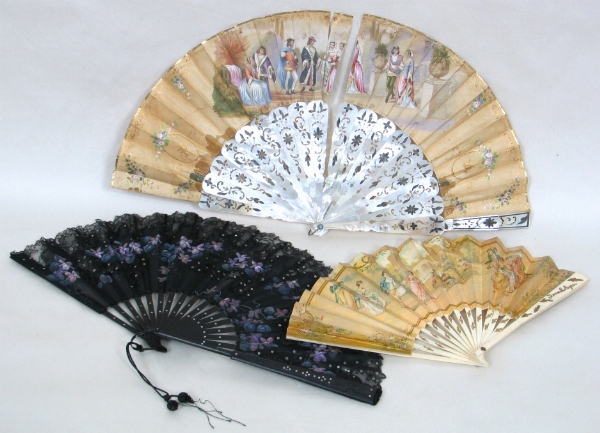
Regency fans could be beautiful or plain. All served to move air and cool the user.

Ceilings were higher, so the heated air had a place to rise, and walls were thicker, which kept rooms and basements cooler for longer. Hand held fans were popular, and one source I found said that gentlemen would sport them as well. The rich had mechanisms in the tropics whereby ceiling fans were rotated by strings and pulled by slaves or servants.

Carnfunnock ice house

Big blocks of glacier ice or blocks of ice cut from frozen rivers were hauled up river by ship into the countryside, covered in straw and burlap, and stored in ice houses that were dug into hillsides or were largely underground.

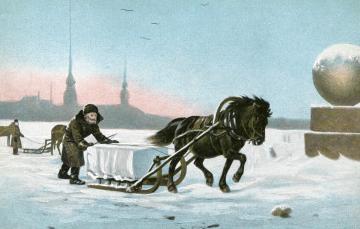
Cutting and hauling river ice. This image is from St. Petersburg, Russia, but the custom of cutting and transporting ice was widespread.

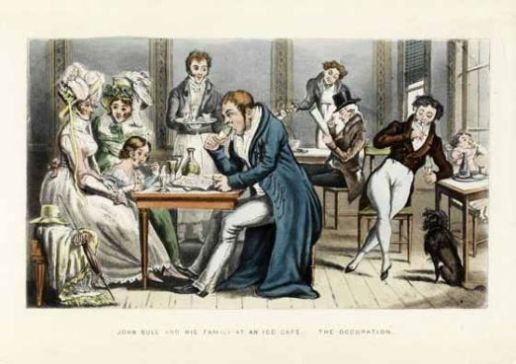
Ice cream was available to those who could afford it in such places a Gunther’s or made at home by the cook.

John Bull and his family at an ice cafe, 1815. Image@Newcastle University

The rich would move back to their country estates for the summer, escaping the stifling heat (and smells) in the city, but ordinary people had to adjust. This morning it was announced that over 2 dozen deaths had been attributed to this latest heatwave, which covers 2/3 of the U.S. I wonder back then how many people died from the effects of such extreme weather?

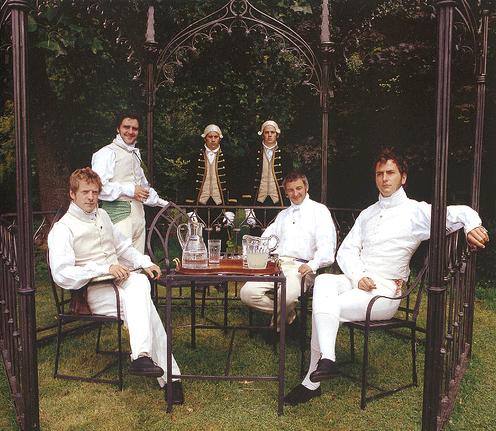
Regency gentlemen at a country house. Note that they are wearing light clothes without jackets. Sitting under a gazebo, they have pitchers of water at hand. One must pity the footmen in full uniform and wig! Image@Regency House Party

Read Full Post »

It’s a truth universally acknowledged that after a bride and groom consummate the marriage the pitter patter of little feet will surely follow (and follow and follow and follow). Such was the case during Jane Austen’s day. Her mother bore eight children and luckily survived her ordeals. The wives of Jane’s brothers Edward and Frank did not, both dying in childbirth with their eleventh child. That these two women were able to survive so many pregnancies was a miracle in itself, given that the chance of a woman dying in childbirth at the time was 20%.
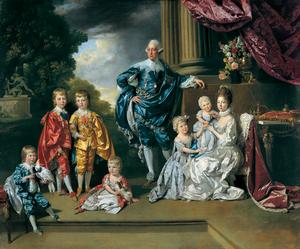
Queen Charlotte, King George IIIs consort, gave birth to 15 children in 21 years. The King and Queen are depicted with their 6 eldest.

Deborah Kaplan writes in Jane Austen Among Women:

“On the birth of his fourteenth child in 1817, Thomas Papillon received this advice within a letter of congratulations from his wife’s uncle, Sir Richard Hardinge: It is now recommended to you to deprive Yourself of the Power of Further Propagation. You have both done Well and Sufficiently.”
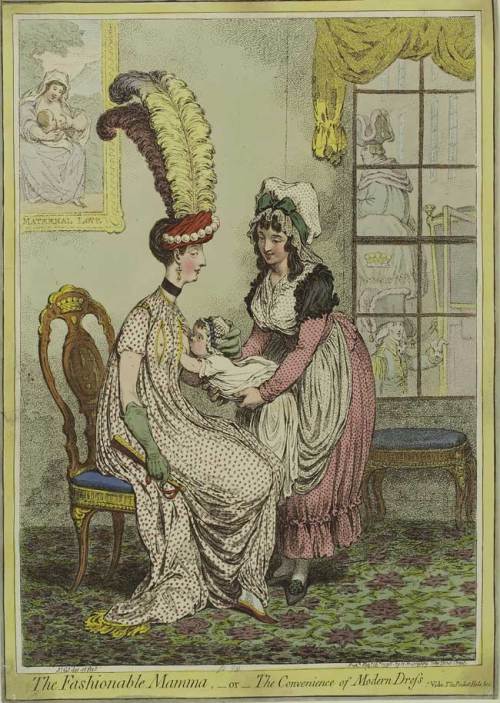
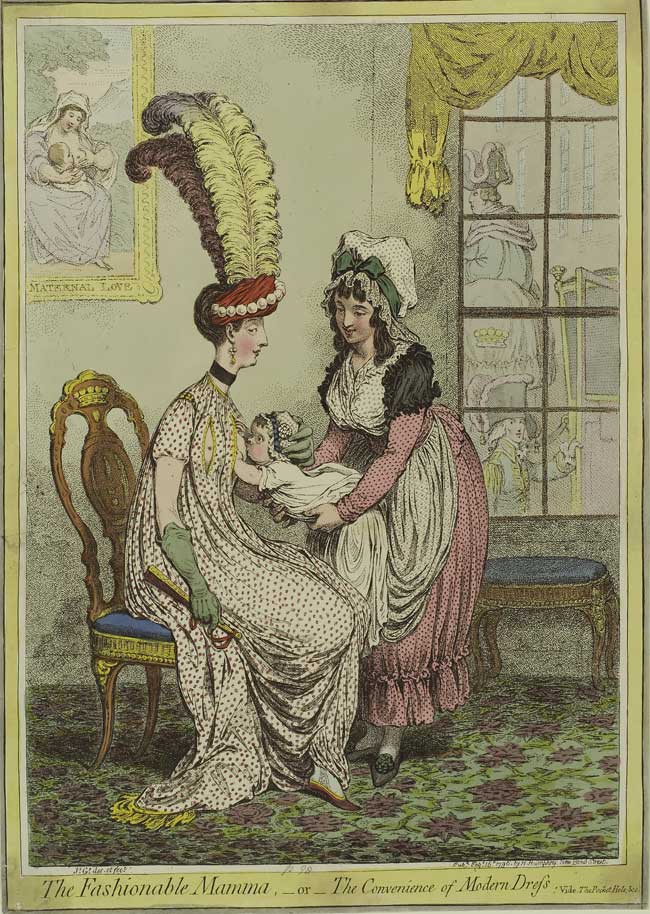
The fashionable mamma, or the convenience of modern dress, James Gillray

Abstinence was one method of birth control, as Sir Richard recommended. Breast feeding was another. If a mother breasfed her child for 3-4 years, the pregnancies would be naturally spaced inbetween periods of amenorrhea (the absence of menstruation). While breastfeeding regained some popularity during the Georgian and Regency eras, women did not feed their babies long enough to supress menstruation for very long and often handed them over to a wet nurse. Cassandra Austen farmed her children to a nurse in a nearby village after six to eight months, guaranteeing that her lactation would soon cease and that she would soon be fertile again. The common belief that having intercourse during lactation would in some way harm the mother and child did offer some added protection from pregnancy, but large families were still common.
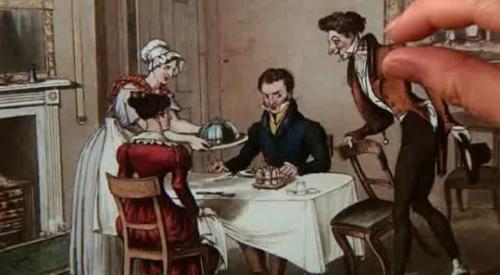
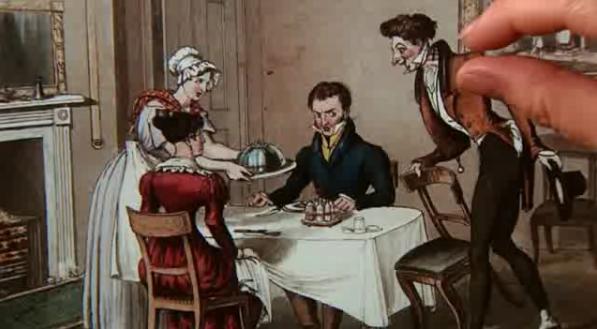
Amanda Vickery shows a bachelor cadging food from an irritated married friend. The poor young man probably lived in a modest rented room.

Social customs also served to keep pregnancies down. Amanda Vickery mentioned in At Home with the Georgians that a bachelor needed to acquire a house and reliable income before he could seriously contemplate marriage. Such acquisitions took years to amass and would hold up the young man’s inevitable role as parent. Once the young man could afford to marry, however, his long period of delayed consummation with a chaste woman ended and he would waste no time in siring a legitimate child.

A woman’s chaste reputation owed much to the urgent necessity of her not getting pregnant before marriage. Conceiving a child out of wedlock turned a woman into a pariah. In medieval times a chastity belt guaranteed that no bride would enter her marriage bed sullied. Unfortunately, these contraptions came in only one size and were therefore extremely uncomfortable for the larger sized woman.(Johannah Cornblatt, Newsweek). Update: Information about chastity belts in medieval times is being debunked these days as a myth. See links in the comment section below.
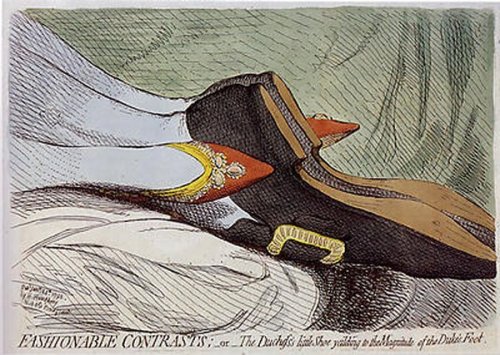
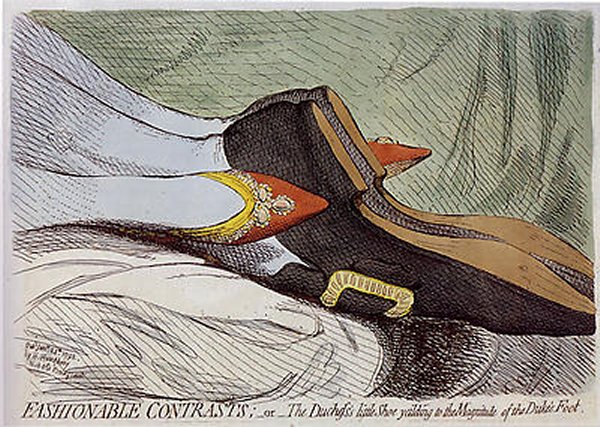
James Gillray's priceless caricature.

Married couples anxious to reduce their number of offspring (or who had reached their limit of 10, 11, or 15) tried coitus interruptus and the rhythm method. Since the female fertility cycle was not fully understood until the early twentieth century, the latter form of birth control resembled a game of Russian Roulette more than family planning. Several religious institutions, the Catholic Church in particular, frowned upon a married couple attempting any form of birth control at all, but there was evidence that birth control was effectively practiced. “Some couples managed to delay the first conception within marriage and few babies were born in the months of July and August, when the heaviest harvest labor took place.”-History of Birth Control.

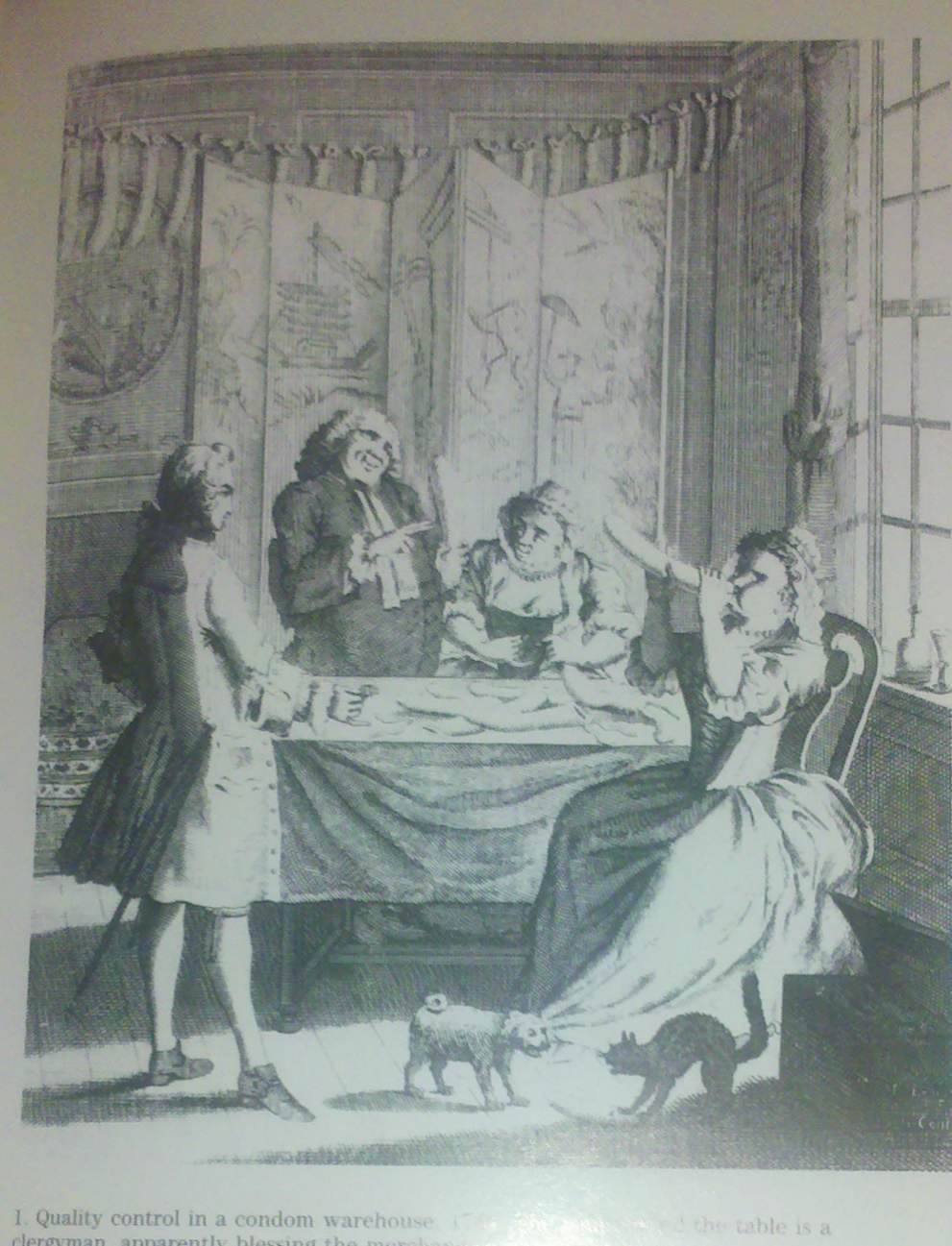
Condoms, which were made of linen soaked in a chemical solution or the lining of animal intestines, had been in use for centuries, but this method of birth control was linked to vice and was mostly practiced in houses of ill repute.
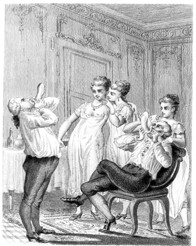
Casanova blowing up a condom with prostitutes looking on.

Giacomo Girolamo Casanova (1725-1798) was among the first to use condoms to prevent pregnancy. The famous womanizer called the condom an “English riding coat.” His memoirs also detail his attempt to use the empty rind of half a lemon as a primitive cervical cap. The engraving shows the Italian seducer blowing up a condom. The photo shows an early 19th-century contraceptive sheath made of animal gut and packaged in a paper envelope. – Newsweek
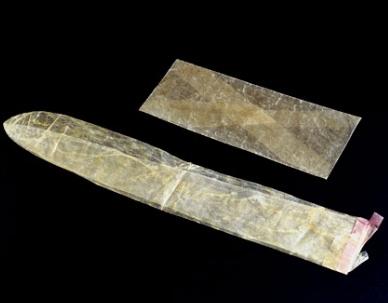
Condom made of animal gut with paper envelope. Image @Newsweek

One can imagine that such clumsy barriers to impregnation failed on too many occasions to count, although they did manage to prevent venereal disease.
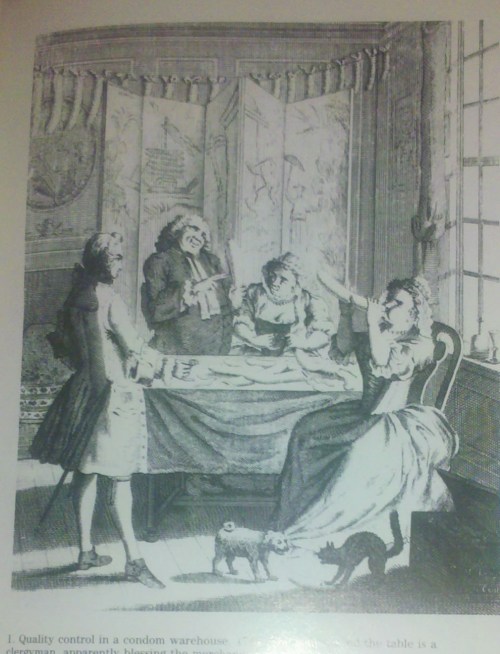
Georgian caricatures made much sport of condoms. This one is entitled: "Quality control in a condom warehouse."

There were other means of pregnancy prevention. Aristotle recommended anointing the womb with olive oil. His other spermicides included cedar oil, lead ointment, or frankincense oil.
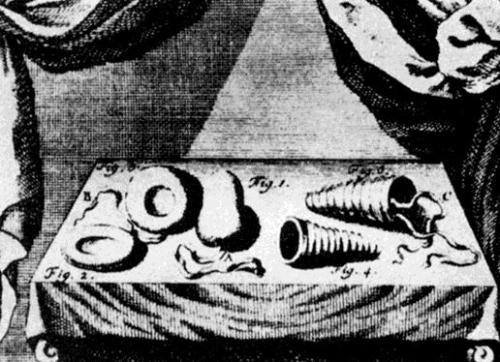
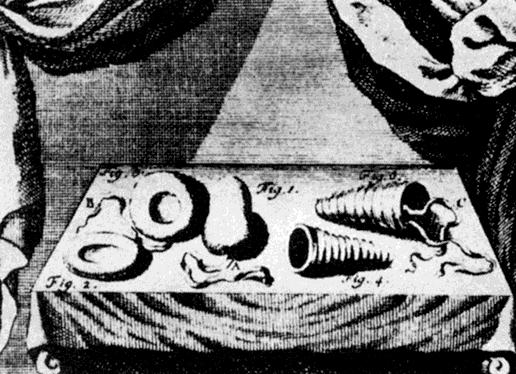
Pessaries, 1755. Image @The Global Library of Women's Medicine

“The pessary [mechanical tool or device used to block the cervix] was the most effective contraceptive device used in ancient times and numerous recipes for pessaries from ancient times are known. Ingredients for pessaries included: a base of crocodile dung (dung was frequently a base), a mixture of honey and natural sodium carbonate forming a kind of gum. All were of a consistency which would melt at body temperature and form an impenetrable covering of the cervix. The use of oil was also suggested by Aristotle and advocated as late as 1931 by birth control advocate Marie Stopes.” – History of Birth Control

Other societies had used methods of blocking sperm including plugs of cloth or grass in Africa, balls of bamboo tissue paper in Japan, wool by Islamic and Greek women, andlinen rags by Slavic women. Ancient Jews used a sea sponge wrapped in silk and attached to a string. – History of Birth Control.

Many young girls who had been seduced, engaged in pre-marital sex, or been raped would attempt not to get pregnant by any means. The unfortunate women who did were ostracised, much like Colonel Brandon’s young charge, Liza, who had been enticed by Willoughby in Sense and Sensibility to give up her virginity. These women were frantic to end their pregnancies rather than lose their standing in society or their livelihood, for no pregnant unmarried woman could work as a maid, shopgirl, or seamstress. They would try anything to end their pregnancies, including ingesting turpentine, castor oil, tansy tea, quinine water into which a rusty nail was soaked, horseradish, ginger, epsom salts, ammonia, mustard, gin with iron filings, rosemary, lavender, and opium. Severe exercise, heavy lifting, climbing trees, jumping, and shaking were also attempted, in most instances to no avail. – History of Birth Control
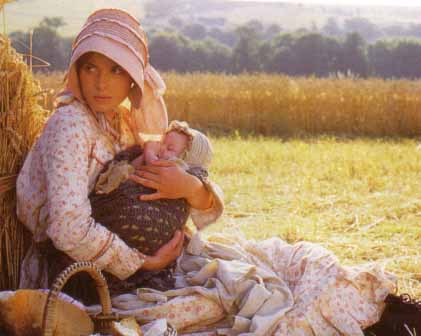
Tess of the D'Urberfield and her baby, Sorrow. Thomas Hardy wrote about the consequences of seduction. (Nastassia Kinski as Tess, 1980)

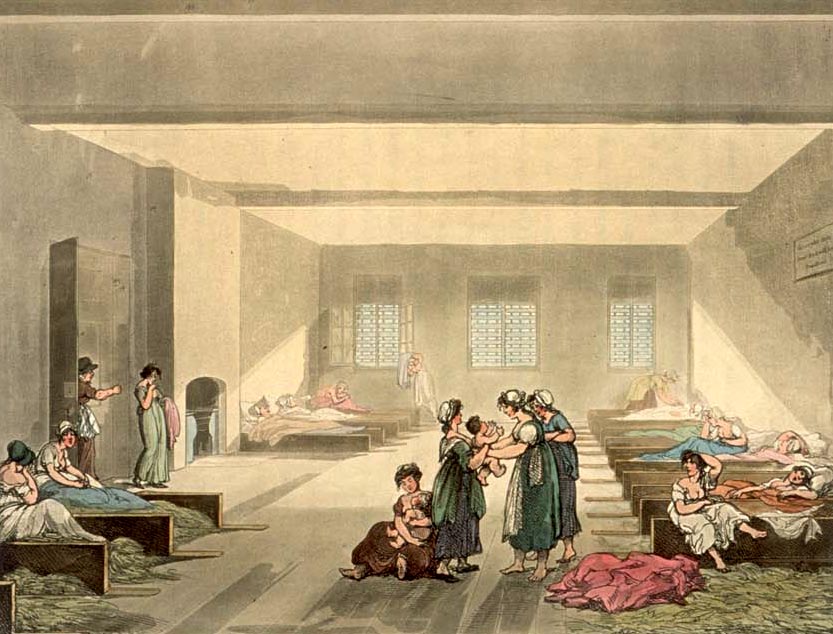
Infanticide has been practiced since the dawn of time, most famously with the Greeks, who left deformed babies to die outdoors. In Regency times, desperate women would leave their babies in the streets to die. Many left their infants at workhouses, a form of infanticide as the quote below attests, and a large number, too poor to support themselves and unable to work off their debts, wiled away their time in prison.

“When the poor stayed with their children in workhouses, the outcome was little better. Between 1728 and 1757, there were 468,081 christenings and 273,930 infant deaths in those younger than the age of 2 in London workhouses. Foundling hospitals and workhouses were institutionalized infanticide machines.” – Global Library of Women’s Medicine
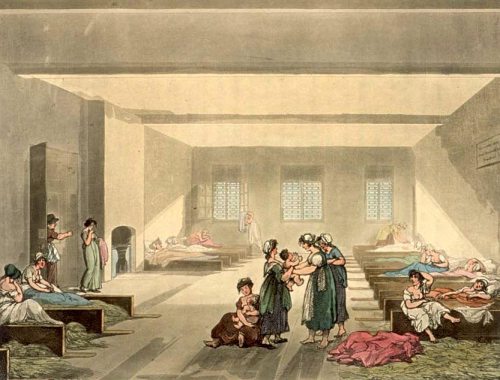
Women at Bridewell Prison, 1808. Rowlandson and Pugin for Ackermann's Repository of Arts

Once children were born and the family was large, it was not unusual to farm out a few children, some to work in their childhood, as Charles Dickens did, and other to live with relatives, as was the case with Fanny Price, who lived with her aunt’s family in Mansfield Park and Edward Austen Knight, who was adopted by a rich, childless couple.
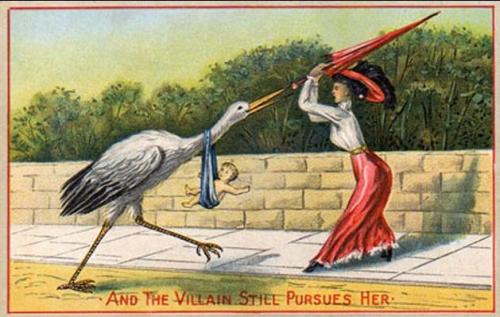
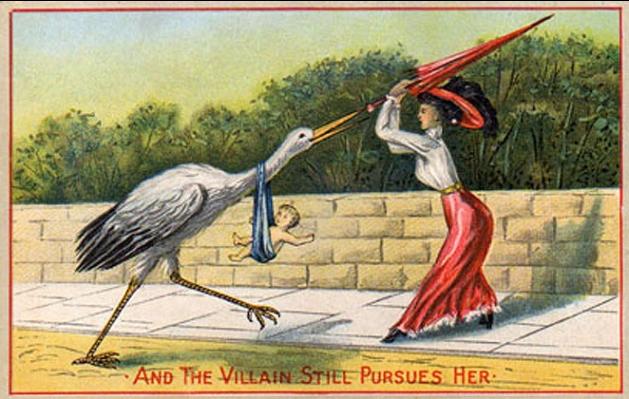
Early 20th century attitude towards an unwanted child. Image @Newsweek

It has been said that families had many children during the 18th and 19th centuries because of the high rate of infant mortality and the need for many helping hands on the farm. But as society became industrialized, large families became a hindrance. With many mouths to feed and limited resources (except in the case of the rich), it is no wonder that couples since time immemorial have searched for ways to limit the number of their offspring.  Update: As Nancy Mayer rightly pointed out in her comment, most women during the Georgian and Regency eras thought it their duty to bear their husbands children and oversee the family household. The matter of family planning might well have been influenced by women of a certain class who could not allow pregnancies to interfere with the rhythm of the work cycle, single women who were desperate to seek ways to end their pregnancies before their condition became obvious, and in houses of ill repute, where condoms would offer some protection against disease. Mistresses and prostitutes would find pregnancies to be more of a hindrance than help in their work. I have often wondered, for example, how Emma Hamilton managed to have so few children and yet enjoy the charms of so many men.
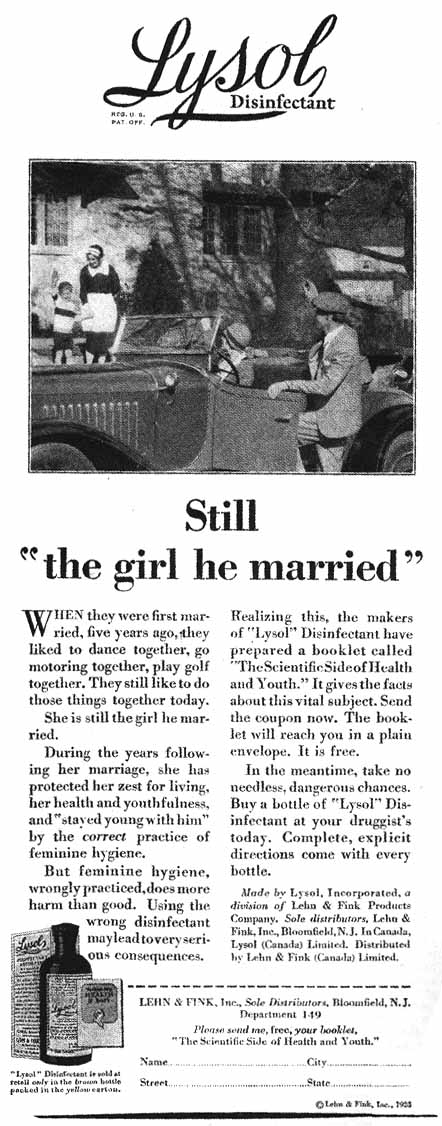
1920's Lysol Advertisement. Image @The Museum of Menstruation and Women's Health

More on the topic:

Read Full Post »
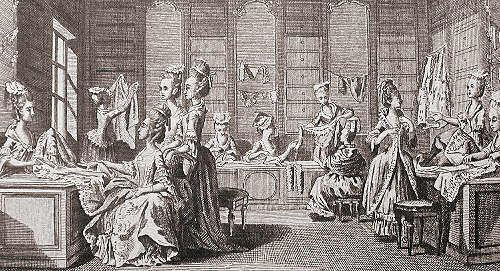
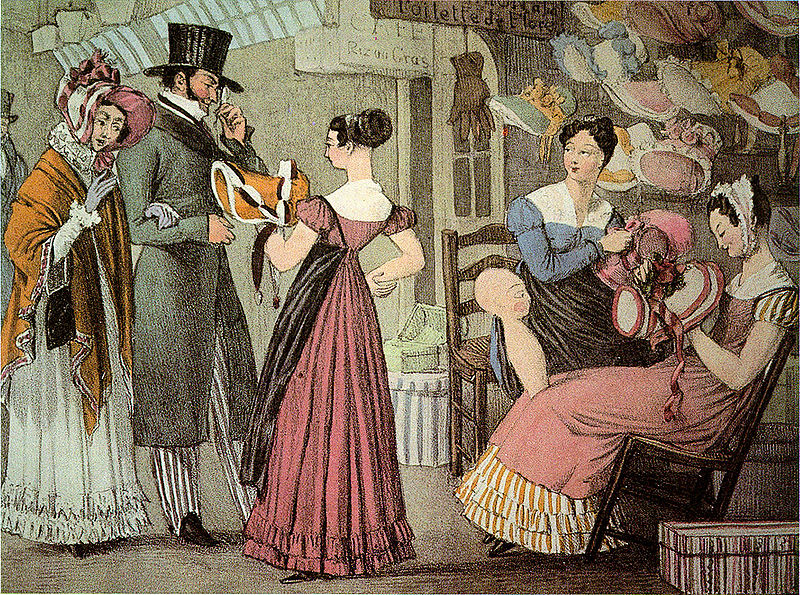
Early milliner shops were like our department stores, selling all manner of fashionable items. The image of a milliner shop in Paris shows the costumes we have come to associate with the era of Marie Antoinette. After the French Revolution, fashions changes drastically, for the French citizenry did not want to be reminded of the recent bloodshed or the ancient Regime. The rage in fashion was an imitation of the classical dress worn by the Greeks and Romans.

Dressmaker shop, 1775

The end of the 18th century witnessed a signal change in the style of women’s dress. The gown no longer consisted of two dresses, an under and an outer one. The formal styles which had prevailed throughout the century and brought into use stiff materials such as solid damasks, velvets, satins, and silks, were replaced by the fashion of the short-waisted clinging gown made of muslin and soft silk. This “Empire” mode characterized the dress of the first quarter of the 19th century. – The Encyclopedia Americana, Frederick Converse Beach, George Edwin Rines, 1902,  “costume”

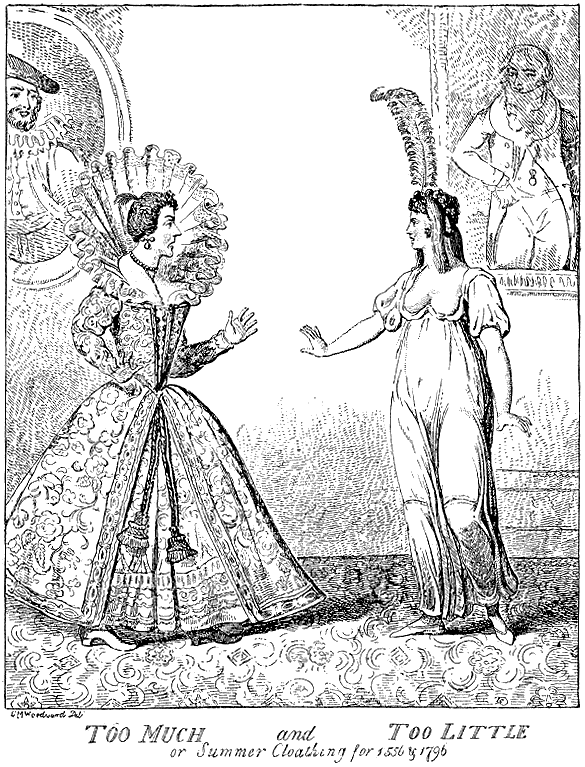
Too Much and Too Little, or Summer Cloathing for 1556 & 1796

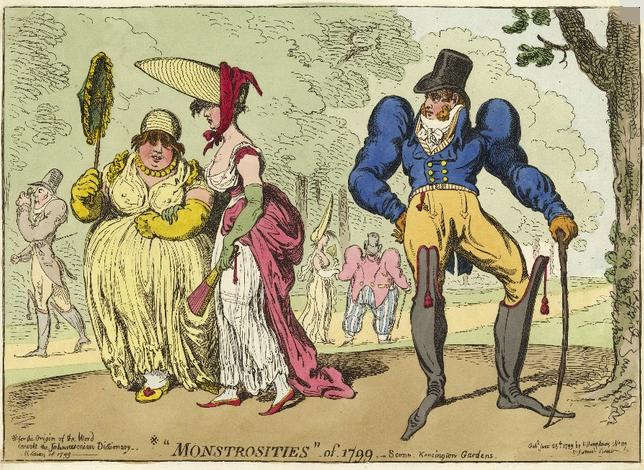
Parisians dressed in the new fashions were known as the “incroyables” (men) and the “merveilleuses,” (women.) These fashions were not at first admired and generally regarded as hideous. Caricaturists had a heyday making fun of these freaks of Fashion. British fashionistas shortly followed suit, as the cartoon by Gillray attests.

Monstrosities of 1799, Kensington Gardens, Gillray

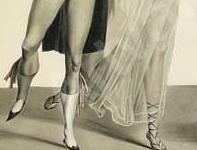
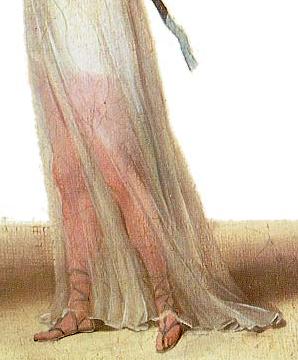
Macaronis turned into dandies, and gently bred ladies wore clothes so thin and diaphanous, that the shape of their legs showed clearly through the skirts. The muslin disease (catching a serious cold or pneumonia) lasted for as long as fashionable young women wore thin muslin dresses with bare necks and arms in damp and drafty buildings.

Merveilleuse et Incroyable. The close up of the dress reveals how sheer the fabrics were.

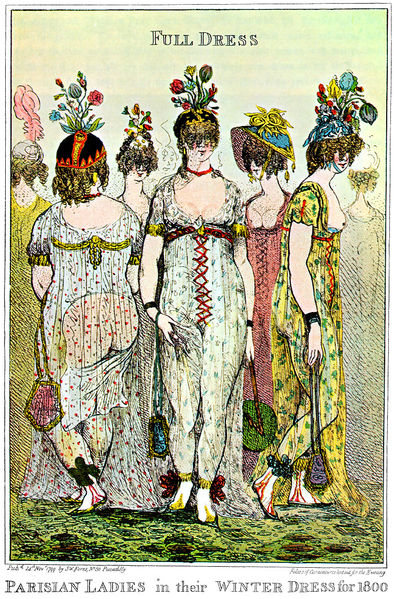
In some instances, nothing was left to the imagination. In the satirical image below by Isaac Cruikshank, the ladies are shown wearing next to nothing. Satire took many forms in the late 18th century. The Lady’s Monthly Museum featured a dialogue between a lady visiting Paris and a man milliner. His answer is hilarious.

Caricature by Isaac Cruikshank

Dialogue Between a Lady and A Man Milliner at Paris

“Citizen, I am just come to town: –pray, have the goodness to inform me how I must appear, to be in the fashion.”
“Madame, ’tis done in a moment; in two minutes I shall equip you in the first style. –Have the goodness to take off that bonnet.”
“Well.”
“Off that petticoat.”
“There it is.”
“Away with these pockets.”
“There they go.”
“Throw off that handkerchief.”
“’Tis done.”
“Away with that corset and sleeves.”
“Will that do?”
“Yes, Madame, you are now in the fashion. ‘Tis an easy matter, you see.–To be dressed in the fashion, you have only to undress.” – The Lady’s Monthly Museum, February 01, 1801, pg. 126.

Definition of a man milliner: A man who makes or deals in millinery, that occupation having been at one time predominantly performed by women; hence, contemptuously, a man who is busied with trifling occupations or embellishments.

Louis-Léopold Boilly painted a gown so sheer that without a petticoat, her short chemise is easily visible under the delicate muslin.

The days of the Revolution (1789 – 1799) brought in simple fashions. Corsets were discarded, the waist became short and the skirt clinging, and cheap materials were used. During the Directoire, the women adapted the classic style, borrowing from both Greek and Roman fashions. These costumes were scanty, and frequently were split up the sides. The dresses were often transparent and worn without chemises. The gentlemen of this fantastic period were styled “Incroyables,” “Unimaginables”; the ladies, “Merveilleuses” and “Impossibles.”  The men wore an exaggerated copy of what had been previously called the English fashion.- Costume design and illustration,  Ethel Traphagen, 1918,  p 120.

Millinery shop in Paris, 1822

A milliner could carry possibly a thousand different goods, becoming the forerunner of the modern department store. At this point, the term “milliner” was tied to the Latin word “mille,” meaning thousand.

The 18th Century milliner might have offered a thousand goods but all shared the quality of being fashionable accessories. Wares could include shoes, jewelry, table service, clocks, hosiery, fabrics, shirts, aprons, cloaks, caps, hats, muffs and mitts. – The Millinery Shop, Colonial Williamsburg

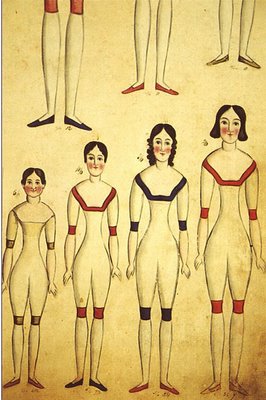
Milliner doll catalog, 1820s. These dolls were dressed in the fashion of the day. Look at the above image for a sample size of a doll. Image @Christine LeFever: Dolls and Fancywork

More on the topic:

Read Full Post »
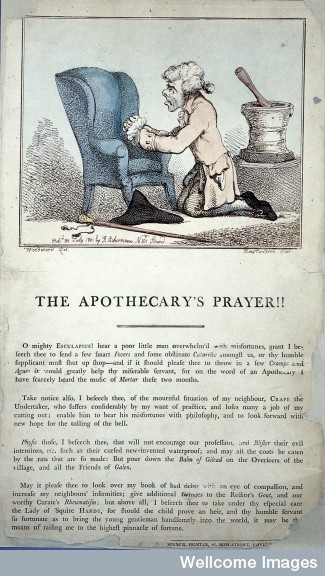
Caricatures from the late 18th- early 19th century always pique my interest. In this instance, Rowlandson’s apothecary (1801) is praying deeply. But what for? Skills to heal more efficiently and better, or for a slew of customers whose illnesses will help fill his coffers with lucre?

Knowing Rowlandson’s outrageous penchant for irony, I am willing to bet it is the latter. So I entered a few phrases into my trusty Google search bar and found this cached explanation of the prayer:

A prayer with a mischievous aim: This example is a sarcastic Apothecary’s Prayer, which was accompanied by a Thomas Rowlandson caricature. 12

“Oh mighty Esculapius! Hear a poor little man overwhelm’d with misfortunes, grant I beseech thee to send a few smart Fevers and some obstinate Catarrhs amongst us or thy humble supplicant must shut up shop…”

“and if it would please thee to throw in a few Cramps and Agues, it would greatly help thy miserable servant, for on the word of an apothecary, I have scarcely heard the music of Mortar these two month…”

“Physic those, I beseech thee, that will not encourage our profession, and blister their evil intentions, viz, such as their cursed new-invented waterproof…”

This was a weatherproof material which was expected to keep the wearer dry and hence free from colds and coughs and other diseases. – Wright, David. Some Prayers and Oaths from the History of Medicine, cached page.

The entire prayer:

O mighty Esculapius! hear a poor little man overwhelm’d with misfortunes, grant I beseech thee to send a few smart Fevers and some obstinate Catarrhs amongst us, or thy humble supplicant must shut up shop–and if it should please thee to throw in a few Cramps and Agues it would greatly help thy miserable servant, for on the word of an Apothecary I have scarcely heard the music of Mortar these two months.

Take notice also, I beseech thee, of the mournful situation of my neighbour, Crape the Undertaker, who suffers considerably by my want of practice, and loses many a job of my cutting out; enable him to bear his misfortunes with philosophy, and to look forward with new hope for the tolling of the bell.

Physic those, I beseech thee, that will not encourage our protection, and Blister their evil intentions, viz. such as their cursed new-invented waterproof; and may all the coats be eaten by the rats that are so made: But pour down the Balm of Gilead on the Overseers of the village, and all the Friends of Galen.

May it please thee to look over my book of bad debts with an eye of compassion, and increase my neighbours’ infirmities; give additional twinges to the Rector’s Gout, and our worthy Curate’s Rheumatism; but above all, I beseech thee to take under thy special the Lady of Squire Handy, for should the child prove an heir, and thy humble servant so fortunate as to bring the young gentleman handsomely into the world, it may be the means of raising me to the highest pinnacle of fortune.

I looked up the word Galen. He was the physician who succeeded Hippocrates and who described cancer as an excessive black bile.  Until the 17th century it was believe that the bile coursed throughout the entire body. Even if a tumor was removed, the black bile remained to create more tumors. Not a nice prayer, n’est-ce pas?

More on the topic:

Image Credit: Wellcome Library, London
An apothecary praying for a host of illnesses to descend on his customers so that he can make more money. Coloured etching by T. Rowlandson, 1801, after G.M. Woodward.
Coloured etching and text 1801 By: George Moutard Woodward after: Thomas Rowlandson
Published: R. Ackermann,[London] (101 Strand) :  30 July 1801
Printed: [E.] Spragg)(London :
Size: border 18.7 x 23 cm.
Collection: Iconographic Collections
Library reference no.: ICV No 11040
Full Bibliographic Record Link to Wellcome Library Catalogue

Copyrighted work available under Creative Commons by-nc 2.0 UK: England & Wales, see http://images.wellcome.ac.uk/indexplus/page/Prices.html
Previous Ref: D5459/2/146

Read Full Post »
I came across this print by Isaak Cruikshank and was instantly captivated. Instead sketching studies of rich and influential people, Cruikshank used the images of ordinary folks. The study of physiognomy goes back a long time, but as early as the 18th century, it was regarded as a dangerous “science.”

Click on image for a larger view.

Physiognomy was regarded by those who cultivated it as a twofold science: (i) a mode of discriminating character by the outward appearance, and (2) a method of divination from form and feature. On account of the abuses of the latter aspect of the subject its practice was forbidden by the English law. By Ihe act of parliament 17 George II. c. 5 (1743) all persons pretending to have skill in physiognomy wore deemed rogues and vagabonds, and were liable to be publicly whipped, or sent to the house of correction until next sessions.1 The pursuit thus stigmatized as unlawful is one of great antiquity, and one which in ancient and medieval times had an extensive though now almost forgotten literature. It was Very early noticed that the good and evil passions by their continual exercise stamp their impress on the face, and that each particular passion has its own expression”. – The Encyclopedia Britannica, a dictionary of arts and sciences, Vol 21, Google eBook

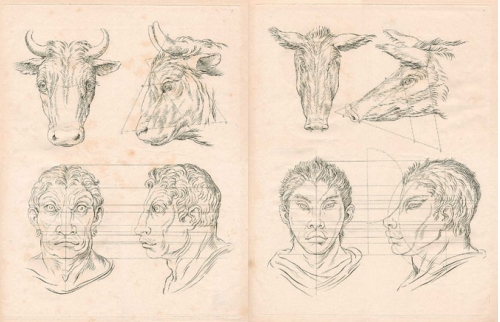
Physiognomy studies, Charles LeBrun, 17th C

In About faces: physiognomy in nineteenth-century Britain, 2010 ,  Sharrona Pearl discusses the study of facial features and their relationship to character during Jane Austen’s and Charles Dickens’ day. Caricaturists felt the license to distort and exaggerate features, much as Cruikshank did. Portrait artists especially “learned how to communicate internal character and lived experience, while adhering strictly to the viewed external appearance.”

While Cruikshank’s images represented a fascinating study that provided a handy visual bank of expressions and features for the caricaturist, the study of physiognomy could take people down a dangerous path of fostering stereotypes.  Hitler took to this practice to an extreme when he offered descriptions of ideal Aryan features and contrasted them to the facial features of the “typical Jew”.  LeBrun’s image (above) compared people’s facial features to animals. There was nothing fun or funny about such sketches, which were more about prejudiced viewpoints than a reflection of  reality.

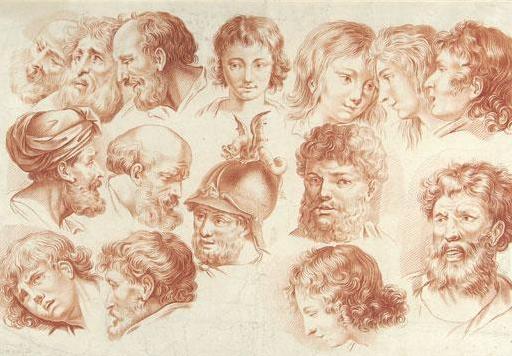
Physiognomy Studies after Pierre Thomas Le Clerc, 1760

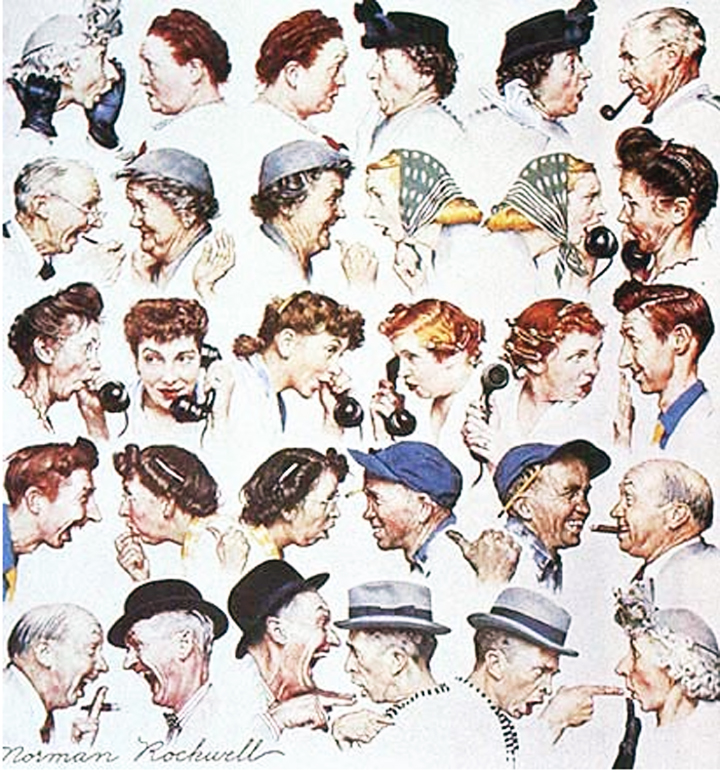
While it is hard for humans to escape first impressions and to be judged by looks alone,  one has to tread carefully in making assumptions based on regular or irregular features. In the hands of a talented artist, however, one can tell much about the sitter’s character through the skilled manipulation of features and expression. Norman Rockwell tells a delightful tale about the nature of gossip in this masterful 20th century caricature. He needed no words to tell his humorous story.

Click on image for a larger view.

First image: Eighty-four physiognomic caricatures of English eighteenth century types. Etching by I. Cruikshank after G.M. Woodward.
1796 By: George Moutard Woodward after: Isaac Cruikshank
Published: Allen & West,London (15, Paternoster Row) : 1 August 1796
Size: platemark 24.9 x 37.1 cm.
Collection: Iconographic Collections
Library reference no.: ICV No 9699
Full Bibliographic Record Link to Wellcome Library Catalogue

Copyrighted work available under Creative Commons by-nc 2.0 UK: England & Wales, see http://images.wellcome.ac.uk/indexplus/page/Prices.html

Read Full Post »
« Newer Posts - Older Posts »