Feeds:
Posts
Comments

Archive for the ‘Jane Austen’s World’ Category

Scheduled for this week are:

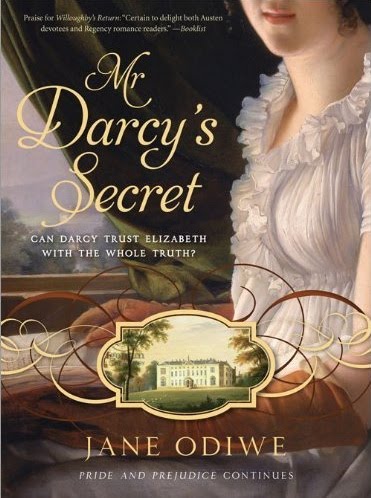
  • A review of Mr. Darcy’s Secret and interview with author Jane Odiwe on February 7th
  • A post by Tony Grant about the highwayman, Jerry Abershawe
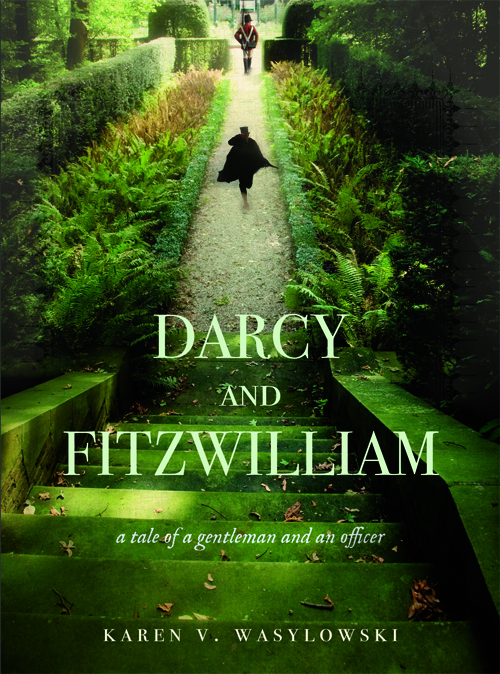
  • And an interview with Darcy and Fitzwilliam author Karen V. Wasylowski on February 10th.

Stay tuned for more!

Read Full Post »

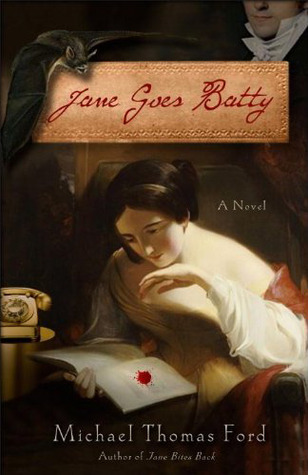
A review of Jane Goes Batty from the desk of Shelley DeWees …

Jane Austen as a protagonist might be one of the most likeable characters in literature.  She’s thoughtful, friendly, and devoted to her art, all of which are qualities you’d probably expect in the real Jane (were you lucky enough to know her).  She’s full of admirable characteristics, yes…accept that one little tiny baby hiccup of a problem…

She wants to suck your blood.

Now, she may not want to kill you unless you piss her off, or happen to be the annoying mother of a guy she’s considering a future with.  She may only want to taste you because, well, she must.  She’s got that little problem.  Not many people know about it, and those her do are among her most trusted confidantes: a lovely friend called Lucy who runs her bookshop in upstate New York and her best buddy Lord Byron, who happens to be a vampire as well.  He provides support, instruction in the ways of vampire art (how to become invisible, how to spot attraction between other people, how to create more undead chums), and is in general a source of inspiration for poor Jane who’s struggling to find meaning in a never-ending life.

The story finds her with a new hit novel, but she knows her old ones are better.  She’s getting lots of money from the new book, but not near as much as she’d be getting if she collected royalties on the others.  She’s happy with her boyfriend Walter, but can never marry him since he doesn’t know about her little problem.  She’s up.  She’s down.  She’s back.  She’s forth.  Jane is getting pulled around by all kinds of forces, many of which are entirely out of her control.  Such is life, Jane.  Such is life.

And such is the way of Jane Goes Batty, the second installment of a trilogy of novels by Michael Thomas Ford.  It’s a modern take on the life on Jane Austen, complete with her struggle to find a publisher and her wish to drink as much wine as she wants (as she said, being unmarried allows her to do just that).  The book is fun and inspiring in some senses, and probably worth your time if you’re looking for a bit of a romp through an alternate reality or simply trying to re-awaken your internal Janeite.  The book flows well and thrives on skillful construction, but seems to be saturated with an overabundance of problems.  Poor Jane the Undead has a veritable laundry list of troubles to slog through, not the least of which being an overdue sequel to her bestseller, an intolerable mother-in-law who insists she convert to Judaism, a new editor, an invasive camera crew, and the threat of a visit from another gloomy friend.  What’s a girl to do?

Jane Goes Batty is fun but simple, composed by a seasoned author whose interests are as diverse as the subject matter of his books.  Michael Thomas Ford spins a fairly interesting tale, and even though it’s nothing to write home about, you certainly won’t hate it!  Give it a shot, even if you haven’t read the first portion of the series, and see if you can lose yourself in Jane-love again.

Gentle Readers, this is Shelley de Wees’s fourth review for me and the third for Jane Austen’s World. (She has also reviewed for my other blog, Jane Austen Today.) Shelley also oversees her own blog, The Uprising, which features vegan recipes. Yum. She lives in the northern U.S. I shiver just thinking about the cold.

Read Full Post »

From Tony Grant, whose contributions to this blog are numerous: “Two years ago some of my friends wanted a weekend away so we decided on Lyme. Our wives went off to New York for the shopping. We tend to go to places more for the local beer than the literary connections, I must admit. Lyme has some very nice pubs and also we wanted somewhere where we could take a brisk walk. We thought of the Undercliff.”

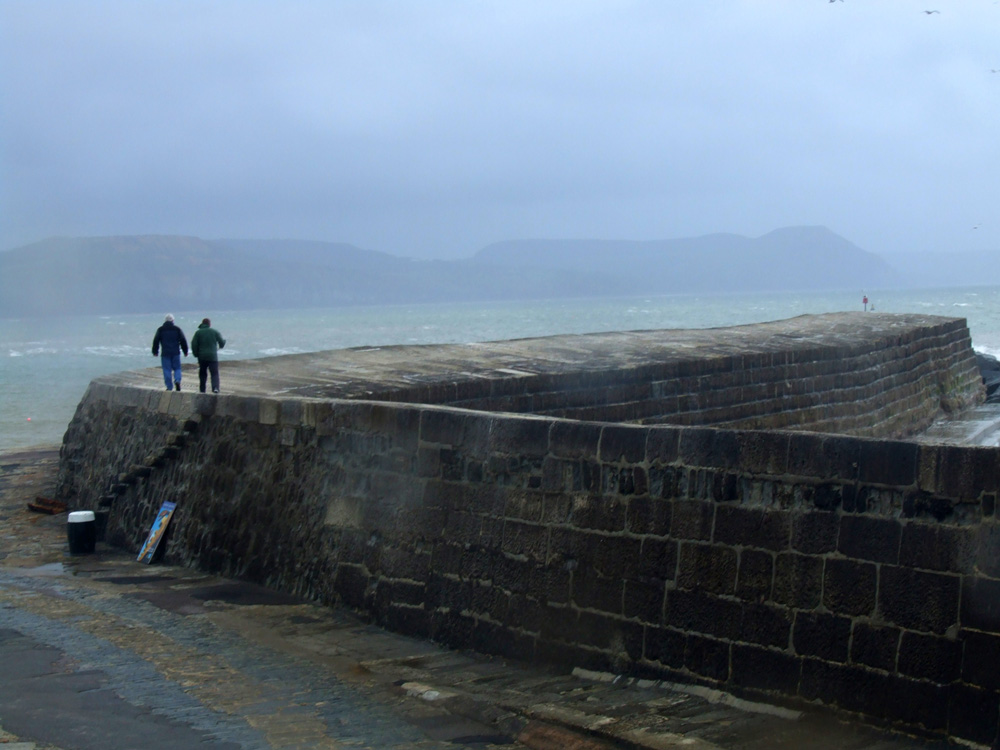
The Cobb at Lyme Regis. Image @Tony Grant

It depends on the weather conditions but the Cobb at Lyme can look and behave like an evil spirited leviathan; a Moby Dick. It’s a savage beast. At other times it can be a gentle, peaceful and calm creature.

Jane Austen used the Cobb at Lyme for the setting of an integral scene in her novel, Persuasion.

The accident on The Cobb, to Louisa Musgrove, brings Anne Elliot to the fore. She is the one looked to by Captain Wentworth and the others to take charge.

John Fowles, who lived in Lyme for most of his life, used Lyme , The Cobb and The Undercliff as the settings for his novel ,The French Lieutenants Woman.Indeed these topographical elements of Lyme are like a group of brooding characters within the novel and shape the action as much as the human characters…” Read the rest of the post at Tony Grant’s blog, London Calling.

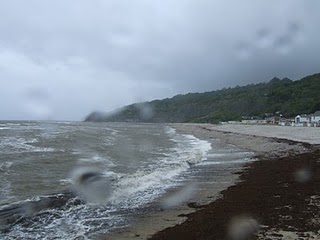
View of the Undercliff from the Cobb. Image @Tony Grant

Read Full Post »

Inquiring readers,

For those of you who have not yet visited Nancy Mayer’s beautiful website, you are in for a treat. Click here to enter Nancy Mayer, Regency Researcher: A most proper authority on all things Regency. Nancy has been a member of JASNA (Jane Austen Society of North America) for some time. She was a member of a local chapter in 1990-1994, then started up a new chapter in 1996, and has been the regional coordinator for northern Georgia since then. Nancy has been researching Regency England for more than twenty years, and finds Google books a big help. While she is responsible for the text on her website, Susan Newman designed the web pages and added the illustrations. Nancy graciously agreed to answer a few of my questions:

1. How and when did you become interested in Jane Austen’s novels?

This is probably heresy, but I came to Austen and her novels because I wanted to learn more about Regency life. I had heard of Pride and Prejudice and seen the old Lawrence Olivier movie, but hadn’t gone any further with it or the other novels until I became interested in the Regency period. After reading Jane Austen’s letters, and some biographical data on her, I started in on her novels. I joined a discussion group in Atlanta around 1990 and haven’t looked back since. Even after twenty years of discussing the novels there is always something new to be found. I am not one who has memorized the books and don’t read them all over every year, but I usually find some new insight each time I do.

2. Which is your favorite Jane Austen book and/or character, and why?

Persuasion. Anne Elliot is my favorite character. She is more mature than the other heroines and so doesn’t make the mistakes they do. One seldom has to blush for her. I also think Wentworth is more romantic than Darcy, but I wouldn’t want to be a sailor’s wife.

3. You are considered an authority on the topic of Jane Austen and the Regency period, and your breadth of knowledge about the era astounds me. What are some of your favorite topics to research and why?

You flatter me. The more I research the more I discover what I don’t know. I like to research marriage, titles, peerage, the law, and mourning rules. I find property law most confusing, and barely know a VanDyke fringe from a scalloped one.

One can find all sorts of period books on Google books.

I am also interested in Lord Byron who was Jane Austen’s contemporary, His life gives the masculine and aristocratic elements missing in Jane Austen’s life. Though they both were alive from 1809 to 1817, one could sometimes think they lived at different times.

4. For the casual (but avid) Jane Austen reader, what are some sources you would recommend for further reading?

  • My Dear Cassandra:The letters of Jane Austen, Selected and introduced by Penelope Hughes Hallet. Clarkston Potter Publishers or Collins & Brown 1990, ISBN 0-51758312-7
  • Some might want the complete letters edited by Deirdre Le Faye, or the ones edited by John Chapman.
  • The novels published by Oxford have great appendices. Some of the Critical editions of the novels have appendices. One should have a copy of Lover’s Vows in one’s Copy of Mansfield Park. There are annotated versions of the stories with explanations of obscure and not so obscure points, and there are even comic book editions of Pride and Prejudice and Sense and Sensibility. No matter one’s taste or interests, one should be able to find a connection with Jane Austen.
  • Mrs. Hurst Dancing by Diana Sperling. This isn’t about Jane Austen but the illustrations of the Sperling family could be those of the Younger Dashwoods or the Bennets. # ISBN-10: 0575030356 # ISBN-13: 978-0575030350. Some are exceedingly expensive, but there are remaindered copies and second-hand copies at reasonable prices.
  • Jane Austen and Her times by G.E. Mitton, originally published 1905, 2007 Barnes and Noble.
  • Also there are probably fifty books out there covering everything from Jane Austen and Art to Jane Austen and Zombies. I know of book on Jane Austen and Food, Jane Austen and Crime, Jane Austen and fashion, ( and Fashion in the Time of Jane Austen).
  • Those who like quizzes and challenges might like: Jane Austen Challenge by Helen Barton: BartonBooks (June 2009) # ISBN-10: 0952725754 # ISBN-13: 978-0952725756
  • Also, So you Think You Know Jane Austen? By John Sutherland and Deidre le Faye Oxford University press, ISBN 0-19-280440-5

5. Would you like to share a common misconception about the Regency period with our readers, one that is wrongly perpetuated by book sources, websites, and blogs?

A general error I have found is thinking that the marriage laws, the church, and laws of inheritance were the same then as they are now. Many think the regency period was just like today, but in costume and with horses.

Nancy, thank you for sharing your wonderful insights. I hope readers will bookmark your website and visit it often. It’s best feature, as far as I am concerned, is your answers to their specific questions, like a personal researcher.

Read Full Post »

Highclere Castle as Downton Abbey was a beautiful setting

Now that the last episode of Downton Abbey has aired, I can reflect back on the series and revisit some of the most surprising scenes. Indeed, the unexpected plot developments, which kept the viewers on their toes,  helped to make this series so unforgettable. Throw luscious costumes into the mix, stunning locations, a wealth of detail about Edwardian life, and great acting and you get one of the best costume dramas in recent years. Oh, the series had its faults with one or two too many stereotypical characters, but overall I give it a grade of A.

Reader alert: Spoilers!!

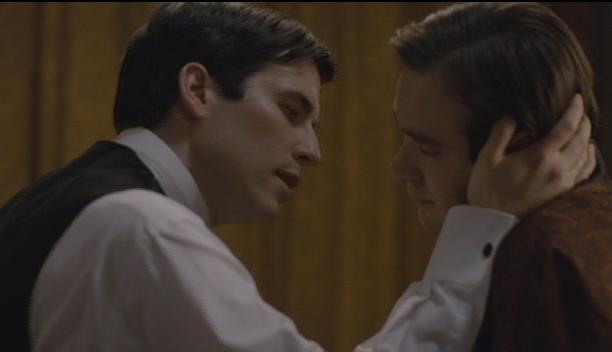
Surprise #1: Thomas kisses the Duke
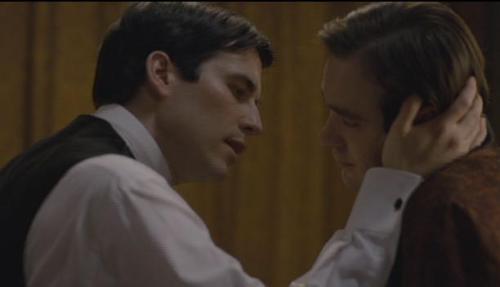
Thomas (Rob James-Colier) and the Duke of Crowborough (Charley Cox)

This scene, which upset parents watching with their children, helped to seal the character of Thomas, the first footman, and clued the viewer into the the Duke’s motives for hightailing it to Downton Abbey when he thinks Mary will come into a boatload of money.
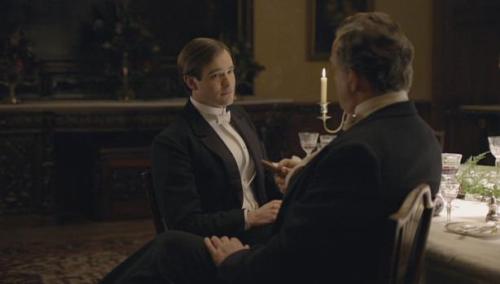
The duke learns the true situation of Lady Mary's finances from Lord Grantham.

The Duke finds and burns Thomas’s letters, which were the footman’s only means of blackmailing him, and then he scurries away the moment he discovers that Lord Grantham’s estate is entailed to the closest male heir, making his chance to marry into the Grantham fortune less than zero. Thomas goes on to demonstrate his sleazy character in many more ways, but his move on the Duke packed a real punch.

Surprise #2: Lady Mary is not just another cookie cutter heroine
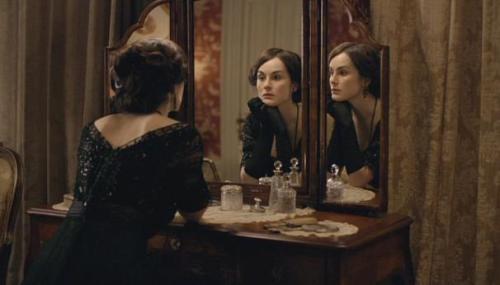
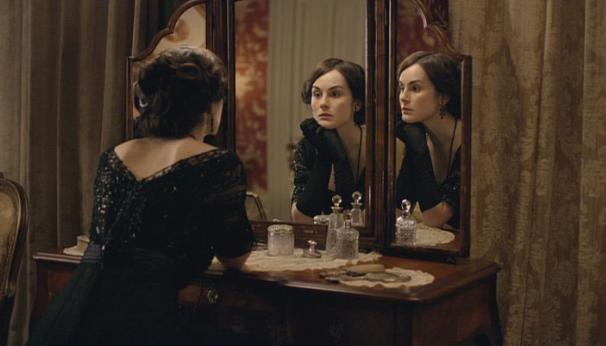
Michelle Dockery as Lady Mary Crawley

From the moment we meet her, Lady Mary comes off as a cold, calculating, and complex woman, whose vulnerability does not come into full view until the third episode. When the viewer meets her, she worries about having to wear black after the death of her fiance on the Titanic and only mourns the fact that she cannot mourn him. Haughty and immodestly aware of her attraction to men, her pursuit of a wealthy and titled husband begins to take on a hint of desperation, which is why her fall from grace with Evelyn Napier’s attractive Turkish friend, Kemal Pamuk (Theo James), is even more shocking.

Surprise #3: Lady Mary, Lady Cora, and Anna share a terrible secret that cannot be contained

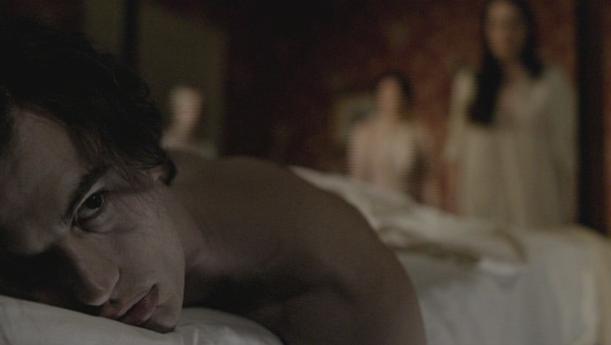
Lady Mary is in deep trouble after Pamuk dies in her bed.

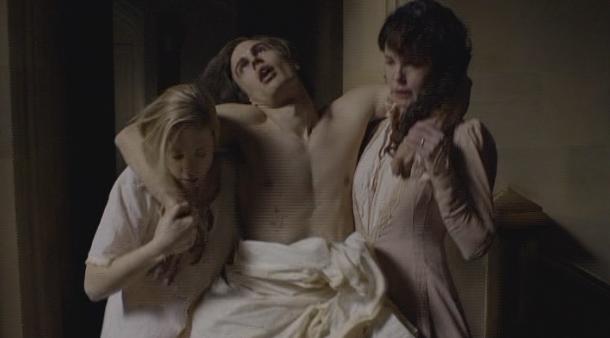
The scene in which Pamuk dies in Lady Mary’s bed and the women secretly carry him back to his bedroom could have descended into slapstick comedy, but it did not due to great directing and acting. As I watched, I didn’t know whether to laugh, cry, or whoop it up. All I knew was that in no way did I anticipate this plot development, which would affect Mary’s story arc and uneasy relationship with her mother for the rest of the mini-series.
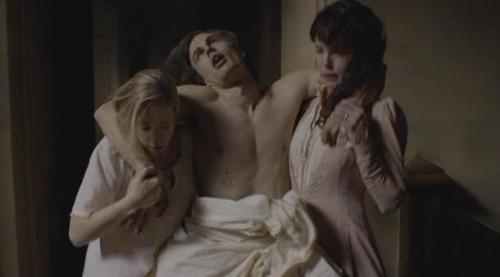
Consequences of Lady Mary's fall from grace. Anna and Cora carry Pamuk back to the bedroom.

Handsome Pamuk is reduced to a limp corpse. And Mary? What on earth was she thinking? When Matthew finally proposes, Cora reveals to Violet that Mary wants to confess about the circumstances of Pamuk’s death, prompting the dowager to exclaim:  “She reads too many novels. One way or the other, everyone goes down the aisle with half the story hidden!”

Surprise #4: The Enjoyable Saga of One Upmanship Between Two Well-Matched Battle Axes
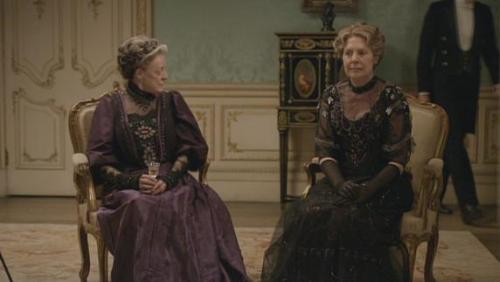
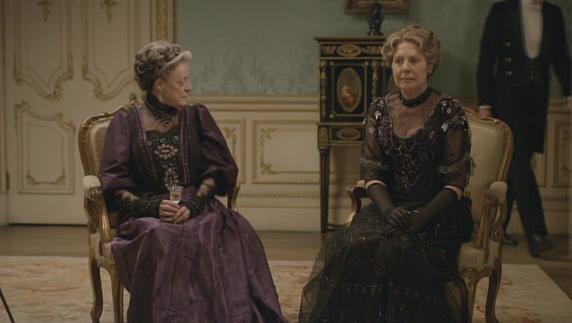
Violet, the dowager countess (Maggie Smith) and Isobel Crawley (Penelope Wilton), Matthew's mama

Violet and Isobel: Two strong-willed women, both firm in their belief that they are right, one with modern notions, the other clinging to old-fashioned ways, provide a colorful but minor story line. Isobel Crawley, despite her comparative lack of social status (when matched against the Dowager Countess), manages to make her will known and felt. Violet can only sputter and rage at Isobel’s interference, and she finds scant satisfaction in proving Isobel’s diagnosis and treatment of Molesley’s skin condition wrong. But Isobel was not born yesterday, and at the Flowershow Death Match she shames Violet into giving the trophy for best roses to Molesley’s papa, instead of appropriating it as her own for the umpteenth time.

Violet graciously gives this year's prize to old Mr. Molesley.

In their scenes together,  Penelope Wilton  gave the incomparable Maggie Smith a run for her money. The enjoyable interplay between these two marvelous actresses was as surprising as it was worth watching.

Surprise #5: Cora’s Pregnancy
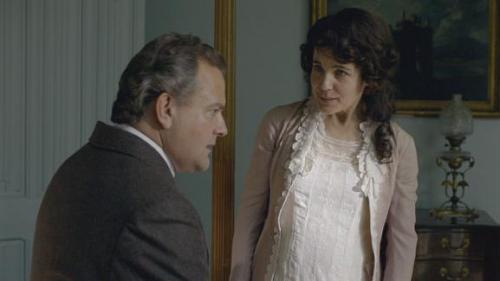
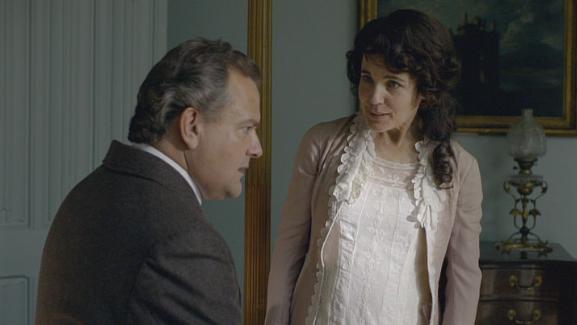
Lord Grantham's surprise at learning of Cora's pregnancy. (Hugh Bonneville and Elizabeth McGovern)

Did you see this scene coming? I did not, although it made sense, for this unexpected pregnancy explains much about the entail and why Matthew Crawley was only the presumptive heir and therefore essentially helpless in changing his situation. As long as the earl could possibly sire a son, Matthew’s claim to the inheritance would remain tenuous. The entail could not be broken for the Grantham was still  a healthy and virile man, as this scene shows. The pregnancy led us to discover…

Surprise #6:  O’Brien’s True Malevolent Impulses
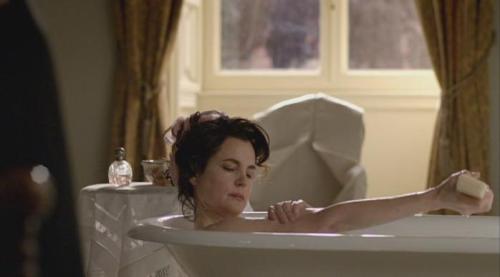
Cora (Elizabeth McGovern) holds the fatal bar of soap
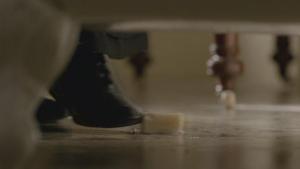
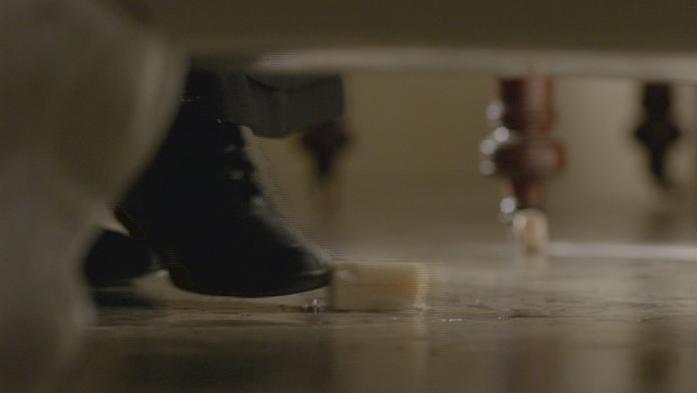
O'Brien shoves the bar of soap in harm's way.

Cora’s fatal flaw was in thinking that she and O’Brien had developed a mutual friendship and trust. While Cora receives glimpses of O’Brien’s true character, she never fully understood the anger and insecurity that her ladies maid harbored. O’Brien’s pang of conscience about shoving the broken half of the bar of soap from under the bath tub came too late, and Cora slipped and fell, losing the male heir that she and Lord Grantham so desperately wanted.  O’Brien’s dark impulse was for naught. Cora wasn’t actively looking to replace her, but only helping her mother-in-law in hiring a new ladies maid. This surprising news hit the viewer at the same time as it did O’Brien.
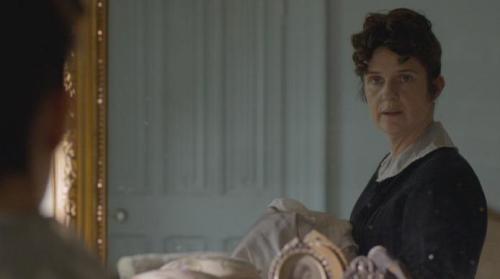
O’Brien’s momentary second thought comes too late. (Siobhan Finneran)

Surprise #8: The Spiteful Tug of War Between Two Sisters
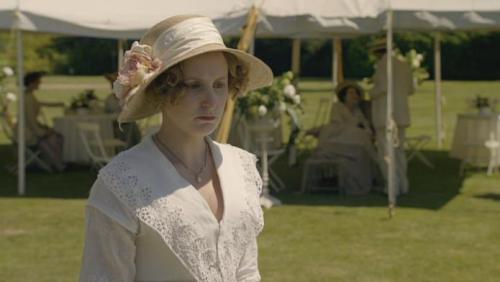
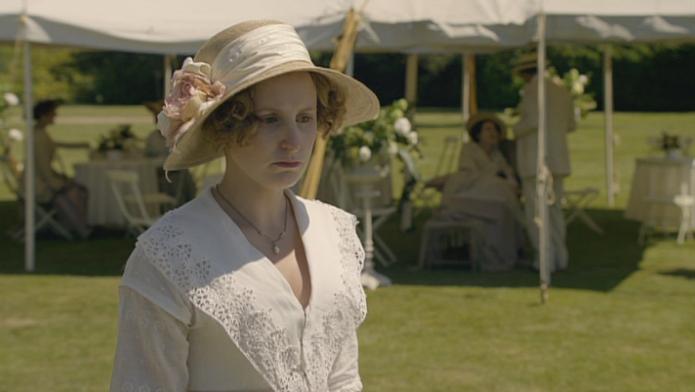
Lady Edith (Laura Carmichael) realizes that her sister Mary was behind Lord Strallan's cool departure.

At first the viewer felt a great deal of sympathy towards plain Lady Edith, who was only to happy to go after Lady Mary’s leavings. But as the mini-series progressed, the viewer came to understand just how much animosity the two women felt towards one another and how far they would go to extract their revenge, Lady Edith writing the Turkish embassy about Mary’s part in Pamuk’s death, and Lady Mary sabotaging Lady Edith’s happiness with Sir Anthony Strallan, who was about to propose.

Lady Mary salutes her triumph over Lady Edith.

In the end, neither sister came up smelling like a rose. The surprise was that their story line was written so well that many viewers came away feeling sympathy towards both women.

Surprise #9: Lady Sybil’s Firm Stance Behind Women’s Rights
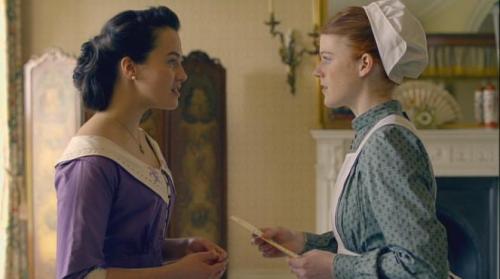
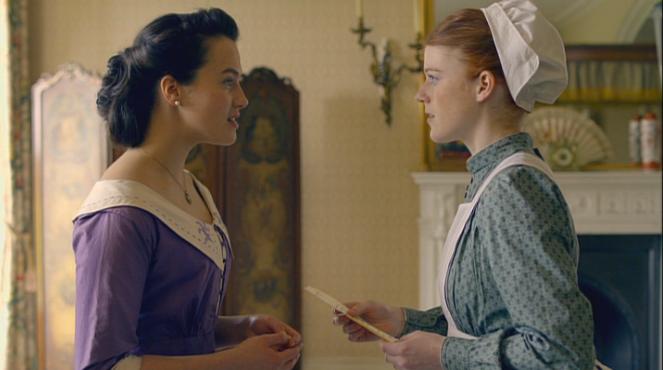
Lady Sybil (Jessica Brown-Findlay) urges Gwen (Rose Leslie) to keep trying to find a job as a secretary

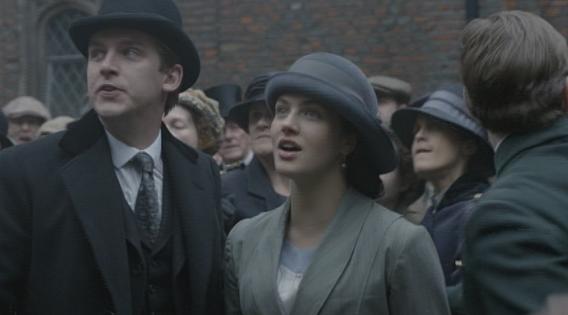
Lady Sybil’s story arc did not truly begin until the second episode and reached its full glory in episode four, when she is struck during an election rally and is carried from the scene bleeding.
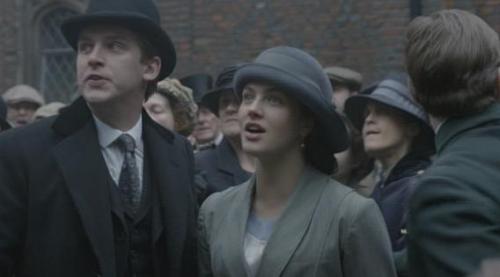
Matthew Crawley and Lady Sybil at the election rally

A smart, independent, and kind woman, one can only hope that Lady Sybil’s character gains traction in the second series that is currently being filmed. The surprise here is that quiet, sweet Lady Sybil is truly the most daring and courageous of the three sisters. Jessica Brown-Findlay has true star status, and any time she came on the small screen, she lit it up.

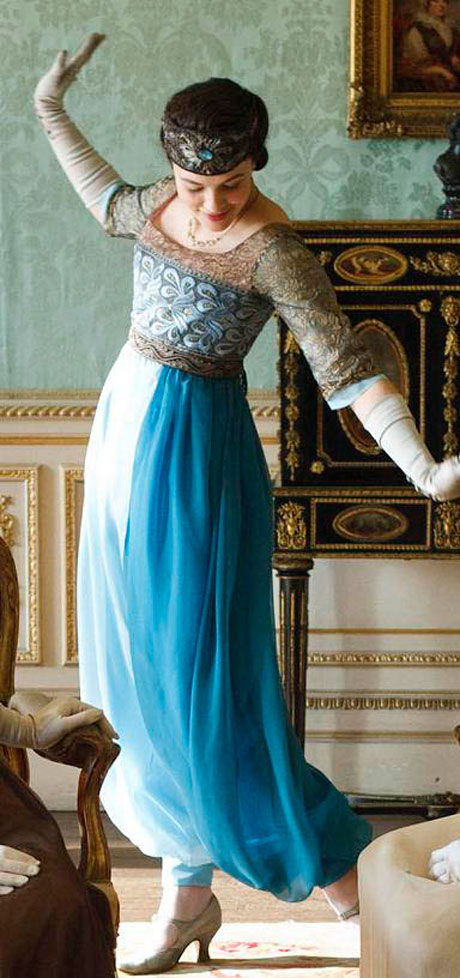
Lady Sybil's daring new harem pants.


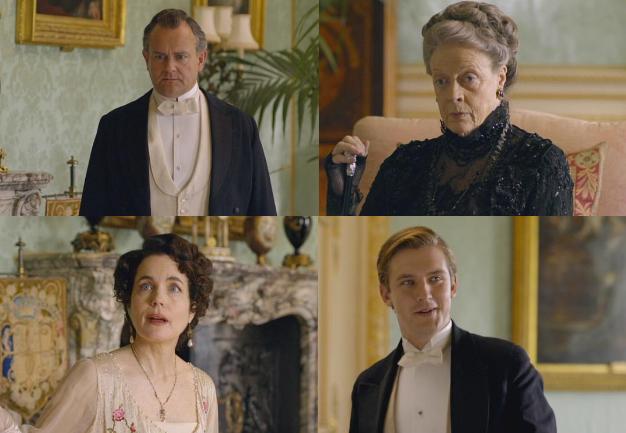
The family reacts to Lady Sybil's harem pants. Priceless.

Surprise #10: The ending
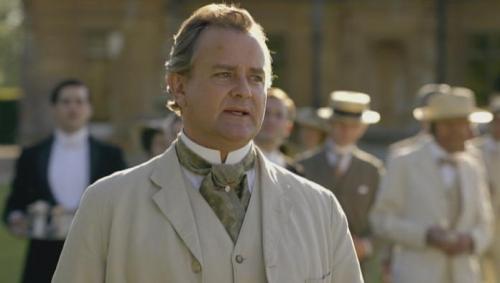
 

Lord Grantham, "I regret to announce we are at war with Germany."

Obviously a second series is in the works, for the story line is left hanging. World War I has broken out, causing consternation among the group.

Matthew refuses Lady Mary's acceptance of his proposal after her baby brother's death, and vows to leave Downton Abbey to make his own way.

Lady Mary accepts Matthew’s proposal, but he refuses her, unsure of whether the baby’s death had anything to do with her acceptance, and he declares his intention to leave Downton Abbey and make his own way in the world. Lady Mary, in a Scarlet O’Hara moment, realizes too late that she waited too long to accept Matthew.
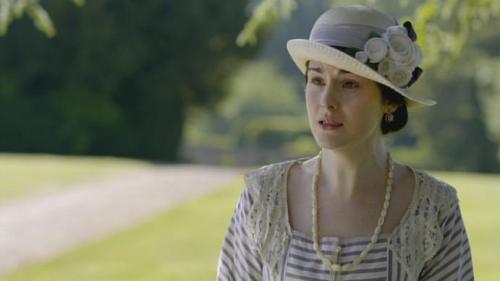
Lady Mary understands she has made a mistake in waiting so long to accept Matthew's proposal.

Bates,  who cares for Anna as much as she cares for him, refuses to discuss his wife’s whereabouts with her.
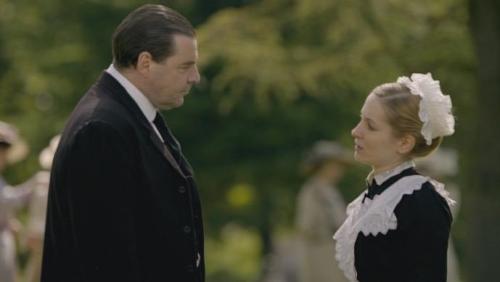
Bates (Brendan Coyle) and Anna (Joanne Froggat) find themselves in the throes of bittersweet love.

And so, the viewer must wait an entire year to see what will happen to the characters in Downton Abbey, testing our patience sorely.
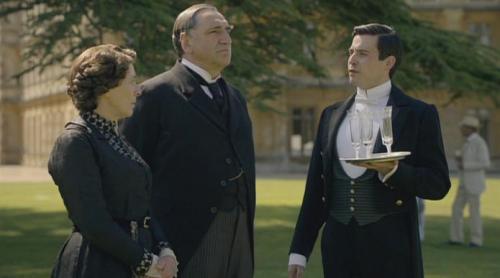
None too soon, Thomas announces his resignation to Mr. Carson and Mrs. Hughes

In addition to my ten choices, there were other surprises and great story arcs in Downton Abbey: Cook’s failing eyesight and the operation that saved it, Daisy’s blindness towards Thomas’s true character, which leads her to lie,
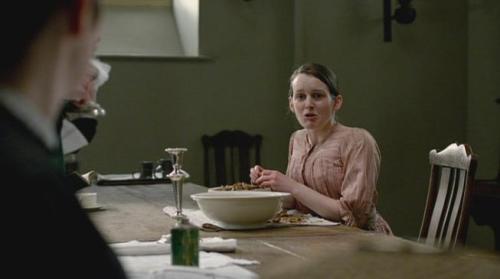
Daisy is haunted by what she saw in the corridor and her lies about Bates.

Mrs. Hughes’s longing for her own family, which made her momentarily receptive to an old flame’s advances, and Mr. Carson’s past as a performer, of which he is ashamed.
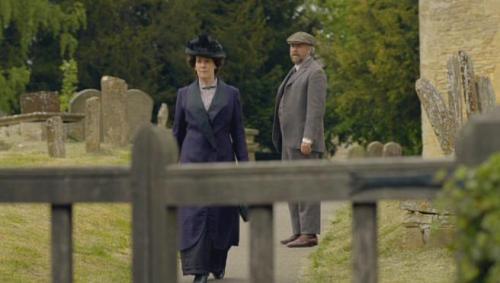
Mrs. Hughes says no to Joe, an old flame (Bill Fellows).

For those of you who missed certain episodes or who would like to watch the series again, PBS has made it available for online viewing until February 22. DVD’s are also available for sale.

My question to you is this: Of all the characters and story lines, which was your favorite? Please feel free to leave a comment.

Read Full Post »
« Newer Posts - Older Posts »