Feeds:
Posts
Comments

Archive for the ‘Regency society’ Category

Reverend George Austen

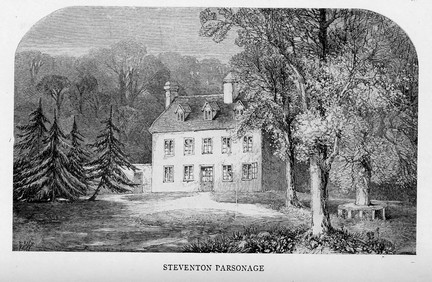
As many Jane Austen fans know, Rev. George Austen ran a boarding school out of his parsonage house in Steventon to augment his £230 pr year income. In1793 he began to teach the sons of local gentlemen in his home to prepare them for university. His library was extensive for a man of modest means, from 300- 500 volumes, depending on the source, an amazing collection, for books were frightfully expensive. Rev. Austen encouraged Cassandra and Jane to read from his library and supported budding author Jane in her writing. At some point, the Austens sent the girls to boarding school in Reading, for which he paid £35 per term, per girl, a not inconsiderable sum. He received around the same amount of money per boarder, and it is conjectured that the Austens hoped to replace their two daughters with many more pupils, which made economic sense. (See Linda Robinson Walker’s link below.) Mrs. Austen was not an indifferent bystander. She cooked, cleaned, sewed, and clucked over the boys like a mother hen, and was involved in their maintenance in a hands-on and caring way, acting as a surrogate mother.
In his Travels Through England in 1782, German traveler Karl Phillip Moritz describes learning academies, head masters, and boarding schools. From his observations, one gains a sense of what life must have been like for the Austens and their pupils:

A few words more respecting pedantry.  I have seen the regulation of one seminary of learning, here called an academy.  Of these places of education, there is a prodigious number in London, though, notwithstanding their pompous names, they are in reality nothing more than small schools set up by private persons, for children and young people.

One of the Englishmen who were my travelling companions, made me acquainted with a Dr. G– who lives near P–, and keeps an academy for the education of twelve young people, which number is here, as well as at our Mr. Kumpe’s, never exceeded, and the same plan has been adopted and followed by many others, both here and elsewhere.
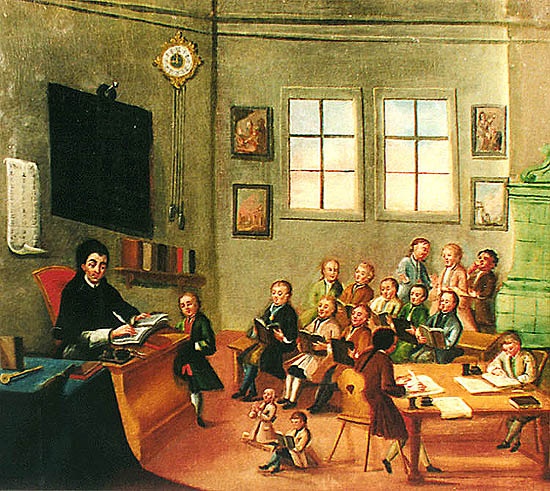
18th Century school room. One imagines a less formal setting for Rev. Austen’s school.

At the entrance I perceived over the door of the house a large board, and written on it, Dr. G–’s Academy.  Dr. G– received me with great courtesy as a foreigner, and shewed me his school-room, which was furnished just in the same manner as the classes in our public schools are, with benches and a professor’s chair or pulpit.

The usher at Dr. G–’s is a young clergyman, who, seated also in a chair or desk, instructs the boys in the Greek and Latin grammars.

Such an under-teacher is called an usher, and by what I can learn, is commonly a tormented being, exactly answering the exquisite description given of him in the “Vicar of Wakefield.”  We went in during the hours of attendance, and he was just hearing the boys decline their Latin, which he did in the old jog-trot way; and I own it had an odd sound to my ears, when instead of pronouncing, for example viri veeree I heard them say viri, of the man,exactly according to the English pronunciation, and viro, to the man.  The case was just the same afterwards with the Greek.

Mr. G– invited us to dinner, when I became acquainted with his wife, a very genteel young woman, whose behaviour to the children was such that she might be said to contribute more to their education than any one else.  The children drank nothing but water.  For every boarder Dr. G– receives yearly no more than thirty pounds sterling, which however, he complained of as being too little.  From forty to fifty pounds is the most that is generally paid in these academies.

I told him of our improvements in the manner of education, and also spoke to him of the apparent great worth of character of his usher.  He listened very attentively, but seemed to have thought little himself on this subject.  Before and after dinner the Lord’s Prayer was repeated in French, which is done in several places, as if they were eager not to waste without some improvement, even this opportunity also, to practise the French, and thus at once accomplish two points.  I afterwards told him my opinion of this species of prayer, which however, he did not take amiss.

After dinner the boys had leave to play in a very small yard, which in most schools or academies, in the city of London, is the ne plus ultra of their playground in their hours of recreation.  But Mr. G– has another garden at the end of the town, where he sometimes takes them to walk.

After dinner Mr. G– himself instructed the children in writing, arithmetic, and French, all which seemed to be well taught here, especially writing, in which the young people in England far surpass, I believe, all others.  This may perhaps be owing to their having occasion to learn only one sort of letters.  As the midsummer holidays were now approaching (at which time the children in all the academies go home for four weeks), everyone was obliged with the utmost care to copy a written model, in order to show it to their parents, because this article is most particularly examined, as everybody can tell what is or is not good writing.  The boys knew all the rules of syntax by heart.
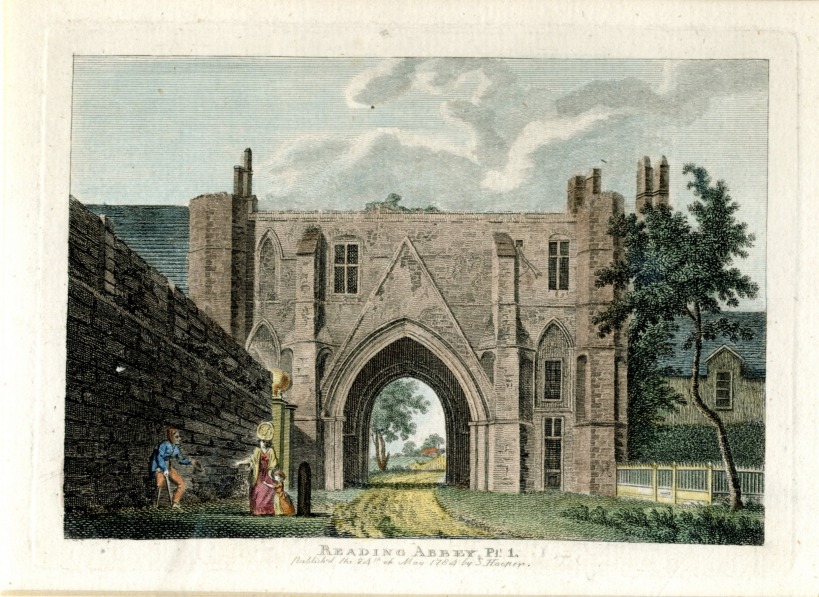
Reading Abbey, where Jane and Cassandra Austen were sent to boarding school

All these academies are in general called boarding-schools.  Some few retain the old name of schools only, though it is possible that in real merit they may excel the so much-boasted of academies.

It is in general the clergy, who have small incomes, who set up these schools both in town and country, and grown up people who are foreigners, are also admitted here to learn the English language.  Mr. G– charged for board, lodging, and instruction in the English, two guineas a-week.  He however, who is desirous of perfecting himself in the English, will do better to go some distance into the country, and board himself with any clergyman who takes scholars, where he will hear nothing but English spoken, and may at every opportunity be taught both by young and old.

Source: Moritz, Karl Philipp, 1757-1793. Travels in England in 1782 by Karl Philipp Moritz (Kindle Locations 645-656). Mobipocket (an Amazon.com company).
Read Full Post »

Fire!

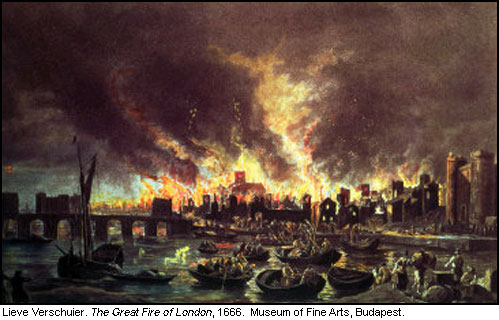
Can there be a more frightening word in Georgian London?  The great fire in 1666 changed the landscape of that city forever. Once a densely packed city riddled with overcrowded, wood-timbered houses and dark, narrow lanes, the fire led the way to a change in building regulations that ushered in brick and stone edifices, wider streets, and public squares. Even with improvements, a fire still presented a horrifically dangerous situation.

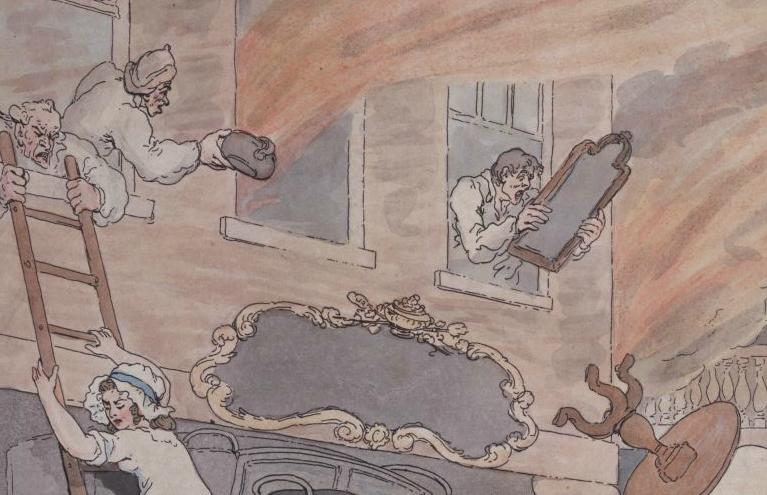
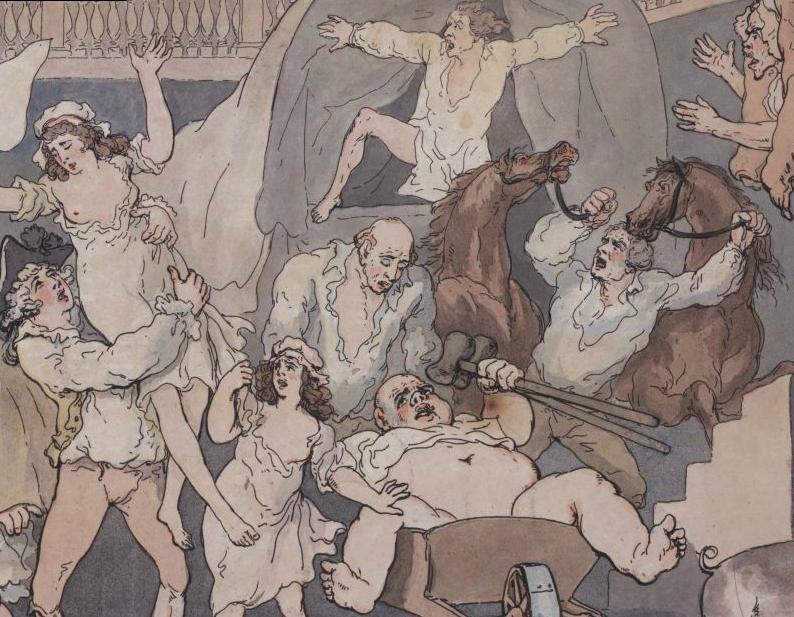
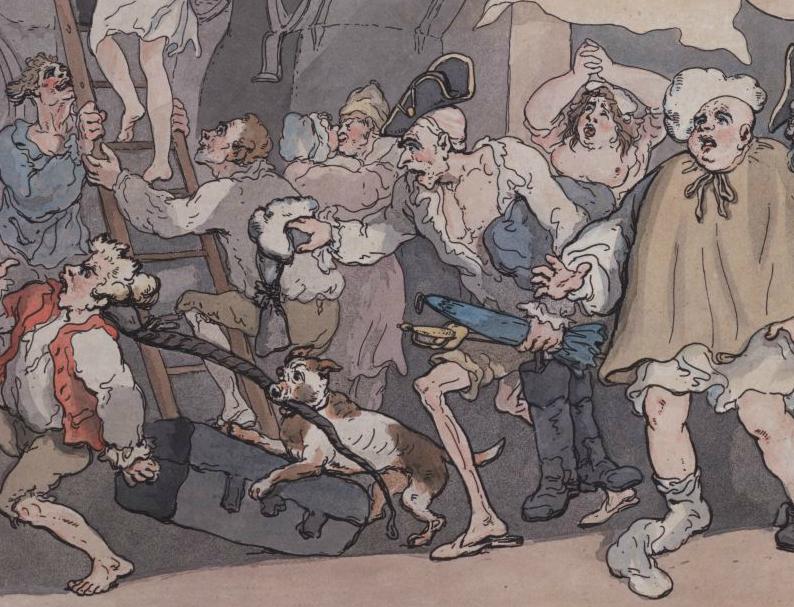
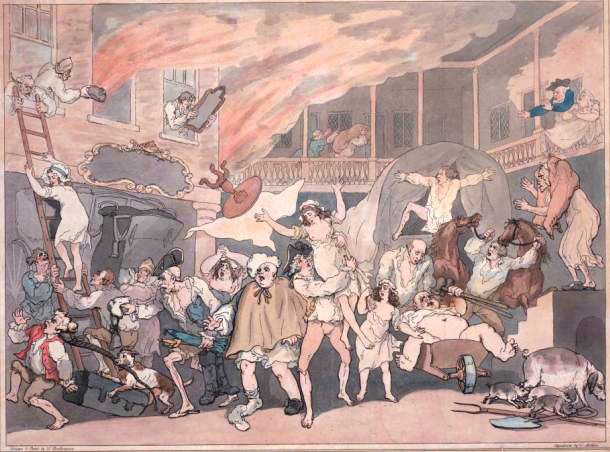
Thomas Rowlandson captures the scene with such realism in “Inn Yard on Fire” that one can smell the smoke and fear, and hear the horses neighing, people screaming, furniture breaking, and wagon wheels squealing as guests and staff run around trying to save themselves, their possessions, and each other.

Fire at the Inn, by Thomas Rowlandson

Panic and pandemonium ensue. A man contemplates tossing a mirror from the second story, another pours his ineffectual chamber pot over the flames. A side table has been tossed through the window, while an anxious woman descends a ladder.

People are in various states of dress and undress. Some help others, some are  overcome with panic. A disabled man is carried from danger in a wheel barrow, while a groom tries to calm two terrified horses.

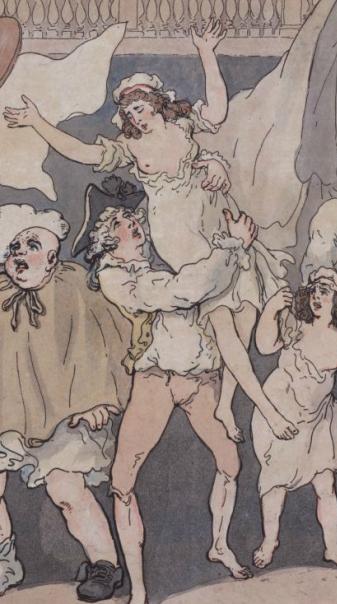
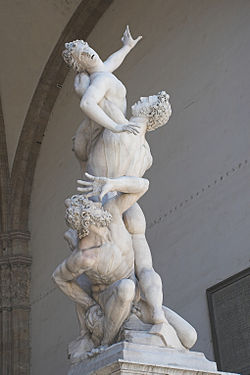
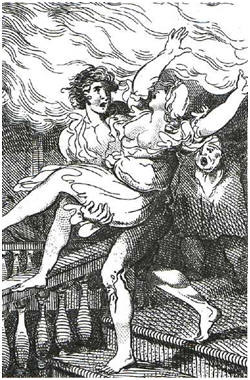
Elements in Rowlandson’s cartoon show a direct association with classical language and Tobias Smollet. The young man saving the girl in distress is reminiscent of Giambologna’s statue of the Rape of the Sabine Women, as well as Peregrine Pickle’s heroic actions towards Emilia.

Rowlandson

Rape of the Sabine Women

Peregrine Pickle saves Emilia. Image @A World History of Art

Once a fire had gained as much ground as depicted in this illustration, there was little chance of saving the building. Rowlandson shows some people carrying out their belongings, while others were barely able to get dressed. By now an alarm had probably been sounded in the community. Bucket brigades, in which people were arrayed in long lines to the nearest well and passed buckets in a continuous motion, could probably put out a minor fire, but not one of this magnitude. In the 1800s, almost 150 years after the great fire, there was still no centralized fire brigade.

In 1680, a property developer named Nicholas Barbon introduced the first fire insurance, which initially insured buildings but not furniture, fittings, or goods.  Insurance companies began to proliferate and formed private fire brigades to protect their customers’ property.

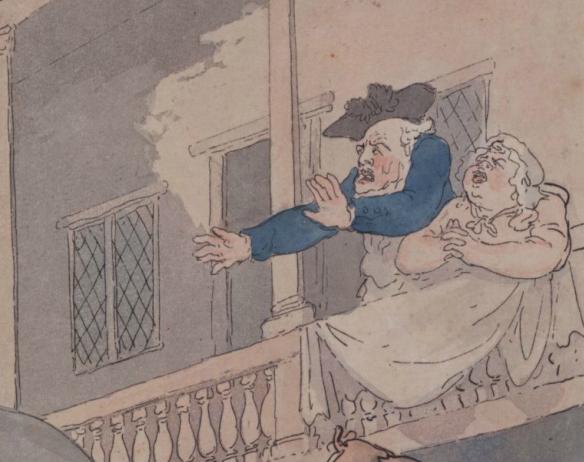
Is this praying elderly couple trapped on the balcony?

In Rowlandson’s cartoon the most the inn keeper can hope for is that the brigade arrives in time to save his structure – if he is insured.  This was easier said than done, for many of London’s streets were not named, since many people could not read, and insured properties were difficult to find.

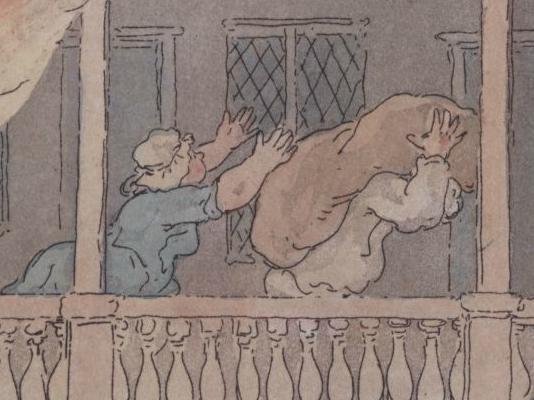
A couple on the second floor frantically attempt to save their belongings.

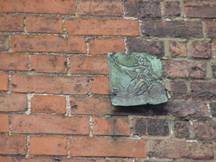
In the early 1800s the fire mark was developed. These plaques, sometimes brightly painted, would signal which properties were protected by insurance firms. Each fire brigade had its own unique plaque.

Fire mark on a building

If a fire started, the Fire Brigade was called. They looked for the fire mark and, provided it was the right one, the fire would be dealt with. Often the buildings were left to burn until the right company attended! Many of these insurance companies were to merge, including those of London, which merged in 1833 to form The London Fire Engine Establishment, whose first Fire Chief was James Braidwood. Braidwood had come to London after holding the position of the Chief Officer of Edinburgh Fire brigade. Edinburgh’s authorities had formed the first properly organised brigade in 1824. – History of the UK Fire and Rescue Service

There were quite a few fire brigades operating in London in the early 19th century and competition was keen. The companies hired sailors and watermen as part-time employees. An advantage of serving in this position was that these men were protected from being pressed into service, a not inconsiderable benefit during the Napoleonic wars.

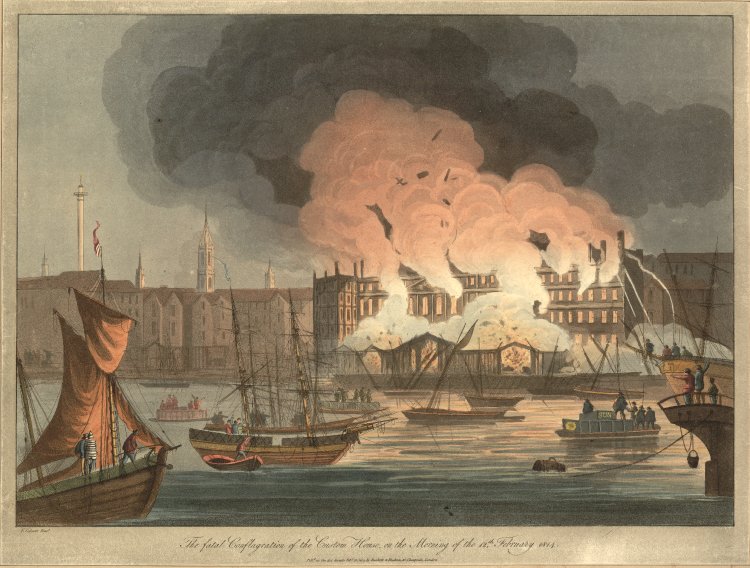
Fighting the fire at the Customs House in February 1814.Image@British Museum

Buildings that had no insurance protection were left to burn, although attempts were made to save the surrounding buildings. Firemarks were essential to identify insured buildings:

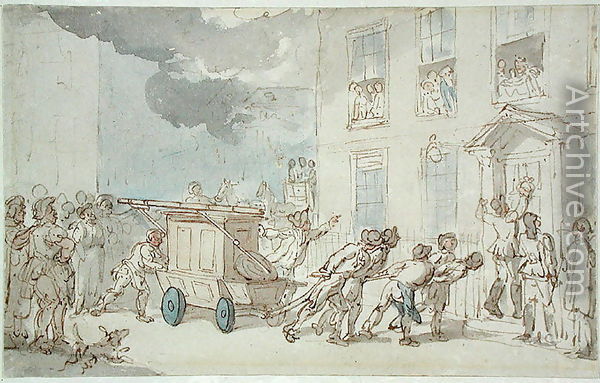
Arrival of the fire engine, Thomas Rowlandson

Designs included, for Sun Fire Office: a large sun with a face; the Royal Exchange Assurance: their building; and Phoenix: obviously Phoenix rising from the ashes. Later fire marks were made of tin, copper, or similar material. These are more often called fire plates. They were more an advertising medium as most do not have a policy number stamped upon them. – Fire Marks: The First Logos of Insurance Companies

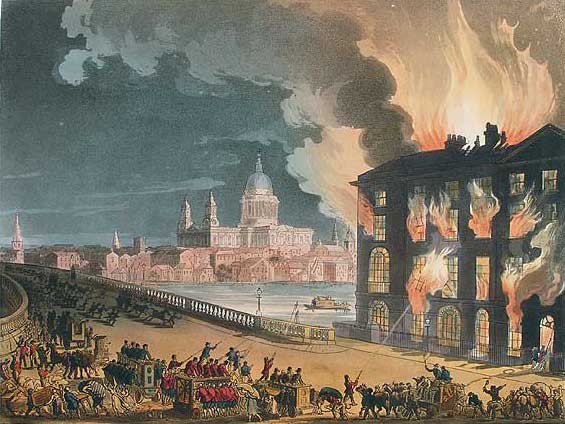
Illustration from Ackermann’s ”Microcosm of London” (1808) drawn by Thomas Rowlandson and Augustus Pugin. Firefighters are tackling a fire which has broken out in houses at the Blackfriars Bridge. Teams of men operate hand pumped equipment. Image @Wikipedia

In 1833 companies in London merged to form The London Fire Engine Establishment, the first step to the various fire brigades being taken over by local government.

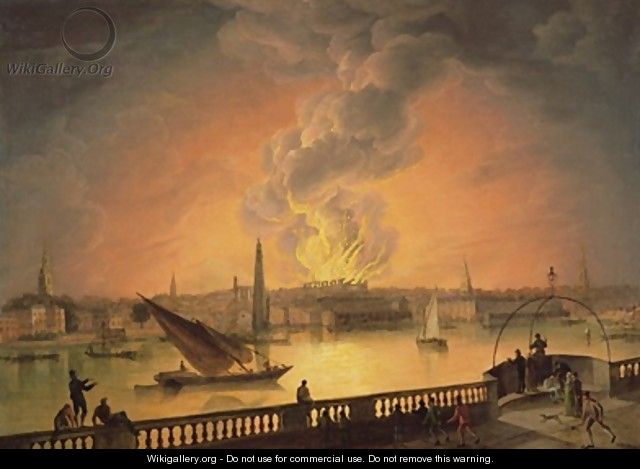
The Burning of Drury Lane Theatre from Westminster Bridge 1809. Artist unknown.  Image property of the Museum of London.

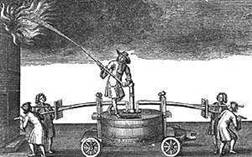
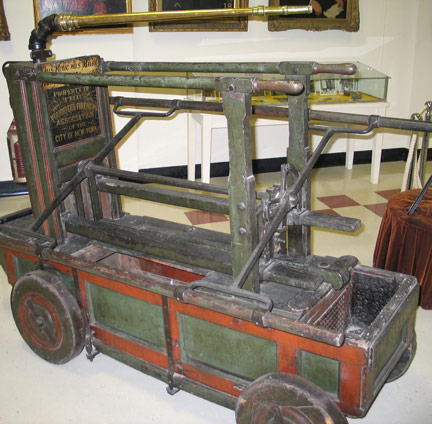
Equipment was still very basic but in 1721, Richard Newsham patented a ‘new water engine for the quenching and extinguishing of fires’. The pump provided a continuous jet of water with more force than before. This new fire engine became a standard until the early 19th century.

Newsham’s wood pumper, ca. 1731.

The men used the handles to pump the water from a lead-lined trough in the main body of the equipment. The apparatus was quite heavy and difficult to maneuver, but it represented a huge step forward in fire fighting technology. People continually ran back and forth to a water source to fill the trough with water. You could also attach a hose to aim the water to a specific location. During this time, however, hose-making was still in its infancy and many leaked. Water buckets and axes to hack out trapped people and create fire free perimeters were still regarded as standard fire fighting equipment.

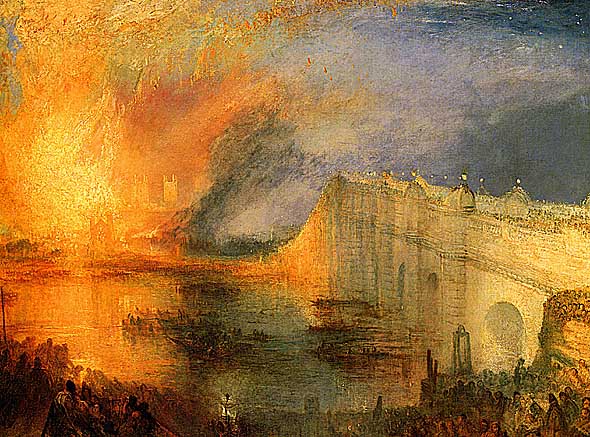
The Burning of the Houses of Parliament, 1834 by William Mallord Turner. Such an event must have provided a spectacular yet horrifying scene for onlookers.

Steam powered appliances were first introduced in the 1850s, allowing a greater quantity of water to be guided onto a fire. With the invention of the internal combustion engine, these appliances were replaced in the early 1900s.

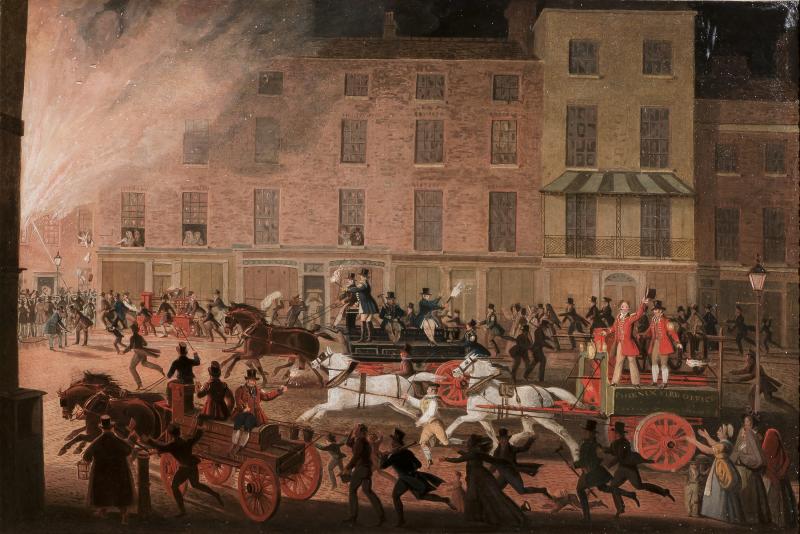
James Pollard (British, 1797-1867) London fire engines: The noble protectors of lives and property, 1823. Image @Olympia Art Antiques

This image by James Pollard, and engraved by R. Reeve, shows several insurance brigades hurrying to a fire.

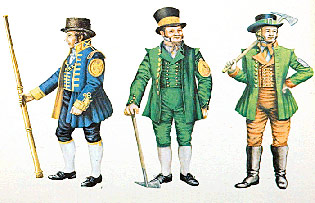
The firemen, of the time, had little training and wore brightly coloured uniforms to distinguish themselves between the different brigades. During large fires they would become very tired through continual pumping of the appliances, and would offer bystanders ‘beer tokens’ in return for their help. – Insurance Firemen and their Equipment

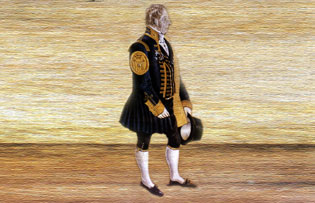
Each company provided different liveries for their men, so that the fire fighters could easily be identified with a particular firm.All insurance firemen wore a large badge on their shoulder to show which insurance company they worked for.

Three uniforms of insurance firemen. All wear a badge

More on the topic:

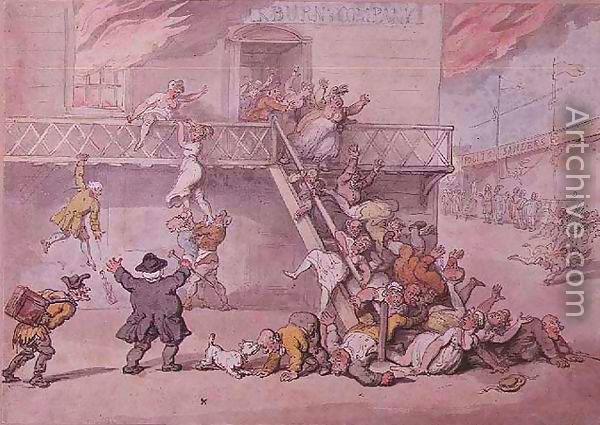
Cockburn’s theatre on fire, another dramatic caricature by Rowlandson.

Read Full Post »

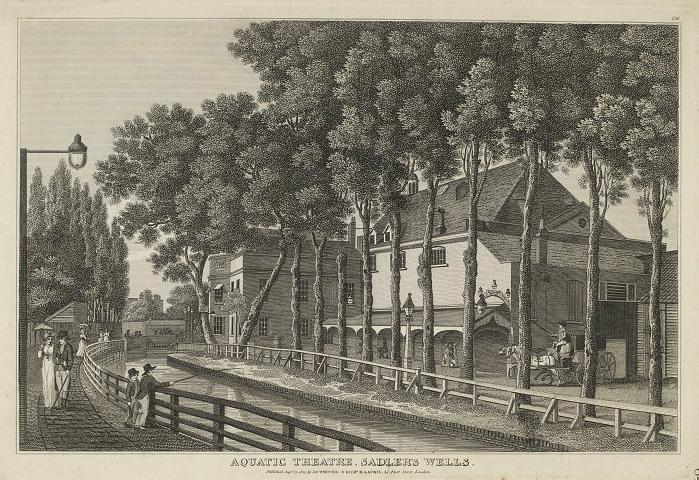
Sadler’s Wells Aquatic Theatre, 1813. copyright The V&A Museum. Click on image to view details.

Sadler’s Wells was a performing arts area located in Clerkenwell in the outskirts of London. Named after Richard Sadler, who opened a musick house there in the late 17th century, the region boasted well water thought to have medicinal qualities.

Sadler was prompted to claim that drinking the water from the wells would be effective against “dropsy, jaundice, scurvy, green sickness and other distempers to which females are liable – ulcers, fits of the mother, virgin’s fever and hypochondriacal distemper.” -Wikipedia

Six theatres have stood at this site since Sadler built his first theatre. A second theatre,  Sadler’s Wells, was constructed in 1765, which attracted summer theatre goers (the Theatre Royal offered performances only in the fall and winter.)

Interior of the theatre in 1810. One can see the water-filled tank on the stage.

In the early 19th century, Sadler’s Wells began to offer aquatic spectacles. The construction of a large tank (90x24x3 ft)  in 1804 by Charles Dibdin covered the entire area of the stage. It was flooded with water that was pumped from the nearby New River at the cost of 30 pounds per annum. This renovation allowed for the theatre to be used for naval melodramas, a popular theme, one imagines, in the days of the Napoleonic Wars and tales of Admiral Nelson’s heroism. The Siege of Gilbraltar, an ambitious spectacle, deployed 117 model ships created by the Woolwich Dockyard shipwrights and riggers, who used a scale of one inch to a foot in exact imitation of the slightest details, including the rigging. Children were cast as drowning Spanish sailors, and could be seen struggling in the waves.

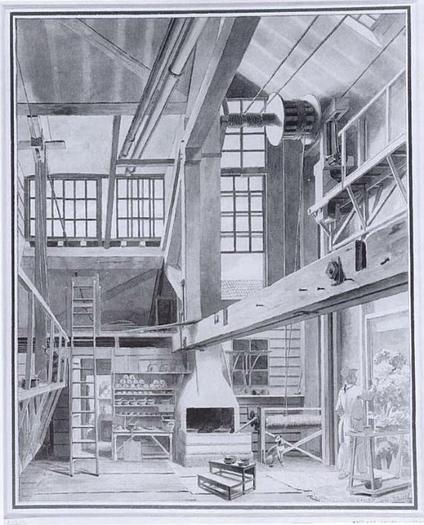
Scenic artist at work, 1790. Image @British Museum

A beautiful drop scene that filled up all the area of the proscenium showed the English fleet drawn up in battle against France and Spain. The enormous painting was used to entertain the audience during a delay while preparations were made behind stage. In order to alleviate 20 minutes of boredom between scenes, the stage slowly rose to nearly the roof of the theatre in full view. A second water tank was built on the theatre’s roof to simulate waterfalls. (With the lack of temperature control in the 19th century and windows in the main area, one can imagine that the theatre’s interior developed a powerful moldy smell in the heat of summer!)

Audience watching a play at Drury Lane, Rowlandson, 1785

The behavior of the theatre goers at Sadler’s Wells left much to be desired. As early as 1711 it was observed that members of the audience were publicly drunk, and their behavior boorish and loutish. Karl Philipp Moritz, a German traveler in England in 1782, described in his travel diary the audience in a typical British play house. Not only was the crowd rowdy between scenes and before the performance (making a “noise and uproar”), but there was a constant pelting of orange peels, for oranges were “tolerably cheap”.

Besides this perpetual pelting from the gallery, which renders and English play-house so uncomfortable, there is no end to their calling out and knocking with their sticks till the curtain is drawn up…I sometimes heard, too, the people in the lower or middle gallery quarrelling with those of the upper one. Behind me, in the pit, sat a young fop, who, in order to display his costly stone buckles with the utmost brilliancy, continually put his foot on my bench, and even sometimes upon my coat. – Karl Philipp Moritz

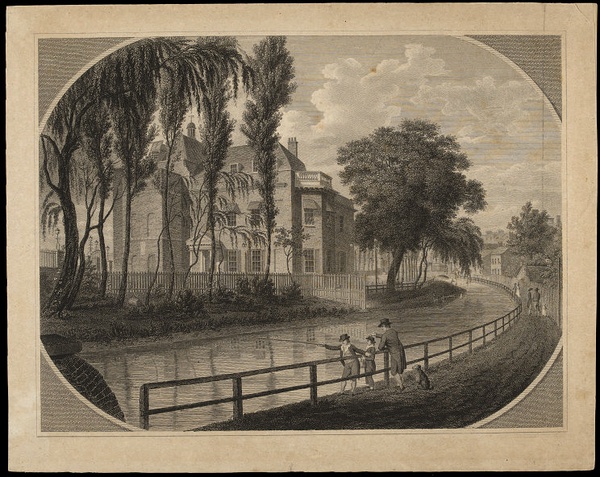
Another view of the theatre. Fishing seems to have been a popular pasttime as well.

If the Sadler’s Wells theatre audience had a particularly rowdy reputation compared to theatres in central London, one can only imagine how truly awful the experience was. The theatre slowly lost its lustre during the first half of the 19th century, for it was located in the rural outskirts of London. Without street lights and an organized police force, travel at night was dangerous, and patrons of the theatre were provided escorts as they traveled back to central London.

 Pinero’s play Trelawny of the ‘Wells’ (1898), portrays Sadler’s Wells as outmoded by the new fashion for realism. The theatre declined until, by 1875, plans to turn it into a bath house were proposed and, for a while, the new craze of roller skating was catered to, as the theatre was converted into a roller-skating rink and later a prize fight arena. The theatre was condemned as a dangerous structure in 1878. – Wikipedia

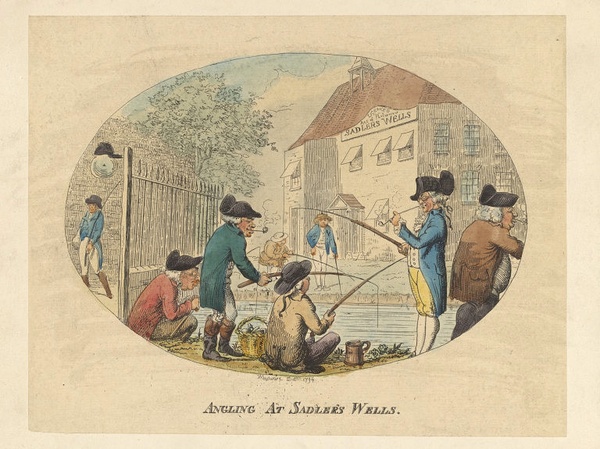
Anglers at Sadler’s Wells.

Read Full Post »

Inquiring readers: Paul Emanuelli has frequently contributed his comments on this blog. Little did I know that he was an author! He has graciously sent in his thoughts about Bath, the city in which he has set his historical crime novel. Paul writes about Bath in his own blog, unpublishedwriterblog. It is well worth a visit!

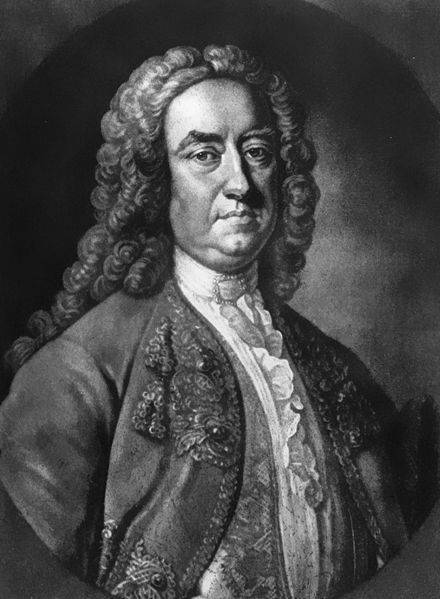
Beau Nash turned the city of Bath into the most fashionable resort in 18th-century England. In his role as Master of Ceremonies he organised the premier social events in the city and chose who should, and should not be invited. He established a select list of people who he defined as the cream of Society, and more importantly he changed the social conventions of the city.

Richard Beau Nash

Nash broke down the old order dominated by the nobility and gentry, and promoted the nouveaux- riches. Whereas in other cities the growing number of wealthy industrialists and tradespeople were still looked down on because of their background, in Bath, Nash welcomed them as elite members of society.

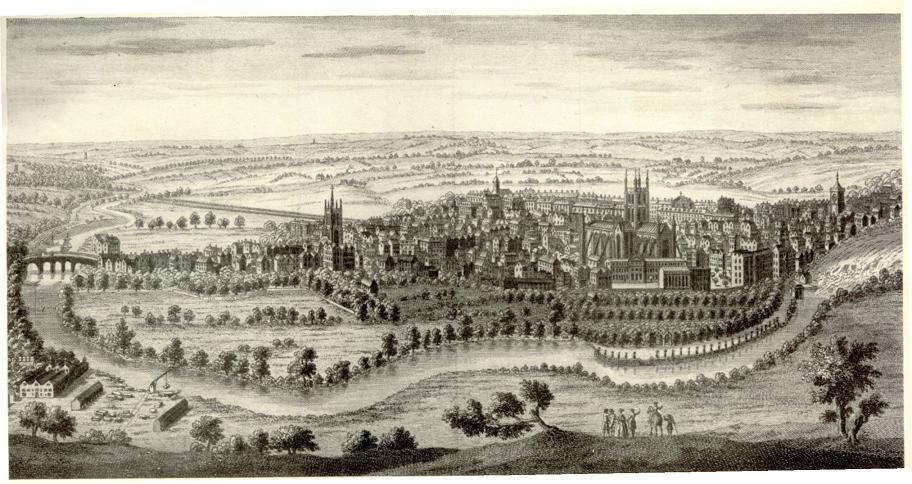
Bath in the 18th century at the time of Beau Nash

For years the city thrived on the wealth of visitors who stayed for the Season. The affluent tourists rented houses and apartments and all the trappings that went with them; crockery and cutlery, silver-ware and ornaments, horses and carriages, servants and attendants. Prominent architects designed fine buildings and the city grew. Milsom Street became one of the most prestigious shopping areas in the country.

Milsom Street and Bond Street with Portraits of Bath Swells.

By 1801, when Jane Austen moved to Bath, the city was the 9th largest in England, with a population of 33,000. Yet the city’s fortunes had already begun to decline. Bath had changed in character and atmosphere. It was becoming less fashionable and the wealthy were visiting less often, and their stays were becoming shorter.

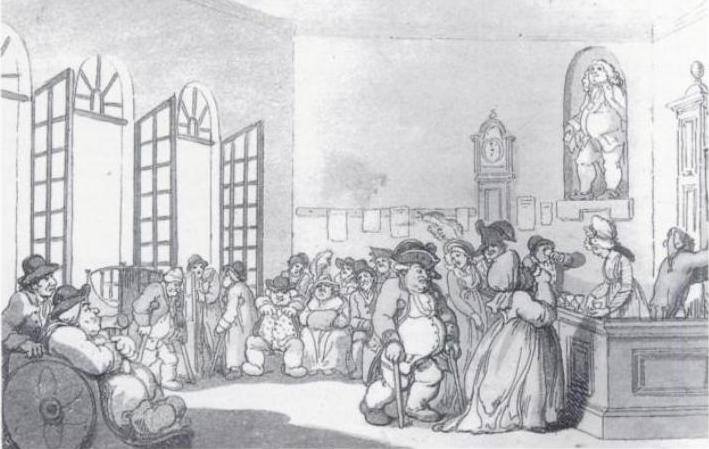
Thomas Rowlandson’s caricature of the Comforts of Bath. The classes noticeably mingled as they awaited drinking the waters in the Pump Room. (Notice the patient in the wheel chair on the left and the sedan chair next to him, which was carried inside the room.) Nash’s statue is in the niche at the top right. You can still see it today.

Built in a bowl of seven hills, Bath’s ever-growing population was increasingly crowded into a relatively small area. It’s little wonder that when Jane Austen moved to the city, she wrote to her sister, Cassandra saying, “The first view of Bath in fine weather does not answer my expectations; … the appearance of the place from the top of Kingsdown was all vapour, shadow, smoke, and confusion.”

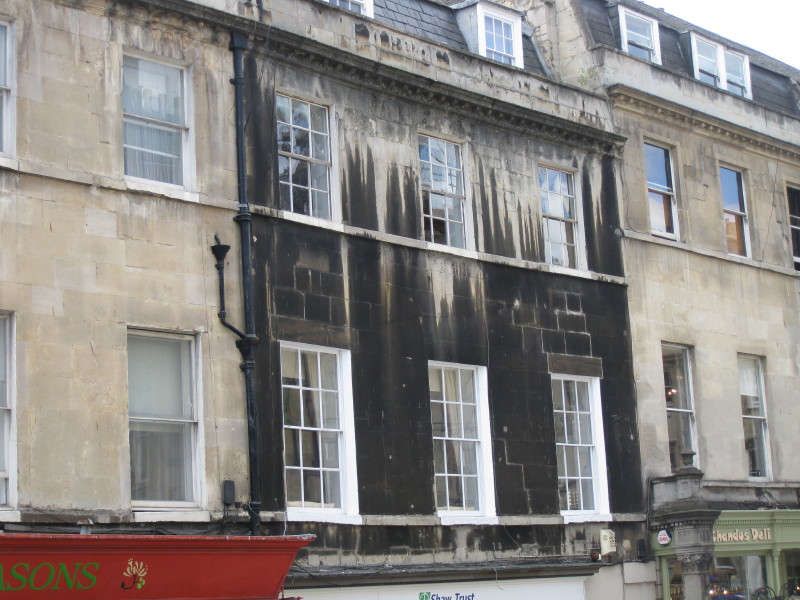
Coal soot darkened the creamy colored stone of the buildings.

Perhaps it is unsurprising that it seemed, “all smoke” when every household depended on coal fires for warmth, that it was “all confusion” when its roads were congested with carts and carriages. And in Georgian cities, once you set foot on the streets there was no escaping the poor drainage and lack of decent sanitation and sewerage systems. As Austen said in a letter to her sister, “We stopped in Paragon (a prestigious address where her wealthy uncle lived) as we came along, but it was too wet and dirty for us to get out.”

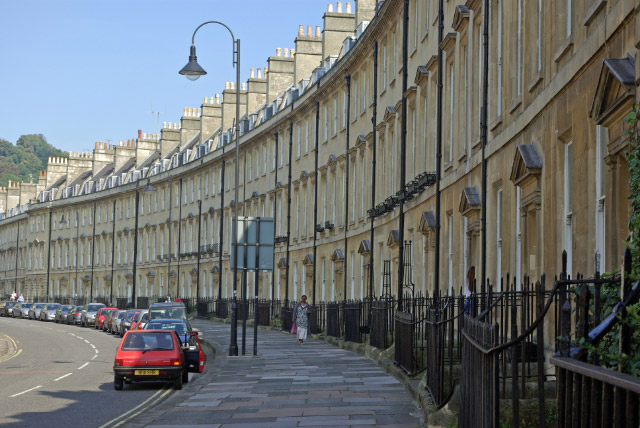
The Paragon, Bath.

By the time Persuasion was published in 1817, the larger part of Bath’s population was working class. Industry was thriving in the city, supplying the many fine shops in Milsom Street and drawing people from the countryside to fill the jobs created. Yet the people who worked in the factories and sweat-shops, the costermongers and shop-assistants, the building labourers and hotel staff were, for the most part, poorly paid.

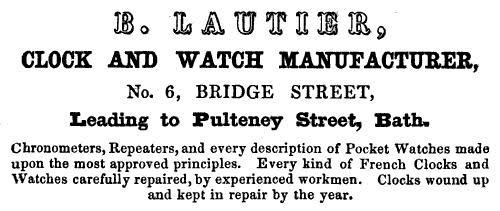
Advertisement for B. Lautier Goldsmith Shop in Bath, 1848

The only housing they could afford was overcrowded and poorly maintained, and the slum areas around Avon Street were increasing in size, as quickly as they were deteriorating in quality and appearance. By 1850, the rookery of hovels and cheap boarding-houses in and around Avon Street were home to almost a quarter of the Bath’s population.

Bath had grown considerably by the 1850’s, the date of this illustration.

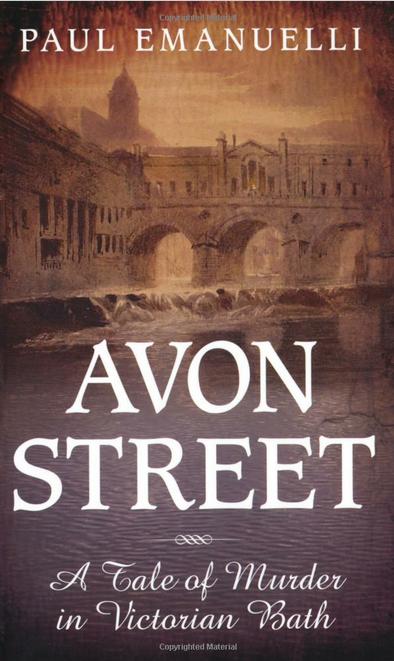
My novel, Avon Street is set in Bath in 1850. But Bath isn’t just a setting. It is a character in its own right. In writing Avon Street, I have tried to take the reader beyond the Georgian facades, and reveal a city, where wealth and elegance were never far from poverty and squalor. Bath was a city, where things were often not as they seemed, where people as Austen said, could “be important at comparatively little cost.” In short it is the ideal setting for a story of confidence tricksters and crime, intrigue and betrayal. A city where enemies can seem all-powerful, and friends are sometimes found where least expected.

Image of Avon Street.

In Persuasion Anne Elliot visits a friend in Westgate Buildings despite Sir Walter’s warning of its unsuitableness – “Everything that revolts other people, low company, paltry rooms, foul air, disgusting associations are inviting to you.” (Click here to see an image of Westgate Buildings in 1900.) It seemed only fitting that the first chapter of my book be set in the same location, on the borders of the Avon Street area.

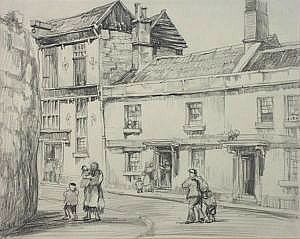
Pickwick Mews, Avon Street, in 1923. Image @The Victoria Art Gallery

More about Avon Street and Paul Emanuelli: Why Avon Street?

Avon Street: Purchase information

Paperback: 352 pages

Publisher: The History Press Ltd (1 Feb 2012)

Language English

ISBN-10: 0752465546

ISBN-13: 978-0752465548

Read Full Post »

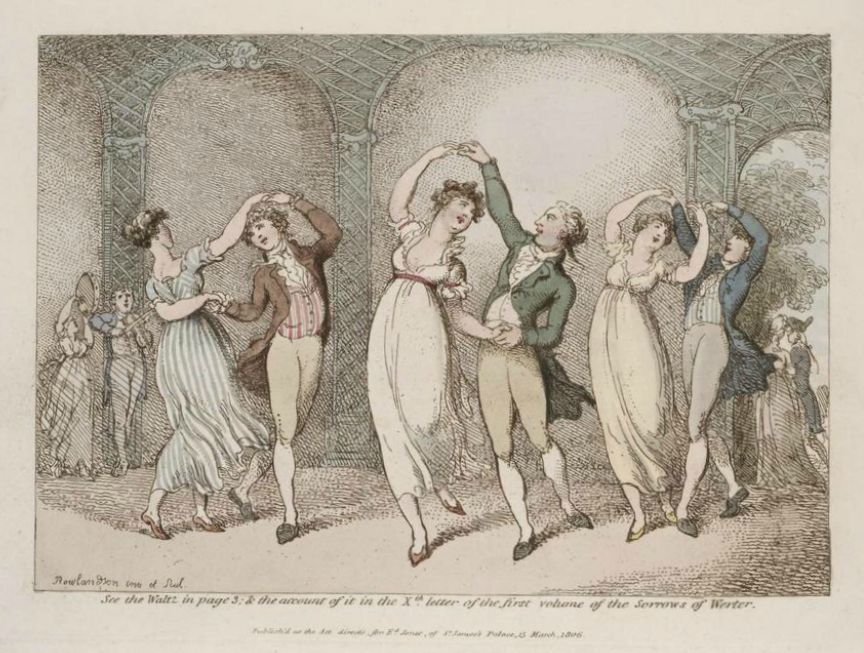
When Lady Caroline Lamb met Byron in 1812, the waltz was starting to gain traction with the more progressive elements of Society. This couples dance was considered rather racy in an age when stately group English country dances were the primary offerings at Almack’s.

Thomas Rowlandson’s image of the waltz in 1806

The vivacious and racy Lady Caroline Lamb met Lord Byron in 1812. She recalled that time in a letter she wrote 12 years later:

Devonshire House at that time was closed from my uncles death for one year – at Melbourne House where I lived the Waltzes and Quadrilles were being daily practised – Lady Jersey, Lady Cowper, the Duke of Devonshire, Miss Milbank, and a number of foreigners coming here to learn…

You may imagine what forty or fifty people dancing from 12 in the morning until near dinner time all young gay & noisy were.
In the evenings we either had opposition suppers or went out to Balls and routs – Such was the life I then led when Moore and Rogers introduced Lord Byron to me… Caroline Lamb, 1824, in a letter to Captain Thomas Medwin

It is interesting to note that Caroline mentions Lady Jersey and Lady Cowper, two of the patronesses of Almack’s, where the waltz was banned. Eventually, however, the ultra exclusive Almack’s would cave in, and by 1814 the waltz was finally sanctioned. Young ladies would still need approval before a gentleman could clasp his arm around her waist, but the doors had been opened beyond the confines of the upper classes.

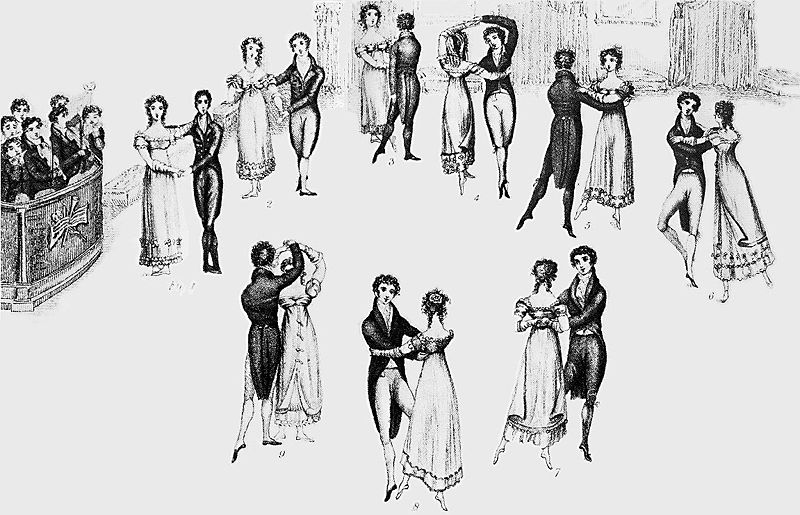
La Walze, Le Bon Genre, 1810. This caricature has a feeling of decadence.

By 1815, when Jane Austen’s Emma was published, the waltz has become so respectable that it would be danced in Highbury at the home of the Coles.

Mrs Weston, capital in her country-dances, was seated, and beginning an irresistible waltz; and Frank Churchill, coming up with most becoming gallantry to Emma, had secured her hand, and led her up to the top.” – Emma

The waltz looks gentrified in this 1816 illustration.

More on the topic:

Read Full Post »

« Newer Posts - Older Posts »