Feeds:
Posts
Comments

My regular Jane Austen readers have been patient as I succumbed to Downton Abbey fever and began to cover events 100 years after Jane Austen’s death. Customs changed during that intervening century. Take the matter of dress. While proper Regency ladies changed their outfits from morning gowns to walking gowns when they went out, and changed into dinner dress when dining, by Victorian and Edwardian times the custom of a lady changing her clothes throughout the day had turned into a fine art.  One could get by with no less than 4-5 changes per day. A woman who packed to visit a country estate was sure not to be seen in the same outfit twice. This meant that for a 4-day visit she would need at the very minimum to have her maid pack 16 changes of outfits. One can only imagine the work of a lady’s maid to keep all the clothes and unmentionables in perfect (and clean) condition. Such attention to detail required quite a bit of organization.

Morning dress, 1815. Ackermann plate. While she looked proper in her at home attire, this morning dress looks stodgy compared to the Edwardian teagown.

Corsets were worn all through the 19th century and into the early part of the 20th century. Women were constricted into these garments for most of their waking day, but there were times when they were free from these tight-laced garments.  During the early 19th century, upper class women at home would wear comfortable (but beautiful) morning gowns. Dressing gowns were also worn. Such gowns were meant to be seen by the family and close relatives only. The moment a woman expected to be seen, she would change into more proper dress.

Cora, the Countess of Grantham, lived during a time when teagowns were all the rage. These beautiful ornate gowns had the advantage of being simply cut and worn without a corset. It was possible that for just a few hours she could relax comfortably before dinner.

They were generally loose-fitting and elaborately trimmed, and gave full vent to the dressmaker’s or couturier’s skill and taste for theatricality. Tea-gowns were influenced by historical styles from eighteenth century Watteau-pleats, to renaissance hanging sleeves and empire waistlines and quite often, all of them at the same time. Never has so much love and art been invested in such an arguably unnecessary garment. All kinds of informal garments including tea jackets, peignoirs, dressing gowns, combing sacques, morning robes and dressing jackets also had their place in the leisured Edwardian lady’s wardrobe, all of them beautifully decorated and almost all of them now obsolete. 1900-1919: The Last Age of Elegance 

American dancer and actress Irene Castle wearing a teagown, 1913

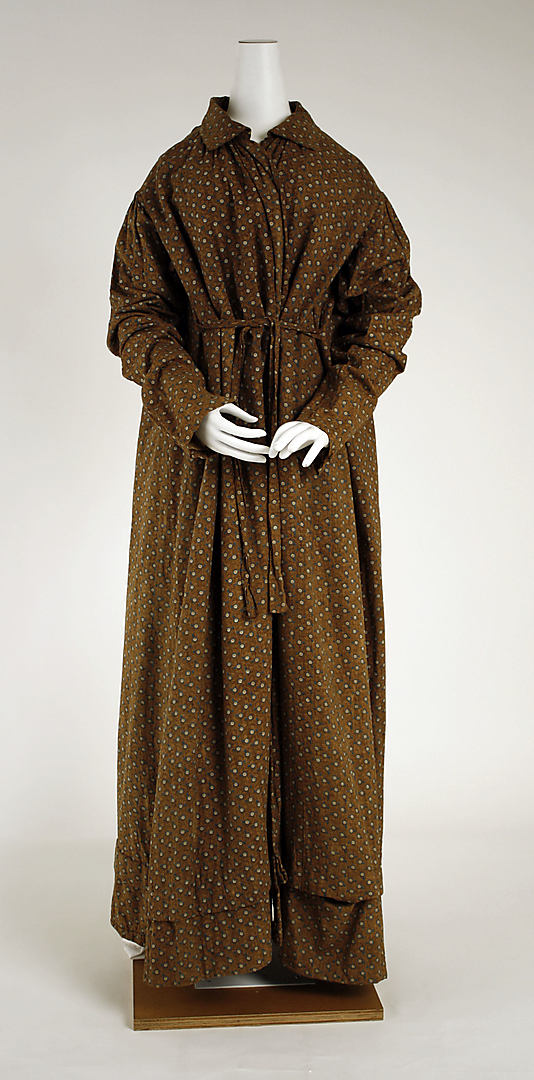
It had long been the custom for a lady to entertain both male and female visitors in her boudoir. (Read my article on this topic.) During the Regency era, dressing gowns were quite plain and simple compared to teagowns.

1810-23 dresssing gown. Image @Met Museum

At times the teagown gave rise to temptation, for a woman could entertain in private and not need the services of her maid:

Worn between five and seven oclock,  gave rise to the French phrase ‘cinq à sept‘. This referred to the hours when lovers were received, the only time of day when a maid wouldn’t need to be there to help you undress and therefore discover your secret. – “Style”, The World of Downton Abbey, Jessica Fellowes

Early 19th century dressing gown. Image @Met Museum

Attired in her tea-gown, a soft flowing robe of filmy chiffon or fine silk, trimmed with an abundance of lace and often free of corsetry, the hostess must have been a tempting prospect for many men. Such loose gowns afforded women great comfort, ease of access and a tremendous sense of femininity. Little wonder then that whilst hemlines rose and fell the tea-gown, which had appeared in England as early as 1875 lingered on until the 1920s. – Edwardian tea gowns, fashion era

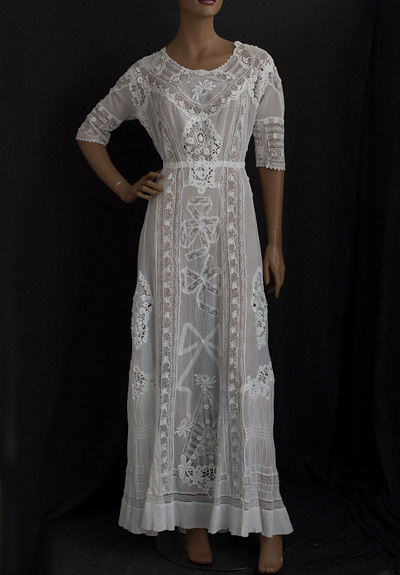
This Lingerie-style dress embellished with Irish crochet, c.1905 (below) can be seen in more detail on Vintage Texiles. Made of sheer cotton decorated with lace and ruffles, this sheer dress required a slip.

Edwardian teagown, 1905. Image @Vintage Textile

More on the topic:

Read more on the topic: Tea Gowns, Edwardian Promenade

Image of an early 19th century dressing gown at the Met Museum

We’re well into Season 2 of Downton Abbey and some obvious patterns in coupling are beginning to emerge in this historical or historic melodrama. Let’s examine how some of our favorite characters are getting on, shall we? (Caution: there will be spoilers for those who have not kept up with the series. Some might also be offended by the language in parts.)

Bates and Anna: The Daisy Saw Chain of Desire

Yes, we will, no we won’t Yes we will, no we can’t. Yes we hope, darn she’s back!

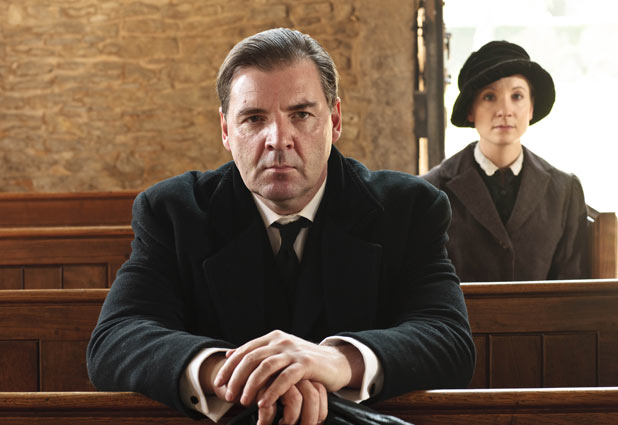
It’s hard to remain on Team Bates when all this couple is allowed to do is react to circumstances beyond their control. We want to root for them, don’t we? The lovely maid Anna and stoic Bates have won our hearts from the start. After becoming sweethearts against his will (for he is married, after all, a minor matter), they give each other romantic looks and sighs, and confess their modest dream of starting their own inn and family.
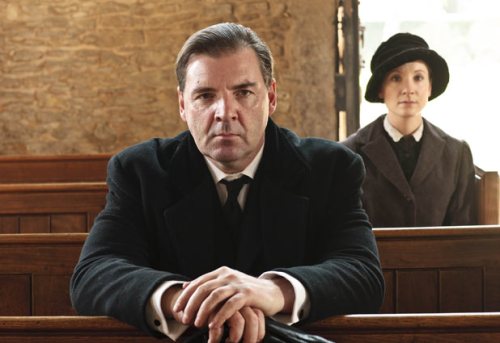
Bates and Anna. Image courtesy of © Carnival Film & Television Limited 2011 for MASTERPIECE

Then a nasty surprise in the shape of the very inconvenient Mrs. Bates arrives to dampen their plans (but not their ardor).

The wickedly delicious Vera Bates lights up the small screen with her foul plans to destroy the couple and the Grantham family because of her intense hatred for her husband. Bates turns into such a milquetoast when she spouts her venom that you just want to kick his butt to force him into action and whack her one. Alas, he remains a milquetoast.

It is up to Sir Richard to use his nouveau riche power and slap the woman down. Vera more than meets her match in Sir Richard, and frankly, these two spark more fire in their short scenes together than Anna and Mr. Bates ever could.

Poor Bored Lord Grantham

Being the head of a landed estate and master of a multitude of subordinates just isn’t enough to keep him busy, thus poor Lord Grantham is shown reading the newspaper in half his scenes in Series 2. His disappointment at not being given an active commission and sent to the front, where he would stand a 50-50 chance of being killed or maimed, sends him sulking to his small corner of the library.

To make matters worse, now that Cora has won her war of wills over Isobel, she has more important matters on her mind than to keep his lordship entertained. The soldiers must be taken care of: Lists made, sheets folded, accommodations planned, meals ordered, and the day in general organized.

Poor pitiful Lord Grantham is starting to feel neglected and lonely. Rather than working with his steward to reorganize his farms to grow vegetables for the army, and mobilizing his workers to do all they can for the cause, the earl behaves like a spoiled two-year old and attends to matters that are best left to others – namely that of hiring a comely war widow as the new maid. To be fair, Carson consulted him first, but shouldn’t this be Mrs. Hughes’ decision, plain and simple?

The Mary-Matthew-Lavinia Triangle

First Mary didn’t want Matthew. Then she wanted him. Then she changed her mind. Then she changed her mind again, which is when he left her, suspecting that she only wanted him for his eventual title not his humble self. Their parting in Season One gave satisfaction to noone but Mary’s sister Edith.

So Mary had to search in other quarters to snag herself a man. He’s not as pretty or accommodating as Matthew, but boy-oh-boy does her new rough-around-the-edges, no-nonsense and ruthless tycoon promise an exciting romp in bed. In the high stakes game that is the marriage mart, love played absolutely no role in Mary’s decision to bind herself to Sir Richard.

Woebetide Mary.

After rejecting his one true love, Matthew hied away from Downton Abbey, only to return two years later with a fiancee named Lavinia. His choice for a wife is as exciting as a crumpled piece of paper. On their first meeting, Mary sidles up to Lavinia with a polite but fixed stare and welcomes her to the Abbey. Lavinia, in awe of her surroundings and the fact that she will one day rule as supreme mistress of the premises, fails to notice the electric looks of longing and passion that pass between Matthew and Mary.

Masochistic Mary, who’s stiff upper lip is firmly planted in front of her clenched teeth, actually tries to be supportive of Lavinia while pretending to be a mere friend to Matthew.

C’mon, Mary! Fess up! One word from Matthew and you’ll drop Sir Richard like a hot potato and jump into Matthew’s sack. Mary experiences a hiccup in that desire when she discovers that Matthew’s unfortunate paralysis has resulted in his inability to perform those rites of passage that turn a blushing young bride into a woman of the world. But then she consoles herself with the thought that, thanks to Pamuk’s manly charms, she has already crossed that heavenly threshold.

Upon seeing Matthew lying prostrate in bed and learning that his prostate is of no use whatsoever, Miss Swire, who still hasn’t figured out that bees come from bees and birds from birds, cries her virginal heart out. She senses that whatever Matthew is trying to tell her must not bode well for their marital relations (whatever that means!).

As for Matthew’s steadfast love for Lavinia: I scoff. I laugh. I guffaw. Honestly, if both women competed in The Dating Game, Lavinia wouldn’t even come in third.

Upstairs Downstairs Love

First he drove her, now he wants to ride her. Branson’s a brash young Irishman who knows his worth. It’s a new age, and social unrest and the war have turned the world topsy turvy. It’s not unusual for a healthy young servant buck to turn his lascivious eyes on the master’s nubile daughter, but to act on his emotions and dare to declare his love? Now that’s awfully balsy of him…n’est pas?

Branson’s object of desire, Lady Sybil, is no namby pamby miss. She was all for the suffragette movement before the war, and actively supported Gwen’s right to improve her life with a typewriter. Sybil’s become a VAD, or volunteer nurse, and washed men’s bloody stumps and tended to their most intimate ablutions. She’s even seen their parts! (Our lovely Sybil has come of age in more ways than one.)

Still, her attraction to Branson, and his to her, is a social taboo that defies the world order as Lord Grantham and his mama know it. Will they find out? Will our hapless couple overcome all obstacles on their path to true love? Or will they part in sweet sorrow? Stay tuned as their world churns.

Lady Edith and Uh, Uh, Uhm ….
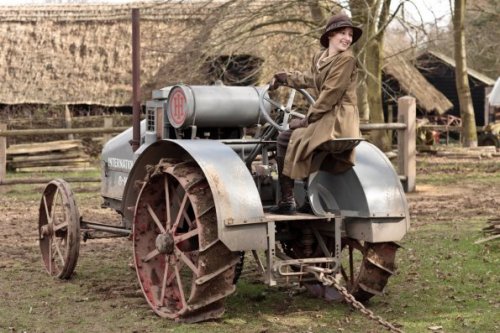
Lady Edith on her fine piece of equipment. Image courtesy of © Carnival Film & Television Limited 2011 for MASTERPIECE

Poor Lady Edith. As if it weren’t bad enough to be caught in the middle of two dynamic and beautiful sisters, she was born with neither personality nor looks. It was Sybil who advised Edith to find her special talents. Well, we know all about one of them – to make Mary’s life hell. But then the war interrupted her favorite sport of baiting her sister. What to do? Drive a tractor, of course, and make sport with the farmer’s wife’s husband after digging deep furrows in his fertile ground. A discreet romp on top of the hay (with all their clothes on) and a joining of moist lips was all it took for the farmer’s wife to aim her proverbial pitchfork at Edith and order her off her man and the land she was plowing.

Poor Edith. Now what? She starts wandering around the house like her papa, with wide vacant eyes, making me wonder if Season 2 is turning into Downton Abbey and Zombies. Then, all of a sudden, Edith discovers the joy of letter writing and transcribing the thoughts of injured soldiers. She plumps up their pillows, fetches their newspapers and books, and takes lessons from the family dog to learn how to become a loyal and useful shadow.

Edith’s good deeds garner her accolades and she blushes from the unexpected glory. Can Edith be saved? Will she turn into an interesting character? So far she’s fooling everyone except Lady Mary, who turning bug-eyed keeping her eyes on both Matthew and her back-stabbing sister.

Yo Mama Wuz Right and U Wuz Wronged

We kind of liked Ethel from the moment we met her, didn’t we? Cheeky and uppity, a bit selfish, too assured, and totally clueless. She’s going to move up in the world and nothing, not even a maid’s position, is going to stop her. When O’Brien plays her tricks on Ethel we laugh,while feeling sorry for her. It’s our first glimpse of the young maid’s vulnerability. She’s all bravado and not too smart.

Caught by Mrs. Hughes in bed with an opportunistic snake, Ethel is cast out of Downton’s downstairs with nothing but the clothes on her back and a growing surprise in her belly. Alas and alack, Ethel’s story arc reflects events that actually happened in the past.

While the Lothario walks away with impunity, the seduced young woman must pay a steep price and become a social pariah.

This Marriage Makes Kim Kardashian’s Seem Eternal

William loves Daisy. Mrs. Patmore loves William like a son. Daisy adores Thomas, but he’s, like, TOTALLY unavailable.

Good old Mrs. Patmore, feeling sad about her nephew’s death, pushes an unwilling Daisy into William’s arm. “C’mon, luv”, she urges the young scullery maid, “It can’t hurt being nice to him – the poor sod is going off to war! What harm can it do?” So a reluctant Daisy goes along with the well-meaning cook and hands William her photo, which is akin to Britspeak for “engaged to be married.” Armed with her image, William knows that he can face a fearless death, which he does, for he returns from Amiens with shattered lungs and takes to his death bed.

Daisy is cattle prodded by the well-meaning staff to marry poor William, who is stoic with the thought that although he is unable to deflower her in his pathetic condition, he can keep her in flour (and butter and tea) for the rest of her life by bestowing her with his name and pension.

The Right Honourable Violet Crawley, Countess of Grantham, and Everyone Else

Whenever Violet encounters anyone, the two immediately become a couple, with Violet gaining the upper hand within a milli-second. Take Violet’s scene with the reluctant minister, for example. With a firm grip on her walking stick, a cemented half smile, and an implacable attitude, she twists his aging co hones by sheer force of her will until he succumbs and marries poor Daisy and the near-dead William, whose face has turned blue. Had Violet been born in another time and social strata, she would have become a dominatrix par excellence!

One other couple must be mentioned: Thomas and O’Brien. As thick as thieves, these two villains cannot get enough of each other and their machinations. Of all the couplings in Downton Abbey, surely this one is meant to last.

And now we can all settle in for the next installment of Season 2 and the goings on at the Abbey. From what I understand, Season 3 is guaranteed. Which coupling shall last? Which shall be fruitful and multiply? And which shall wither on the vine and remain barren? Stay tuned.

(Hint: for quicker download, click on title of this article.) As viewers of Downton Abbey, we think we have gotten to know Highclere Castle and its setting well.  Sir Barry remodelled Highclere Castle for the third earl of Carnarvon from 1839 to 1842. The architect had just finished building the Houses of Parliament. The house once looked quite different and was Georgian in feature, as this image shows.

highclere-castle-in-the-18th-century

Extensive renovations were made during the late 18th and early 19th centuries. In the mid-19th century, Henry, the 3rd earl of Carnarvon, transformed the house into a grand mansion with 60- 80 bedrooms (the sum varies according to the source) and over 120,000 square feet. The staircase, also designed by Thomas Allom, sits in the tower designed by Charles Barry.

Highclere Castle after renovation

Highclere Castle after renovation. Sir Charles Barry’s renovation was in the “High Elizabethan” style. The building was faced in Bath stone.

The Architectural Design

Architectural design for the tower of Downton Abbey by Sir Charles Barry, 1842. Image@Christie’s

The BBC said about Barry’s Houses of Parliament:

A good example of the period’s confused love affair with the past, it was summed up earlier this century as classic in inspiration, Gothic in detailing, and carried out with scrupulous adherence to the architectural detail of the Tudor period. – BBC, A British History of Architecture

This description can easily be applied to Highclere Castle with its whimsical look back to Tudor times.

The term “Jacobethan” refers to the Victorian revival of English architecture of the late 16th century and early 17th century, when Tudor architecture was being challenged by newly arrived Renaissance influences. During the 19th century there was a huge Renaissance revival movement, of which Sir Charles Barry was a great exponent – Barry described the style of Highclere as “Anglo-Italian”.[3] – Wikipedia

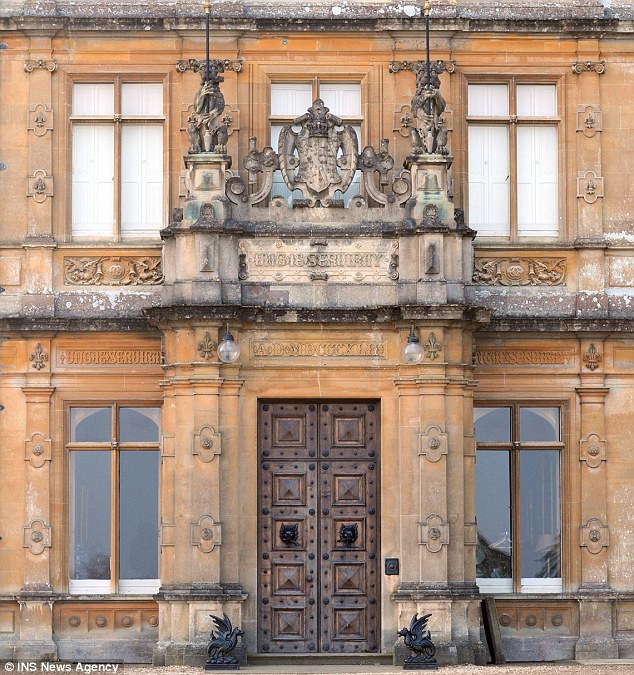
The Facade and Front Door

The front door

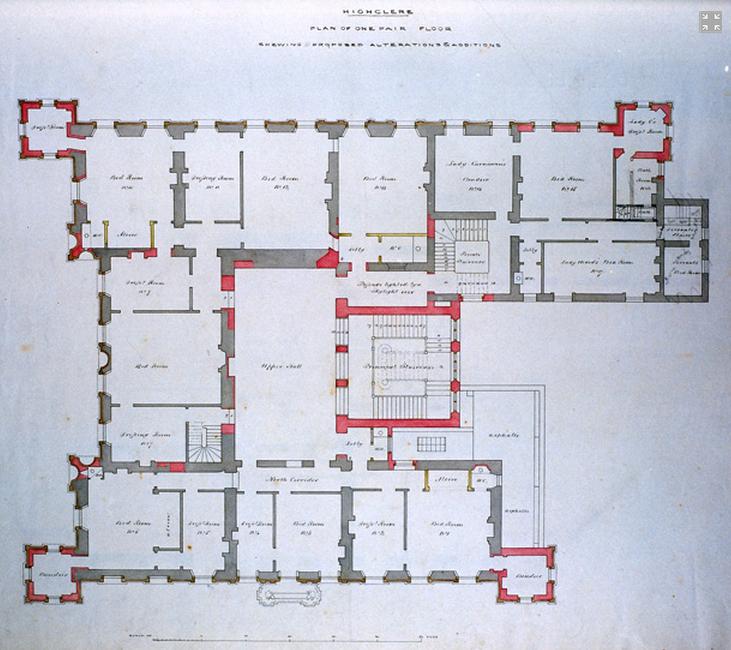
Many visitors come to this blog looking for a floor plan of Highclere Castle. This one depicted below sits on the Highclere Castle website and is a bit hard to read. Not all the rooms are currently in use, and a number, such as the music room, are available to be rented as conference rooms.

The House Plan

In the television series, the servant quarters and kitchens were not filmed at the Castle, but were constructed at Ealing studios in West London.

From The Victorian Country House by Mark Girouard.

Entrance Hall and Saloon

stairs and hall

Stairs and hall

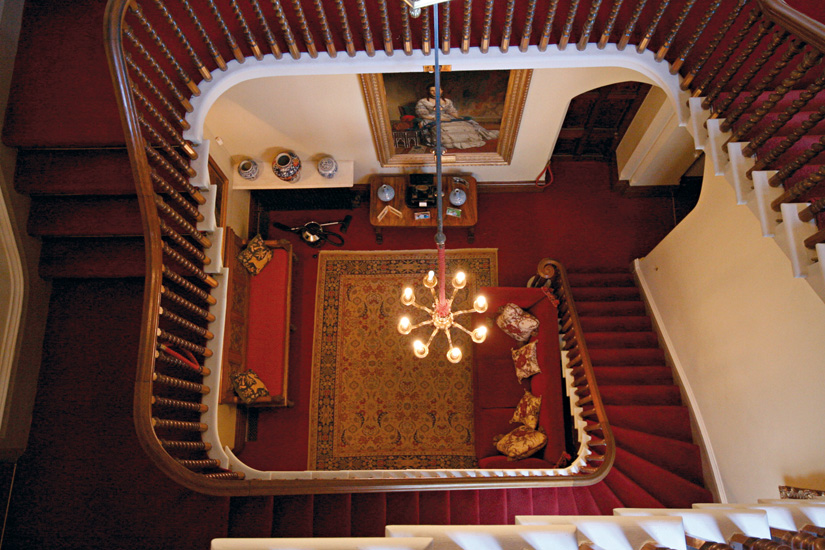
Red stairs birds eye view

Red stairs birds eye view

Pillars

Pillars

Passage above saloon leading to the bedrooms

Interior of Highclere Castle

Saloon from gallery above. The room was designed by Thomas Allom and completed in the 1860s.

Saloon seating space Picture by Paul Hilton ©

Saloon seating space Picture by Paul Hilton ©

Salloon

Saloon

Detail of saloon ceiling

Detail of saloon ceiling

The Music Room

Music room

Music room

Music room

These days the music room is available as a conference room.*

The Library

Double library

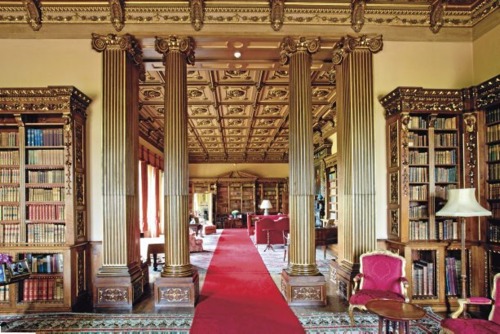
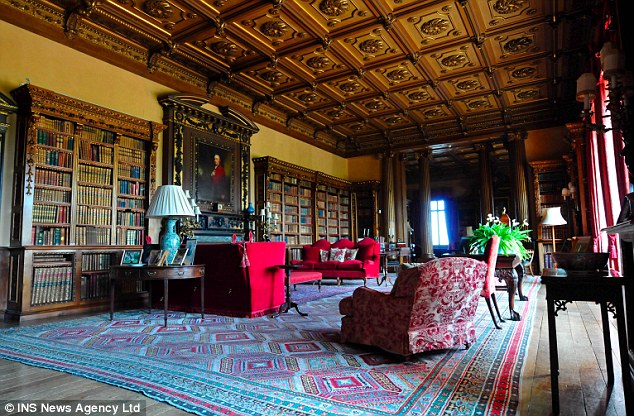
Double library with coffered celings holds over 5,000 books.

Comfortable seating within the library

Comfortable seating within the library

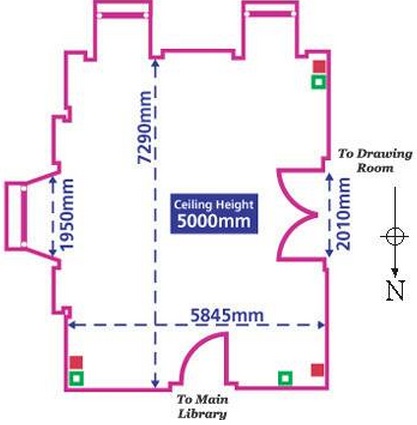
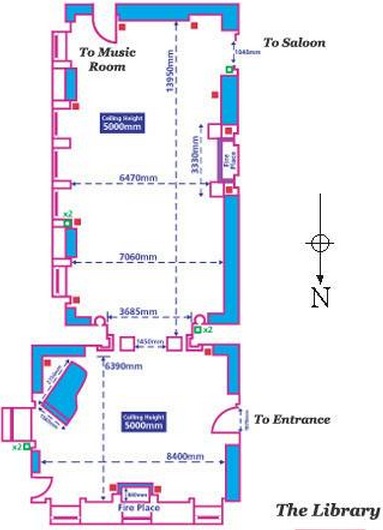
The library is unusual in that it consists of a two part room. The opening between the two areas is featured by columns. This room is also available to rent as a conference room.*

The Drawing Room

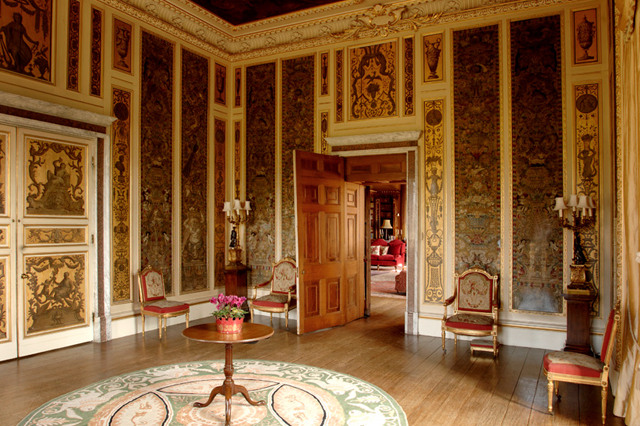
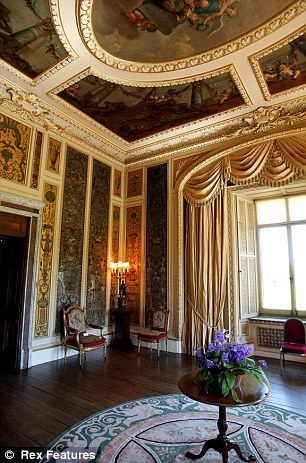
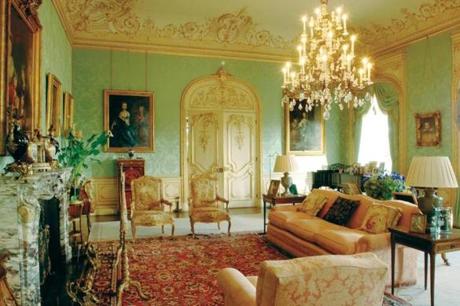
The drawing room image @Boston Globe. The drawing room was designed by Almina, the 5th Countess of Carnarvon,  in the "rococo revival" style .

The drawing room image @Boston Globe. The drawing room was designed by Almina, the 5th Countess of Carnarvon, in the “rococo revival” style .

The Dining Room

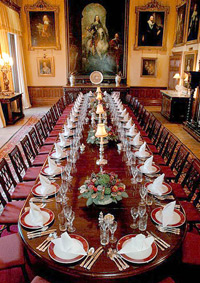
Much drama is centered in the dining room. The actors often took days to film a scene, and it was quite a feat to keep the food looking fresh and to maintain continuity in both the drinking glasses and on the plates. Read Downton Abbey: Dining in Splendor for more information.

The dining room

The dining room

diningroom-highclere

Image @Conferences UK

Bedrooms

Modern bedroom

Renovated bedroom

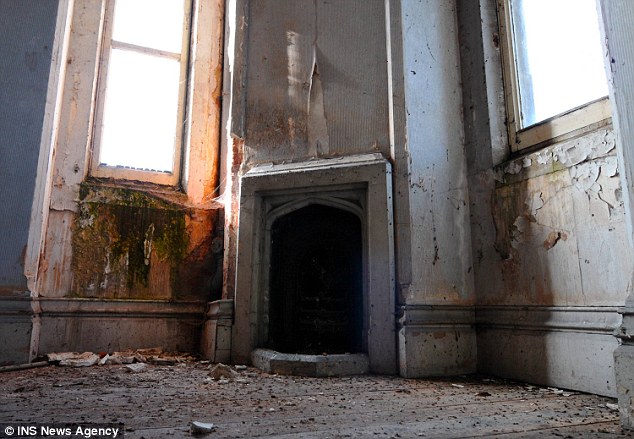
One of the bedrooms in need of renovation. Image @Daily Mail

One of the bedrooms in need of renovation. Image @Daily Mail

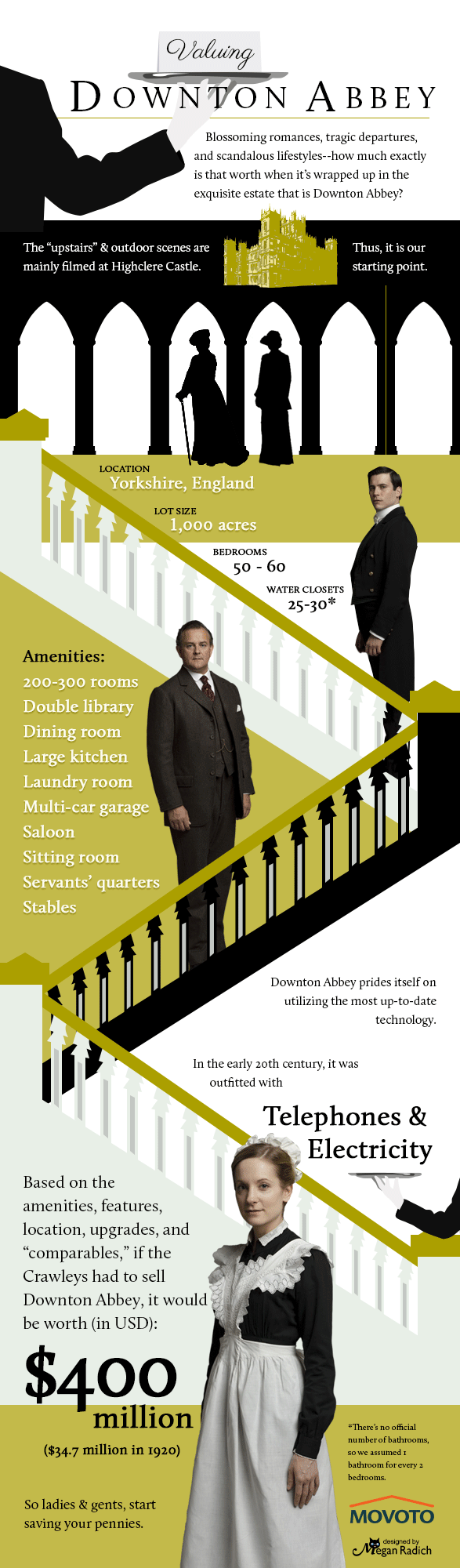
This image on Huffington Post shows more details about Downton Abbey/Highclere Castle and values the mansion:

valuingdowntonabbey

More on the topic:

We’ve heard the term, “Behind the green baize doors”, but what exactly does it mean? You hear this reference most often in regard to servants and in old books.

Baize was a sturdy green cloth attached to a swing door.  The insulating fabric prevented noises from disturbing the individuals on either side:

The ‘Green Baize Door’ was the dividing line between the two domains, and trespassing beyond meant going into foreign territory. The ‘Green Baize Door’ was a feature of almost every substantial house. It was generally an ordinary framed door onto which was tacked a green baize cloth, usually with brass tacks. It was the universal signal of the dividing line between the two halves of the house.The Bull children would not be tolerated by the servants in the domestic part of the house unless they were working under supervision. This was like walking into somebody else’s house. The servants would normally use a different route to get to the various parts of the house, and would aim to be seen as little as possible. This was not because they were considered beneath notice: on the contrary, it was so that they could do their work uninterrupted by the requirement to exchange civilities. Houses evolved so that domestic staff could go about their task without interruption, not to ensure the privacy of the residents. They had none. –Borley Rectory and the Green-Baize DoorDomestic life at Borley Rectory, by Andrew Clarke copyright 2002

Image @Chest of Books

The brass-headed tacks holding the cloth down could sometimes be arranged in a decorative design. The cloth not only deadened sound but also absorbed kitchen odors. Green baize doors became popular during the mid-Eighteenth century, so Jane Austen must have been aware of the practice, which was more and more used as the 19th century progressed. During Victorian times the practice of sound proofing doors with baize was quite common. The cloth could also be used to insulate nursery room doors, bedroom doors, and doors leading to studies or any place where sound needed to be muffled.

It was a time when housemaids were taught to turn their face to the wall if they should pass their employer on the stairs. For whose protection? one wonders. The era of Squire Allworthy and Sir Roger de Coverley had long passed, when relations between master and man were more informal. – The green baize door: social identity in Wodehouse; Part two – Allan Ramsay 
Early 19th century mahogany desk with baize lining**

Baize (or bayes), also known as a bocking flannel,  was a coarse wool or cotton material, which had a felt-like texture:

“In Europe, baize was used mainly for case, cabinet and closet linings, as well as furniture coverings. Clothing baize was used for monk and nun habits as well as soldier’s uniforms. In the North American Native market, the term baize frequently alludes to inexpensive coarse broadcloth. – Wool Trade Cloth 

Baize dates back to the 16th century, 1525 to be precise. A mid-17th century English ditty about the history of ale and beer brewing, mentions “bays”:

Hops, heresies, bays, and beer;
Came into England all in one year.

“Heresies refers to the Protestant Reformation, while bays is the Elizabethan spelling for baize. – Good English Ale 

Baize scrap from the Titanic. Image @Online Titanic Museum*

Baize was used in a number of ways, including as a protective cover for gaming tables, for the nap of the cloth increased friction, preventing cards from sliding and slowing billiard or snooker balls.  The cloth is available in a variety of naps. Roman Catholic churches used red or green baize for altar cloth protectors, and the cloth was used in museum cases and desks as well.

St. Jerome in his study

As previously mentioned, baize was also used for clothing.

“I would recommend to you the Green Baize Gown, and if that will not answer, You recollect the Bear Skin.” Letter from Abigail Adams to John Adams, 3 December 1788

The site for Knox Family Clothing mentioned mid-18th century receipts for baize and bayes,  as well as rattinet, armozeen, dowles, buff battinet, flannel, linen, silk, and velvet.

In Practical Cooking and Dinner Giving, published in 1876, Mary Foote Henderson recommends:

“Put a thick baize under the table-cloth. This is quite indispensable. It prevents noise, and the finest and handsomest table – linen looks comparatively thin and sleazy on a bare table.”  

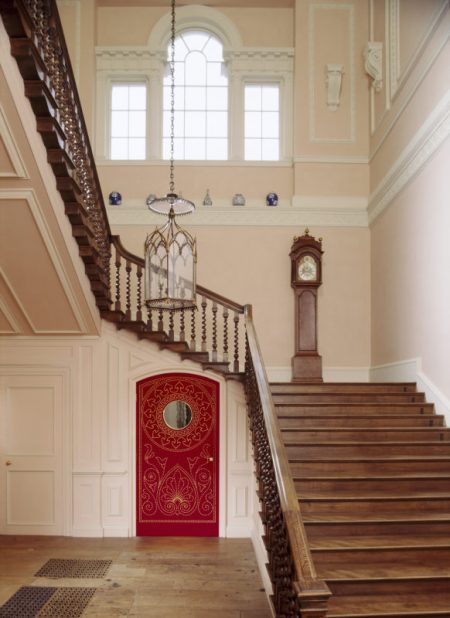
The Staircase Hall at Uppark. The red baize door leads to the servants' quarters. ©NTPL/Geoffrey Frosh

Red baize was also used as insulating material, as the decorative door at Uppark (image above) indicated. (National Treasure Hunt, National Trust Collections) In this advertisement for an 1808 Georgian house for sale, a red baize door to the inner lobby is featured. The red baize servant door providing access to the inner lobby and the kitchen, rear reception and breakfast room. 1808 house

More on the topic:

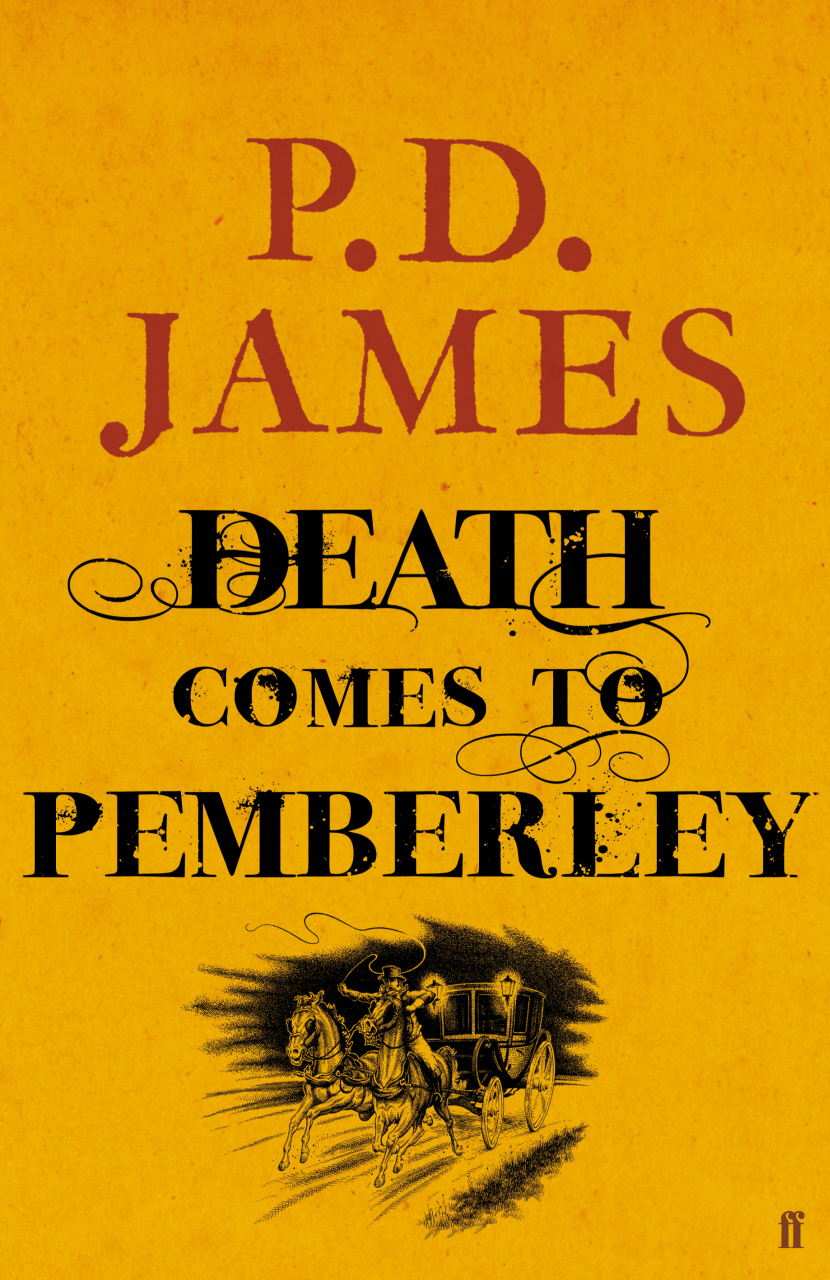
It’s rare that I purchase a Jane Austen sequel. Generally, publishers will send books for review or I’ll pick up a copy at the library. When Death Comes to Pemberley was announced I did not hesitate to purchase a copy for my Kindle. P.D. James, the book’s author, is a highly regarded mystery writer with a solid record for selling mystery books to discerning mystery fans. (The book placed third on the NY Times best seller list this weekend.)

A good friend of mine, whose judgment I value, owns every single P.D. James novel and was overall satisfied with this novel. I had never read a P.D. James novel before, and she was curious to know what I thought of this book. Another Janeite friend had read it and remarked that it was very well done and followed the forensic detective work of its time. They waited to discuss the book with me until after I had finished reading it and could give my opinion. Last weekend the three of us came to the same conclusion, which was that the mystery was weak and a bit lame, and that the actual murderer was so preposterous as to be unbelievable. My question to them was: “Why would a famous author like P.D. James waste her time writing a Jane Austen sequel, especially if the mystery was less than sterling?” Both defended her decision to write this book, while I was not particularly swayed. Both were ecstatic that she had written one more book, for they fear that their author, being 90+ years old, might not have too many novels left to write. To that I said she shouldn’t have bothered.

My suspicion is that had P.D. James been an unknown author peddling her manuscript for the first time to publishers and agents, Death Comes to Pemberley would have been tossed on the slush pile and she would have received a slew of the rejection letters,  one of which might have looked like this:

Dear Ms. P.D. James,

Thank you for your submission of Death Comes to Pemberley, which we read with interest, for your writing style is quite extraordinary. I’m sorry to say that  our interest in your manuscript was killed by its long talky scenes and sparseness of  mystery plot. I don’t need to hear about the crime from potential witnesses, then learn the same information during the inquiry and then again during the trial.

You will need to solve a major  problem with the plot by writing the denouement towards the end of the story, rather than 2/3 of the way through.  After I discovered who the murderer was, I frankly did not care to sift through another five chapters so that you could tie up loose plot threads. Let me make a few suggestions for improvement before you send the manuscript on to others:

1. Check your facts. In the first chapter on the first page you referred to Mr. Collins as Mr. Bennet’s nephew. He is Mr. Bennet’s cousin.  I almost stopped reading the book right then, for the mistake and others made me wary of the quality of your research or understanding of Pride and Prejudice and its characters.

2. Show don’t tell. Yes, I understand that this is a Jane Austen sequel and that you are working with familiar characters, but you slowed your plot to a crawl with your reams of exposition at the start of the novel and, strangely, at the end. Also, your men were too talky. While I appreciate the fact that they might have spoken more formally two hundred years ago, men don’t as a general rule talk in long unbroken sentences, especially to each other.

3. Write an original novel with your own characters. Whenever you deviated from Mr. Darcy and Elizabeth and other Pride and Prejudice characters, your novel jumped to life.

Sincerely, Vic @Jane Austen’s World

Death Comes to Pemberley is yet another instance of a famous author joining the Jane Austen bandwagon. Some of you might remember Colleen McCullough jumping into the fray with her detestable The Independence of Mary Bennet, which must have garnered riches for the publisher before readers caught on. (Read my review here.) These two best-selling authors, while they rightly have earned their literary reputations, fell down in my opinion when they so cynically wrote novels that, to put it kindly, barely scraped bottom when compared to Jane Austen’s own brilliant work. Besides, what business had they to write a Jane Austen sequel? Do they really think it is all that easy?

The career of a Jane Austen sequel writer is not an easy one. Most write their books out of love for Jane Austen and her characters. Those that I have come to know through correspondence are earnest about their desire to continue Jane’s stories. They work hard for very little recompense. Unless a publisher anticipates a blockbuster novel (such as Pride and Prejudice and Zombies, a concept novel if ever there was one), most provide book advances that barely cover the cost for postage or time spent researching a topic. Once upon a time book publishers, editors, and agents invested in long-term relationships with new authors, building their reputations up slowly and giving them time to develop their talents.

Image @New Yorker

This is no longer the case. A writer has only two or three years to make money back for the publisher.*(See Laurel Ann’s comments below.)  That is a lot of pressure, considering that royalties on the published price of trade books ranging from 10%-12.5% and on paperbacks from 7.5% to 10%. Many first time authors fail to realize any profit on their books. The average first novel sells around 2,000 – 4,000 books, but the break even for publishers is around 5,000 books. Four out of five first novels fail to make money for the publisher. Authors might only earn the total amount of their advance, minus the cost of extra copies of books they have purchased for giveaways and bookmarks, and the loss of spare time as they visit book stores, libraries, reading clubs, and groups and attend conferences all over creation in order to publicize their books will never be made up. These days authors are expected to oversee their own blog, and a Facebook and twitter account as well. Many spend hours writing down answers to interview questions or being interviewed online.

As readers you will notice a big push for books several times a year, when many new titles are competing with each other. Before the holiday season this year, P.D. James received an automatic “in” from most of the major book critics; she received extremely kind reviews in my estimation. It’s almost as if even the most discerning critics didn’t bother to read her entire book. The ordinary sequel writer gets no such first-class treatment. Their eyes are glued on Amazon’s rankings, hoping they will break free from the midlist and sell enough volumes to give them a second contract for another book.

One author I talked to said she made almost no income from writing; another said she was unlikely to collect royalties this year. Another author, who lives in my city, was dropped by her publisher despite glowing reviews, only to be picked up by another publisher. For these authors, their writing careers must seem like an unpredictable roller coaster ride.

While I am not a great fan of Jane Austen sequels and prequels, I do salute these writers, who follow their passion. Many have written a truly enjoyable story that I can wholeheartedly promote. I can’t exactly say the same of Death Comes to Pemberley. Sorry Ms. James, but I give this book only 2 out of 5 regency tea cups.

For more information about the life of a writer, read The New Literary Lottery. This NY Magazine article by Alex Williams is a bit dated, but fascinating.