Feeds:
Posts
Comments

Archive for 2011

When Nicole Whitcomb’s car runs off a Colorado mountain road during a blinding snowstorm, she is saved from death by a handsome, fascinating, and enigmatic stranger.

Snowbound with him for days in his beautiful home high in the Rockies, she finds herself powerfully attracted to him. But there are things about him that mystify her, filling her with apprehension. Who is Michael Tyler? Why does he live in such a secluded spot and guard his private life so carefully? What secret—or secrets—is he hiding?

Review of Nocturne: From the desk of Shelley DeWees (The Uprising) …

“Never have I had such an intense relationship with books as when I was a young girl. I raged inside them and lived a double emotional life, half real girl, half inhabitant of a distant world, and I chose book neither because of, nor in spite of, their artistic merit, only for their ability to pull me through the looking glass.”
–Caitlin Flanagan, What Girls Want: Vampire Novels Illuminate the Complexities of Female Desire

It’s Saturday afternoon. The rain is lashing against the windows of your bedroom, obscuring your view into the outside world and in turn, hiding yourself from anything beyond your immediate surroundings. A delicious sense of solitude creeps through you, and you know you’ve got all day to sit and soak it up…no job, no husband, no nothing to distract you. Relieved and carefree, you toss yourself on the bed and carefully unfold the book you’ve been waiting to read, the book you’ve been toting around in your bag for weeks or clutching to your chest like some kind of emotional armor. You’re quickly absorbed once again, lying on your stomach with your legs in the air, and hours upon hours of unbroken silence pass before you know it while your brain floats on a cloud of imagination…

Typical Saturday? Maybe in our most magnificent fantasies. Or how about in our memories?

Losing yourself in a book is truly a remarkable thing. The moment when you look at the clock to realize that midnight has come and gone is a special one, not to be taken lightly. That is, of course, until you become conscious of that fact that, yes, you have to be up in 3 hours and to work in 5. And therein lays the problem. Somewhere along the path of growing up we lost the ability to retreat into our heads, forsaking our giggly girl-reader for a woman almost-reader with a car payment and a pension plan. We traded away the gift of reading trashy, poorly written books that take you somewhere else in favor of using our adult scrutiny to decide whether a book was “good.” When you were a girl, a book became “good” simply if it gave you the giddy feeling that 40-something men must get when they get an unexpected glimpse of pornography: “a slingshot back to a world of sensation that, through sheer force of will and dutiful acceptance of life’s fortunes, you thought you had subdued,” says Caitlin Flanagan, author of “What Girls Want: Vampire Novels Illuminate the Complexities of Female Desire.

Fortunately for us and our shriveled imaginations, it’s never too late to get it back. Thus, I’d like to introduce you to a vampire romance where the characters are predictable and the plot is laughably absurd. The weak woman falls hopelessly in love with a too-perfect man, surrounded by an idyllic setting where gender roles from the 1960’s abound….and no, I’m not talk about that other vampire series. Nocturne, the newest gift from Syrie James, is infinitely better written than that other thing, far better in terms of structure and development but equally silly and delicious.

Nicole Whitcomb, with her lovely red-headed beauty and underdeveloped common sense, drives off the road in a winter storm and is saved by the overly enchanting Michael Tyler. She wakes up in his perfect house among his flawless made-to-attract-her life and…big surprise…falls for him. But wait! He’s a VAMPIRE! What, didn’t you know that? Whoa. Their story unfolds just as you would expect, and the no-I-can’t-yes-you-can banter progresses just as it did in that other novel series. However, the sexual energy builds and the two characters finally succumb to their urges…very well, by the way.

I found myself glued to the pages of this novel, despite its definite installment under the “brain candy” column. A slight glimmer of the teenager I once was showed her face once again, and I dissolved into giggles and gasps like a silly school girl. My adult brain got to take a hiatus for awhile, sipping on margaritas while my imagination hummed into motion, and only shouting in protest at one or two points. It’s not artistic literature, but Nocturne will grip you like books once did, upstairs in your room, hidden away while still in plain sight. It was a unique moment, something that I’m a bit embarrassed to admit (but that must be my overachieving adult side talking).

Excerpt from Nocturne:

Nicole’s heart began to beat erratically. She’d heard scary things about mountain men who’d lived too long in isolated places. Who was this guy? He seemed cultured and spoke very formally, as if he belonged in the Queen’s court or in a palace surrounded by servants.

What was an Englishman doing in this remote corner of the Colorado mountains, unless he was hiding from something? But if he was a killer, surely he would have murdered her already, instead of carefully tending to her wounds. Wouldn’t he?

“You haven’t told me your name,” she said, straining to keep her voice even.

“Haven’t I? I beg your pardon. Michael Tyler.”

“How is it that you live up here? I thought this was national forest land.”

“It is. But there are pockets of private land scattered throughout.”

“Do you live here all year long?”

“I do.”

“By yourself, or …”

“I live alone.”

Her questions seemed to annoy him. He stood up and Nicole sensed that he was about to leave the room. In an effort to lighten the mood—or maybe just to put herself more at ease—she glanced at the grand piano and said with a forced smile, “So I take it it’s either you who plays that piano, or the resident ghost?”

A surprised twinkle lit his blue eyes. He sat back down in his chair with the first hint of a smile. “Definitely the ghost. Watch out for her. She plays at the oddest hours and has been known to leave candles burning in the most unlikely places.”

“She?”

“A raven-haired beauty. From her clothing and hairstyle, I deduce that she’s from the previous century. Which is strange when you consider that I only built the house ten years ago.”

Nicole laughed. His smile was charming. His accent was so lovely, she could listen to it all day long. Maybe there was nothing to be afraid of after all…” (Read a longer excerpt here.)

Syrie James

More links:

Read Full Post »

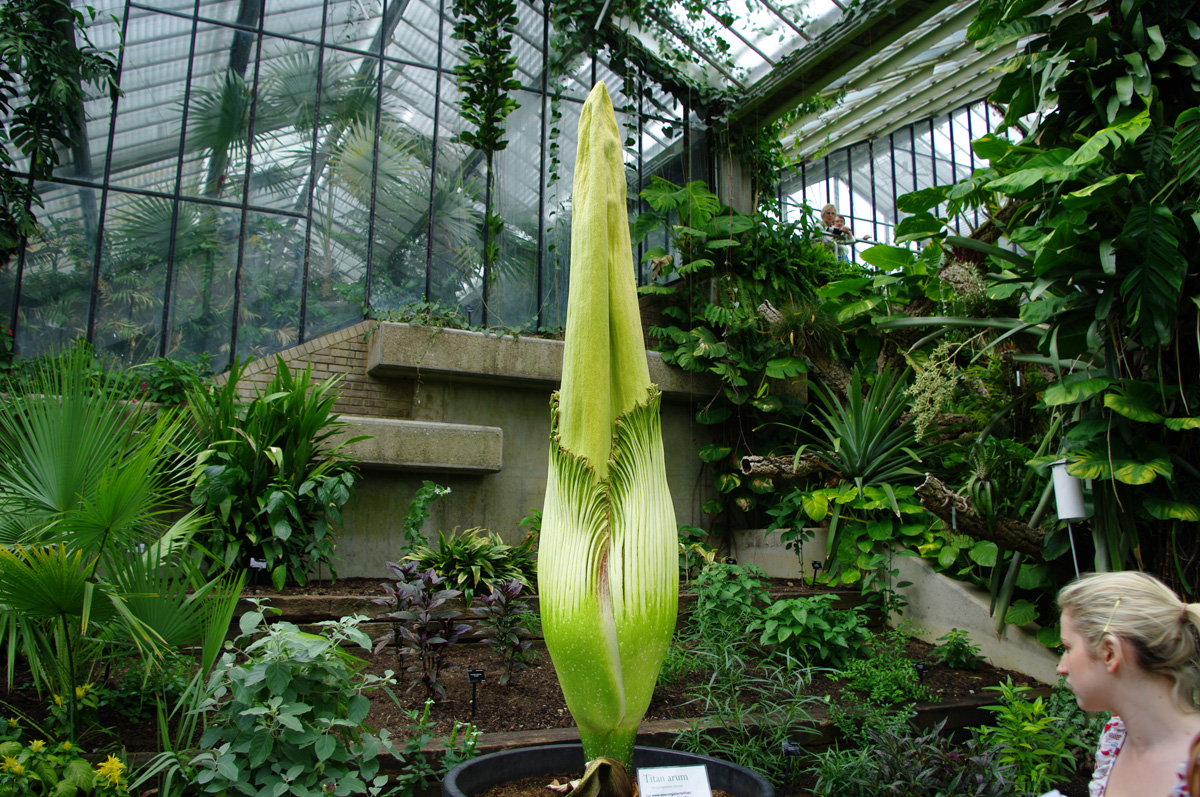
Curious readers: Tony Grant (London Calling) has contributed an article about Kew Gardens and his beautiful photographs to go with it. Relax and enjoy this visual feast of gardens, walkways, and flowers.

The Royal Entrance at Kew. Image @Tony Grant

I have been to Kew Gardens, which is only a couple of miles from where I live, on the other side of Richmond upon Thames, many, many times for more than thirty years. When I first visited Kew gardens all those years ago the charge to get through those regal, ornate gates was 1p, a penny, a mere token payment. Kew is a government research centre and a leading authority on plants throughout the world. I think they felt in those far off days that a token payment, just to keep the paths swept, was all that was required. It was and is a government-owned establishment, and so by default, we, the British public, own it, (A little like The National Gallery and The National Portrait Gallery. Those paintings belong to me you know. So, why shouldn’t I get in free?)

Bumble bee at Kew. Image @Tony Grant

Nowadays, it costs an arm and a leg to get into Kew Gardens. I’ll whisper this; “it’s £13.90 for an adult.” The Government decided, to help finance research, and to develop further public facilities in the gardens, we should all pay to get in. It’s such a beautiful place and such an elemental place that, yes, I’ll pay to get in. No questions asked. I need my dose of Kew. And many, many thousands of others just love to pay to get in too.

Through the glass wall. Image @Tony Grant

Oh, by the way, if you are a mum with a baby and young toddlers in tow, it’s free for the children, totally free. An example of British quirkiness in action. The gardens are a great place to meet for morning coffee in one of the 18th-century orangeries, to have a chat and a place to let the youngsters roam.

The Chinese Pagoda. Image @Tony Grant

My first encounter with Kew, I must admit, involved fellow students, bottles of wine, cans of beer, some very attractive females (my future wife amongst them), and an appreciation of nature and trees gained by lying on my back looking up through leafy branches to a clear blue sunny sky beyond.

Approaching a palm house. Image @Tony Grant

Kew to me means pleasant tree-lined walks, elegant plant houses with their acres of glass and miles of fine wrought iron structural parts painted white and curved and curled into shapely structures. It is a place to look closely at beautiful flowers, contemplating their wondrous shapes and form, and their intense colours, and to take in their seductive perfumes. It is uplifting to observe the majesty of the many varieties of trees, with their beautiful patterned leaves, and their branch and twig systems like fine black lace against changing skies.

Environmental art at Kew. Image @Tony Grant

Kew calms the spirit. It is a meditative place. You can become one with yourself as you walk around or find a place on the grass to sit.

A Zen Garden. Be at peace. Image @Tony Grant

It is vast enough to give you personal space and there is tranquillity amongst the greens and shade.

Museum Number One, Economic Botany. Image @Tony Grant

The Importance of Kew

Kew is an important place. It has a seed bank that holds 10% of all the worlds’ plant species, and contains samples of nearly all endangered species. It also has a herbarium whose collection is being added to virtually daily. At the Joderell Laboratory at Kew, they research the molecular systems, and study the physiology and biochemistry of plants. They study the plants to find natural medicines, specifically for anti-cancer and anti-inflammatory drugs. One department focuses on agricultural research, and there are also botanical illustration and photography departments. Kew is a world leader in conservation and plant technology.

18th century orangery. Image @Tony Grant

Development of Kew

The development of Kew began in the 16th century when Henry VII built a palace at Richmond just along the Thames from Kew. By the 17th century the area round Richmond had become established as a hub of political power for part of the year. Everybody who was part of the court and the government came there in the summer when the king was in residence. Later, James I combined all the royal land in the area, along with former monastic land, with the park that existed at Shene, and created a new hunting ground of 370 acres. Robert Stickles, the architect, built a hunting lodge called Richmond Lodge right in the middle of it.

Temperate House and pagoda. Image @Tony Grant

After Charles I was executed, and The Commonwealth had taken over under Oliver Cromwell, much of the Royal property around Richmond and Kew was sold off. However, those sales were reversed during the reign of William III. Robert Stickles’s Richmond Lodge had survived, and it was extended and turned into a royal palace. The old deer park was reassembled, and the land around Richmond Lodge was turned into formal gardens. So began what we know today as Kew Gardens.

The broad walk.Image @Tony Grant

In the 1690’s, George London created the Broad Avenue, a wide path that goes nearly the full length of the gardens connecting many of the main gardens features. Charles Bridgeman and William Kent, two great 18th century landscape gardeners, primarily created the layout and design of the original gardens.

William Kent

Capability Brown added to the design later. Because of these three great garden designers’ influences and ideas, the garden at Kew were watched and visited, so that new ideas in garden design could be disseminated. Kew was an important influence to 18th century garden design throughout Britain.

Shape, pattern, colour. Image @Tony Grant

This early 18th-century plan was overlaid by later designers, although some of the Capability Brown’s features still persist. It is also likely that some of the older trees might have been planted by Charles Bridgeman. In 1731, King George II’s son, Frederick, Prince of Wale,s leased Kew farm. In 1736 he married Princess Augusta of Saxe Gotha, and together they began some drastic changes at Kew. They commissioned William Kent to redesign Richmond Lodge. He added extensions and covered the façade in white stucco. It became known as The White House.

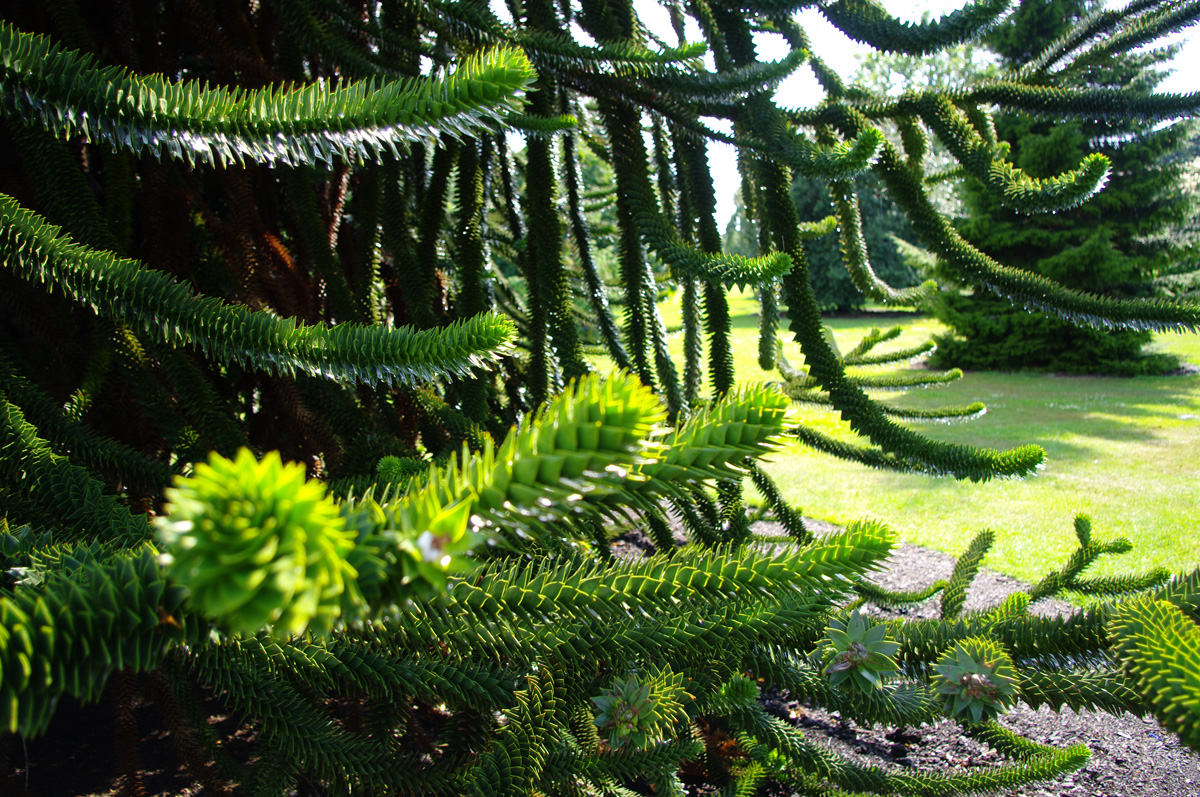
Monkey puzzle tree. Image @Tony Grant

Frederick and Augusta were garden enthusiasts, and they were helped by the Earl of Bute, who advised them on obtaining plants and landscaping. He later became the tutor to their son, who became George III. Unfortunately, Frederick died in 1751 due to a bout of pleurisy and a burst abscess in his chest. He wasn’t able to fulfil his plans for the gardens. At the time it was said his death was a great loss to the development of gardening in this country. George III, Frederick’s son, succeeded to the throne on the death of his grandfather, George II in 1760.


The Dutch House at Kew, Kew Palace. Image @Tony Grant

Capability Brown was commissioned to re-landscape the gardens. The royal family used Richmond Lodge as a summer home. When, Princess Augusta, George’s wife, died, the royal family moved to the White House, whilst The prince of Wales and his brother Prince Frederick lived in the Dutch House, which still exists today and is now called Kew Palace. The royal children were given lessons in botany and botanical illustration. During his bouts of illness, the King lived at Kew.

George III

During the Georgian period Joseph Banks became friends with George III and was the unofficial director of Kew Gardens. He became one of the most influential botanists of his time and began many of the work botanists do today.

Natural art beside an orangery. Image @Tony Grant

Sir Joseph Banks (1743 – 1820)
In 1761he inherited his father’s estate in Lincolnshire to which was attached considerable wealth. His first voyage of discovery was to the coasts of Newfoundland and Labrador on the ship HMS Niger. On his return to London in 1767 he was elected a member of the Royal Society at the tender age of 23.

Joseph Banks

When the society proposed an expedition to observe the transit of Venus in the Pacific in 1769, Joseph Banks financed his own expedition with his own team of scientists, including the botanist Daniel Solander and the artist Sydney Parkinson. HMS Endeavor under Captain Cook left England in August 1768.

Inside a green house. Image @Tony Grant

Joseph Banks’ botanical collection formed the basis of the Herbarium at Kew today. His original specimens an still be studied there. Later he mounted expeditions to Iceland, the Hebrides, and the Orkneys. Banks helped organise the first collections at Kew. Specimens arrived from all over the growing British Empire, a typical trait with Empire building.

Water lillies. Image @Tony Grant

The initial impulse were trade and wealth, but so many other things went along in parallel with that:  science, exploration, discovery, art, culture. The British Empire brought religion, government, and even citizenship along with it. You can see examples and parallels with The Roman Empire, the Spanish exploration of South America, and present-day empire building.

Inside the roof of the Palm House. Image @Tony Grant

Kew is a special place, and a visit there brings home the importance of plants, the keystone of our planet and very existence. They do so much for us, and their beauty brings us peace and joy. Is it such a strange thing to do – hug a tree?

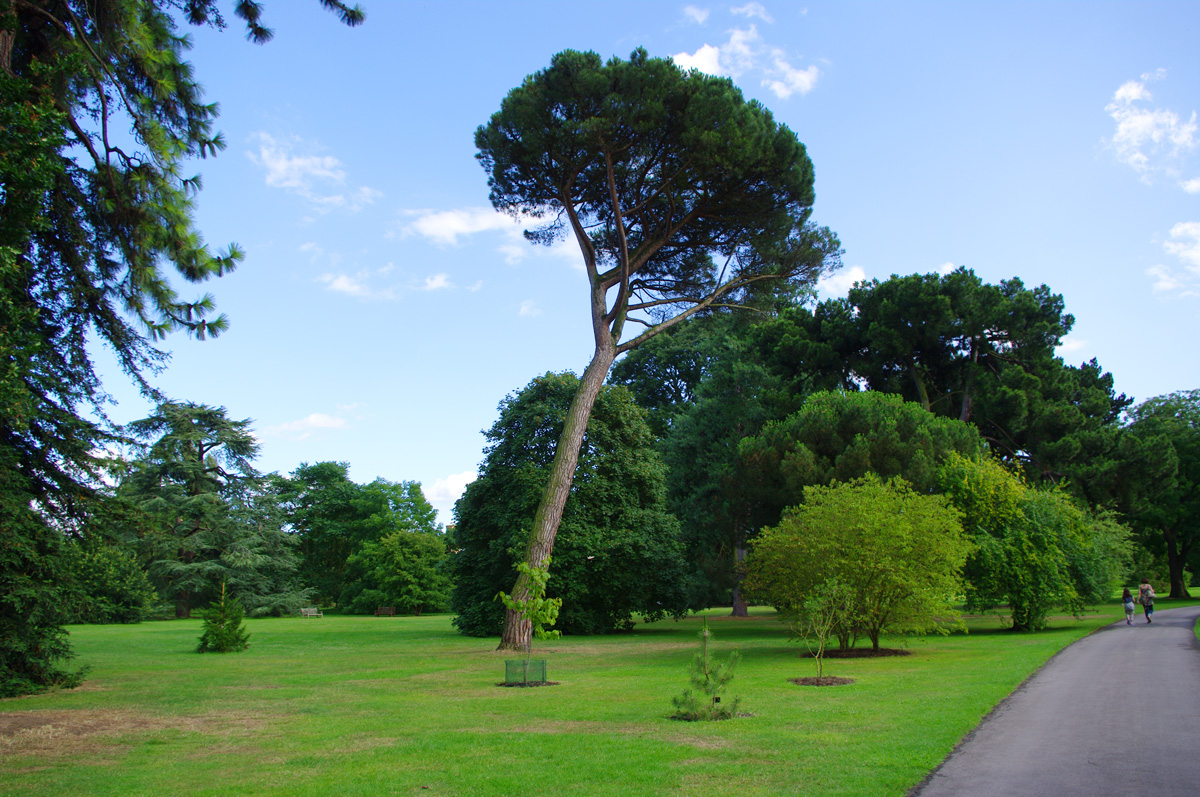
Scots pine. Image @Tony Grant

More images:

Before opening. Image @Tony Grant

Environmental art at Kew. Image @Tony Grant

Inside the Palm House. Image @Tony Grant

Side entrance. Image @Tony Grant

Stairs inside the Palm House. Image @Tony Grant

Water tower. Image @Tony Grant

Read Full Post »

The valet (rhymes with pallet) is a personal manservant who tends to his master’s every need, from a clean room to seeing to his clothes to making sure that his entire day goes smoothly from the moment he rises to the time he goes to bed. Also known as a gentleman’s gentleman, the valet is the closest male equivalent to a lady’s maid.

Mr. Darcy (Colin Firth) dresses with the help of his valet, who stands ready to put on his coat. In this scene, Mr. Darcy changes his mind and chooses another coat before visiting Elizabeth at the inn. Image @Pride and Prejudice, 1995

Mrs. Beeton describes a valet’s duties in her excellent 1861 book on household management:

His day commences by seeing that his master’s dressing-room is in order; that the housemaid has swept and dusted it properly; that the fire is lighted and burns cheerfully; and some time before his master is expected, he will do well to throw up the sash [open the window] to admit fresh air, closing it, however, in time to recover the temperature which he knows hismaster prefers. It is now his duty to place the body-linen on the horse before the fire, to be aired properly;

Edwardian clothes horse. Image @Denhams.com

to lay the trousers intended to be worn, carefully brushed and cleaned, on the back of his master’s chair; while the coat and waistcoat, carefully brushed and folded, and the collar cleaned, are laid in their place ready to be put on when required. All the articles of the toilet should be in their places, the razors properly set and stropped, and hot water ready for use.

Barry Lyndon (Ryan O’Neal). While the master shaves, his footmen assist him, making sure his implements are at hand. His valet would have overseen the arrangements and will sharpen the razor and clean the shaving brush after Barry has finished shaving. Image @Barry Lyndon

Gentlemen generally prefer performing the operation of shaving themselves, but a valet should be prepared to do it if required; and he should be a good hairdresser. Shaving over, he has to brush the hair, beard and moustache, where that appendage is encouraged, arranging the whole simply and gracefully, according to the age and style of the countenance. Every fortnight, or three weeks at the utmost, the hair should be cut, and the points of the whiskers trimmed as often as required. A good valet will now present the various articles of the toilet as they are wanted; afterwards, the body-linen. Neck-tie, which he will put on, if required, and, afterwards, waist-coat, coat, and boots, in suitable order, and carefully brushed and polished.”

Other valet duties:

Ian Kelly (Brummel) and Ryan Early in Beau Brummel (2006 play)

  • As his master goes out, the valet hands him his gloves and hat, opens the door for him, and receives his orders for the rest of the day.
  • He puts his master’s dressing-room in order, cleaning combs and brushes, folding clothes and putting them in drawers.
  • If his master has no clothes sense, the valet will select suitable clothes, making sure they are clean, particularly the collars, and maintained in good repair.
  • He consults with the tailor, perfumer, and linen-draper.
  • He awaits his master’s return, making sure that his drawing room is picked up by the maids, and dusted and swept by them, and that the room is made ready with a lit fire and candles.
Credit: Courtesy of © Carnival Film & Television Limited 2012 for MASTERPIECE

Bates (Brendan Coyle) assists Lord Grantham (Hugh Bonneville) in Downton Abbey. A valet and his master become close over the years. Image @Downton Chaser

  • The valet stands ready to help his master dress for dinner or any other occasion.
  • He makes sure that the washing table is ready, filling the ewer and carafe with fresh water, and placing the basin towels, brushes, hot water, and shaving apparatus near at hand.
  • In case of wet weather, when his master has returned from riding, the valet lays out a change of dry linen and clothing, and is ready to assist his master out of the damp clothing.
  • He helps his master prepare for journeys, packing enough linen and other clothing for the trip. At the Inns, he takes charge of his master’s comfort as he would at home, and has everything ready to assist his master in dressing and undressing.
  • If no footmen is available during the journey, the valet will also see to these services, even at table.
Bates at the moment he is informed that he must leave Lord Grantham's service. Despite their long association, it was imperative that a valet was physically capable of performing all his duties, including standing in as footman when the occasion required. Bates' reliance on a cane prevented him from carrying a tray. (We all have learned that Lord Grantham is a softie and kept Bates on.) Credit: Courtesy of © Carnival Film & Television Limited 2012 for MASTERPIECE

Bates at the moment he is informed that he must leave Lord Grantham’s service. Despite their long association, it was imperative that a valet was physically capable of performing all his duties, including standing in as footman when the occasion required. Bates’ reliance on a cane prevented him from carrying a tray. (We all have learned that Lord Grantham is a softie and kept Bates on.) Credit: Courtesy of © Carnival Film & Television Limited 2012 for MASTERPIECE

The valet keeps his master’s clothes in good repair:

  • Hats are kept well brushed on the outside with a soft brush, and wiped inside with a clean handerchief.
  • Clothes placed in a wardrobe are covered with brown holland or linen wrappers to secure them from dust.
  • He places boots and shoes cleaned by the under footman in the dressing room.
  • Slippers are aired by the fire.
  • As soon as his master finishes shaving, the valet will clean the razor and brushes.
  • Before he hangs damp clothing by the fire, he rubs the cloth with a sponge until the smoothness of the nap is restored. If the clothes are allowed to dry before brushing, then later brushing might not remove the roughness.
Credit: Courtesy of © Carnival Film & Television Limited 2012 for MASTERPIECE

In Downton Abbey, Matthew resists Molesley’s services, causing an undue amount of stress to the butler, who also acts as his valet. Credit: Courtesy of © Nick Wall/Carnival Film & Television Limited 2012 for MASTERPIECE

Valets in humbler households:

The butler in a second or third rate establishment takes on the duties of the house steward, valet, and footman as well. He is likely to pay market bills, assist his master in dressing, serve at table and oversee the wine and silver, and superintend other male servants.

Sources:

Read Full Post »

Tea is always served by the host/hostess or a friend, never by servants. Tea is never poured out, then passed several cups at a time, the way coffee may be, because it cools very quickly. Instead, it is always taken by the guest directly from the hands of the pourer.” – Etiquette Scholar

The ceremony of making tea is almost always included in costume dramas like Downton Abbey or a Jane Austen film, such as Emma. When Maggie Smith as the Dowager Countess of Grantham invited her daughter-in-law, Cora (Elizabeth McGovern), to the Dower House for tea in Downton Abbey, the arranged time was most likely at four o’clock in the afternoon.


Cora and the Dowager Countess sit down to tea

In one particular scene, the two women entered the drawing room in which a small table had been laid out with an elaborate tea set, fine china, and silver spoons. An assortment of tiny sandwiches, cookies, and scones were arranged upon a beautiful batttenburg lace tablecloth that covered the table. Low tea (an Edwardian dowager would never have said high tea) was meant to blunt the appetite before dinner.

The duchess pours boiling water over the tea leaves in the tea pot

A tea ceremony provided an intimate setting between the hostess and her guests, for it was the hostess who prepared and served the tea, catering to each guest and handing them their custom-prepared tea one cup at a time. In this time honored ritual, one of the most important questions the dowager would ask was: “Would you care for weak tea or strong tea?” Cora’s preference would guide the Countess in the next stage of tea preparation, for if she said “strong tea,” then the Dowager would pour the tea as she had prepared it into Cora’s cup. Had Cora said “weak tea”, the Countess would pour a smaller quantitiy of the brew into the china cup, then top it off with hot water.

Cora eats a crustless sandwich as her mother-in-law prepares the tea

The Dowager would then ask her guest how much milk and sugar to add. She would have poured boiling water over the tea leaves in a tea pot, and steeped the leaves for three minutes, all the while conversing with her guests. At this point the water was no longer boiling. Then the Countess would pour in the milk. (If she poured it in first, she would have found it difficult to judge the strength of the tea by its color.) Hudson, the butler in Upstairs, Downstairs, said about pouring milk into tea: “Those of us downstairs put the milk in first, while those upstairs put the milk in last.”

In this instance, the Dowager leaves her guest in the middle of serving tea, a faux pas

History of Low Tea

On September 25, 1660, Samuel Pepys recorded: “did send for a cupp of tee (a China drink) of which I had never drank before.” By June 1667, tea was considered to be a healthy drink. One day Pepys arrived home to find his wife making tea, which his apothecary had found good for her cold.

Emma, 1996 (with Kate Beckinsale). Emma and Harriet drink tea during Mrs. Elton's first visit

Samuel Johnson was a self-described “hardened and shameless tea drinker, who has, for twenty years diluted his meals with only the infusion of this fascinating plant; whose kettle has scarcely time to cool; who with tea muses the evening, with tea solaces the midnight, and with tea welcomes the morning.” His chronicler James Boswell observed that “It was perfectly normal for him to drink sixteen cups in very quick succession, and I suppose no person ever enjoyed with more relisht the infusion of that fragrant leaf than did Johnson.”

Silver tea set by Odiot, Paris, circa 1880. Image @A.Pash and Sons, Mayfair

Until the 1760’s, only the rich could afford teapots, which were made of silver. Then in 1765 Queen Charlotte commissioned Josiah Wedgwood to create a tea service made from his quality cream colored earthenware, which he named Queen’s Ware (with the Queen’s permission, of course) and gave to her as a gift. From that moment on he was the Queen’s potter. Wedgwood’s creamware was thin, attractive and durable. After receiving the Queen’s patronage, his firm became quite famous. The attractive new tableware quickly became popular, and by 1775 other manufacturers, including those on the Continent, had widely copied Wedgwood, imitating Queensware and creating increasingly fanciful teapots. It is said that this tableware was instrumental in spreading the popularity of tea.

Wedgwood Queensware, c. 1790. Image @Christies

In 1840, the Duchess of Bedford began serving tea with refreshments in the afternoon to appease her appetite before dinner, and the custom of afternoon tea, or low tea, took off. To read more about drinking tea between the 18th and mid-19th centuries, read my post about Tea in the Regency Era.

Some interesting facts about tea:

  • Notice, this is a change: The difference between high tea and low tea: Low, or afternoon, tea is served at four o’clock with light snacks, such as sandwiches, cookies, and scones. High tea is a full meal served with tea, including meat, bread, side dishes and dessert on a table of regular height. Hence high tea.

16th century tea bowl, Korea

  • Tea cups at first were fashioned after Chinese bowls without handles or saucers. In the mid 1750-s, a handle was added to prevent ladies from burning their fingers.
  • A saucer was once a small dish for sauce. During the Dowager Countess’s day, it was acceptable to pour tea into a cup’s saucer to cool the beverage before drinking it.
  • In the late 17th century, a lady would lay her spoon across the top of her cup to signal that she was through drinking. Other signals included turning the cup upside down, or tapping the spoon against the side of the cup.
  • Filling the cup with tea almost to the rim is considered a faux pas.

"Might I give you this cup?" The Dowager hands her tea to Moseley while visiting Matthew Crawley.

Sources:

Read Full Post »

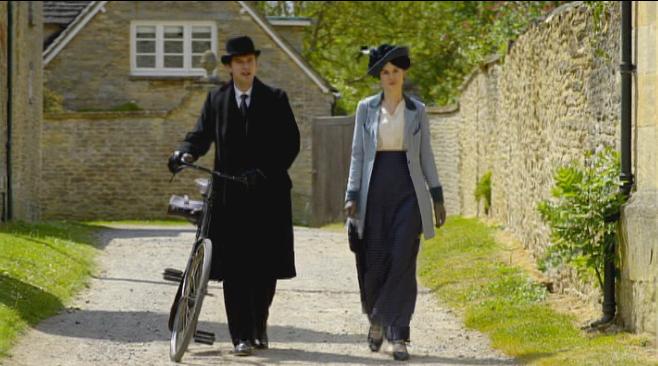
Matthew Crawley and Lady Mary stroll through the town, Episode 3

While it is popularly known that the interior and exterior scenes of Downton Abbey were filmed in Highclere Castle, the market town of Brampton, where the scenes of the town were shot, is not so well known. Bampton is located in Oxfordshire and was chosen because “the village provided an authentic backdrop close to London.”*

Matthew (Dan Stevens) and Mrs. Crawley (Penelope Wilton) arrive in their new home

Yesterday, villagers gathered outside St Mary’s Church to watch Penelope Wilton, who plays Mrs Reginald Crawley, and Dan Stevens, who plays her son Matthew Crawley, arriving at the family home.

Ms Wilton said: “This is one of the prettiest villages I have ever been to. It feels like living in a timewarp.”*

The film crew was not able to hide all 21st century influences. Notice the t.v. arial


Drama as Modern Life Intrudes in Hit TV Show discusses the difficulty of filming a period movie in a location, and viewers “have spotted a TV aerial on a roof, electricity pylons, a modern conservatory and double yellow lines on a road.” One villager remarked, “nothing is ever perfect.”

Bampton (St. Mary's Church in the background), 1965. Image @Francis Frith

Read Full Post »

« Newer Posts - Older Posts »