Feeds:
Posts
Comments

Archive for the ‘Architecture’ Category

By Brenda S. Cox

“Yesterday came a letter to my mother from Edward Cooper to announce, not the birth of a child, but of a living; for Mrs. Leigh has begged his acceptance of the Rectory of Hamstall-Ridware in Staffordshire, vacant by Mr. Johnson’s death. We collect from his letter that he means to reside there, in which he shows his wisdom. Staffordshire is a good way off . . .”—Jane Austen to Cassandra, Jan. 21, 1799

In 1806, Jane Austen and her family made a trip to visit their relatives in the north. They spent five weeks with her first cousin Edward Cooper, rector of Hamstall Ridware (whom I wrote about earlier). They stayed in his rectory, and must have attended the adjacent Church of St. Michael and All Angels and heard Edward Cooper preach there. The church is still much as Austen knew it, inside and out.

The Church of St. Michael and All Angels, Hamstall Ridware, where Jane Austen visited for several weeks in 1806. Photo © Brenda S. Cox, 2023

Hamstall Ridware History

Hamstall Ridware means “homestead,” or “place of the house,” by the “river ford.” It is on the River Blithe. The first word is Anglo-Saxon, the second is Celtic, indicating that the two people groups may have both been living in the area at the time it was named. Three other towns with the name Ridware (Pipe Ridware, Hill Ridware, and Mavesyn Ridware) are nearby.

The de Ridware family were the medieval “lords of the manor” for the area. The church was built, in the Norman style, around 1120 A.D, and expanded in the 14th and 15th centuries.

In the 1370s, the de Ridwares had no male heir, so the land passed to the Cotton family. A Cotton family tomb, from the time of King Henry VIII, still stands in the church. Each shield on the sides commemorates one of the children of John and Joanna Cotton. Half of each shield is their family crest, an eagle on a blue background. For the sons, the other half represents their profession. For the daughters, the other half shows the shield of their husband’s family.

This tomb from the time of King Henry VIII represents all the children of the Cotton family, the lords of the manor at the time. Photo © Brenda S. Cox, 2023

In the 1500s, the Cottons had no male heir, so the manor, Hamstall Hall, and the lands, passed to Sir Anthony Fitzherbert, the husband of the eldest daughter. 

In 1601 the estate went to Sir Thomas Leigh of Stoneleigh, one of Jane Austen’s forebears. This early stained glass window, incorporating 14th century glass, commemorates all these patrons of the Hamstall Ridware church. Each family would have owned the advowson for the Hamstall Ridware church, the right to choose the rector of the church when the previous one died.
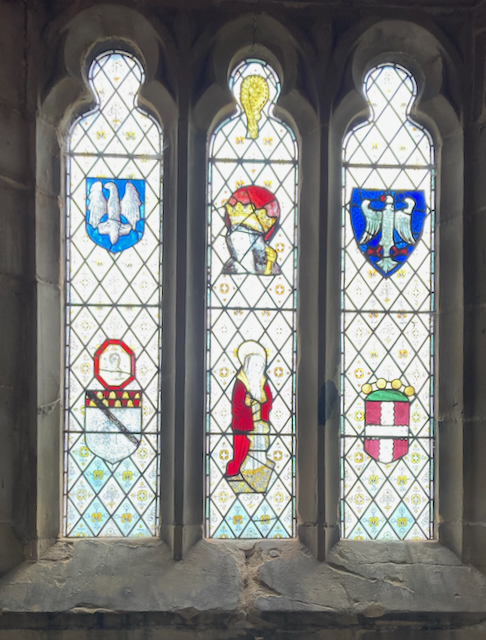
Stained glass window in Hamstall Ridware church. This window shows coats of arms of the families who have owned the manor and land of Hamstall Ridware: the de Ridwares of Hamstall on the upper right, the Cotton de Ridwares on the upper left, the Fitzherberts on the lower left, and the Leighs on the lower right. Alice Cotton, wife of Richard Cotton, appears near the top of the middle panel. Photo © Brenda S. Cox, 2023

The Leighs’ main home was at Stoneleigh Abbey (which we’ll “visit” later). The Hon. Mary Leigh of Stoneleigh Abbey was patroness of Hamstall Ridware in 1799.  When the previous rector, Mr. Johnson, died, she gave the living to her relative Edward Cooper. Before that he had been a curate, an assistant or substitute clergyman, probably with a low salary, at Harpsden. Jane and her family had visited the Coopers at Harpsden in August and September of 1799, before the Coopers moved to Hamstall Ridware in October. Edward invited them to visit Hamstall Ridware in 1801, but Jane said in a letter that they preferred to go to the seaside that summer. However, five years later, the Austens did make a long trip to visit their Leigh relations at Adlestrop, then accompanied their cousin, Rev. Thomas Leigh, who had just inherited Stoneleigh Abbey, to the abbey. From Stoneleigh they went to Hamstall Ridware, 38 miles away.

During this time, it’s possible that Jane may have seen the play Lover’s Vows, an important part of Mansfield Park. It was advertised in a village called Cheadle about an hour’s carriage ride away (Gaye King, “Visiting”).

Unfortunately, during Jane’s visit, Edward’s eight children came down with whooping cough, and Jane got it a few weeks later, after she got home (Letters, Jan. 7, 1807).

Displays in the church commemorate Jane Austen, her visit to Hamstall Ridware, the history of the church, and the Leigh family’s connections to the area. Photo © Brenda S. Cox, 2023
The church history board gives fascinating tidbits. For example, the parish register for 1715 lists the death of rector Thomas Allestree, M.A., and the induction of a new rector, Gorstelowe Monck, A.M. (same as M.A., Master of Arts); 7 baptisms (presumably of babies); 5 marriages including two to widows, and two others by license, both with one spouse from another parish; 7 burials, including Rev. Allestree (age 77) in July, his widow in December, and two babies buried shortly after their baptisms. An adjacent news article about Rev. Allestree says he wrote and memorized 500 sermons, and preached them a total of 5,000 times! Photo © Brenda S. Cox, 2023

The Rectory

The rectory (or parsonage, the house provided for the rector of the parish) where the Austens stayed is now a private home. It is now difficult to see even from the outside, but this photo shows the building before a gate was built.

The Hamstall Ridware rectory, before gates were installed. Jane Austen and her family stayed here for five weeks in 1806 with Jane’s cousin Edward Cooper. Photo © Jack Barber, 2017, used by permission.

It has been speculated that this rectory was the pattern for the Delaford rectory, where Edward and Elinor Ferrars settle in Sense and Sensibility. The layout of the Delaford estate, with “stew-ponds” (fish ponds), “a very pretty canal” (perhaps suggested by the nearby river), and “great garden walls,” also corresponds to some features of the Leighs’ estate at Hamstall Ridware.

Gaye King wrote,

“Edward had found the rectory quite large enough to accommodate his growing family. Like the fictional parsonage at Delaford it had ‘five sitting-rooms on the ground floor, and … could make up fifteen beds’ (292). So the young rector could look forward to maintaining the tradition of liberal hospitality such as that he had enjoyed at the Steventon parsonage. When Jane Austen, together with her mother and sister, did eventually spend those five weeks at Hamstall Ridware in 1806 Edward and Caroline had eight children. There were also, living in at the rectory, two maids and a governess, yet there was still ample accommodation for the guests.”

(I have since noticed that the five sitting rooms and fifteen beds were characteristics of the manor house where Col. Brandon lived, not of the parsonage! And I doubt a country parsonage would have so many sitting rooms.)

However, relatives who visited wrote that it was “a beautifully situated parsonage house on a considerable eminence, back’d with fine woods, seen at a distance from the road to this happy village,” and that the church “was a very neat old Spire Building of stone, having two side Ailes [sic] Chancel &c. and makes a magnificent appearance as a Village Church” (quoted in Deirdre Le Faye, Jane Austen: A Family Record, 157).

The Church of St. Michael and All Angels, Hamstall Ridware

The Church of St. Michael and All Angels, Hamstall Ridware, where Jane Austen’s cousin Edward Cooper was rector from 1799-1833. Photo © Brenda S. Cox, 2023

The church is large, seating 200 people, almost three times the size of Jane’s church at Steventon (which seats about 75). It has a long central aisle leading to the chancel, where the altar sits, and two side aisles. Lining both sides is a clerestory, high walls with a series of windows which let in natural light.
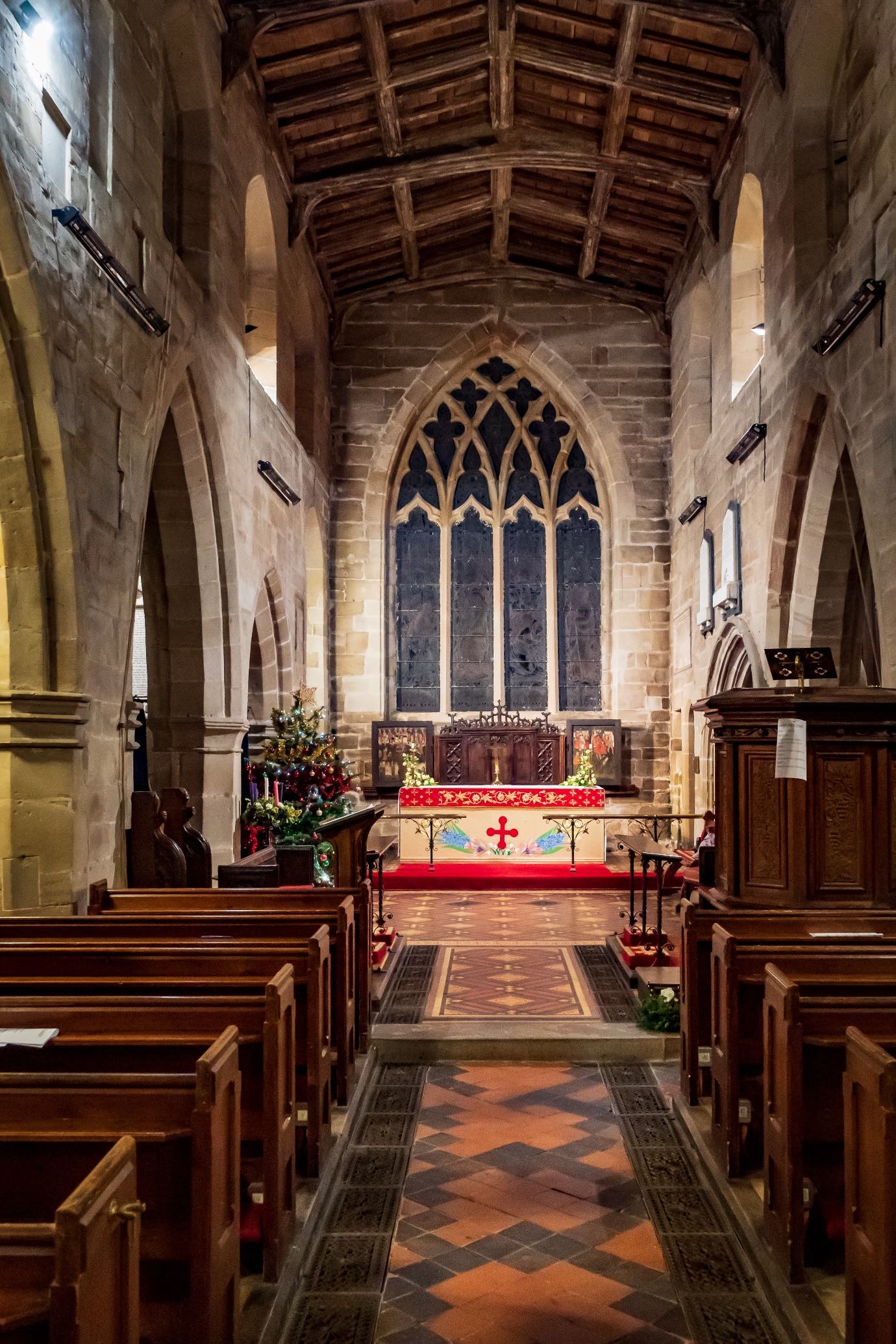
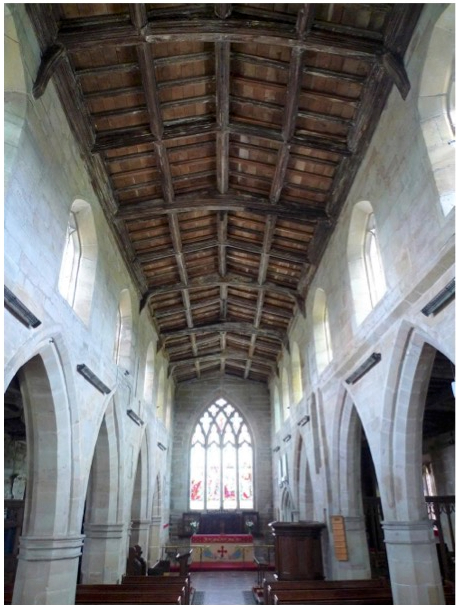
Central aisle of the Hamstall Ridware church. Photo courtesy of Hamstall Ridware PCC, used by permission.
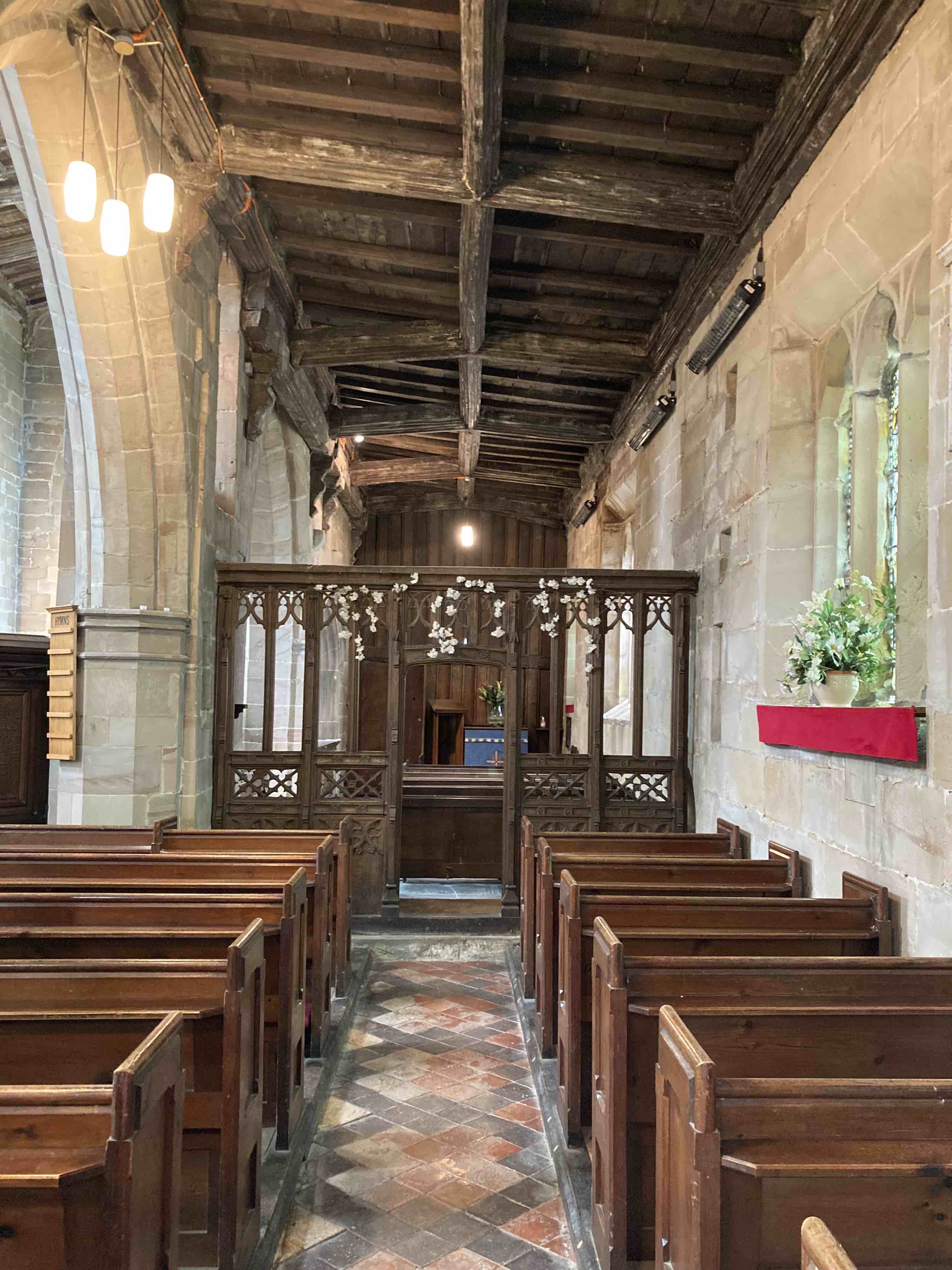
Unusually, the upper section of the church has clerestory windows down the whole length of the church, lighting up the whole interior. The aisle roofs are “moulded ridge pieces and tie beams.” Photo courtesy of Hamstall Ridware PCC, used by permission.
Late 15th century chapel screen on a side aisle. Photo © Brenda S. Cox, 2023

Like many churches in England before the Reformation, this church once had a rood screen separating the chancel from the nave. This was a barrier between the chancel, where the clergy celebrated mass at the altar, and the lay people worshiping in the nave. It was usually topped by a cross; the Anglo-Saxon word for cross is rood. Some churches also had a rood loft, above the screen, from which a choir would sing parts of the service. Many rood screens and lofts were destroyed during or after the Reformation, to symbolize people’s more direct access to God.

A few steps, which once led to the rood loft, still remain in one wall. Two paintings from the rood screen are now behind the main altar in a reredos (reer-ih-dahss is one pronunciation). This means a decorative panel behind the altar. These paintings are from the late 15th century, by an unknown accomplished artist, probably local.

The reredos behind the altar includes two 15th century paintings from the rood screen of the church, which was destroyed during the Reformation. The one on the left is apparently unique in England. It shows times when Christ’s blood was shed: “the circumcision, the agony in the garden, the scourging, the crown of thorns and the crucifixion,” according to the church booklet. “The right-hand panel shows the procession of the cross with St. Mary Magdalene kneeling in front of it. Both panels have been heavily scratched and scored. This was probably done at the time of the Civil War [1642-1651], when everything that had Roman Catholic associations was defaced.” Photo © Brenda S. Cox, 2023

Memorials to the Cooper Family

Edward Cooper and his family left their mark on the church. The memorial to Edward Cooper says:

In a vault near this spot, are deposited the remains of the Rev. EDWARD COOPER, who, for upwards of 30 years was rector of this parish, and for many years of the adjoining parish of Yoxall also: in both which places, (as a faithful minister of Christ, and endeared to all his parishioners,) he discharged, with unremitting zeal, the duties of his sacred office.

He was the only son of the Rev. Edward Cooper, L.L.D. vicar of Sonning Berks, &c. and prebendary of Bath and Wells; and of Jane his wife, grandaughter of Theophilus Leigh, Esq., of Addlestrop, in the county of Gloucester,

He was formerly fellow of All-Souls’ College, Oxford, as was his father also.

He departed this life, the 26th day of February, 1833, in the 63rd year of his age.

“He being dead yet speaketh”

Within the same vault also repose the remains of CAROLINE ISABELLA, his widow, only daughter of Philip Lybbe Powys, Esq. of Hardwick House in the county of Oxford,

She died on the 28th day of August, 1838, in the 63rd year of her age.

This tablet is erected by their eight surviving children, as a tribute of grateful affection, and respect, to the memory of their deeply lamented, and much beloved parents.

Memorial in Hamstall Ridware church to Edward Cooper, rector. Photo © Brenda S. Cox, 2023

As the memorial notes, Edward was also rector of a neighboring parish, Yoxall (from 1809). Like George Austen, he needed the income from two small parishes and was able to serve them both since they were close. Rev. Thomas Gisborne, another Evangelical minister, was from Yoxall. He wrote a book that Cassandra and Jane both liked, An Enquiry into the Duties of the Female Sex (letter of Aug. 30, 1805). Perhaps Edward had recommended it to them. Though we have no record of it, it’s possible Jane could have met Gisborne during her visit. He was a friend of Edward’s, and he and Henry Austen were the godfathers of one of Edward’s sons. Gisborne was also involved with Wilberforce in fighting the slave trade. (Gaye King, “Cousin” article)

On another wall is a memorial to Edward’s son and grandson. His youngest son Warren died in 1844, age 39, and Warren’s son, Edward-Warren, died as an infant in 1840.

Hamstall Ridware memorial to Edward Cooper’s son and grandson. Photo © Brenda S. Cox, 2023

Outside, under a large cross, are the graves of Edward’s third son, Rev. H. C. Cooper, vicar of Barton-under-Needwood (5.6 miles away), who died in 1876, “in the 76th year of his age.” Also Edward’s second daughter, Cassandra Louisa, who died in 1880, “in the 84th year of her age.” The final inscription reads, “Looking for the mercy of our Lord Jesus Christ unto eternal life. Jude, v. 21”

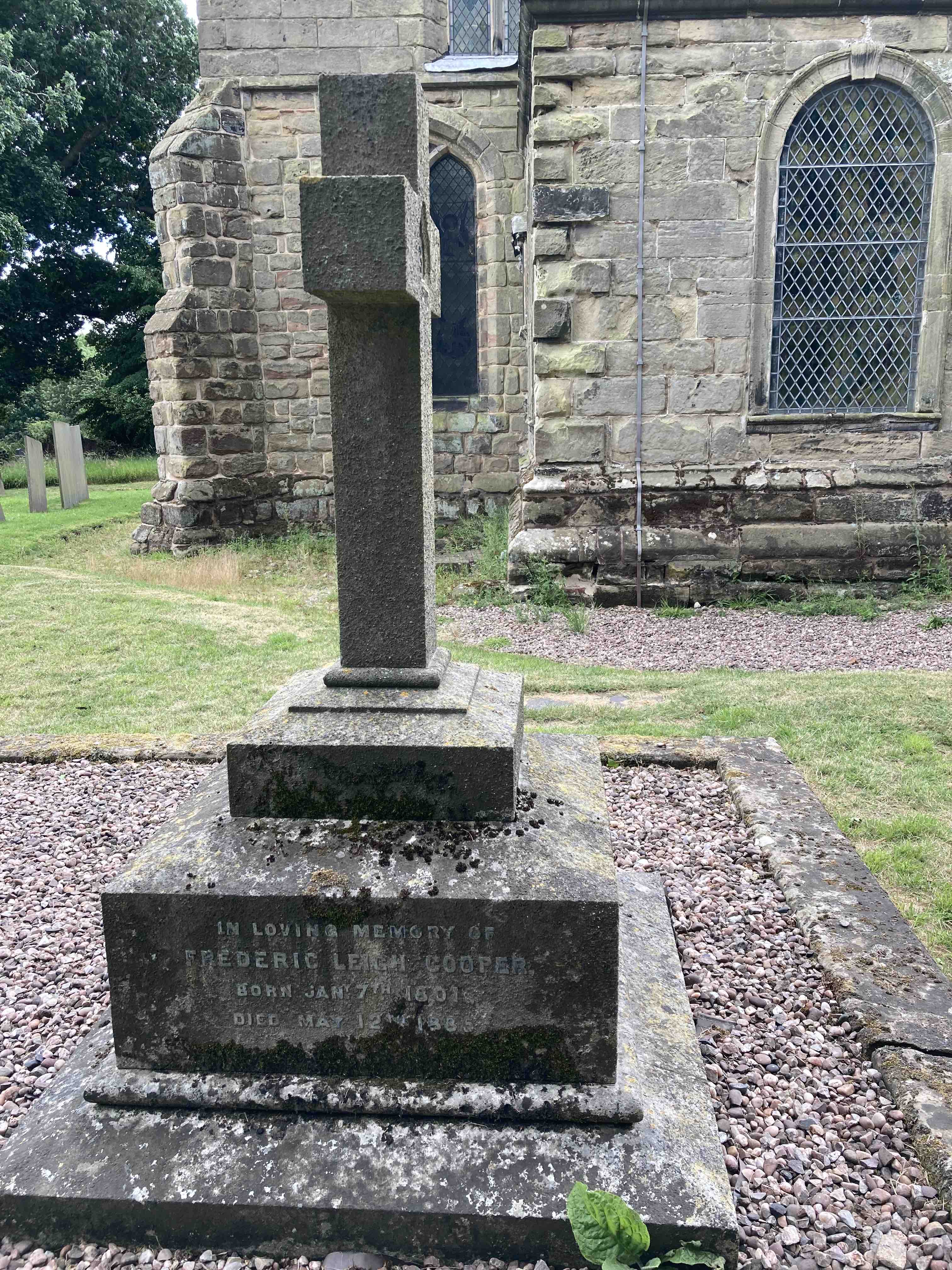
Another side memorializes Frederic Leigh Cooper, born 1801, died 1885. This was Edward’s fifth child

This cross identifies the burial site of several of Edward Cooper’s children in the Hamstall Ridware church burial ground. Photo © Brenda S. Cox, 2023
Side view of cross with inscription to another son. Photo © Brenda S. Cox, 2023

Glebe

Green fields surround the church. Most churches in England had glebe land, farmland that provided income for the clergyman. In 1978, all glebe land was transferred to the dioceses, who administer it now. (A diocese is a group of church parishes overseen by a bishop.) Some modern locations in England still retain the name glebe. Hamstall Ridware is part of the Diocese of Lichfield, and I was told the diocese still receives income from grazing on glebe lands nearby. Glebe income today is used to pay clergy salaries and other expenses.

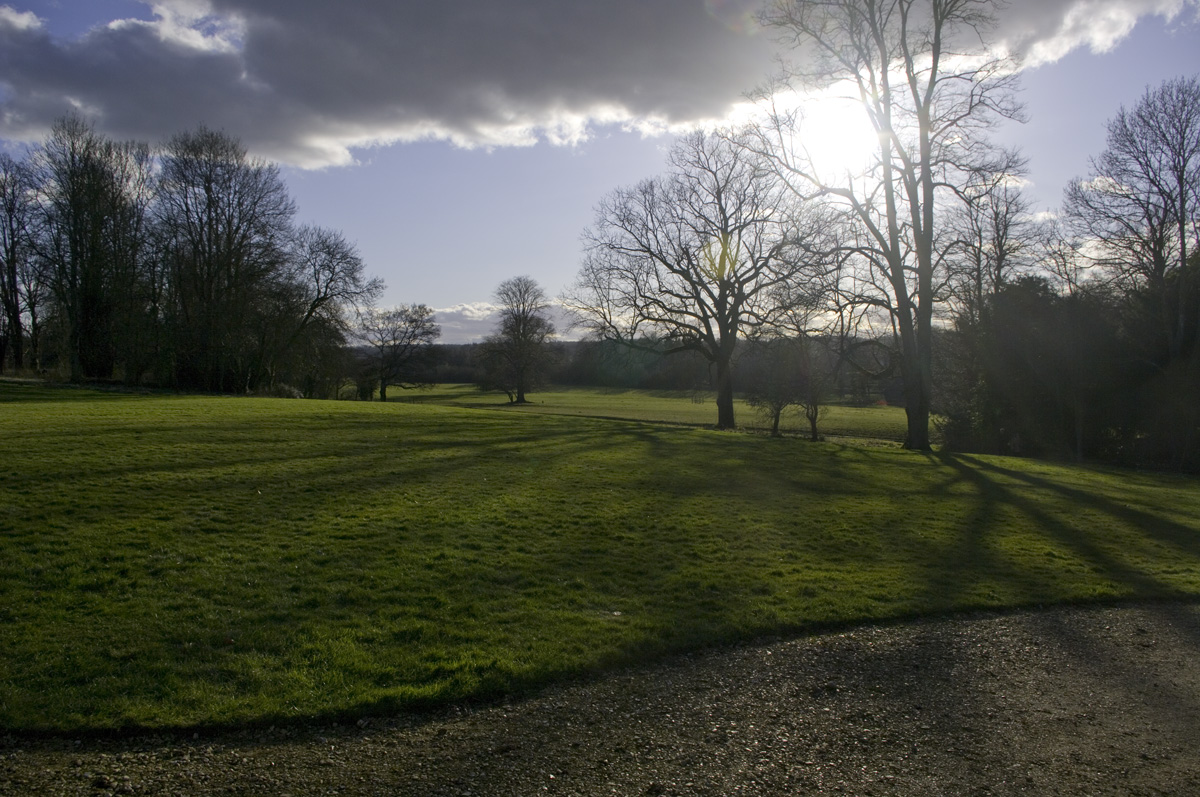
The Hamstall Ridware church is in the midst of green fields, some of which still provide income to the Church of England today. Photo © Brenda S. Cox, 2023

The Church Today

The Hamstall Ridware church is now part of a benefice including four parishes with one rector. In 1831, the population of the parish was 443. In 2011 it was 313.

Hamstall Hall, previous home of the Leigh family, is now mostly in ruins. But, according to the church booklet, the current Lord Leigh is still “a patron of the United Benefice of King’s Bromley, the Ridwares, and Yoxall jointly with the Bishop of Lichfield and the Dean and Chapter of Lichfield Cathedral.” (In other words, they jointly choose/approve the clergymen for the churches of the benefice.) 

Like Chawton and Steventon, Sunday services are held at the Hamstall Ridware church weekly, usually with only ten or so faithful parishioners attending. The church is large, seating 200 people, but it has little heating, and only a chemical toilet outside. However, they do get big crowds for Harvest, Christmas, and other special services, as well as lectures and concerts. And many visitors come to the church, which is open in the daytime, though apparently the door can be tricky to open.

The Church of St. Michael and All Angels is well worth a visit for Jane Austen enthusiasts. It is just over an hour’s drive, by car, from Stoneleigh Abbey. The Samuel Johnson Birthplace Museum in Lichfield is on the way.
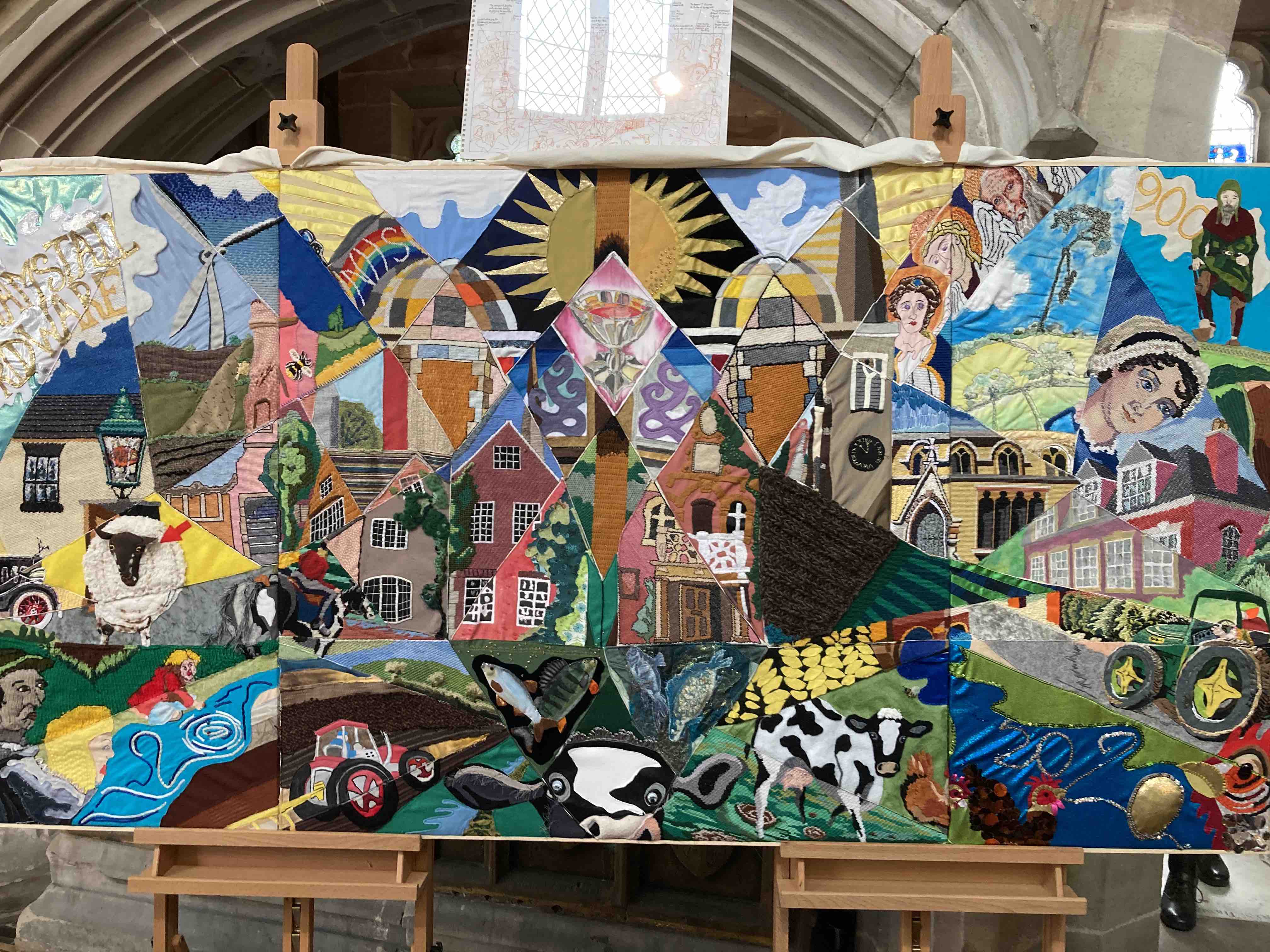
The people of the church created a tapestry depicting Hamstall Ridware through 900 years of history. Jane Austen’s face is prominent on the right side. Photo © Brenda S. Cox, 2023

Note: In 1805, Edward Cooper wrote a hymn that is still sung today, “Father of Heaven, Whose Love Profound.”

For Further Exploration

This post from the Ridware Historic Society includes diary entries from Edward’s mother-in-law, during her visits to the family at Hamstall Ridware, as well as more information about the town and its people.

The church website gives some history and a schedule of services.

The historic listing tells more details of the church’s architecture.

A video showing many aspects of the church

Booklet on the church (a slightly older version than the one I used for this article)  

Photos on Flickr of Hamstall Hall, Hamstall Ridware church and Yoxall church  

Gaye King “Jane Austen’s Staffordshire Cousin: Edward Cooper and His Circle,” Persuasions 1993

Gaye King, “Visiting Edward Cooper,” Persuasions 1987

Donald Greene article, “Hamstall Ridware: A Neglected Austen Setting,” Persuasions 1985 

Posts on other Jane Austen Family Churches

Steventon

Chawton

Adlestrop and the Leigh Family

Stoneleigh Abbey Chapel

Great Bookham and Austen’s godfather, Rev. Samuel Cooke

Ashe and Jane’s Friend Mrs. Lefroy 

Deane

Brenda S. Cox is the author of Fashionable Goodness: Christianity in Jane Austen’s England. She also blogs at Faith, Science, Joy, and Jane Austen.
Read Full Post »

Inquiring readers, guest blogger Tony Grant is a marvelous photographer, as you might have discovered from the images that accompany his posts. A week or so ago he wrote a post about door knockers. He provided only two original images: the rest came from the web. Last weekend he rectified the situation, saying:

I drove into London to meet my daughter off the Cardiff coach at Victoria Coach Station today. I think I did an article on Belgravia once connected with the upstairs Downstairs series. Victoria is in Belgravia.To cut this story short, I had time to have a walk around Belgravia and along Eaton Square. The doors to those houses have a superfluity of Lion head door knockers.
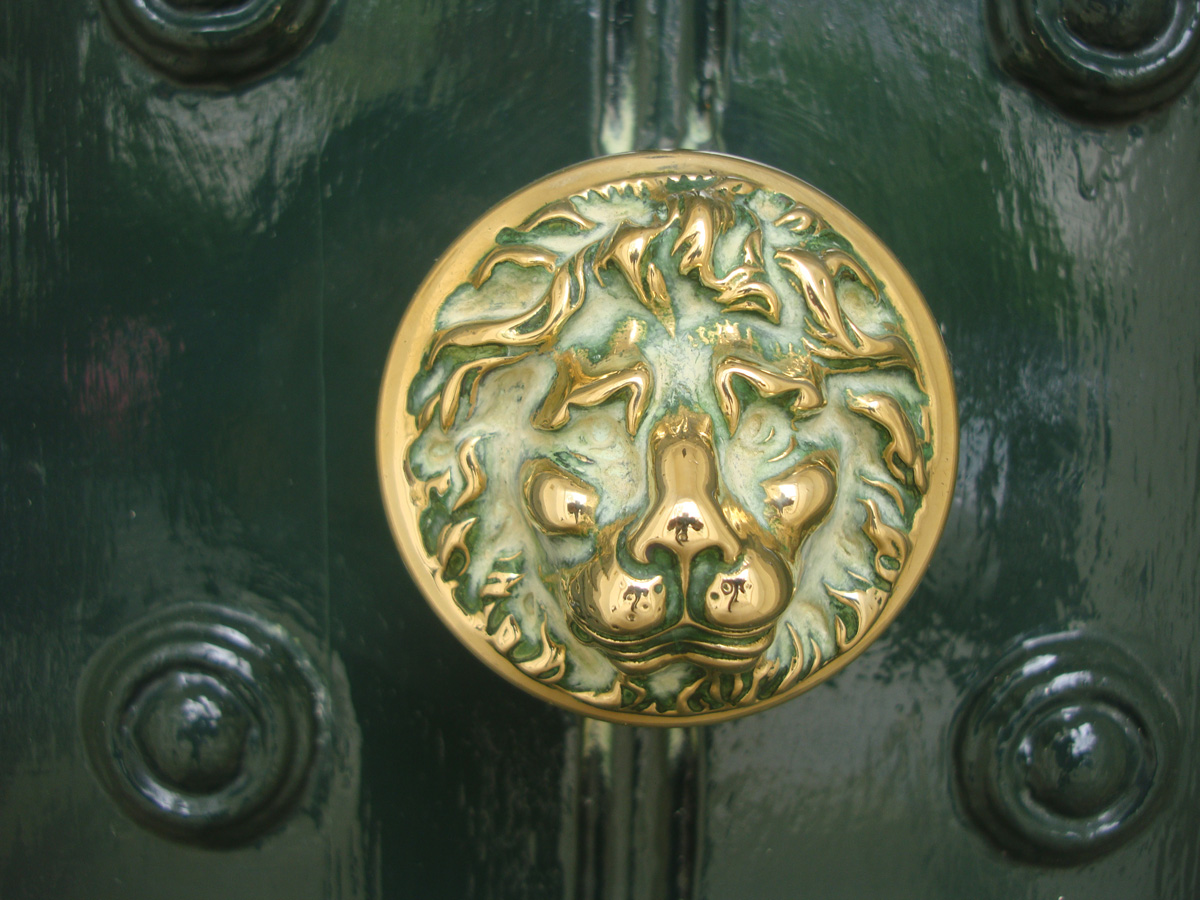
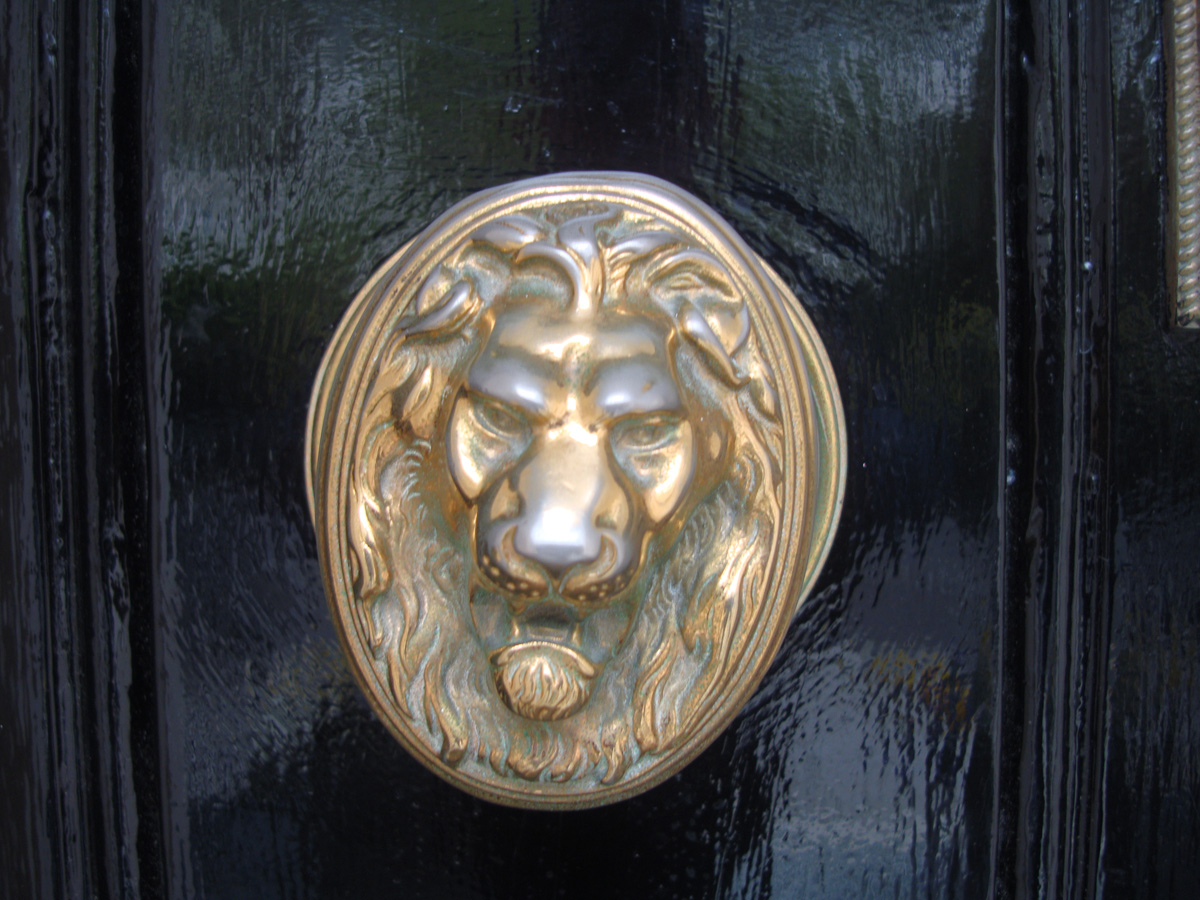
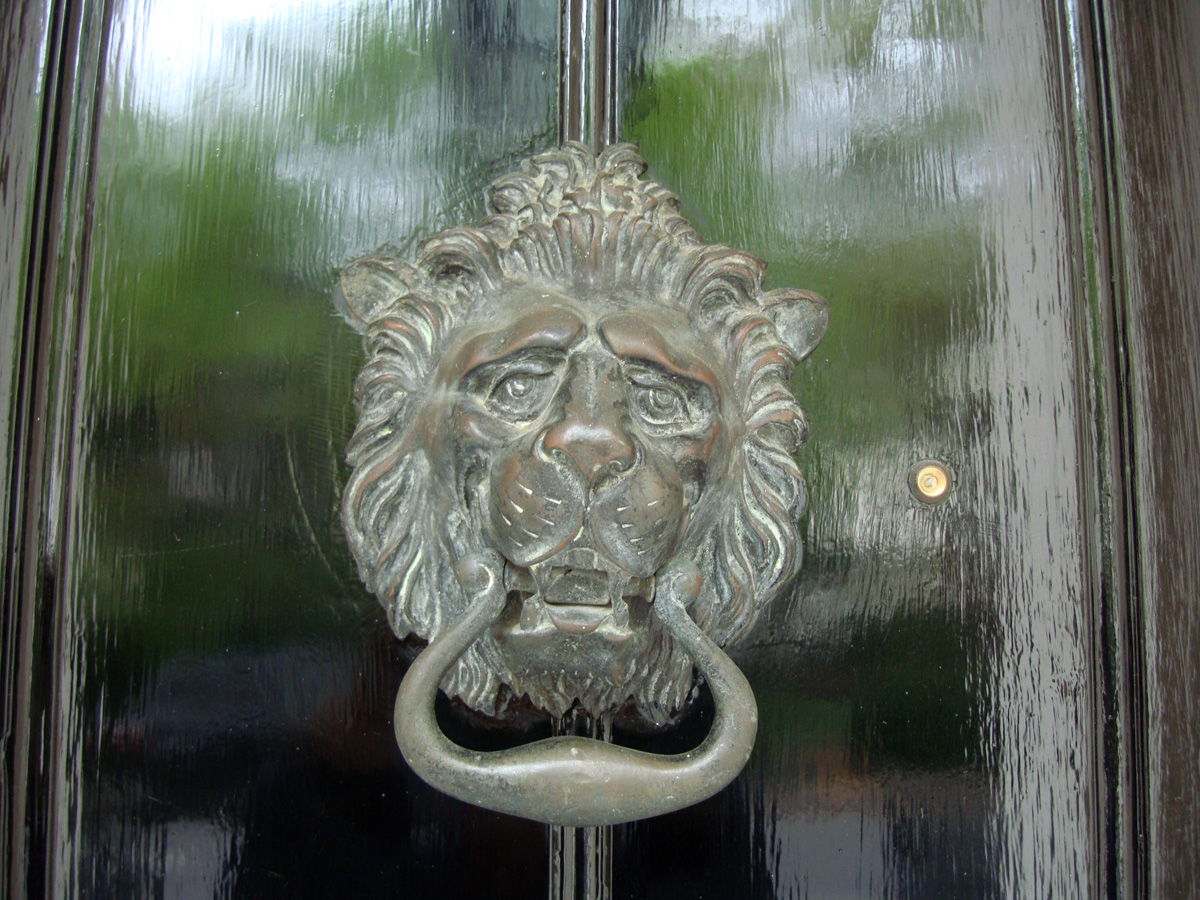
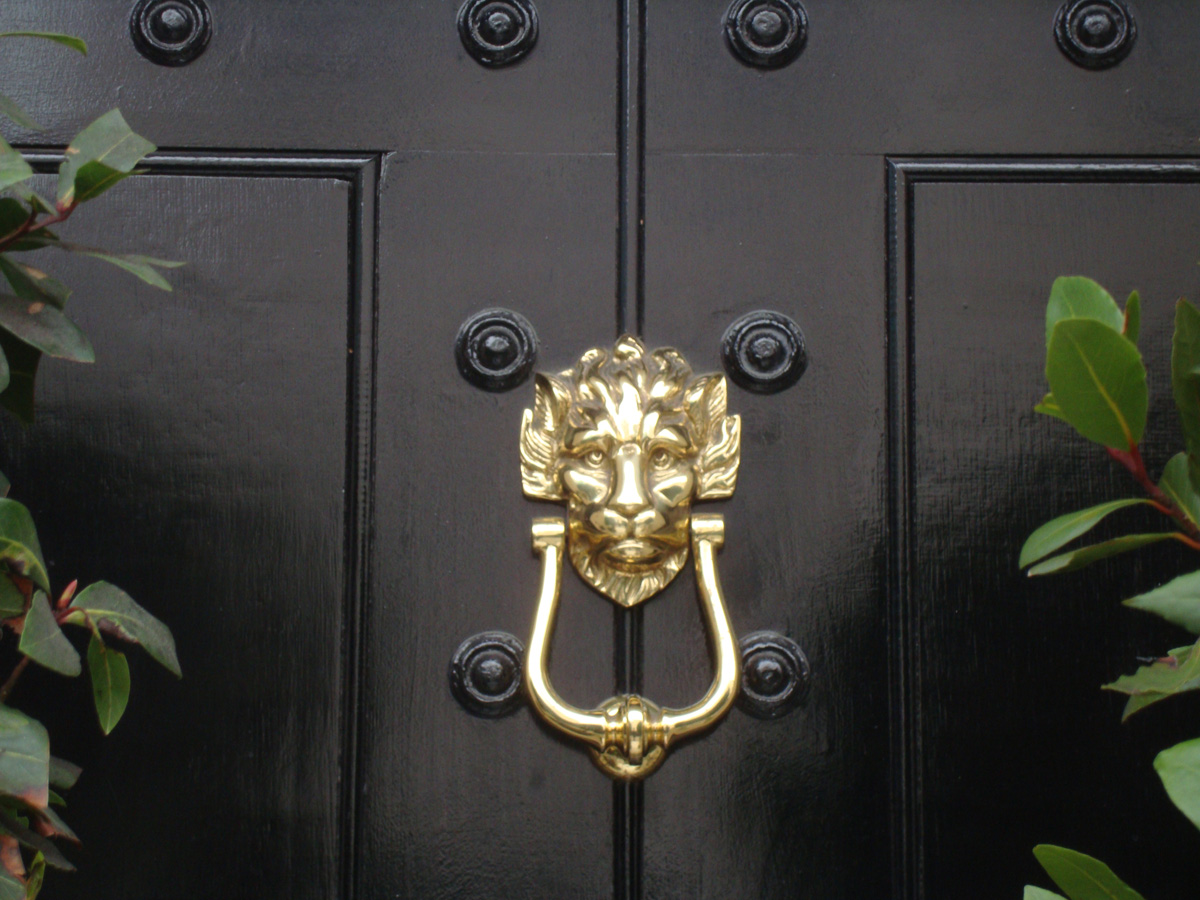
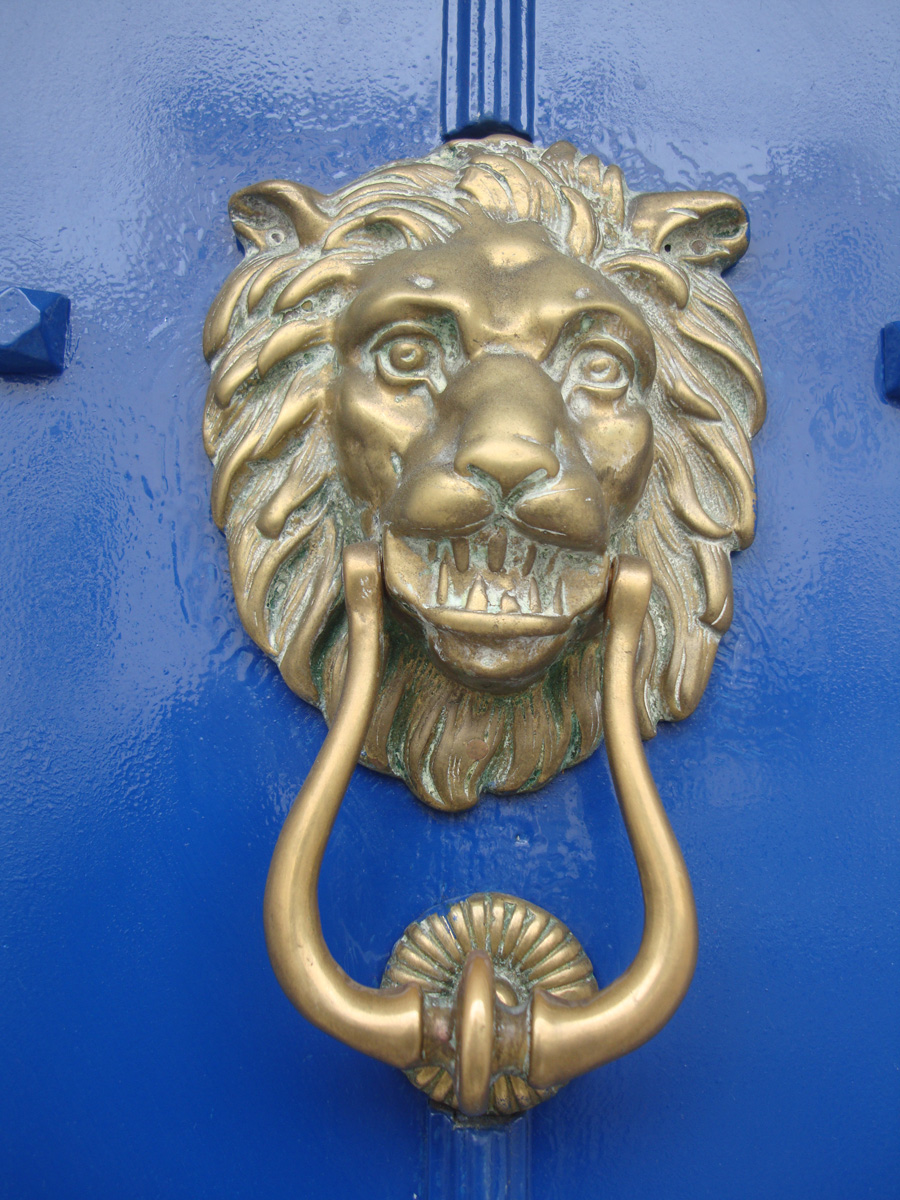
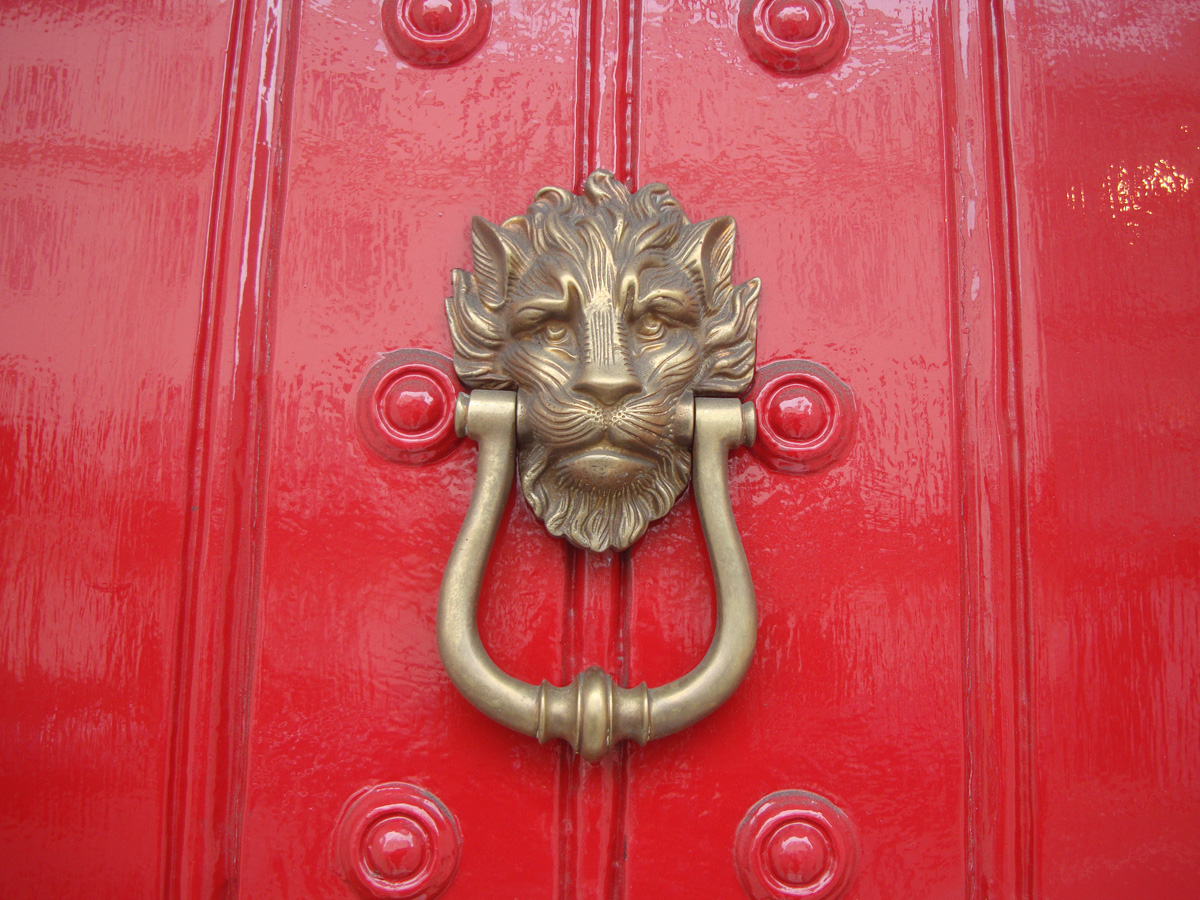
What I have discovered taking these photographs is that  each lion head has it’s  own personality. They are all different which means they were all made individually, each from their own unique mould.

What struck me in viewing those photos is how beautifully painted the doors are. Tony is right – the lions all have their own personalities! Enjoy. Click on each image to view the larger photo.

Read Full Post »

Gentle Readers, Frequent contributor Tony Grant has supplied us with yet another treat: a post about door knockers. After you have read it, you will want to hop on over to his blog, London Calling, in which he describes his trip to Venice. 

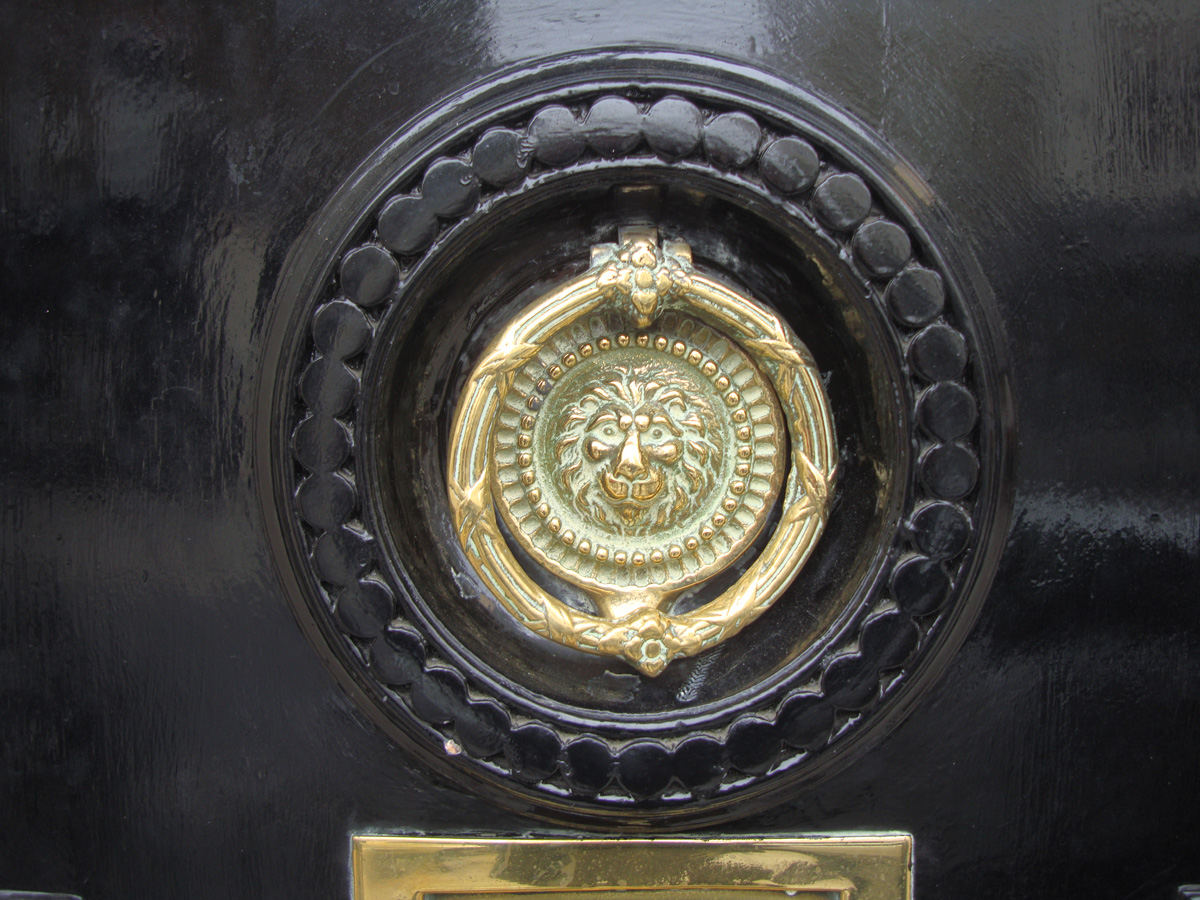
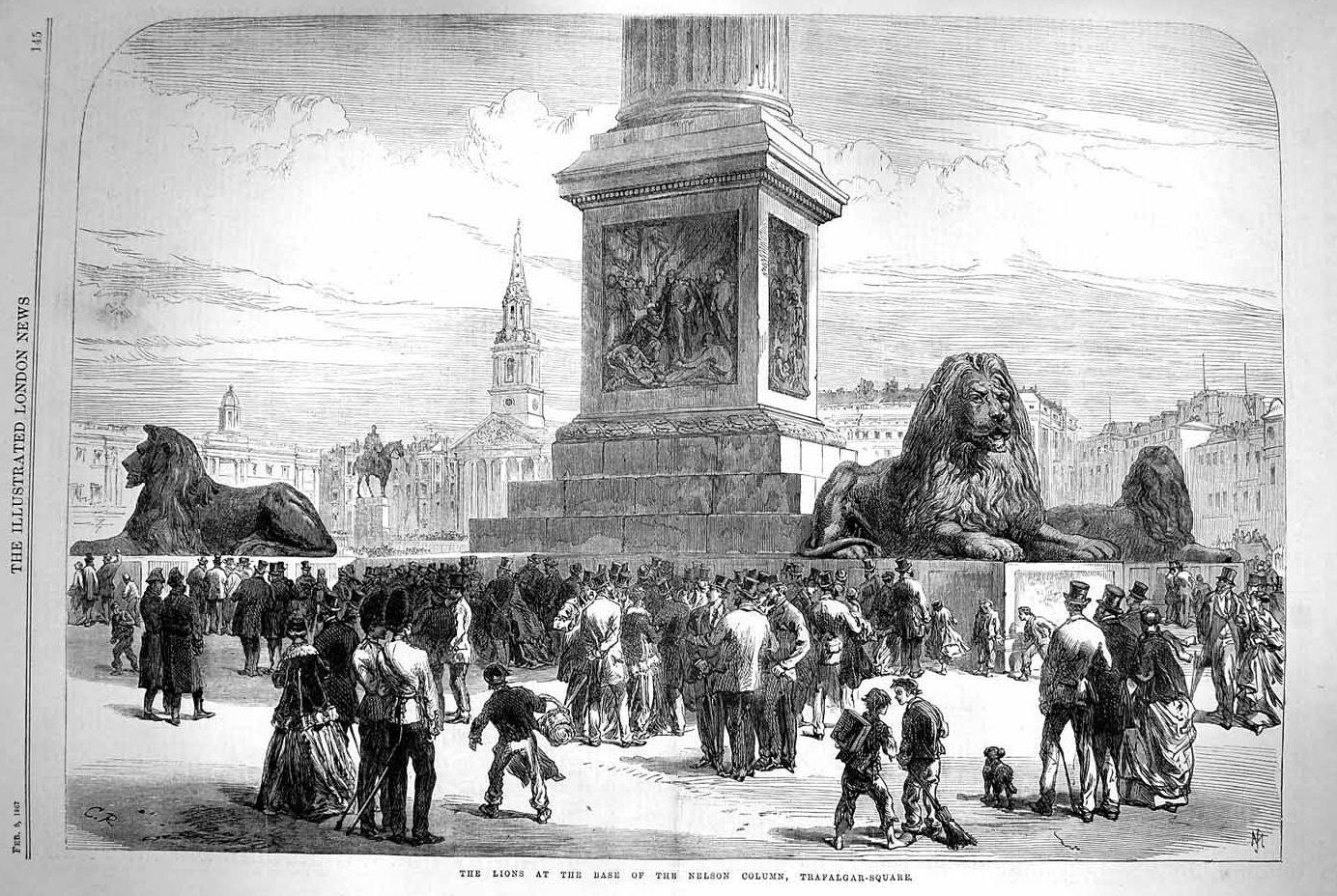
The quintessential door knocker in Georgian architecture is the brass lion head with a large brass ring gripped in its mouth. It has been used as a symbol of Great Britain for centuries. Trafalgar Square has four enormous bronze lions positioned on great granite plinths at the four corners of the base of Nelson’s Column. They are made from the melted down bronze from canons captured from French ships at The Battle of Trafalgar.
Lions at the base of Nelson's Column, Trafalgar Square. Image @The Illustrated London News

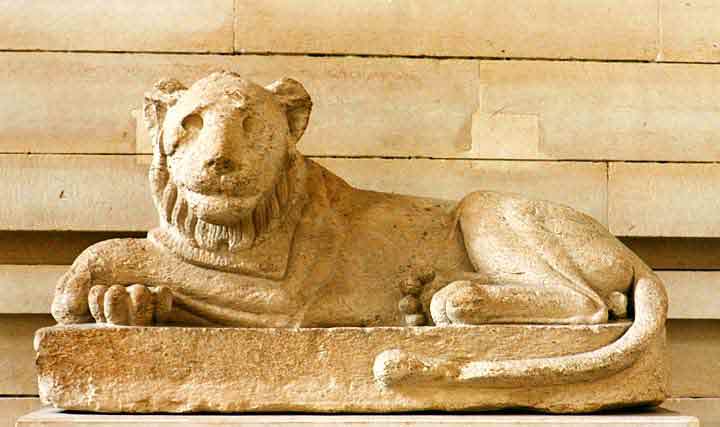
All coats of arms relating to the monarchy have lions as a prominent feature of their design, usually rampant. Lions have been used symbolically since the Paleolithic period.

Egyptian lion sculpture carved out of limestone, Louvre

The Egyptians carved sphinxes, half man, half lion. They symbolise power and strength, courage and fortitude.

Heraldic lion

You can go to any part of London and you will come across Victorian or Georgian housing still with their original door furniture. Very often the door furniture will include a brass lion head door knocker. This could be a sign of Victorian and Georgian confidence. A sign for people of the greatest and largest empire the world has ever known. For the visitor it is their first contact with the house and a way of communicating their arrival by lifting the knocker and rapping it smartly against its back plate. The back plate to a lion head knocker is the lion’s head.

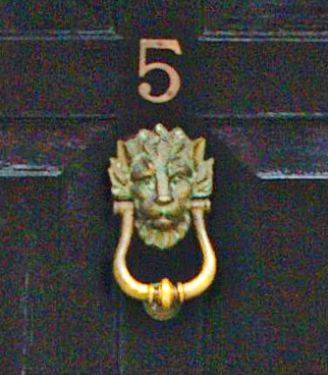
Lion door knocker. Image @Tony Grant

Knocking on a door does two things. First it makes the visitor take hold of the house. The hand grips the knocker. It is a like a handshake; a very English form of greeting. Secondly, through the sound of the knock it communicates to the occupants that somebody is visiting. The way the door is knocked can express other things too like haste, frustration, timidity or confidence.

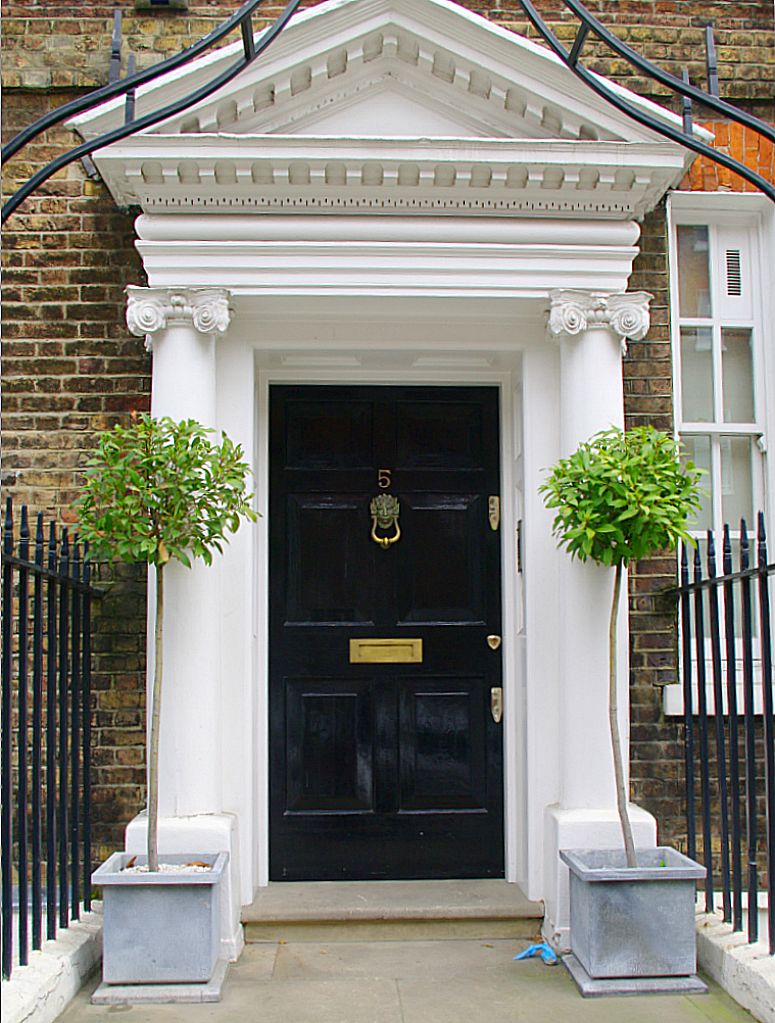
Front door with lion knocker. Image @Tony Grant

The fact that many Georgian houses have door knockers that are the originals means that we today in the 21st century, who are still using these door knockers to gain entrance, have a palpable, physical connection to people from past generations and from all classes of a past society.

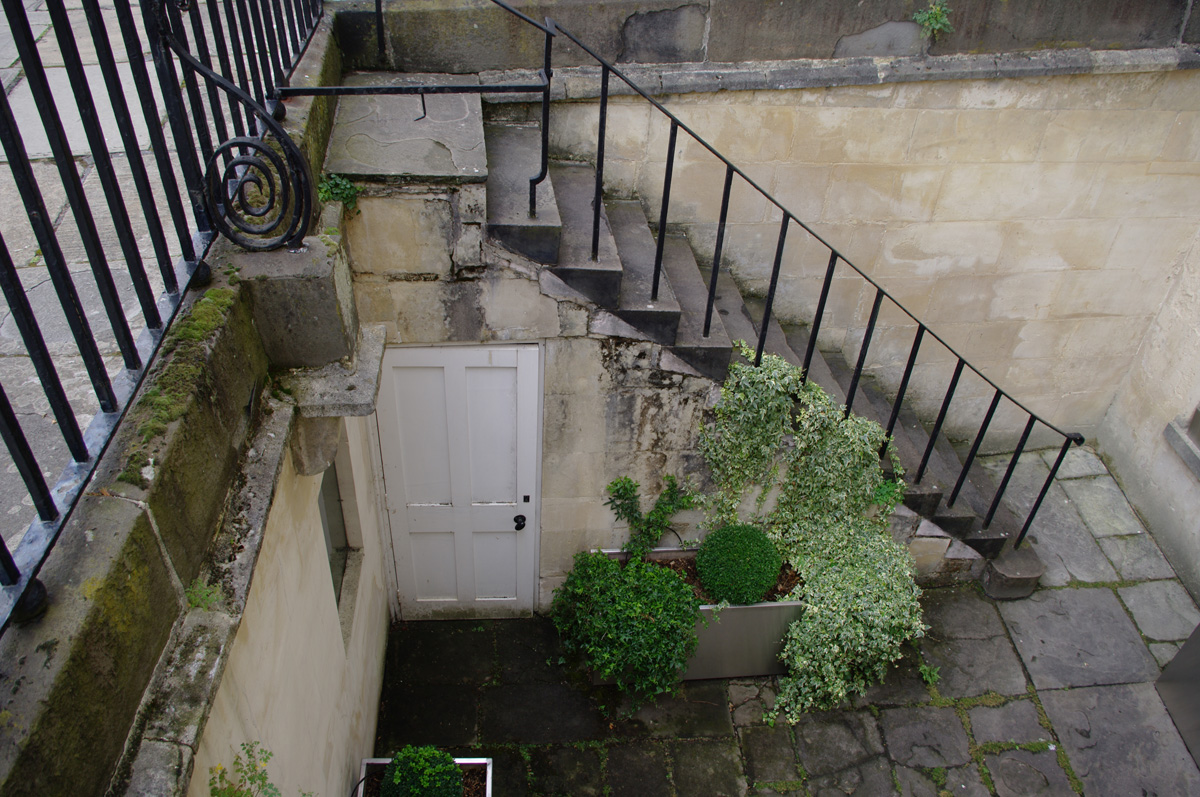
Downstairs to the servant's quarters, Bath. Image @Tony Grant

The servants belonging to the Georgian household would not have used the doorknocker of their own house. They would have slipped down the flight of stone steps near the front gate, to the servant’s quarters in the basement. However a footman or servant sent with a message or communication from another household would have used the front door knocker. The owners of the house would have knocked to alert their footman to open the door to them and their friends would have knocked to gain entrance too.

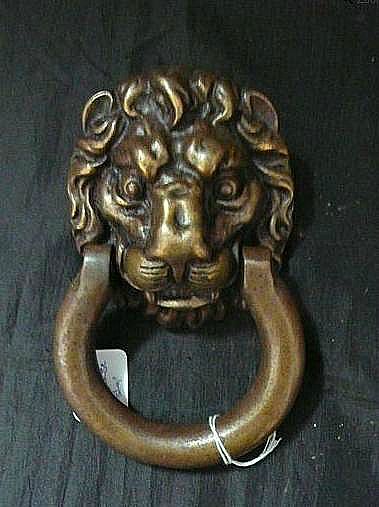
Door knocker made of brass. Image @Ruby Lane

A lot of door knockers are made from brass. Some are iron. Brass is a very special metal. It has a golden lustre when polished and expresses wealth, a friendly glow and a welcoming feel. Iron on the other hand can be aggressive and harsh. Iron against iron can cause a spark. It can rust and have unfriendly qualities. Brass on the other hand is benign. It is a malleable metal and has acoustic properties. In fact the brass door knocker on a Georgian front door can almost be regarded as a percussion instrument. The solid wooden door is the drum skin and the entrance hall behind it is the chamber within which the sound resonates and vibrates.

J. L. Settle door knocker at Portsmouth

Brass is used for many purposes, including bullet cases, artillery shell casings, horse accoutrements, locks, bearings, gears, musical instruments, horns and bells. It does not create a spark. It is low friction.

Brass is an alloy, which almost makes it a magical thing. It is an alloy of copper and zinc. The proportions can vary between the two metals to create different qualities in the brass. It is a substitutional alloy. This means that when the copper and zinc are melted together they replace some of each other’s atoms with their own atoms. Brass has been made since Roman times. You can imagine in the middle ages or earlier and perhaps even up to Georgian times people regarded blacksmiths and workers of metals almost as magicians being able to smelt ores and extract pure metals from their furnaces to make the most magical things. Brass is a difficult alloy to make, even more so than other alloys. Copper can be smelted easily but zinc cannot be smelted from it’s ore. Brass has to be created through what is called a cementation process. This is when smelted copper is mixed with the unsmelted zinc ore. This means that many impurities are included and the slag that is created has to be carefully separated during the alloy creating process. Zinc comes from rocks called hemimorphite and smithsonite. Lead is something that is also added to some brass alloys to create a different quality. However, sometimes, the lead leaches from the finished brass. Imagine that rubbing onto some unsuspecting visitors hands. Particles of lead unseen on the hands and transferred to the mouth and the digestive system.


That thought lends new credence to the famous scene in Charles Dickens a Christmas Carol when Scrooge returns home on a cold misty winters night,

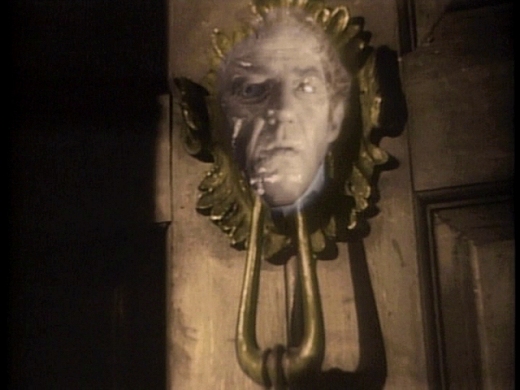
Now, it is a fact, that there was nothing at all particular about the knocker on the door, except that it was very large.  It is also a fact, that Scrooge had seen it, night and morning, during his whole residence in that place; also that Scrooge had as little of what is called fancy about him as any man in the city of London, even including — which is a bold word — the corporation, aldermen, and livery.  Let it also be borne in mind that Scrooge had not bestowed one thought on Marley, since his last mention of his seven years’ dead partner that afternoon.  And then let any man explain to me, if he can, how it happened that Scrooge, having his key in the lock of the door, saw in the knocker, without its undergoing any intermediate process of change — not a knocker, but Marley’s face.

Marley’s face.  It was not in impenetrable shadow as the other objects in the yard were, but had a dismal light about it, like a bad lobster in a dark cellar.  It was not angry or ferocious, but looked at Scrooge as Marley used to look: with ghostly spectacles turned up on its ghostly forehead.  The hair was curiously stirred, as if by breath or hot air; and, though the eyes were wide open, they were perfectly motionless.  That, and its livid colour, made it horrible; but its horror seemed to be in spite of the face and beyond its control, rather than a part or its own expression.

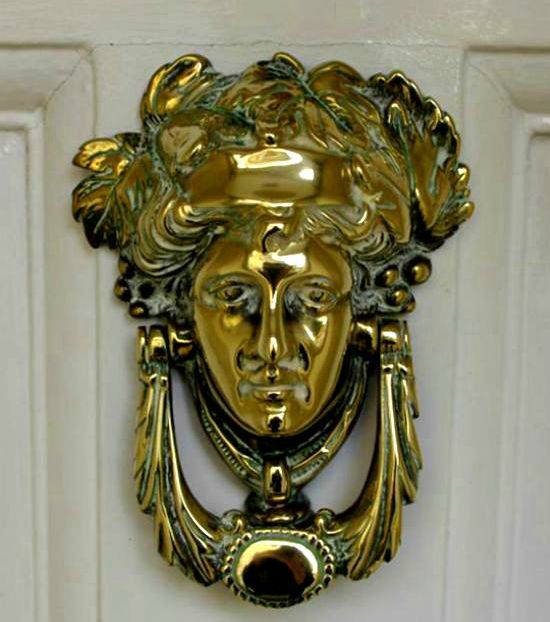
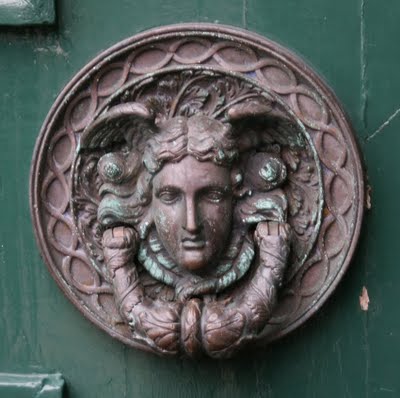
Another form of door knocker - that of a Roman god wearing a laurel wreath, Bath. Image@Tony Grant

As Scrooge looked fixedly at this phenomenon, it was a knocker again.

To say that he was not startled, or that his blood was not conscious of a terrible sensation to which it had been a stranger from infancy, would be untrue.  But he put his hand upon the key he had relinquished, turned it sturdily, walked in, and lighted his candle.”

Was it lead poisoning that was rotting Scrooges brain or just tiredness, misery, the cold and mist and darkness playing tricks with his imagination and senses?

Filing a door knocker. Image @History.org Foundation Journal

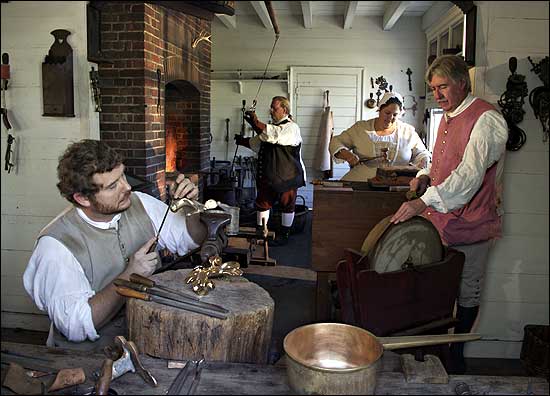
To make a lion head door knocker a few technical and difficult processes have to be carried out. A mould has to be made. A carver carves a lion head pattern out of wood. A mould maker uses a box filled with a mixture of sand and clay to make a fire-proof  mould. The wooden pattern is pressed into the sand and clay composite and a lion head knocker mould is thus created. The molten alloy of copper and zinc that creates the brass is then poured into the mould and left to cool and solidify. When cold the brass knocker can be extracted and filed and sanded down to get rid of any rough surfaces. In this process, craftsmen, metal workers geologists and miners would form a trail of work and economy. Finally the finished  door knocker would have been sold to a carpenter making a door to then be sold to a builder who would fix the door in the house he made for a new purchaser.

Door knocker at the Brighton dome at the Brighton Pavilion, early 19th c.

More on the topic:

Read Full Post »

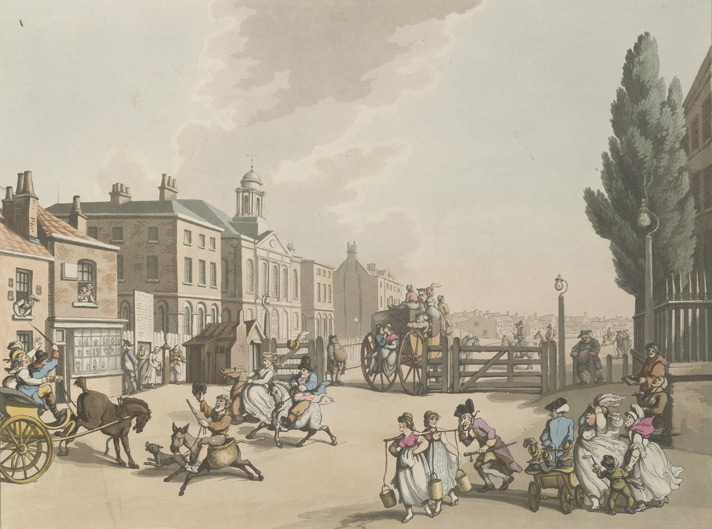
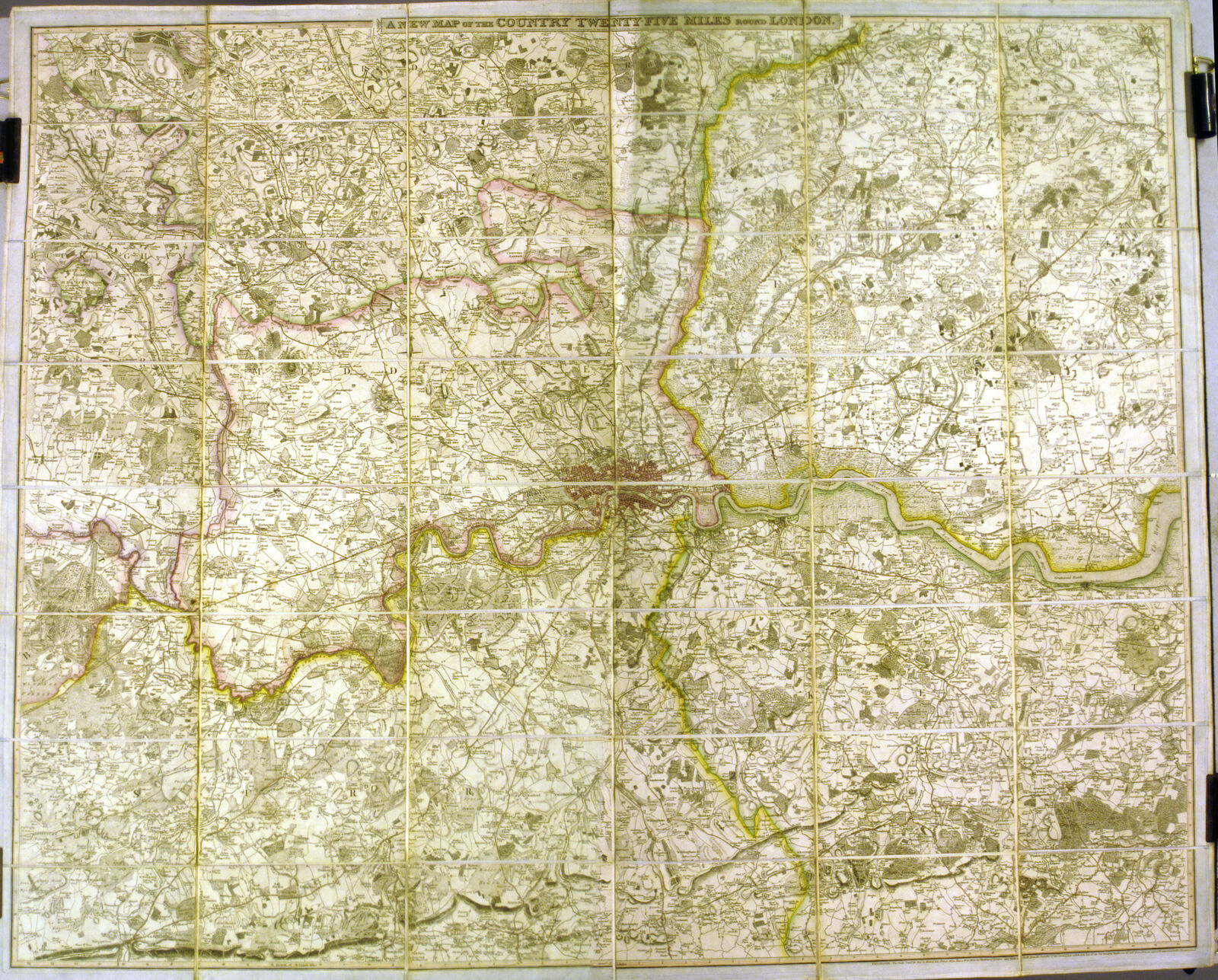
Inquiring readers, I had read about the closeness of rural areas near London during Jane Austen’s day. This image of Tottenham Court Road from the 1812 edition of Ackermann’s Repository shows the countryside beyond the toll gate. One imagines that Jane Austen was accustomed to such vistas when she visited her brother Henry in London. One moment she would be traveling through the countryside, the next moment she would be entering a teeming metropolis (Click here to see map):

In the first years of the eighteenth century, pastures and open meadows began by Bloomsbury Square and Queens Square; the buildings of Lincoln’s Inn, Leicester Square and Covent Garden were surrounded by fields, while acres of pasture and meadow still survived in the northern and eastern suburbs outside the walls. Wigmore Row and Henrietta Street led directly into fields, while Brick Lane stopped abruptly in meadows.“World’s End” beside Stepney Green was a thoroughly rural spot, while Hyde Park was essentially part of the open countryside pressing upon the western areas of the city. Camden Town was well-known for its “rural lanes, hedgeside roads and lovely fields”where Londoners sought “quietude and fresh air.” – Extract from “LONDON The Biography”, by Peter Ackroyd. Published by Vintage, 2001


The contemporary description of this view of St.James Chapel is telling:

The edifice selected for the subject of our view in the metropolis, for the present number, is the chapel of ease, situated near the turnpike in Tottenham-court-road, belonging to the church of St. James, Piccadilly. It was erected after a design of the celebrated architect, Mr. James Wyatt.

The contiguous parsonage-house on one side, and a school on the other, together with the plantations in the area between the front railing and the buildings, give great additional consequence to the appearance of the whole…

The vicinity of this chapel has recently witnessed one of those transformations of fields into houses, produced in every direction around the metropolis as if by the effect of enchantment. A prodigious street has just sprung up on the left-hand side, in continuation of Tottenham-court-road; and thus London has proceeded another good stage in its progress to Kentish Town. – St. James Chapel, Tottenham Court Road, 1812, Ackermann’s Repository

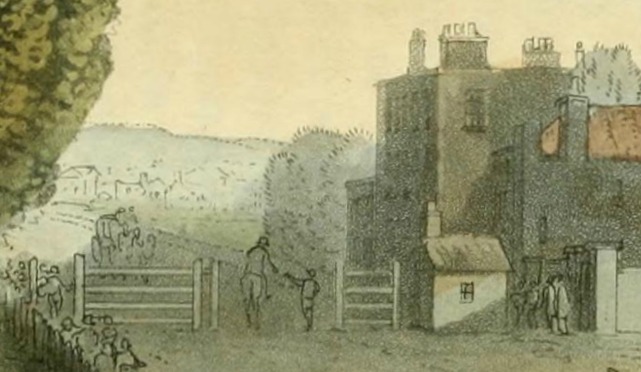
Detail of the turnpike. The toll keeper is collecting money from a man on horseback. Notice the small toll house, and the rural scene beyond.

The great age of toll gates and turnpikes was the 18th Century. In the latter part of the previous century, turnpikes were established and run by trusts. They could only be set up through Acts of Parliament, the first of which was passed in 1663. The idea was that the trusts would take over responsibility from parishes to maintain major trunk roads. They would collect the tolls, manage the finances and fulfil their obligation to use those funds to maintain the roads – Toll gates and turnpikes, London Historian’s Blog

Entrance, Tottenham Court turnpike by Rowlandson. Image @ Europeana

Rowlandson’s image shows another view of the turnpike. Pedestrians continued without hindrance via the side openings (except for the obese man, who seems to be stuck), but people on horseback and vehicles slowed to pay a toll in the gated center. Note Rowlandson’s detail of an old lecherous man ogling the two milk maids.

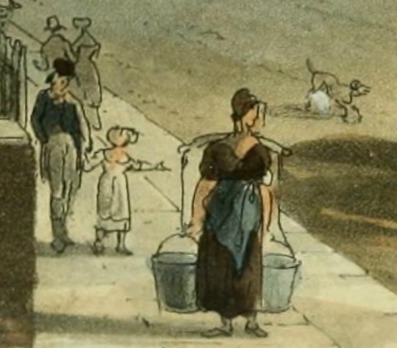
One milkmaid recorded her daily route and the results are astonishing: 19 miles.  Milkmaids are famous for their pretty skin, and this was largely because many of them had acquired immunity to smallpox through milking duties.  As milk delivery was a daily occurrence, many milkmaids ran slates for their customers, proving they were to some extent both literate and numerate, and also hard enough to call in a debt. – The Cries of Georgian London

Milk maids provided fresh drinks to customers. This one has just passed through the toll gate and has a long day's walk and work ahead of her.

“The cry of ‘Milk’ or the rattle of the milk-pail, will never cease to be heard in our streets. There can be no reservoirs of milk, no pipes through which it flows into the houses. The more extensive the great capital becomes, the more active must be the individual exertion to carry about this article of food. The old cry was ‘Any milk here !’ and it was sometimes mingled with the sound of ‘Fresh cheese and cream;’ and it then passed into ‘Milk, maids below;’ and it was then shortened into ‘Milk below;’ and was finally corrupted into ‘Mio’ which some wag interpreted into mieau—demi-eau—half water.”  – Buying Bread and Milk in 18th and 19th Century London, Susannah Ives

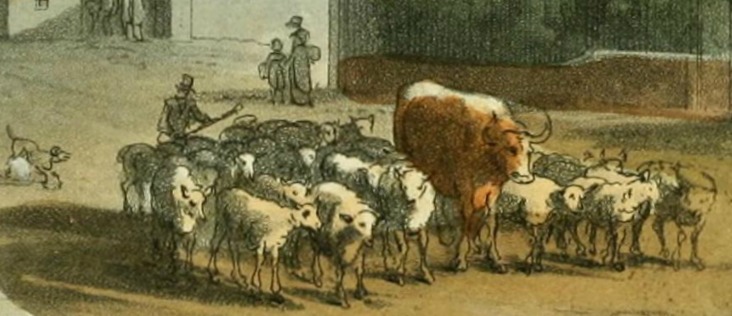
Detail of cattle being driven to market. One imagine that the streets were filled with dung and the smells of the animals, most of whom must have been frightened of the big city's sights and sounds.

This detail of sheep and an oxen being driven through the streets to market was a common sight. The people in this great metropolis had to be fed. In just a few hours these hapless animals will find themselves in the noisy, tumultuous, and bewildering environment of Smithfield Market, for instance. Without refrigeration, their meat would be sold, consumed or prepared within hours of their slaughter.

Cattle were driven through the streets until the mid 19th century. In an article for Household Words in March 1851 Dickens, with characteristic sarcasm, describes the environmental impact of having live cattle markets and slaughterhouses in the city:

“In half a quarter of a mile`s length of Whitechapel, at one time, there shall be six hundred newly slaughtered oxen hanging up, and seven hundred sheep but, the more the merrier proof of prosperity. Hard by Snow Hill and Warwick Lane, you shall see the little children, inured to sights of brutality from their birth, trotting along the alleys, mingled with troops of horribly busy pigs, up to their ankles in blood but it makes the young rascals hardy.” – Dickens’ London

Read Full Post »

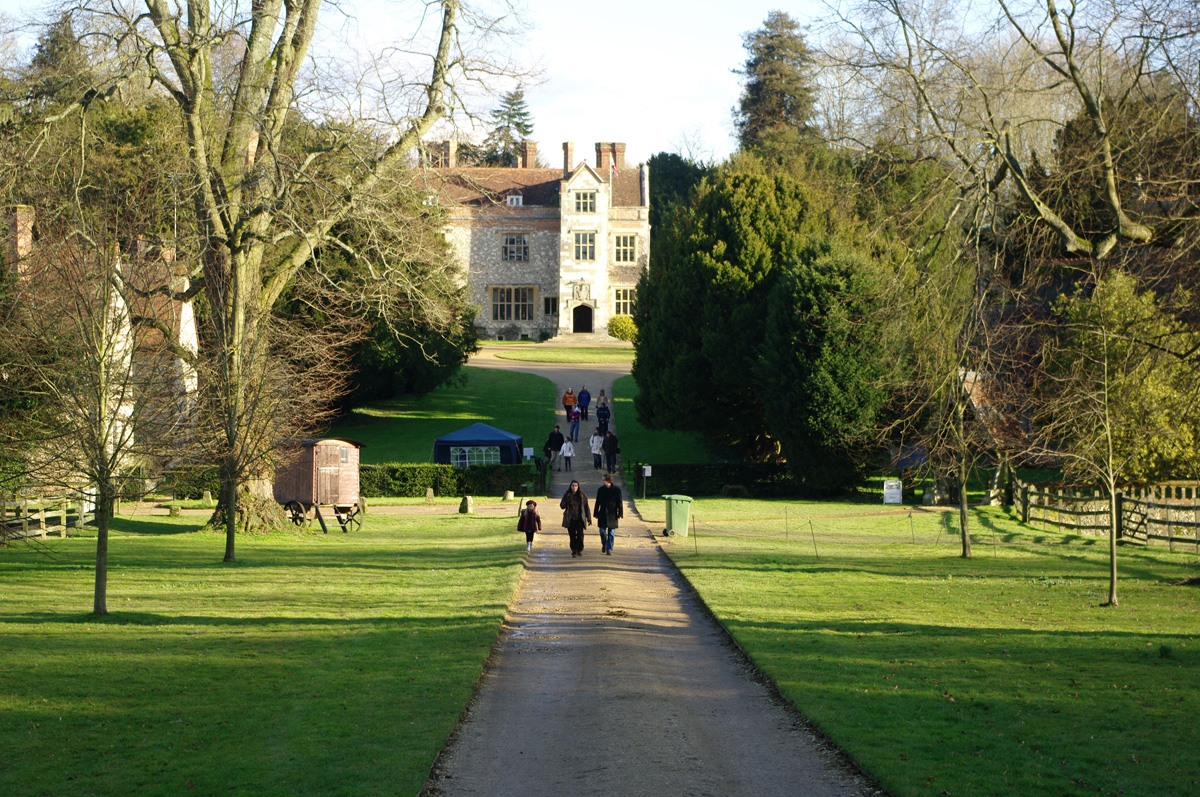
Gentle Readers, these fantastic images are by Tony Grant from London Calling. The text are quotations from the fabulous Chawton House Library site.  This site is rich with information and history. I am so impressed with the section on chickens, which were rescued and given a chicken-friendly coop for roosting and free ranging. The horses are magnificent as well. Sandy Lerner has done a magnificent job of turning this once ruin of a house into an historic library and museum. As Tony’s images show, this house is a world treasure .

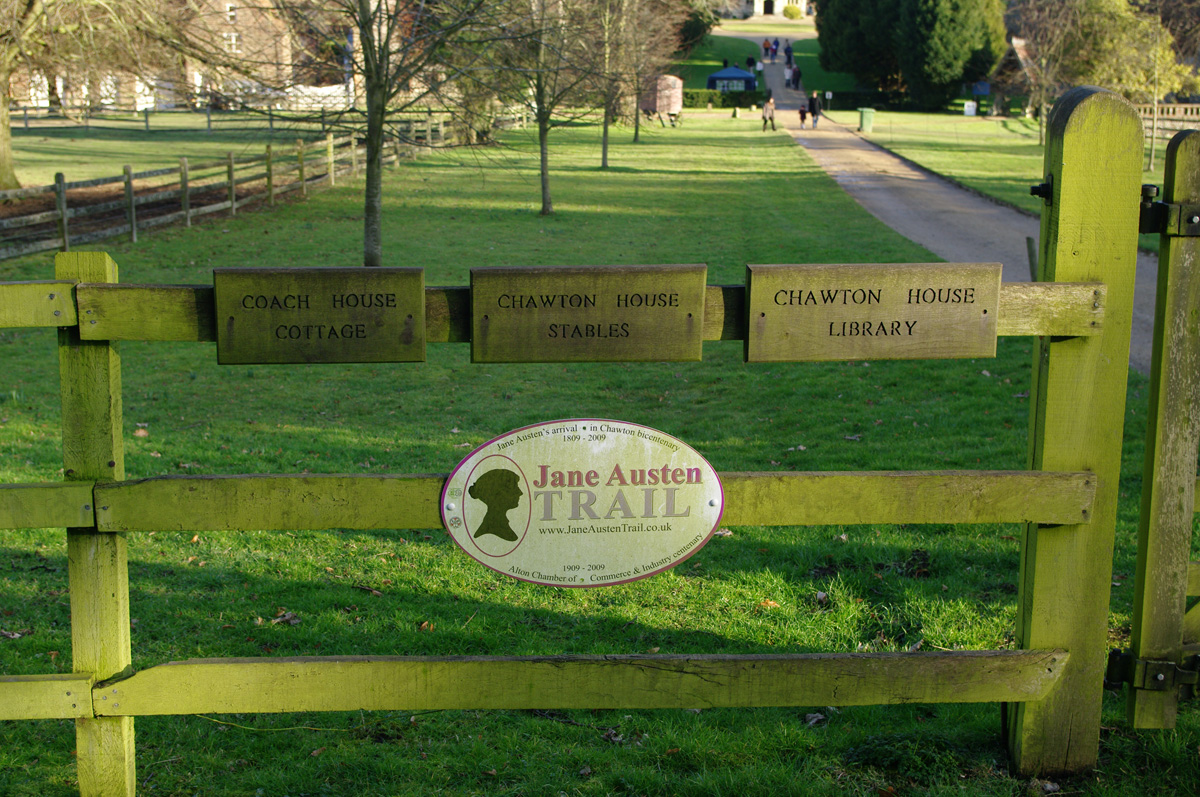
Drive leading to Chawton House. Image @Tony Grant

In April 1551, the land was sold for £180 to John Knight, whose family had been tenant farmers in Chawton since the thirteenth century and who had prospered sufficiently to wish to acquire a large estate.

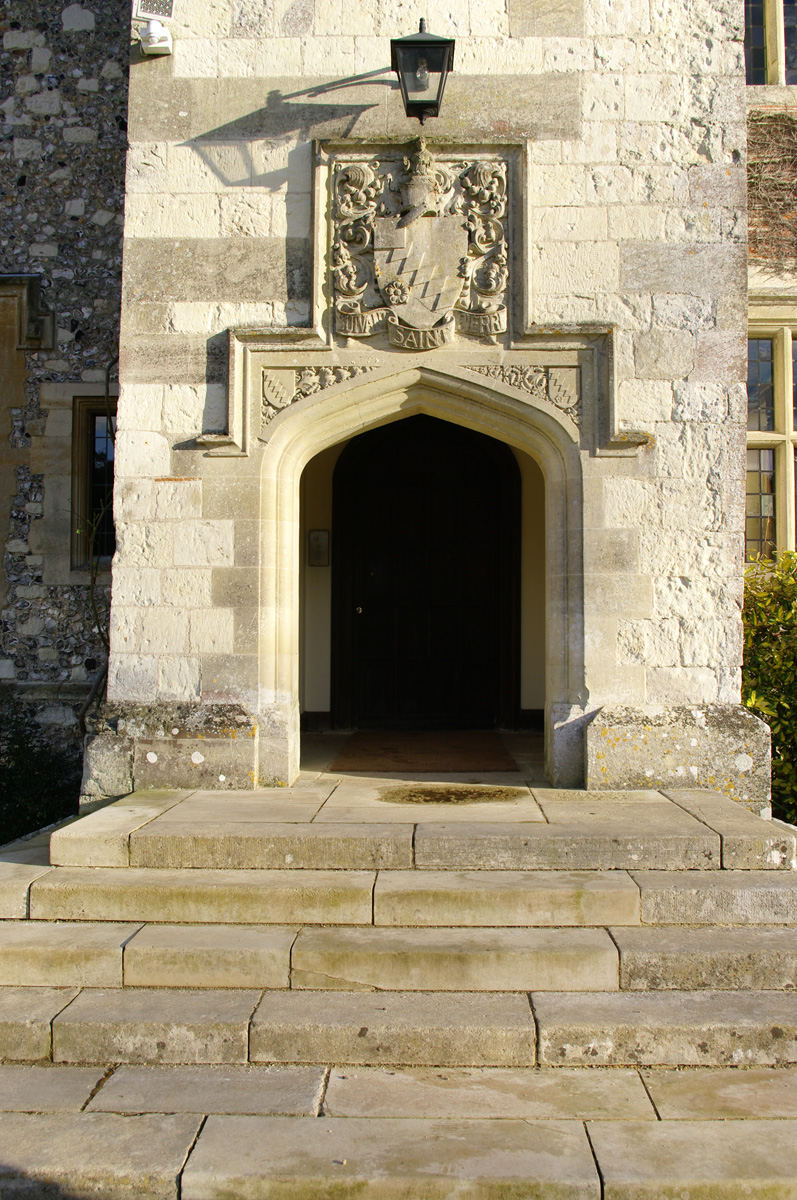
Front entrance. Image @Tony Grant

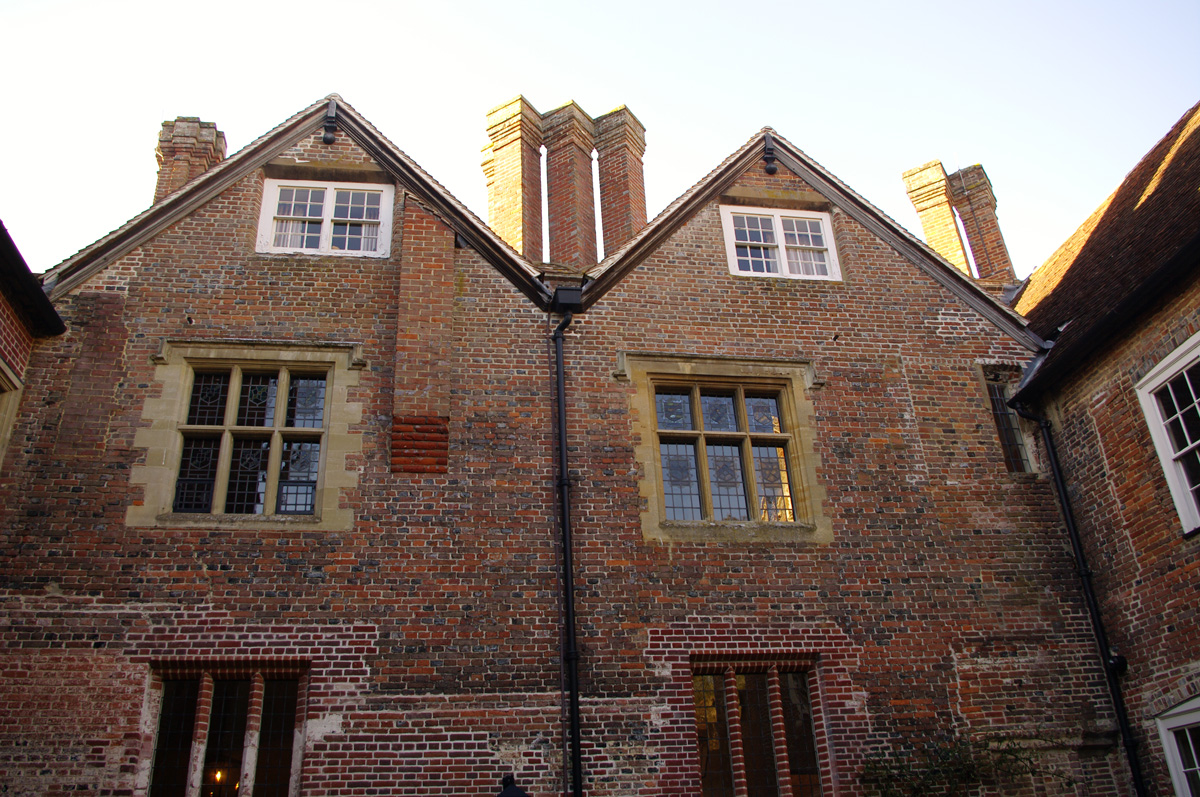
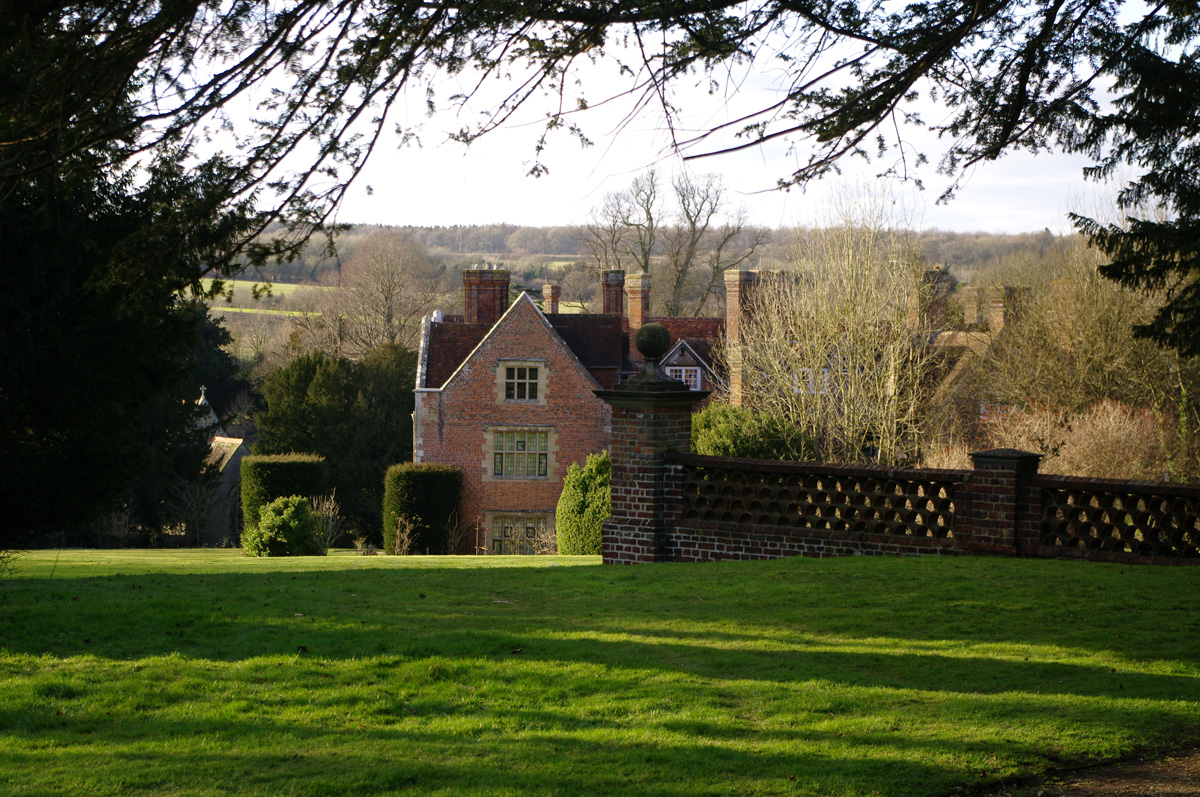
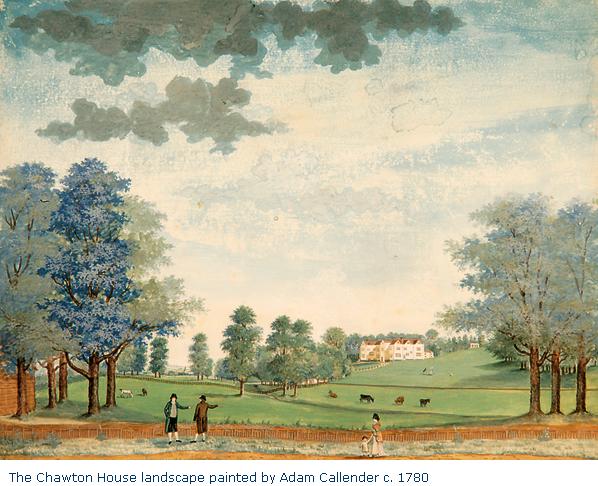
The medieval manor house was replaced by John Knight’s grandson, also called John, with the largely Elizabethan house that can be seen today.  – History

Window detail. Image @Tony Grant

Eaves. Image @Tony Grant

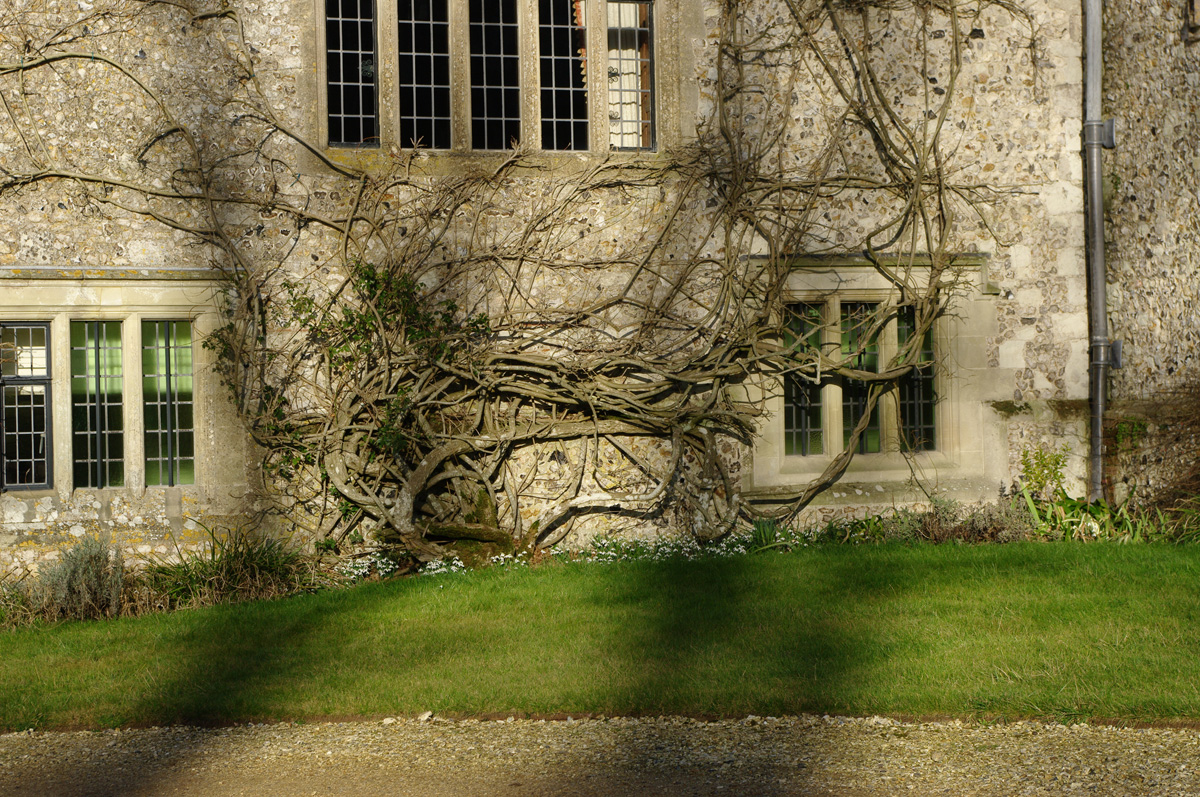
Climbing shrub. Image @Tony Grant

Side view with side door. Image @Tony Grant

In 1781, Thomas Knight II inherited, but when he and his wife Catherine showed no sign of having children of their own, they adopted a son of the Reverend George Austen, who was a cousin of Thomas Knight’s.

Edward is introduced to the Knights. Image @Chawton House Library

Edward Austen Knight eventually took over management of the estates at Godmersham and Chawton in 1797, living mostly at Godmersham and letting the Great House at Chawton to gentlemen tenants.

Chawton Cottage, where Jane Austen lived. Image@Tony Grant

In 1809 he offered a house in the village to his mother and two sisters Cassandra and Jane, and it was there that Jane Austen began the most prolific period of her writing life.

Image @Tony Grant

Sandy Lerner. Image @The Telegraph

By 1987, when Richard Knight inherited, parts of the house were derelict, the roof leaked, timbers were rotting and the gardens were overgrown with scrub. The decline was halted in 1993 with the sale of a 125 year lease to a new charity, Chawton House Library, founded by the American entrepreneur and philanthropist, Sandy Lerner, via the charitable foundation established by her and her husband Leonard Bosack, the Leonard X. Bosack and Bette M. Kruger Foundation.

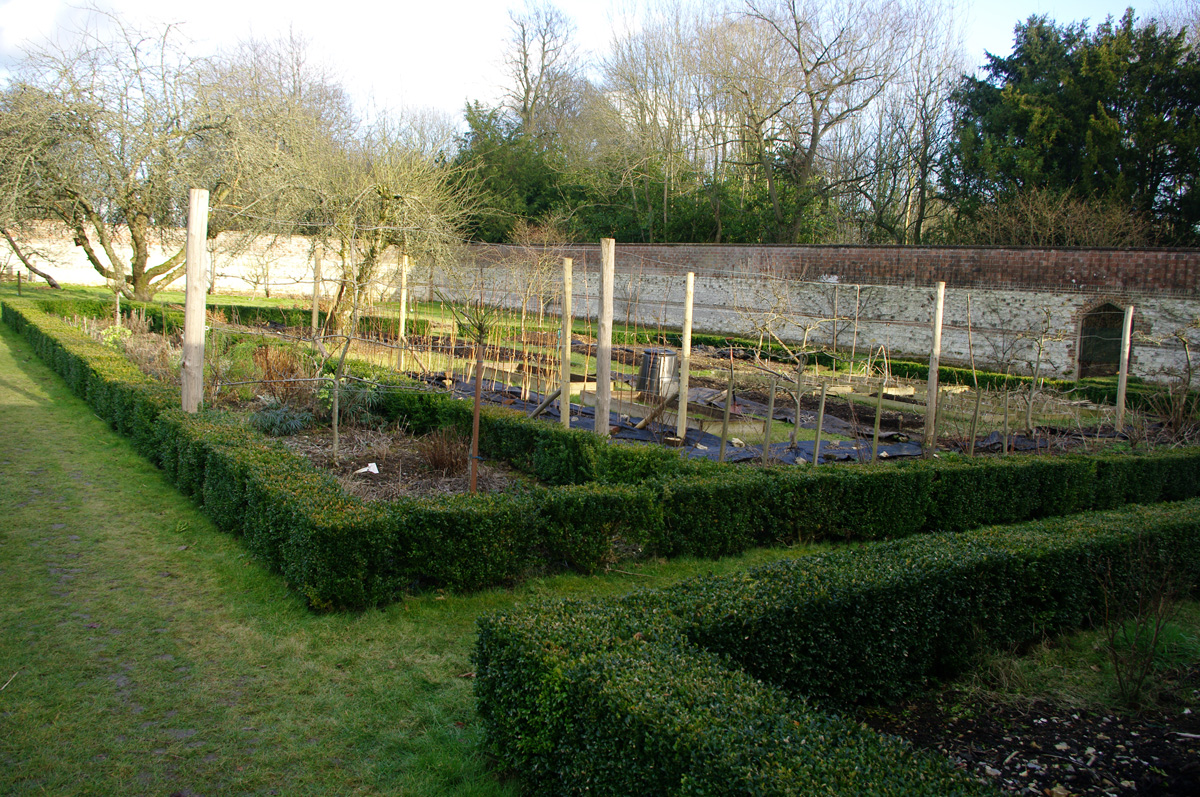
Kitchen garden entrance. Image @Tony Grant

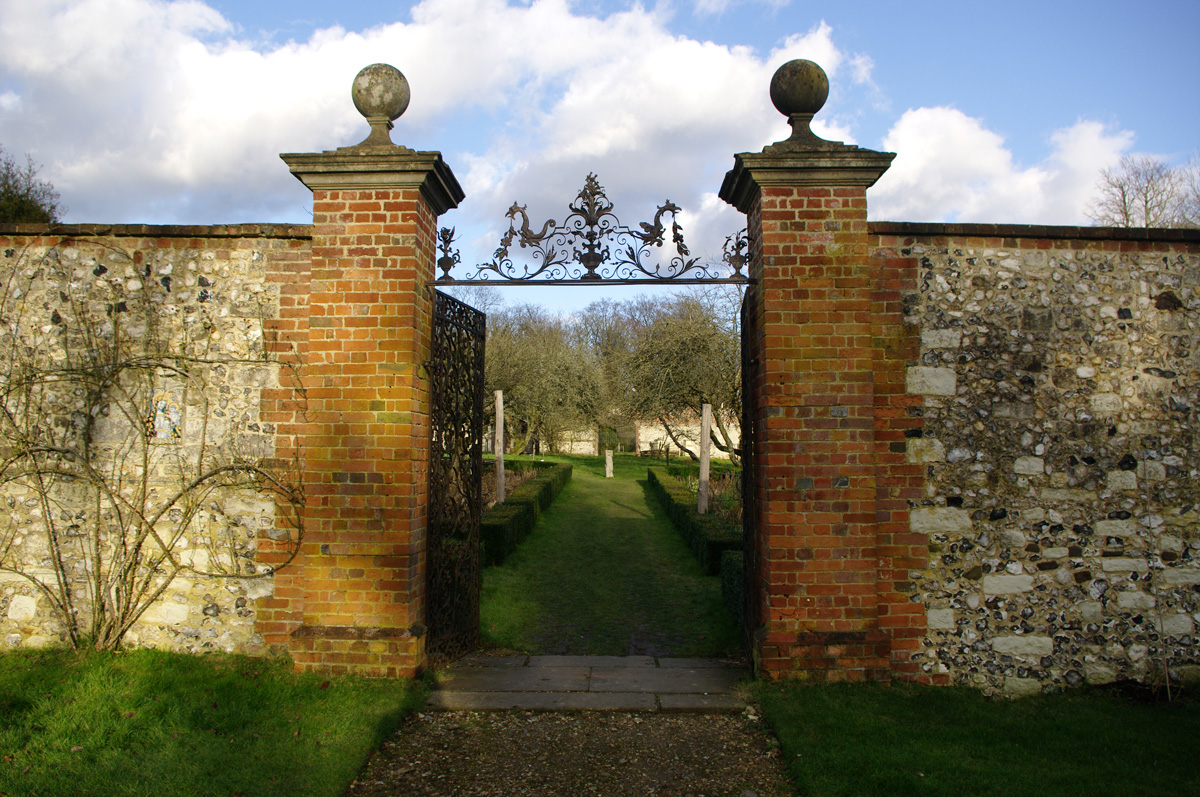
The grounds and gardens at Chawton House Library continue to be in the process of restoration although a great deal has already been achieved. The focus of the restoration is the English landscape period of the eighteenth century together with Edward Austen Knight’s early nineteenth-century additions of walled kitchen garden, shrubberies and parkland. – The estate

Kitchen gardens. Image @Tony Grant

The Library Terrace was built between 1896 and 1910 (probably in 1904-05) by Montagu Knight (1844-1914). The terrace was actually an Arts & Crafts addition and almost certainly influenced by Edwin Lutyens.

Going round the back of the house. Image @Tony Grant

View from the gardens. Image @Tony Grant

Gravel paths are not typical of the English Landscape period and were probably introduced by Edward Knight II (1794-1879).

View from one of the gravel paths. Image @Tony Grant

According to Montagu Knight, the brick Upper Terrace was built in 1901. In the early twentieth century this was a broad grass terrace with a central gravel path, recently uncovered.

Image @Chawton House Library

In Jane Austen’s time, the kitchen garden was located to the north of the Rectory (opposite the current entrance to Chawton House). Edward Austen Knight had the idea to build a new walled garden during his sister’s lifetime: in 1813, Jane Austen wrote to her brother Frank:

‘[h]e [Edward Austen Knight] talks of making a new Garden; the present is a bad one & ill situated, near Mr Papillon’s; — he means to have the new, at the top of the Lawn behind his own house’.

However, her brother’s plans did not come to fruition until after her death in 1817. – The estate

The grounds. Image @Tony Grant

The farm buildings. Image @Tony Grant

The fields. One can see the horses. Image @Tony Grant

The Wilderness dates from the late seventeenth and early eighteenth centuries and was originally set out geometrically with trees in straight rows, a practice which was later dropped. It survived the English Landscape improvements.

St. Nicholas Church. Image @Tony Grant

Church Copse. This area to the rear of St. Nicholas Church was cleared between 1999 and 2000, revealing the Knight family pet cemetery and the rear lychgate into the churchyard. Of particular interest in this area are the several large, important eighteenth-century lime trees and a yew tree, probably from the same period. – The estate

Image @Tony Grant

Read Full Post »

« Newer Posts - Older Posts »