Feeds:
Posts
Comments

By Brenda S. Cox

“I am all alone. Edward is gone into his woods. At this present time I have five tables, eight-and-twenty chairs, and two fires all to myself.”—Jane Austen writing from Godmersham, Nov. 3, 1813

Jane Austen’s brother Edward, adopted by wealthy relatives, inherited not one, but two extensive estates. Jane and her mother and sister eventually lived in a cottage at Chawton in the county of Hampshire, Edward’s secondary estate. You can still visit Chawton House and Chawton Church.

Godmersham Park

Godmersham Park today. This estate was probably one inspiration for Pemberley. Edward Knight’s income was even higher than Mr. Darcy’s, but Edward had to run two estates.

Jane and Cassandra often enjoyed the luxuries at Edward’s main residence at Godmersham Park, in the county of Kent. Edward, his wife Elizabeth, and their eleven children often needed the help and company of Edward’s poorer sisters. Sixty-one of Austen’s surviving letters (out of 161) were written either from or to Godmersham. Jane spent a total of ten months of her life at Godmersham.

Entrance to Godmersham Park today. American owners in the 1930s, Mr. and Mrs. Robert Tritton, remodeled the house. In Austen’s time it was three stories, with painted bricks on the front (which were turned around when the house was remodeled). The back and front of the house were reversed from today.

In 1808, Jane wrote of her brother James and his wife, “James and Mary are much struck with the beauty of the place” (June 15). She herself was enjoying ice cream, a Regency delicacy, and wine: “I shall eat Ice and drink French wine, and be above Vulgar Economy” (June 30). No doubt Elizabeth Bennet, once she marries Darcy, will enjoy such luxuries as well!

One of two “follies” at Godmersham Park built from two facades of white pillars that were originally at the front of the main house.
The Godmersham Park Heritage Centre is a small museum showcasing portraits, photos, and artefacts of earlier times.

Servant-Friends

Jane Austen made two friends among the servants at Godmersham. Anne Sharp was her niece Fanny’s governess; Jane later corresponded with her. Susannah Sackree was the children’s nurse. Both are often mentioned in Austen’s letters. For example:

“Pray say everything kind for us to Miss Sharpe, who could not regret the shortness of our meeting in Canterbury more than we did. I hope she returned to Godmersham as much pleased with Mrs. Knight’s beauty and Miss Milles’ judicious remarks as those ladies respectively were with hers.”—Jane Austen, Aug. 30, 1805

“Sackree is pretty well again, only weak. Much obliged to you for your message, &c.; it was very true that she blessed herself the whole time that the pain was not in her stomach. I read all the scraps I could of your letter to her. She seemed to like it, and says she shall always like to hear anything of Chawton now” —Jane Austen at Godmersham, Sept. 23, 1813

Memorial in the Godmersham church to Susanna Sackree, the Knight family’s beloved nurse. Sackree’s original memorial outside is illegible, so JASNA donated this parchment version. It calls her “faithful servant and friend for nearly 60 years” and says that at her own request the following was written on her tombstone: “Flee from evil, and do the thing that is good, for the Lord loves the thing that is good. Keep innocency, and take heed unto the thing that is right, for that shall bring a man peace at the last.” Then, “My dearest friends I leave behind/ Who were to me so good and kind/ The Lord I hope will all them bless/ And my poor soul will be at rest.”
One exhibit at the Godmersham Park Heritage Centre maps the living quarters of the servants and shows items they would have used.

The Library

Austen’s favorite part of the house, not surprisingly, was the extensive library. Like Darcy’s “delightful library” at Pemberley, it was “the work of many generations,” with Edward Knight “always buying books,” like Darcy, to add to it. Jane wrote:

“We live in the library except at meals, and have a fire every evening. . . . I am now alone in the library, mistress of all I survey; at least I may say so, and repeat the whole poem if I like it, without offence to anybody.”—Jane Austen at Godmersham, Sept. 23, 1813. The poem is “Verses on Alexander Selkirk” by William Cowper; Selkirk’s real adventures were the inspiration for Robinson Crusoe.

“The Comfort of the Billiard Table here is very great. It draws all the gentlemen to it whenever they are within, especially after dinner, so that my brother, Fanny, and I have the library to ourselves in delightful quiet.”—Oct. 14, 1813

The 1818 catalogue of the library lists more than 1200 books. The books in the library were removed to Chawton before Godmersham was sold in 1874.  Most were later dispersed. The library’s bookshelves were removed and the area split into offices. The website “Reading with Austen” is an attempt to digitally recreate the library Jane Austen so much enjoyed.

Godmersham Park is now a college of the Association of British Dispensing Opticians (ABDO College) and is not open to the public. However, we were allowed to see the front rooms. Here you can see the collage of the old, classical decorations of the entry room and the newer apparatus of the opticians association.
Godmersham Park entry area.
Godmersham Park still has beautiful gardens. The grounds were once quite extensive, like those of Pemberley, and you can still roam around and see different types of gardens.
The “Lime Walk” is another lovely part of the Godmersham Park gardens. Emma walks in a lime walk at Donwell Abbey.

When Austen visited Godmersham, she attended church at St. Lawrence the Martyr parish church of Godmersham. On Thursday we explore that church.

All photos in this post ©Brenda S. Cox, 2026

Brenda S. Cox is the author of Fashionable Goodness: Christianity in Jane Austen’s England. She also blogs at Faith, Science, Joy, and Jane Austen.


For Further Exploration

Edward Austen Knight: A tightwad or a man with heavy responsibilities?

Godmersham Library—“Reading with Austen”—Search to see what books Jane might have read there, and see annotations in some of the books.

Reading at Godmersham: Edward’s Library and Marianne’s Books

Godmersham Park Heritage Centre

Godmersham Village

Godmersham Walking Tour

Godmersham Park, history of the house

Review of Godmersham Park, novel by Gill Hornsby

Godmersham Park: A Novel of the Austen Family, is based on the story of Anne Sharpe, governess at Godmersham and friend of Jane Austen.

More Godmersham Photos in this post by Deb Barnum

Regency Ice Cream and Ice Cream in Jane Austen’s Day

Wild Jane Austen?

Book Review by Brenda S. Cox

“Loving Jane Austen, to me, is dependent on continuing to find something new to appreciate, mull over, research, or reconsider in her writings. What’s wild is that although her books don’t change, I do. . . . Reading, and loving, Austen’s fiction means something far different to me at fifty-seven than it did at seventeen.”—Wild for Austen, 262.

A few days ago we reviewed Living with Jane Austen by Janet Todd. Today we get a personal perspective from another Austen expert, Devoney Looser, giving her view of Jane Austen as ‘wild,’ in Wild for Austen.

Wild for Austen by Devoney Looser seeks to undermine stereotypes about Austen.

Wild for Austen: A Rebellious, Subversive, and Untamed Jane, by Devoney Looser

Devoney (DEV-uh-nee) Looser takes pride in being rather ‘wild’ herself. She dedicates this book to people in “the international roller derby community,” saying: “You got me rolling, knocked me down, and lifted me up, not only as Stone Cold Jane Austen [Looser’s roller derby name] but as a stronger and more joyful teacher-scholar.”

Devoney’s goal is to demolish the “myth of Jane Austen as a quiet, bland spinster.” She finds ‘wildness’ in Austen’s novels, in the lives of Austen’s connections, and in Austen’s ‘afterlives.’

Looser says ‘wild’ is ‘a linchpin word in Austen’s fiction.’ In the Oxford English Dictionary (OED), we find examples from Jane Austen for the earliest uses of ‘wild’ to mean ‘passionately or excitedly desirous to do something’ (Mrs. Palmer is ‘wild to buy all’ in S&S; Elizabeth is ‘wild to be at home’ in P&P; the Musgrove girls are ‘wild for dancing’ in Persuasion). ‘Wild’ can also mean ‘elated, enthusiastic, raving’ (“The men are all wild after Miss Elliot.”). The OED also defines ‘wild’ as ‘artless, free, unconventional, fanciful, or romantic in style,’ which Looser says characterizes Austen’s novels.

Looser also argues against the myth of “Austen’s fiction having been largely forgotten until 1870. It wasn’t.” Austen’s novels were apparently widely read and familiar throughout the 1800s. Looser gives examples, from the years following Jane’s death, of the novels mentioned in magazines, poems, and a court case. Here’s an example I like: “Mansfield Park was said to be the secretly chosen favorite (on private slips of paper) of seven distinguished literary gentlemen in 1862.” Looser has also found clear imitations of Austen in other stories published in the 1800s.

Chapters in Wild for Austen

Part I: Wild Writings
  1. Introduction: Austen Gone Wild
  2. Fierce, Wild, and Ruthless: Austen’s Juvenilia
  3. The Controversial Case of Sophia Sentiment (a letter in her brothers’ periodical The Loiterer, possibly Jane’s first published work)
  4. Running Wild: The Winning Immorality of Lady Susan
  5. Wildest: Sense and Sensibility (1811)
  6. Almost Wild: Pride and Prejudice (1813)
  7. Bewildering Mansfield Park (1814)
  8. Wild Speculation: Emma (1816)
  9. Wild to Know: Northanger Abbey (1818)
  10. The Young People Were All Wild: Persuasion (1818)
  11. Wild-Goose Chase: Unfinished Sanditon (111)
  12. Oh, Subjects Rebellious: The Watsons and Last Words
Part II: Fierce Family Ties (explores unexpected people and events among Austen’s family and acquaintances)
  1. Jane, the Wild Beast, and the Progressive Burdetts
  2. Cousin Eliza’s Statesman, Singer, and Spy (a lurid murder of Austen’s acquaintances)
  3. The Leighs as Learned Literary Ladies (authors among Austen’s relatives)
  4. The Sensational Shoplifting Trial of Aunt Jane Leigh Perrot
  5. Three Austen Brothers and the Abolition of Slavery (new evidence about Frank, Charles, and Henry)
  6. The Austen Family Legacy, Suffrage, and Anti-Suffrage (Austen descendants for and against the vote for women)
Part III: Shambolic Afterlives (how people have seen and adapted Austen since her death. ‘Shambolic’ means ‘chaotic.’)
  1. Seeing Jane Austen’s Ghost
  2. Sense and Sensibility Goes to Court (Quotes from S&S were used as evidence in an 1825 breach of promise suit, to support the idea that a woman would not fall in love with a much older man; counsel had obviously not read the whole book! Austen’s novels have also been cited in much more recent court cases.)
  3. Jane’s Imaginary Lover in Switzerland (Fake news in 1886 went viral.)
  4. Almost Pride and Prejudice: The Wild Films That Never Were
  5. Wild and Wanton: The Rise of Austen Erotica
  6. Loving (and Hating) Jane Austen
  7. Coda: Austen After 250
Marianne sees Willoughby and is about to approach him with the “wildest anxiety.”

Personally, I found the first two sections the most interesting. I’m still not convinced that Austen’s novels are what I would call ‘wild,’ though the Juvenilia and Lady Susan certainly are! But Looser brought out many intriguing insights about each novel, looking at the use of ‘wild’ in the books.

For example, she shows Sense and Sensibility defying expectations of romance novels: “the doublings and triplings, twists and turns, and backstories and backstabbings keep readers constantly on their toes” (46). Marianne is the “wildest,” speaking to Willoughby in “the wildest anxiety.” But the point of the story, recognized by early readers, is that both men and women should have a balance of both sense and sensibility; they need “both finely tuned minds and warm, rebellious feelings.” The best books should also “embody the best of both qualities” (57).

Mansfield Park has the least ‘wild’ heroine of the six novels. However, in my own humble opinion, it has the largest cast of other ‘wild’ characters—Henry Crawford, who commits arguably the worst action of the villains by eloping with a married woman, breaking up Maria’s marriage with no intention of marrying her; Mary Crawford, who makes a dirty joke and considers adultery ‘folly’; and Maria, who marries a man she hates and leaves him for a man she has already seen to be trifling and insincere. Julia, of course, elopes, which was also considered ‘wild.’ Tom Bertram not only convinces his household to put on a morally questionable play, but is so wild he drinks himself almost to death. Looser says Mansfield Park may have been “a jarring reading experience” for 1814 readers. She considers the wildest thing about it to be “its prompting of lively, difficult arguments and rousing debates” (76).

Wild for Austen, by Devoney Looser, may help you see Austen, her writings, and her connections in a new light. Or give you fodder for lively arguments. Enjoy Austen’s ‘wildness’! (UK link)


Brenda S. Cox is the author of Fashionable Goodness: Christianity in Jane Austen’s England. She also blogs at Faith, Science, Joy, and Jane Austen.

Book Review by Brenda S. Cox

“It’s an inspiring example [of growing older]—to be amazed, amused, and to laugh while choosing to wear just what you wanted.”—Janet Todd, in Living with Jane Austen, talks about Jane “writing little spoofs and funny letters to entertain her nieces and nephews,” in her late thirties, when she can dress for her own comfort rather than having to please others.

Many authors celebrated Austen’s 250th birthday with books giving their own slants on our beloved Jane Austen. Two university professors attracted my attention because of their high qualifications combined with reader-friendly writing. I knew Janet Todd’s name as the general editor of the authoritative Cambridge Edition of the Works of Jane Austen, the version I quote from for serious Austen articles. I knew Devoney Looser’s name as a vibrant speaker at JASNA AGMs. I enjoyed personally meeting and hearing both of them in September, one in England, one in Atlanta, Georgia. I enjoyed their talks so much that since then I’ve read both their books. Today I’ll review Todd’s book, and in a few days I’ll review Looser’s book.

Living with Jane Austen, by Janet Todd, gives an expert’s personal perspective on Jane Austen and her novels.

Living with Jane Austen, by Janet Todd

Living with Jane Austen by Janet Todd is like a fun ramble in the countryside with the author. She explores words, ideas, themes, connections, and sidelights of Austen’s novels and letters. Her introduction examines connections between her life and Austen’s, and the meanings of ‘memory’ in the novels. The other chapters cover an extensive array of topics. I’ll give you a quote from each chapter as a little taste, to whet your appetite.

Chapters in Living with Jane Austen

The Brightness of Pemberley

(mostly on the significance and implications of country estates)

“In the novels published after Pride and Prejudice, Jane Austen will give her heroines many comfortable homes, though none so grand as Pemberley. In the last, Persuasion, however, she lets her heroine be married with no home to go to at all. . . . In this novel, the distinction is clear at least between a house and a home: the sailors can make a home on a boat, or in a rental for a few months in Lyme Regis, but Anne’s father, the landowner Sir Walter, can’t make one anywhere. . . . Anne Elliot understands that people are more important than property, and that they are not at all the same thing” (37).

The Darkness of Darcy

(mostly on patriarchy, with some extensive comparisons with feminist Mary Wollstonecraft’s writings and life)

“Is Darcy not Patriarchy itself, with all its glittering, merciless, unequal glamour?” (53) “The fact that as readers we delight in what both Darcy and Elizabeth have gained through the great property is the smudge of darkness I find at the heart of this lightest and brightest of novels” (57).

“Sir Thomas [Bertram of MP] is another patriarch in a big house frightening the vitality out of his dependants. Could he be Mr. Darcy, grown older, if he’d been foolish enough to marry Caroline Bingley instead of Elizabeth Bennet?” (or, I would say, if he’d married Anne de Bourgh . . . )

Talking and Not Talking

(mostly about the right and the wrong words, class, and wit)

“I revere Emma but something disturbs me. . . . Anyone who fears she might be an interloper, the not-quite-proper arrival in a new place will understand. . . . Mrs. Elton dropped abruptly into Highbury; loud Mrs. Elton, not quite ‘a lady’” (59). Ooh, can we relate to Mrs. Elton, of all people? Moving right along . . .

“As aware of rank as snobbish Emma, Elizabeth takes an opposite tack: where Emma disparages those beneath her—the Martins, Coleses and Eltons—Elizabeth mocks the ranks above her” (79).

Emma disparages farmer Robert Martin to Harriet, considering him too far below her rank.
Elizabeth Bennet, on the other hand, laughs at those above her in rank, like Lady Catherine de Bourgh.
Making Patterns

(patterns and connections that bring us deeper; includes comparisons of Northanger Abbey and Sanditon, Austen’s first and last written novels.)

“Austen’s late revising of Northanger Abbey possibly triggered the whole project of ‘Sanditon’. In which case, she’d be reversing the sexes: using the Henry Tilney—Catherine Morland dynamic to create (in the absence of Sydney Parker) the sober-minded Charlotte and fiction-addled, quixotic Sir Edward. Unlikely though it sounds, perhaps, after the gentleman has been chastened and reformed rather than the lady, these two might make a match. We’ll never know.”

Poor Nerves

(connections of mind and body; mental stress causing physical symptoms)

“Yes, the sun was hot, yes, Fanny [Price] had a headache. But it’s difficult for the reader not to see other factors at work. Fanny forgets to lock the spare room in the parsonage. We wouldn’t expect her to be so careless. Was she . . . already letting jealousy infect her mind because Edmund was away with Mary Crawford?” (115)

The Unruly Body

(illness, nursing, the skin, teeth, and headaches in Austen’s life and novels)

“If you want advice about teeth from Jane Austen, there it is: stay away from dentists” (147).

Into Nature

(weather, umbrellas, estate improvements, long walks)

“Dramatised in the novels, the Church of England becomes a matter of sermons and parsonages, ordination and tithes, but in the letters, underneath the worldly concerns, the Church emerges as a way of life, of experiencing life, like noting when Spring arrives, Autumn fades or Christmas approaches. It’s a very ‘moderate’ seasonal English way of being religious” (165).

Giving and Taking Advice

(advice from conduct books; advice in love; guidebook advice; writing advice)

Virginia Woolf wrote that ‘a woman must have money and a room of her own if she is to write fiction,’ but Austen’s experience was different. Based on Austen:

“If you intend to write anything, best not follow Virginia Woolf and wait for your own room and money and certainly not depend on inspiration, but do avoid much housekeeping” (185).

Being in the Moment

(moments of stillness in Austen, Wollstonecraft, Wordsworth, Cowper; comfortable moments with good food)

“In the finished novels, there are moments when the heroines step aside. . . Without being overtly religious, these moments, prayerful and cloistered, resemble a stoical Christian meditative state in which the mind becomes stilled. Perhaps the woman is simply ‘reasoning with herself’, perhaps trying to gain composure to cope with a disruptive emotion or endeavouring to arrange feelings so they can be investigated later—or just accepting emptiness” (199).

How to Die

(death in Austen’s fiction and in her life)

After quoting Cassandra’s comments on Austen’s death, Todd summarizes: “Fortitude in life, patience in death, kindness and gratitude in both” (232).

Afterword

(One of the gifts Austen has given her is an appreciation of home.)

“Jane Austen . . . might have preferred to be in Chawton churchyard near the cottage where she’d now be lying with her mother and sister. It might have seemed more like home” (235).

These are just a few of the delightful tidbits I appreciated. Some references to other books of the time were less familiar, but still interesting. The book is full of fascinating insights, connections, and thoughts about Austen’s life, words, and world. I recommend Living with Jane Austen by Janet Todd. (UK link)

For a further perspective, read “Jane Austen and Me.”

In a few days we’ll look at a different perspective on Austen, Devoney Looser’s Wild for Austen

Brenda S. Cox is the author of Fashionable Goodness: Christianity in Jane Austen’s England. She also blogs at Faith, Science, Joy, and Jane Austen.

As we enter the new year, I introduce to you a beautiful new book by Hilary Davidson called A Guide to Regency Dress: from Corsets and Breeches to Bonnets and Muslins. This book is a true gem, and it was the perfect gift (to myself) for Christmas. I am a fashion and textiles nut, and a huge fan of Davidson’s work, including her previous book Jane Austen’s Wardrobe.

This is one of my favorite new books of the past year, and I plan to use it as I read and research Austen’s novels and watch the film adaptations. Davidson provides a comprehensive glossary of terms related to fashion and clothing during Austen’s time, included beautiful photography to help illustrate various items. Seeing everything in one place makes this a Jane Austen fashion dictionary and encyclopedia that is both fascinating and beautiful. What might normally take me hours to research for one of my articles, I can now find easily in one place.

I particularly enjoyed the way the book is broken up into sections, with a detailed glossary in each section. The sections include Women, Men, Hair and Beauty, Jewellry (sic), and Textiles and Trimmings. Each section includes information and a full glossary with exquisite, full-color photos and illustrations. I enjoyed reading about the differences between items such as women’s stockings and men’s stockings. Women are often the focal point of Regency dress, but men’s clothing and dress is just as interesting. As a writer, I also appreciated Richardson’s extensive bibliography at the end of the book.

You can peruse this book anytime you want to learn more about dress in Austen’s day or find inspiration for your next Regency tea party, event, or ball!

Order Your Copy Here

About the Book

An accessible, fun, yet authoritative guide to male and female Regency fashion: Celebrated dress historian Hilary Davidson brings together nearly 20 years of research on Regency fashion in an illustrated guide for the first time. All the elements of the Regency wardrobe of both men and women―from coats, gowns and undergarments to shoes, accessories, beauty, hair and jewellery―are assembled, along with their textiles and trimmings.

A Guide to Regency Dress is an essential companion to navigate the fashion world of Jane Austen or re-create the Regency look. Here’s a look inside the book:

About the Author

Hilary Davidson is a dress, textiles, and fashion historian and curator. Hilary trained as a bespoke shoemaker in her native Australia before completing a Masters in the History of Textiles and Dress at Winchester School of Art (University of Southampton) in 2004. As a skilled and meticulous hand-sewer, she has created replica clothing projects for a number of museums, including a ground-breaking replication of Jane Austen’s pelisse.

In 2007, Hilary became curator of fashion and decorative arts at the Museum of London. She also worked on the AHRC 5-star rated Early Modern Dress and Textiles Network (2007-2009) and from 2011 has appeared as an expert on a number of BBC historical television programs, and as a frequent radio guest speaker in London and Sydney. From 2012, Hilary worked between Sydney and London as a freelance curator, historian, broadcaster, teacher, lecturer, consultant and designer, while working on a PhD in Archaeology at La Trobe University, Melbourne. In 2022, she moved to New York City to take up the role of Associate Professor and Chair of the MA Fashion and Textile Studies: History, Theory, Museum Practice at the Fashion Institute of Technology.

Hilary has taught and lectured extensively at the University of Southampton, Central St Martins, the University of Cambridge, the University of Glasgow, New York University London, The American University Paris, Fashion Design Studio TAFE Sydney and the National Institute of Dramatic Art, Sydney. Her previous books include Dress in the Age of Jane Austen (2019) and Jane Austen’s Wardrobe (2023).

Final Thoughts

When I attended my first JASNA AGM many years ago, I wore a beautiful Regency dress my mother sewed for me to the banquet and ball. I received a lot of compliments, but I only had a dress. Since then, I’ve slowly added to my “Jane Austen closet” with various accessories. Now that I have this book, I can continue to expand my collection until I can dress in Regency clothing from head to toe.

I could easily spend hours researching the fashion and textiles of Jane Austen’s era, and I hope others of you will find this new resource as fascinating as I do!

Rachel Dodge Bio

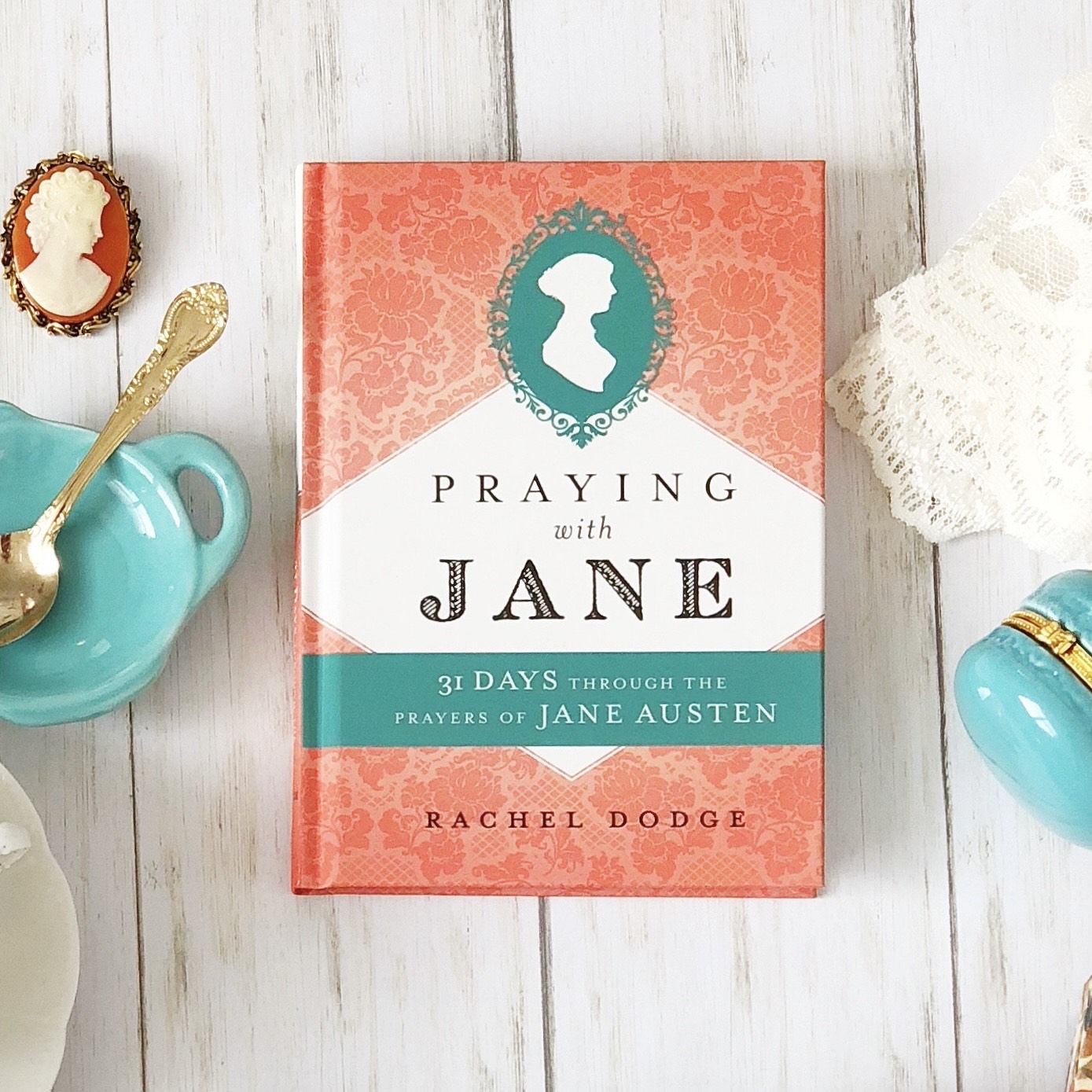
Rachel Dodge teaches writing classes, speaks at libraries, teas, and conferences, and writes for Jane Austen’s World blog. She is the bestselling, award-winning author of The Anne of Green Gables DevotionalThe Little Women DevotionalThe Secret Garden Devotional, and Praying with Jane: 31 Days Through the Prayers of Jane Austen. She has narrated numerous book titles, including the Praying with Jane Audiobook with actress Amanda Root. A true kindred spirit at heart, Rachel loves books, bonnets, and ballgowns. Visit her online at www.RachelDodge.com.

Ah, ’tis the season for celebrations! And what a better way to recall our dear Jane’s 250th birthday celebration than during the month of December?

This link leads you to a 2006 post of holiday celebrations Jane would have enjoyed.

Then, this YouTube video features both Chawton Cottage and Chawton House, and will take you on a walk past the beautifully preserved houses that Jane and Cassandra must have seen during their walks through the village.