Feeds:
Posts
Comments

Regency women went to great lengths to achieve an effortless, romantic look with long, flowing lines to their dresses and hairstyles. Even their dresses, which appeared to have little underneath, had several layers hidden below the surface. As with everything, nothing in the Regency era is quite as simple as it seems.

And behind the scenes of every genteel woman’s daily beauty regime were servants who made it all possible. Without today’s modern household appliances, a whole team of people were required to make a household run smoothly. There were servants who laundered, mended, ironed, and polished. Maids who buckled, tied, boosted, and smoothed; carried clean, hot water for bathing; and emptied bathtubs and chamber pots. Men and women cleaned, cooked, served, polished, and dusted. All so that life could go on smoothly and seamlessly.

Women in Jane Austen’s world were expected to be many things, especially when it came to their personal appearance, but what went on behind the scenes to make these women appear so effortless and graceful?
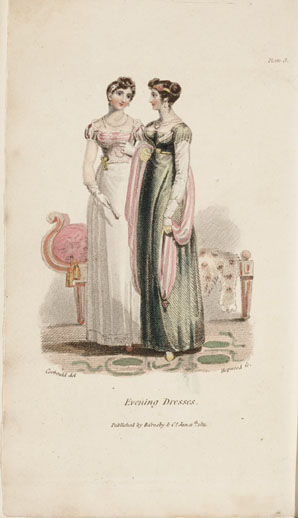
Evening dresses, fronticepiece, The Mirror of Graces,, 1811
Evening dresses

[Mr. Bingley] came, and in such very good time that the ladies were none of them dressed. In ran Mrs. Bennet to her daughter’s room, in her dressing gown, and with her hair half finished, crying out:

“My dear Jane, make haste and hurry down. He is come—Mr. Bingley is come. He is, indeed. Make haste, make haste. Here, Sarah, come to Miss Bennet this moment, and help her on with her gown. Never mind Miss Lizzy’s hair.”

“We will be down as soon as we can,” said Jane; “but I dare say Kitty is forwarder than either of us, for she went up stairs half an hour ago.”

Oh! hang Kitty! what has she to do with it? Come be quick, be quick! Where is your sash, my dear?”

Pride and Prejudice, Jane Austen

It took time to achieve the polished look of a Jane Austen heroine; thus, I’ve also included additional links for each of the topics below for those who want to delve deeper. Let’s look behind the scenes:

Bathing

Cleanliness then wasn’t quite what it is today. Bathing only became common during the 18th century in wealthy households. In Jane Austen’s time, baths were taken once a week (more or less depending on the season) with sponge baths in between. This was usually done by sponging off with a pitcher of water and a little basin on the bedroom dresser. To bathe, people sat in a larger tub or stood in a smallish tub on the floor and washed with a pitcher of water. (The Family, Sex & Marriage in England 1500-1800 by Laurence Stone)

A portable bath shower from the mid 19th c.

Affordable soaps of the time were soft and more caustic than the soaps, lathers, and body washes we enjoy today. Firm, refined bar soaps were scented and more costly (and therefore less frequently used). As for a woman’s hair, the same soap used for the body was also used for the hair, and the hair was washed far less often than today.

Oral Health

As for dental health, tooth brushes and tooth powder were used. In Sense and Sensibility, we read this: “He was giving orders for a toothpick-case for himself, and till its size, shape, and ornaments were determined, all of which, after examining and debating for a quarter of an hour over every toothpick-case in the shop, were finally arranged by his own inventive fancy…”
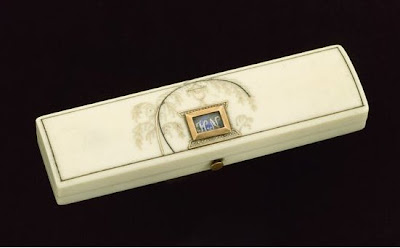
Toothpick Case, National Maritime Museum, 1806

From Austen’s own letters, we know that dentistry in her time was a grisly business:

The poor girls and their teeth! I have not mentioned them yet, but we were a whole hour at Spence’s, and Lizzy’s were filed and lamented over again, and poor Marianne had two taken out after all, the two just beyond the eye teeth, to make room for those in front. When her doom was fixed, Fanny, Lizzy, and I walked into the next room, where we heard each of the two sharp and hasty screams.

The little girls’ teeth I can suppose in a critical state, but I think he must be a lover of teeth and money and mischief, to parade about Fanny’s. I would not have had him look at mine for a shilling a tooth and double it. It was a disagreeable hour.

Jane Austen’s Letters, Henrietta St., 15 Sept. 1813

The advent of modern dentistry, and the use of anesthetics, wouldn’t come until long after Austen’s lifetime. I, for one, feel much more enthusiastic about my next dental cleaning after this. For more on the topic of Regency dentistry, you can read this JAW article on Dental Hygiene in the Regency Period.

Dressing and Undergarments

For the latest fashions, women often shared patterns and new fashions. Those who had lately traveled to London or even Bath brought back descriptions, clippings, and patterns to share with their friends and family member. In Pride and Prejudice, we read this about Mrs. Gardiner’s visit: “The first part of Mrs. Gardiner’s business on her arrival, was to distribute her presents and describe the newest fashions.”

Underdrawers belonging to the Duchess of Kent, 1810-1820

As fashions evolved, so did women’s undergarments. Under their slim, empire-waisted Regency dresses made of thinner material than previous years, women wore a shift, stays, a waist petticoat, stockings, and more. With so much to lace up and buckle, women needed help getting dressed. On the topic of stays, we know that Jane wrote this to Cassandra:

I learnt from Mrs Tickar’s young Lady, to my high amusement, that the stays now are not made to force the Bosom up at all; that was a very unbecoming, unnatural fashion.

Jane Austen’s Letters, September 1813

However, women did not yet wear “underwear,” drawers, or pantaloons. Drawers were considered immodest and improper, something only men wore, until the early to mid 1800s. Slowly they caught on, and by the mid-1800s they were a matter of course when hoop skirts became popular. You can find more here: Ladies Underdrawers in Regency Times: Regency Underwear.

Cosmetics

In terms of cosmetics, a more natural Romantic look took hold during Austen’s life, in large part aided by the blockade during the Napoleonic Wars. Ladies were still, nevertheless, never too far from their rouge pot (Beauty and Cosmetics, 1550-1950 by Sarah Jane Downing). Regardless of one’s complexion or skin tone, a rosy glow was part of achieving that healthy romantic look.
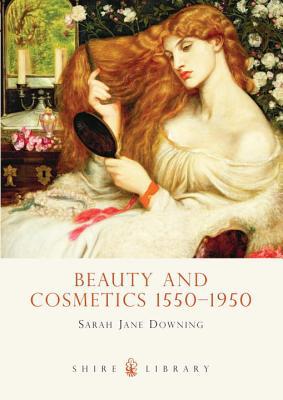
As for covering up body odor, deodorant was not yet used, while the perfumes of the time tended toward sweet, musky scents. To find out more about cosmetics and how they were made (many times out of materials we now know are dangerous), you can read this article: A Deadly Fashion: Beauty and Cosmetics 1550-1950 – A Review.

Hair

During Jane Austen’s lifetime, hairstyles for women became more natural and graceful. This meant instead of powder, wigs, and elaborate updos, the natural hair color became popular again. Women wore their hair swept up into simple twists, buns, and chignons with locks of hair curled around their faces. Curling tongs and curling papers and cloths were used to create this effect.

The fashions and hairstyles all came from the Greco Roman styling that became popular during Austen’s day. You can read more here: Greco Roman Influences on Women’s Hairstyles During the Georgian Era.

Combs used as hair accessories

With the bonnets and caps used at the time, curls were used to frame the face. For evening and dinner parties, accessories such as combs and ribbons were used. Often a maid helped fix a lady’s hair each morning and before an evening dinner or party. What might look like a very natural hairstyle could take quite a bit of time to perfect beforehand. For more, you can read about Regency Hairstyles and their Accessories. Additionally, you can view Vic’s stunning Pictorial History of Regency Hairstyles.

A Look Behind the Scenes

The world of a genteel Regency woman was complex and nuanced. Next month, I’ll discuss “Privy” Matters: Regency Feminine Hygiene, Bodily Functions, and Childbirth. We’ll take an even closer, behind-the-scenes look at a genteel woman’s private life in Jane Austen’s time. All to help us understand the real-life world of carriage rides, balls, dinners, and courtship that we so enjoy in Austen’s novels.

As much as I love dressing up for a Jane Austen event, all of this information reminds me, as ever, that as romantic as everything looks in a Jane Austen film, life for women of her time was anything but simple—even for those who were part of the landed gentry.

When I’ve dressed for the ball given at past JASNA AGMs, my outer layer tends to be the most historically accurate. I’ve yet to invest in undergarments, and I usually “make do” with my own homemade hair accessories, jewelry, and ballet flats. One day, I’d like to invest in a bonnet. As one wise woman once told me at an AGM, “It takes years to build your Regency wardrobe – just take it one piece at a time.” Do you own any Regency clothing? If so, what do you enjoy wearing most? -Rachel


RACHEL DODGE teaches college English classes, gives talks at libraries, teas, and book clubs, and writes for Jane Austen’s World blog and Jane Austen’s Regency World magazine. She is the bestselling author of The Anne of Green Gables Devotional: A Chapter-By-Chapter Companion for Kindred Spirits and Praying with Jane: 31 Days Through the Prayers of Jane Austen. Her newest book The Little Women Devotional is now available for pre-order and releases December 2021. You can visit Rachel online at www.RachelDodge.com.
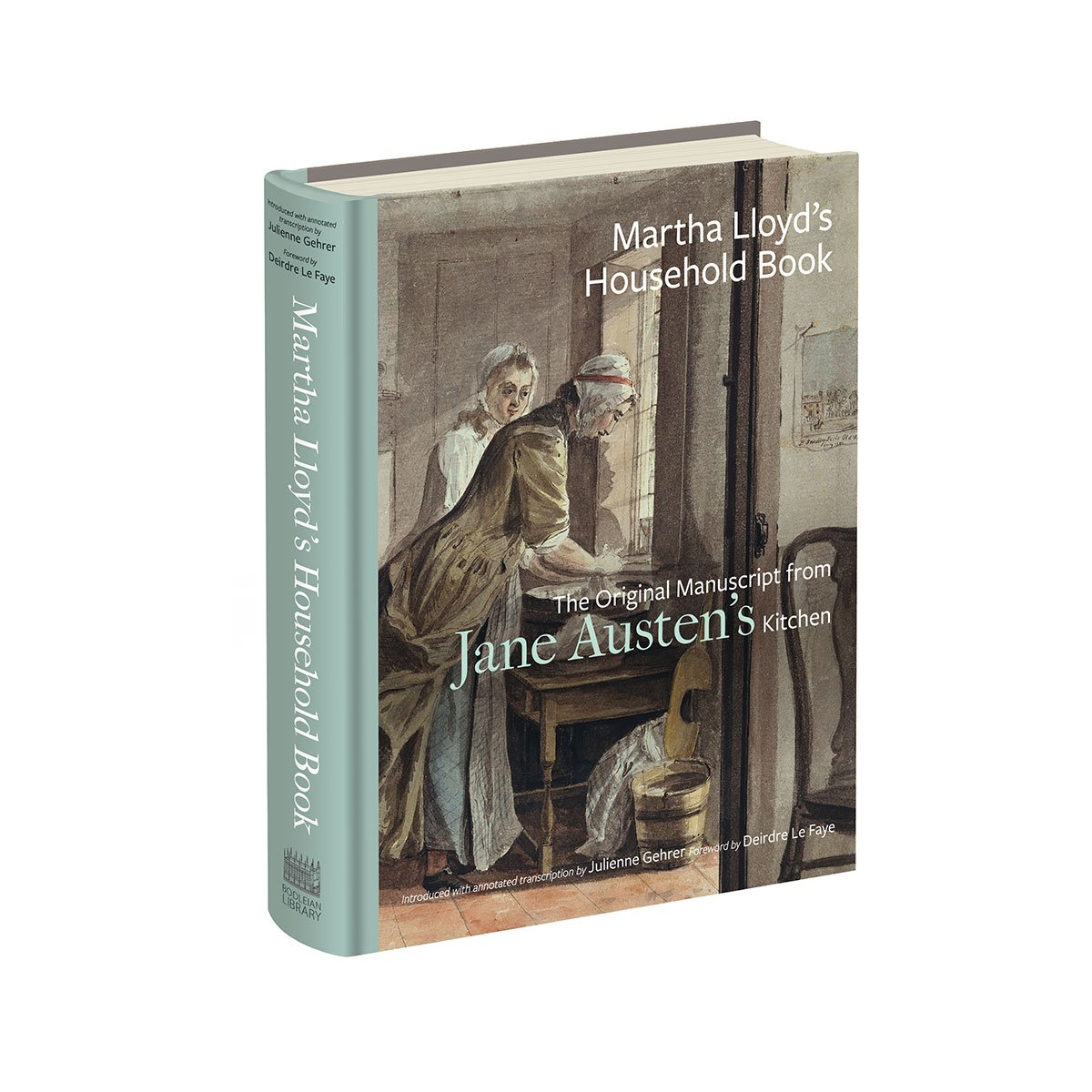
Book reviewers are not supposed to reveal their thoughts until the end of their review. I am breaking that rule: I LOVED this book. 

martha-lloyd

Book Cover from Bodleian Shop

The book begins with Deirdre Le Faye’s excellent foreword, which, among many other good points, mentions how contemporary readers who belonged to the same gentry class as the Austens readily associated the family’s culinary choices to their own food preferences.

Martha’s book…was compiled for a family of the Middling Sort, as the expression was—unpretentious households of the literate and professional classes, not landed gentry and not necessarily well off.” – (p viii, Household Book)

Martha Lloyd in her own light

Julienne Gehrer’s comprehensive discussion of Martha Lloyd’s friendship with Jane Austen, her relationship with the Austen family, and her late-life marriage to Sir Francis Austen, Jane’s brother, had me mesmerized. Previously, I only had a general knowledge of Martha’s friendship with Jane, but this book placed their relationship into a clear and loving perspective. Four years after George Austen’s death in 1805 in Bath, the Austen women, with Martha in tow, moved from one rented house to another, until they settled in Chawton Cottage in 1809 on Edward Austen’s Hampshire estate. There, Martha was given a large bedroom. This must have been quite an honor!

Martha’s relationship with the Austens did not end with Jane’s death in 1817, but lasted throughout her life. Her marriage at 62 years of age finally made her an Austen in name as well as in spirit. While Gehrer describes the sisterly affection between Jane Austen and Martha Lloyd in a concise 30 pages, there is so much more to this book that is represented in that short account of their friendship. 

Historical context of Martha’s household book

In this section, Gehrer places Martha’s book in historical context.

… a lady’s household book was an essential tool for managing her home.” (p. 31)

These household books were written by the reigning ladies of the house to communicate with their cook and housekeeper. Early on they were private, not published, and described their own preferences. The books  included recipes and information they inherited from their mothers, relatives, and friends. The women felt free to copy from each other and from popular cookery books, such as Hannah Glasse’s seminal book from 1775. 

Lloyd’s contemporaries would not have known of The Housekeeping Book of Susanna Whatman, written in 1776-1800. It remained a private household book until it was found and published in 1952. My copy from The National Trust reveals Whatman’s knowledge of housekeeping and daily oversight of her servants via her specific instructions. She married young and one can imagine that as a new bride ruling her first household, she must have clung to her mother’s and grandmother’s advice for guidance and comfort. 

Gehrer traces the evolution of these household books and their varied uses. Country or city settings influenced the information that the women included.

Household books compiled in country setting often include ‘A Cure for Mange in Horses or Dogs and the necessary for ‘the cure of the Bite of a Mad Dog’, as does Marrha’s book.” – (p. 37)

The author also gives us tips on working with period recipes, cautioning us about creative spelling during the Georgian period, common word abbreviations, and the variable quantities mentioned, such as ‘a piece of dough the size of a walnut’. Often instructions assume that the cook already knows about which preliminary steps to take or how many hours of preparation might be expected. The modern cook has no such knowledge. Gehrer also cautions:

Many original recipes, both culinary and medicinal, contain ingredients now known to be toxic and are not advised for consumption or use.” – (p. 41)

Nevertheless, many interesting historic recipes remain that can be safely followed, through which this book guides the reader.

Unique details and connections to Jane Austen in Martha’s book

Gehrer then examines why Lloyd’s household book is of such historical importance. Rosa Mary Mowll, a great-granddaughter of Francis Austen and granddaughter of his child, Edward Thomas Austen, wrote a letter to a trustee of the Jane Austen Society about the book, but failed to mention the direct Austen contributions. Her offer was not deemed important and thus this primary source wasn’t initially accepted by the Austen experts from the Society. Thankfully,  her insistence and persistence influenced better minds to prevail and helped the book find its rightful place in history.

In June 1956, Martha Lloyd’s Household Book became part of the collection at Jane Austen’s House…” – (p. 44)

A full description of the book, including missing pages, descriptions of Martha’s script (with photographic images), dates of contributions and the names of contributors are included. The book then makes direct connections to Jane Austen and the recipes in her novels, and her family’s favourite dishes and recipes. Fancy French fare and dinners for the middling sort are described.

…examples of simple and abundant country foods permeate Jane’s writing and Martha’s household book. It is easy to envision Mrs Austen’s Steventon dairy producing pails of milk, pints of cream and pounds of butter, inspiring young Jane’s food-laden ‘Lesley Castle.’” – (p. 60)

Particulars of Martha Lloyd’s household book

This section, which starts on page 67, is the piece de resistance of this book – the first facsimile publication, in color, of this notebook ever. It is followed by a complete transcription of Georgian era cursive writing, and includes detailed annotations that help the modern reader interpret the recipes in ways we can understand. A glossary, extensive notes, and bibliography are included, as well as beautifully reproduced images. 

Contrast this book to The Knight Family Cookbook from the Chawton House Press, 2014. I bought this book at the AGM in Williamsburg in 2019 in support of this important institution and do not regret its purchase, but I would love to see a reissue. The preface by Richard Knight and Introduction by Gillian Dow were a scant 7 pages, followed by a grey and black facsimile of the cookbook without a transcription of the cursive writing, which at times was hard to read or follow, making it hard to interpret the recipes. Again, my purchase went to a good cause, but for practical purposes, I could not make heads or tails of a majority of the recipes.

In conclusion

For those who are intrigued with the story of Martha Lloyd and Jane Austen, a wonderful current companion piece is the recently published Jane Austen’s Best Friend by Zöe Wheddon, which adds so much color and flavor to Martha Lloyd’s Household Book: The Original Manuscript from Jane Austen’s Kitchen. 

About the author

Julienne Gehrer is an author, journalist and food historian who lectures on Jane Austen and the long eighteenth century. Her articles have appeared in Texas Studies for Literature and Language, Jane Austen’s Regency World, and JASNA News. She is the author of several books including this one and Dining with Jane Austen (2017).

More about Martha Lloyd

Purchase the book

Gehrer, J. (2021) Martha Lloyd’s Household Book: The Original Manuscript from Jane Austen’s Kitchen (1st ed., U.K.) Bodleian Library.

UK: Bodleian Shop – Click here to order the book

US: publication August, 2021 – Click here to order the book on Amazon 

Sir Thomas More will be familiar to many of us from Robert Bolt’s stage play and 1966 film, A Man For All Seasons, and from Hilary Mantel’s more recent book, Wolf Hall. For those persons who confine their reading to the six novels of a certain Georgian lady and don’t recognize his name, he was Lord High Chancellor of England from October 1529 to 16 May 1532, under King Henry VIII. He steadfastly refused to condone Henry’s desire to break from the Catholic Church to facilitate his divorce from Catherine of Aragon; Henry’s solution was to order his execution.


Hover cursor over images for captions

Neither the historical record nor the dramatisations document his descendant lines to any extent, but Sir Thomas and his wife Jane Colt established a fertile line of progeny. A genealogist and descendant, the late Martin Wood, in his book The Family and Descendants of St Thomas More) [1] thought that the tally so far could number one hundred thousand. What has never been on the public record is a direct family connection between Sir Thomas and Jane Austen. The link is in the maternal line of Mrs. Austen, Cassandra Leigh, through her maternal great-grandmother, Anne Dawtrey.

George Austen and Cassandra Leigh both had some knowledge of their fathers’ ancestries but, I suspect, little of their mothers’. Cassandra was proud of her paternal lineage – her great-grandfather was the 8th Lord Chandos, her great-uncle was the first Duke of Chandos, and her distant cousin Edward Leigh was Baron Leigh of Stoneleigh. Her mother Jane Leigh (née Walker) lived with the Austens at Steventon for the last four years of her life, and the first four of their marriage. Of the Austens’ parents she was the one best known to them, and it seems safe to assume that she’d have talked about her forebears. However the current record of Cassandra’s maternal family extends back only to her great-grandmother, and it’s likely that she knew nothing of earlier generations.

Until recently I had not given Anne Dawtrey any attention – her son-in-law (and Cassandra’s maternal grandfather) John Walker, ‘Doctor of Physick at the University of Oxford,’ had both dominated and frustrated my attention. I have to report that he continues to elude not just me, but several archivists at the University of Oxford as well.

The only detail recorded for Anne, confirmed by the licence allegation for her marriage to James Perrott (dated 23 November, 1667) [2], was that she was of Petworth in Sussex. When I got round to looking, the Dawtreys revealed themselves to have been a long-established Petworth family, with additional estates in Essex and Suffolk. They were wealthy enough to leave Last Wills and Testaments that are preserved at The National Archives [3]; and bore Arms (that is, heraldic Arms), so their pedigree is recorded in the Sussex County Visitations [4]. Working through those and other sources, I was able to establish that Anne’s great-great grandfather was William Dawtrey, who had been elected MP for Sussex in 1563 and died in 1591, and that his wife was Margaret. 

Margaret’s surname had been recorded as Rogers in the Visitations; it was only on finding William’s biography in the website of The History of Parliament [5] that I learnt that she was in fact a Roper, and that she was the daughter of William Roper of Eltham, Kent. It didn’t take long to discover that this was the William Roper who had married Margaret More, the devoted daughter of Sir Thomas More. (William Roper was Sir Thomas’s first biographer; Margaret More, besides supporting her fsther during his trial, retrieved his head from the executioner; it is now interred in the Roper vault under the Chapel of St. Nicholas in St. Dunstan’s, Canterbury.)

Anne Dawtrey was a 4th-great-granddaughter of Sir Thomas; Jane Austen was an 8th-great-granddaughter. While researching Jane’s maternal pedigrees I have found many very interesting ancestors, but none so surprising as Sir Thomas. The chance that she knew this is negligible! If these details have any bearing on Jane Austen herself, it’s in the way that they illustrate that her descent was through some of the most interesting people in British history.

In the preceding paragraph I wrote “none so surprising as Sir Thomas.” But here’s another detail that comes close. Sir Thomas More’s parents, Sir John More (a Judge of the Common Pleas and of the King’s Bench) and Alice Graunger, had four surviving children, of whom he was the second eldest. His youngest sibling, Elizabeth, married John Rastell, and they too established a successful line of progeny.  One of their great-grandsons was amongst the worthiest of Jane Austen’s distant cousins, the great English poet John Donne.

Hover cursor over images for captions

About the author:

Ronald Dunning is the creator of the Ancestry.com “Jane Austen Family Tree,” which is undergoing an update as his research continues. He learned through his grandmother that her family was in some way related to Jane Austen. After moving from Canada to England in 1972, he pursued this intriguing information and discovered that Frank Austen [Jane’s brother] was her great-great-grandfather. Find more information in Deb Barnum’s 2012 interview with Mr. Dunning for Jane Austen in Vermont, An Interview with Ron Dunning on his Jane Austen Genealogy ~ The New and Improved Jane Austen Family Tree!

References:

[1] The Family and Descendants of St Thomas More. Martin Wood. Gracewing, Leominster, 2008. ISBN 978 0 85244 681 2

[2] Marriage Allegations in the Registry of the Vicar-General of the Archbishop of Canterbury. Harleian Society Vol. XXIII, 1886. p.142

[3] Probate Records:

William Roper, PROB 11/60/365 (in which he names his ‘daughter Dawtrey’)

William Dawtrey (d.1591) PROB 11/78/329

Sir Henry Dawtrey (d. 1646) PROB 11/196/139

William Dawtrey (d.ca 1679) PROB 11/361/238

[4] Visitations of Sussex for 1530 and 1633-4; Harleian Society, London, Vol.LIII, 1905; p.32

[5] History of Parliament Online: http://www.historyofparliamentonline.org/volume/1558-1603/member/dawtrey-william-1591

Read other articles by Mr. Dunning

By Brenda S. Cox

“God grant me patience, Pray for me Oh Pray for me.” –Jane Austen’s last recorded words, from Cassandra’s letter to Fanny Knight, July 20, 1817

You probably know that Jane Austen died young, at age 41, on July 18, 1817.

What did she die of? We don’t know, but many scholars have speculated. Most of these conditions had not even been identified in Austen’s time.

Her Symptoms

From letters we learn that Austen had:

  • Fluctuating symptoms, better, worse, better, worse
  • Pain in her face (Sept. 15 and 24, 1813, exacerbated by cold air), back (Sept. 8, 1816), and knee (Feb. 21, 1817), though not much pain near the end
  • Discoloration of skin, especially face, “black and white and every wrong color” (March 25, 1817)
  • Pale skin (from her niece Caroline’s observations)
  • Recurrent fevers (March 25, April 6, 1817)
  • Sleepless nights
  • A clear mind (she wrote a poem on Winchester Races shortly before her death)
  • Fatigue, weakness, langour, often needing to lie down (May 22, 1817, as well as months before that)
  • A “Discharge” for a week, which the “applications” of a Winchester doctor alleviated (May 22, 1817)
  • A seizure near the very end; when repeated, Cassandra describes it as faintness (July 20, 1817)

Her Self-Diagnosis

What did Austen think she had? On Jan. 24, 1817, she wrote, “I am more & more convinced that Bile is at the bottom of all I have suffered, which makes it easy to know how to treat myself.” And again on April 6, “I have been suffering from a Bilious attack, attended with a good deal of fever.”

Bile is often mentioned in Austen’s letters as a source of disease for her family and friends. The liver produces bile as part of the digestive process. She implies that she has a digestive disorder.

On Feb. 21, 1817, Austen wrote, “I am almost entirely cured of my rheumatism, just a little pain in my knee now & then, to make me remember what it was, & keep on flannel.” March 26, 1817, she wrote, “I have still a tendency to Rheumatism.” So at this point she attributed her pain and weakness to rheumatism in her joints.

Contemporary Treatments

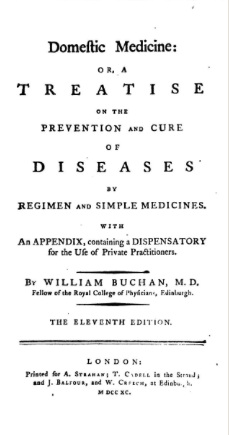
In Austen’s time, doctors considered that the “humours” in the body: blood, phlegm, yellow bile, and black bile, had to be in balance. In Dr. Buchan’s popular Domestic Medicine (11th ed., 1790), he writes, “Jaundice, indigestion, loss of appetite, and a wasting of the whole body” are “the consequences of a vitiated state of the liver, or obstructions of the bile” (56). 

For an intermittent fever, Dr. Buchan recommends ipecac, which will cause the patient to vomit up bile and clean out the system (150). For stomach issues caused by bile, he recommends bleeding, liquids and light foods (such as Mr. Woodhouse’s gruel), and warm baths (290-291).

For jaundice (probably what we would call hepatitis, which turns the patient’s skin and eyes yellow, from excess bile), Buchan says “numberless British herbs” supposedly cure it, but he observes that generally the disease goes away by itself, so the herbs don’t necessarily cause the cure. He goes on to recommend hempseed and several other herbs that he thinks work. He also describes other diseases as connected with bile.

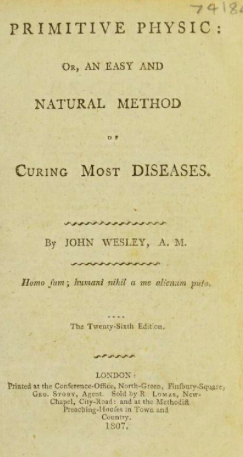
John Wesley, the Methodist preacher, wrote a very popular book called Primitive Physic: Or, An Easy and Natural Method of Curing Most Diseases. It went through many editions and is still available today (I bought mine at the Wesley Museum in London). His goal was to list “cheap, safe, and easy medicines” available to “plain, unlettered” people. He marked those he had tried himself. Wesley started with lifestyle recommendations, such as, eat and drink moderately, and exercise regularly. Then he gave remedies for many diseases.

For “bilious cholic” (upset stomach ejecting bile), he recommends drinking warm lemonade or taking “sweet oil.” He gives nine remedies for rheumatism, including cold baths, warm steams, and eating barley-gruel with currants, roasted apples, fresh whey, and light pudding.

We don’t know what remedies Austen might have tried for her “bile” or rheumatism.

Mr. Curtis, her apothecary in Alton, and Mr. Lyford, her doctor in Winchester, tried to cure her, but we don’t know what diagnoses they made. For some possibilities, as well as more modern ideas, see “Did Jane Austen die from Nervous Consumption on July 18, 1817?” 

Modern Theories

Many modern scholars and doctors have speculated on what might have caused Jane’s death. Here are a few of their ideas:

Addison’s disease (tuberculosis of the adrenal glands)

This theory was put forward by Sir Zachary Cope in 1964. Austen’s langour, fatigue, skin discoloration, and stomach irritability fit with Addison’s. However, her niece described her as pale, while Addison’s generally gives a tanned appearance, according to Claire Tomalin in Jane Austen: A Life. The National Organization for Rare Disorders says, though, that Addison’s can cause white patches and darker patches, including black freckles on the face, so that might fit. However, her clear mind and lack of pain towards the end do not fit with Addison’s, apparently.

Lymphoma, such as Hodgkin’s Disease, a form of cancer

A study in June 2005 gives Hodgkin’s Disease as a more likely diagnosis. This causes an immune deficiency. The article considers Austen’s medical history of recurrent infections, including possible conjunctivitis which gave her eye problems, typhus when she was a child, and the whooping cough she contracted as an adult. She may have had an immune deficiency and lymphoma for years. Jane Austen’s birth, a month late, could have made her more susceptible to an immune deficiency. Trigeminal neuralgia, causing her face pain exacerbated by cold, could also be associated with a lymphoma.

Tuberculosis, or consumption

Another writer, K.G. White,  suggested in 2009 that tuberculosis, or consumption, was much more widespread in Austen’s day than Addison’s, and is another possible cause of her death. It may have been a secondary infection on top of a lymphoma

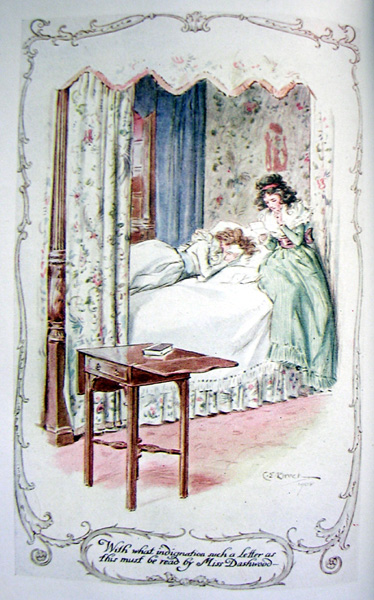
In Sense and Sensibility, Marianne Dashwood nearly dies of an illness brought on by indulging her misery and “sitting in her wet shoes and stockings.”

Lupus (an autoimmune disease)

An even more recent theory claims that all Austen’s symptoms were consistent with systemic lupus erythematosus. Joint pain, skin discoloration, fever, fatigue, and fluctuating symptoms that come and go are all consistent with lupus. See “Black and White and Every Wrong Colour.” 

Accidental Arsenic Poisoning

The British Library suggests that Austen may have died of accidental arsenic poisoning, from arsenic in medications or the water supply. They tested three pairs of spectacles from Austen’s writing desk, which are believed to be hers. Based on the prescription strengths, the researchers speculate that she may have gotten cataracts due to arsenic poisoning. Arsenic could also have caused her facial discoloration. See Dr. Sandra Tuppen’s article  and “Jane Austen Poisoned.”

Breast Cancer

Another possibility is breast cancer, which Carol Shields suggests in Jane Austen: A Life (NY: Penguin, 2001), 173-174. Austen’s Aunt Philadelphia (her father’s sister) apparently died from breast cancer, and estrogen fluctuations might have caused Austen’s fevers. 

Typhus

Another theory is that she died of a recurrence of the typhus which almost killed her as a child, while she was in Southampton. See Linda Robinson Walker, “Jane Austen’s Death: The Long Reach of Typhus?

Overdose?

Helena Kelly, in Jane Austen: The Secret Radical, thinks that whatever Austen was sick with, “a dose of opiates strong enough to knock her out completely for nine hours has to have at least hastened her death” (282). The laudanum Dr. Lyford gave her may have been too high a dose, which caused her to eventually stop breathing.

In the end, we don’t really know what took Jane Austen away—to heaven, as her sister Cassandra strongly believed. We know she left this world before she could finish all the works we wish she might have done. But we’re thankful for those works she did complete and the legacy she left to us all.

What’s your favorite theory about what happened to our beloved Jane? Can you add any information about the possible diagnoses above?

Jane’s obituary in the Salisbury and Winchester Journal says, “Her manners were gentle, her affections ardent, her candour was not to be surpassed, and she lived and died as became a humble Christian.” (Candour at this time meant that she thought the best of people, as Jane Bennet did.) (Quoted in Claire Tomalin, Jane Austen: A Life.)

For spiritual and religious aspects of death in Austen’s novels and in her experience, see my article in Persuasions On-Line, “Preparation for Death and Second Chances in Austen’s Novels.” 

You can connect with Brenda S. Cox, the author of this article, at Faith, Science, Joy, and Jane Austen or on Facebook.

Taking a vacation—whether it’s a staycation or a trip—is all about taking a break from your everyday activities to rest, relax, and get refreshed. As things continue to reopen, it’s fun to think about ways to make the summer season special. And of course, Jane always provides me with special inspiration!

Here are a few activities you might like to try this summer, whether you prefer to keep closer to home or you are ready to set out and have an adventure. These “Jane-cation” ideas are designed to fill your cup and put a pep in your step! Most of these activities can be done virtually, with your family, or in small groups.

#1 – Take a Book Lovers Day Off

  • Clear your calendar—just like a regular vacation day
  • Plan your meals ahead of time
  • Select your books
  • Read books you want to read (not something you have to read)
  • Set up a cozy spot indoors (or create an outdoor reading nook)

Read Like Jane: Read the books Jane Austen read in her lifetime. You can select some of your titles from this list from Jane Austen in Vermont: Jane Austen’s Reading List.

Jane Austen on Reading:

The person, be it gentleman or lady, who has not pleasure in a good novel, must be intolerably stupid.

―Mr. Tilney, Northanger Abbey

I declare after all there is no enjoyment like reading! How much sooner one tires of anything than of a book! When I have a house of my own, I shall be miserable if I have not an excellent library.

―Miss Bingley, Pride and Prejudice

If a book is well written, I always find it too short.

―Kitty Percival, “Catharine, or the Bower”
Anne Hathaway, Becoming Jane

#2 – Host a Small Garden Party

  • Plan summer fare that’s light and fresh
  • Invite guests to bring a favorite tea cup
  • Provide a selection of teas, lemonades, and sparkling waters
  • Don’t forget a pretty dessert such as Strawberry Shortcake Trifles
  • Decorate with fresh flowers, tea cups, and stacks of books tied with ribbon

Party like Jane: Ask your guests to bring fresh flowers and create your own bouquets or nosegays. You can read this JAW article about Regency bridal bouquets for inspiration. Learn how to make Georgian ices here!

Jane Austen on Parties:

Our party went off extremely well. There were many solicitudes, alarms, and vexations beforehand, of course, but at last everything was quite right. The rooms were dressed up with flowers, etc., and looked very pretty. 

―Jane Austen’s Letter to Cassandra, 25 April, 1811.

You know how interesting the purchase of a sponge-cake is to me.

―Jane Austen’s Letter to Cassandra, 15 June, 1808.

The Orange Wine will want our Care soon. –But in the meantime for Elegance & Ease & Luxury . . . I shall eat Ice & drink French wine, & be above Vulgar Economy.

―Jane Austen’s Letter to Cassandra, 1 July, 1808.

Strawberry Shortcake Trifles from CookingClassy.com

#3 – Plan a Picnic or Fruit-picking Excursion

  • Meet up with family or friends for a picnic
  • Explore a new park or picnic area
  • Bring a pretty basket, delicious food, drinks, and a blanket
  • Play games or provide riddles for guests
  • Try a new recipe

Picnic like Jane:
Take cushions, flowers, and other items to make it comfortable and picturesque. You can read this JAW article on Box Hill and Regency picnics. Or plan a Regency picnic menu courtesy of the Jane Austen Centre.

Jane Austen on Excursions:

We are to walk about your gardens, and gather the strawberries ourselves, and sit under trees;—and whatever else you may like to provide, it is to be all out of doors—a table spread in the shade, you know. Every thing as natural and simple as possible.

―Mrs. Elton, Emma

To sit in the shade on a fine day, and look upon verdure, is the most perfect refreshment.

―Fanny Price, Mansfield Park

The pleasures of friendship, of unreserved conversation, of similarity of taste and opinions will make good amends for orange wine.

―Jane Austen’s Letter to Cassandra, 20 June, 1808.

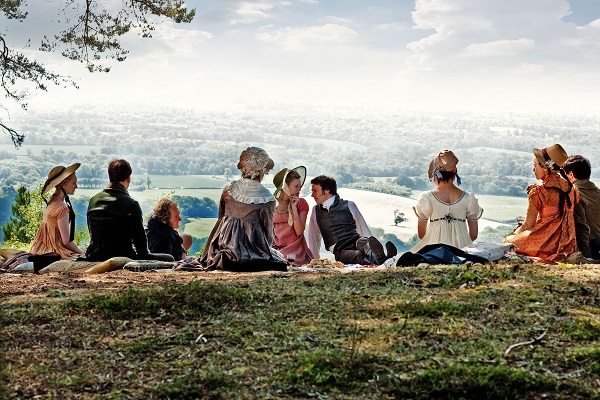
Emma, 2009

#4 – Take a Home & Garden Tour:

  • Explore a local public garden
  • Tour a historic home
  • Volunteer in a community garden
  • Revamp a corner of your own garden or patio
  • Take a gardening class

Garden like Jane: Try planting flowers like Jane might have had in her garden. Read this JAW article on Jane Austen’s garden when she was living at Chawton Cottage. Or enjoy this Pictorial Visit to Chawton by Tony Grant.

Jane Austen on Homes & Gardens:

Pemberley House . . . was a large, handsome stone building, standing well on rising ground, and backed by a ridge of high woody hills; and in front, a stream of some natural importance was swelled into greater, but without any artificial appearance. Its banks were neither formal nor falsely adorned. Elizabeth was delighted.

―Jane Austen, Pride and Prejudice

Some of the flower seeds are coming up very well, but your mignonette makes a wretched appearance. …Our young piony [sic] at the foot of the fir-tree has just blown and looks very handsome, and the whole of the shrubbery border will soon be very gay with pinks and sweet-williams, in addition to the columbines already in bloom. The syringas, too, are coming out. We are likely to have a great crop of Orleans plums, but not many greengages—on the standard scarcely any, three or four dozen, perhaps, against the wall.

―Jane Austen’s Letter to Cassandra, 29 May, 1811.

Two . . . hedgerows radiated, as it were, from the parsonage garden. One, a continuation of the turf terrace, proceeded westward, forming the southern boundary of the home meadows; and was formed into a rustic shrubbery, with occasional seats, entitled “The Wood Walk.” The other ran straight up the hill, under the name of “The Church Walk,” because it led to the parish church.

―James Edward Austen-Leigh, A Memoir of Jane Austen (Description of Steventon)
Jane described the syringa in the garden. Image@Tony Grant

#5 – Take a trip to the seaside or mountains:

  • Go to the seaside
  • Drive to the mountains
  • Take a day trip
  • Rent a house or cabin
  • Camp out

Travel like Jane: Looking for something literary? Explore one of these Literary-themed Day Trips. Or check out some of the Best Literary Places to Read and Eat around the world. Want to stay closer to home? Visit your local independent bookstore, buy a book, and show your support.

Jane Austen on Travels:

A little sea-bathing would set me up forever.

―Mrs. Bennet, Pride and Prejudice

What delight! what felicity! You give me fresh life and vigour. Adieu to disappointment and spleen. What are young men to rocks and mountains? Oh! what hours of transport we shall spend!

―Elizabeth Bennet, Pride and Prejudice

The Cobb itself, its old wonders and new improvements, with the very beautiful line of cliffs stretching out to the east of the town, are what the stranger’s eye will seek; and a very strange stranger it must be, who does not see charms in the immediate environs of Lyme, to make him wish to know it better.

―Jane Austen, Persuasion

We had a little water-party yesterday; I and my two nephews went from the Itchen Ferry up to Northam, where we landed, looked into the 74, and walked home, and it was so much enjoyed that I had intended to take them to Netley to-day; the tide is just right for our going immediately after moonshine, but I am afraid there will be rain; if we cannot get so far, however, we may perhaps go round from the ferry to the quay.

―Jane Austen’s Letter to Cassandra, 24 October, 1808.
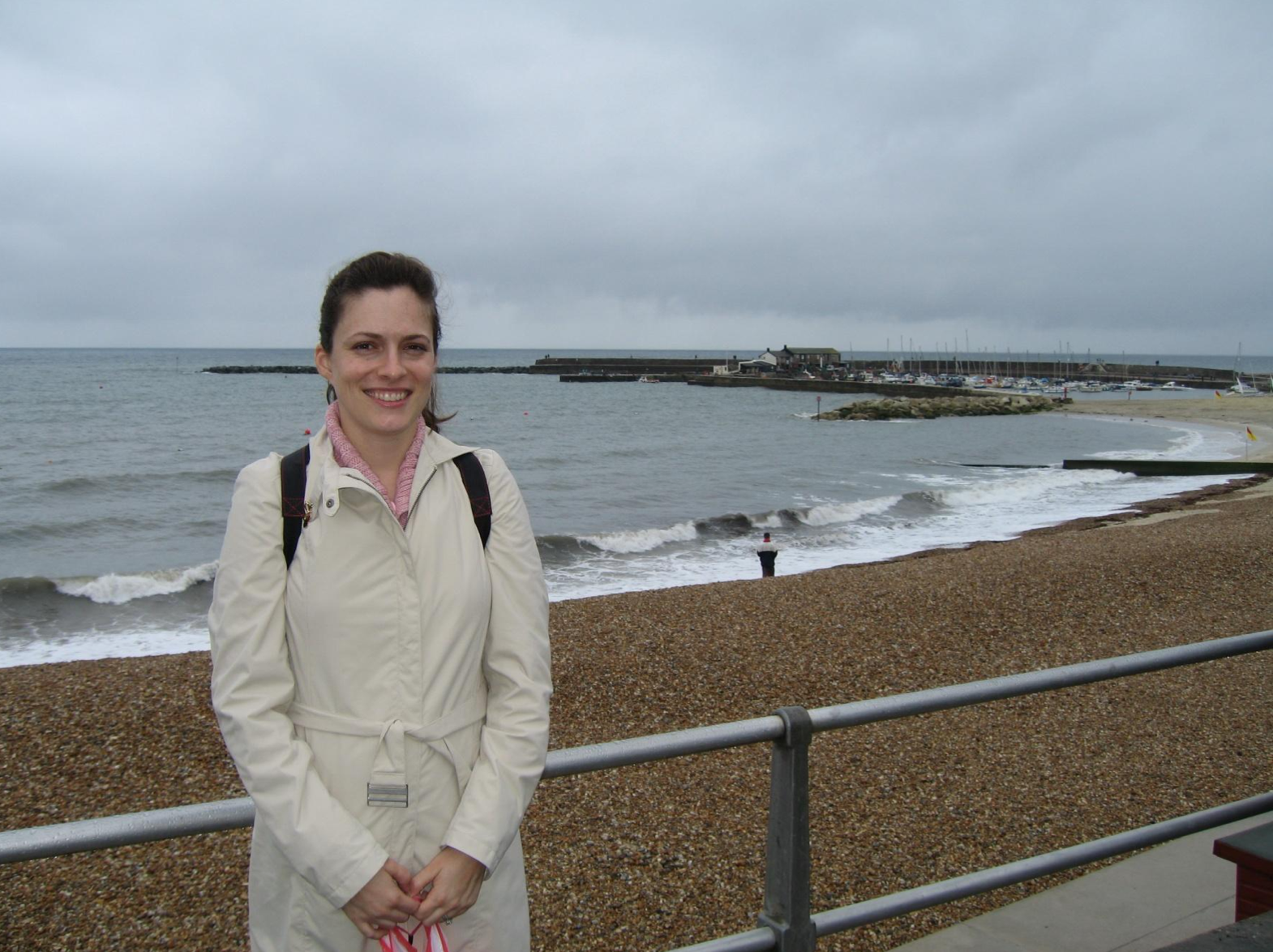
Lyme Regis and The Cobb (Rachel Dodge, 2007)

Wishing you all a summer filled with bookish plans, dear Jane Austen’s World readers! If you could choose any “Jane-cation” (if travel/health restrictions did not exist), where would you go?

RACHEL DODGE teaches college English classes, gives talks at libraries, teas, and book clubs, and writes for Jane Austen’s World blog and Jane Austen’s Regency World magazine. She is the bestselling author of The Anne of Green Gables Devotional: A Chapter-By-Chapter Companion for Kindred Spirits and Praying with Jane: 31 Days Through the Prayers of Jane Austen. Her newest book The Little Women Devotional is now available for pre-order and releases later this year. You can visit Rachel online at www.RachelDodge.com.