Feeds:
Posts
Comments

Archive for the ‘19th Century England’ Category

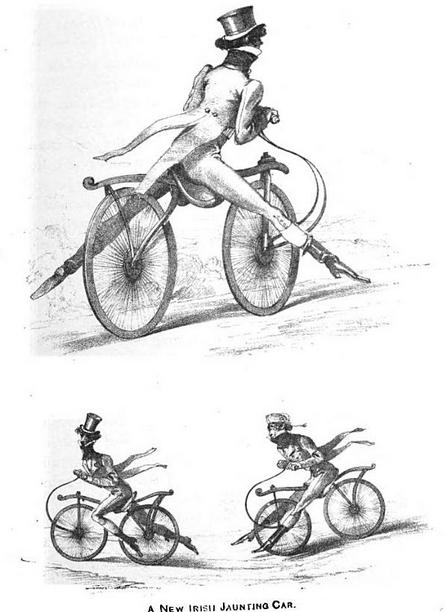
Imagine a bicycle with no brakes and no pedals and you have an idea of what it was like to ride a velocipede, or the dandy horse, in the early 19th century.

“The dandy-horse was a two-wheeled vehicle, with both wheels in-line, propelled by the rider pushing along the ground with the feet as in regular walking or running. The front wheel and handlebar assembly was pivoted to allow steering.” (Wikipedia)

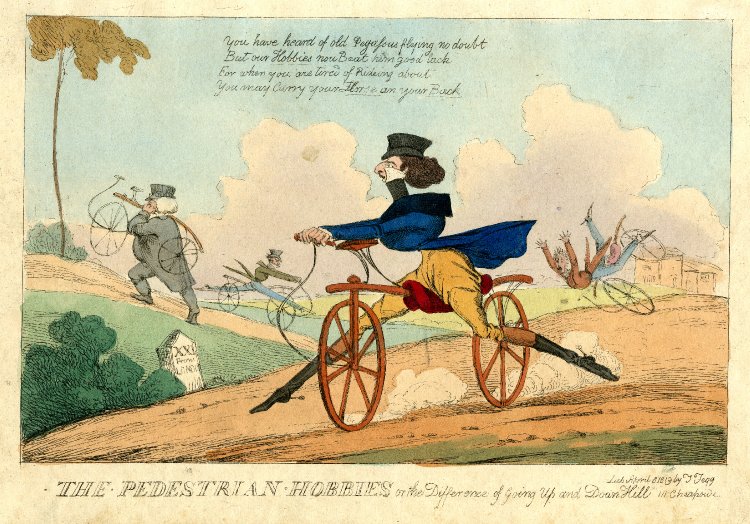
This meant that the man riding this contraption not only looked ungainly while riding it, but had very little control over what he was doing and where he was going, especially on uneven and hilly ground.

The earliest usable and much copied velocipede was created by the German Karl Drais and called a Laufmaschine (German for “running machine”), which he first rode on June 12, 1817. He obtained a patent in January 1818. This was the world’s first balance bicycle and quickly became popular in both the United Kingdom and France, where it was sometimes called a draisine (German and English), draisienne (French), a vélocipède (French), a swiftwalker, a dandy horse (as it was very popular among dandies) or a Hobby horse. It was made entirely of wood and had no practical use except on a well-maintained pathway in a park or garden. – Wikipedia

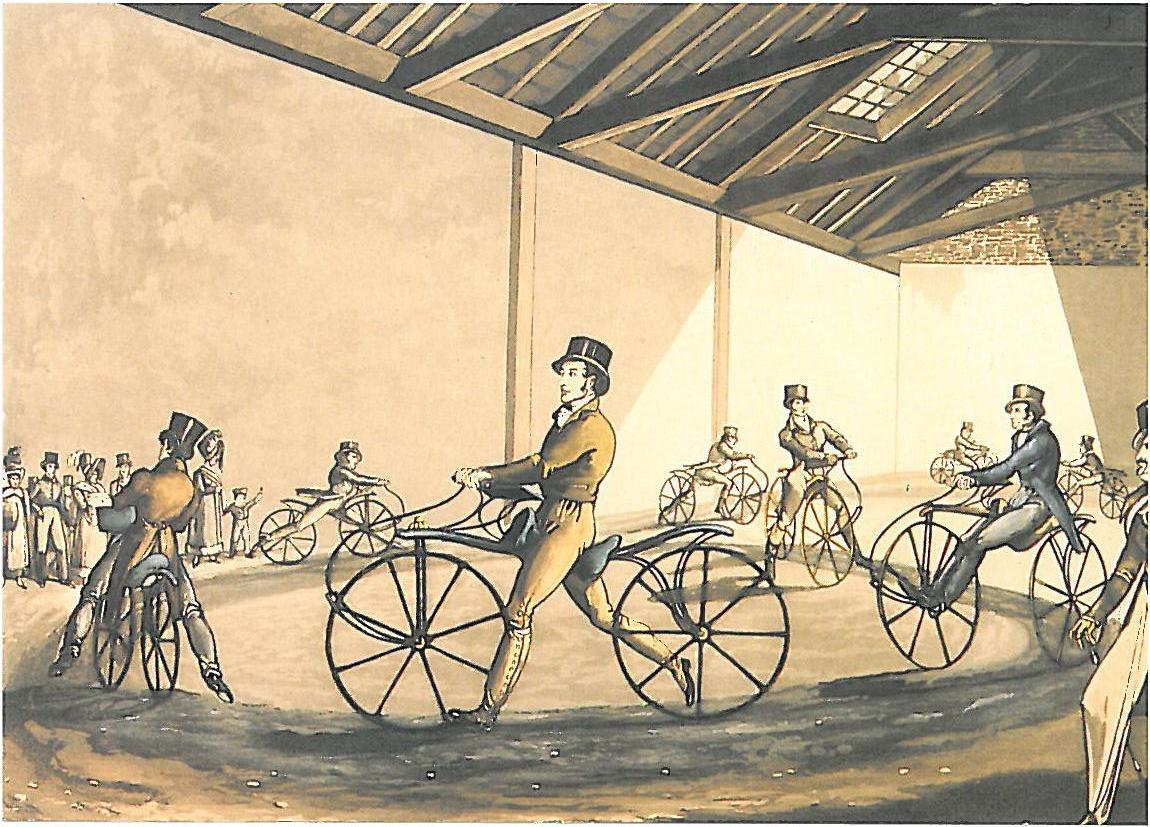
Learning how to ride one of these vehicles wasn’t easy. As seen in the image above, a man would propel himself with his legs and brake with them. The image below is from the archives of Westminster City Council, and is of a postcard of Dennis Johnson’s (c.1760-1833) velocipede school. The school was founded in 1818 by Johnson,  the coachmaker, who had made some improvements on Drais’ machine. He managed to make around 320 of his pedestrian curricles, as he called his patented machines. Then in 1819 the craze for velocipedes went out of fashion: Mr. Johnson returned to making carriages. (Velocipedes.) It wasn’t until towards the end of the 19th century that the velocipede began to be perfected and started to resemble the bicycle we know today.

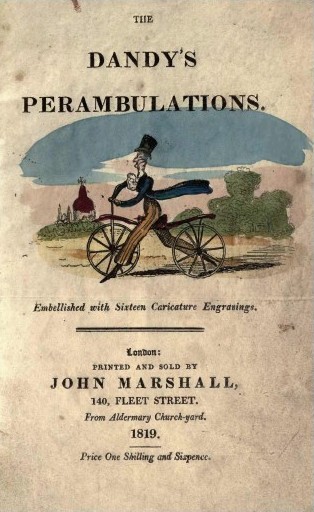
Several years back I featured a remarkable publication on Dandyism.net called The Dandy’s Perambulations. The pamphlet was printed and sold in 1819 by John Marshall in Fleet Street.

Image @Dandyism.net

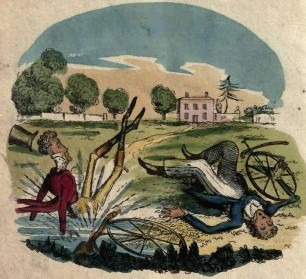
Below are a few lines from the pamphlet:

[They] ran along together straight,
Until they reached the turnpike gate,
Where a coach had made a stop;
So they both got upon the top,
And after their disastrous falls,
At length in safety reached St. Paul’s.

Image @Dandyism.net

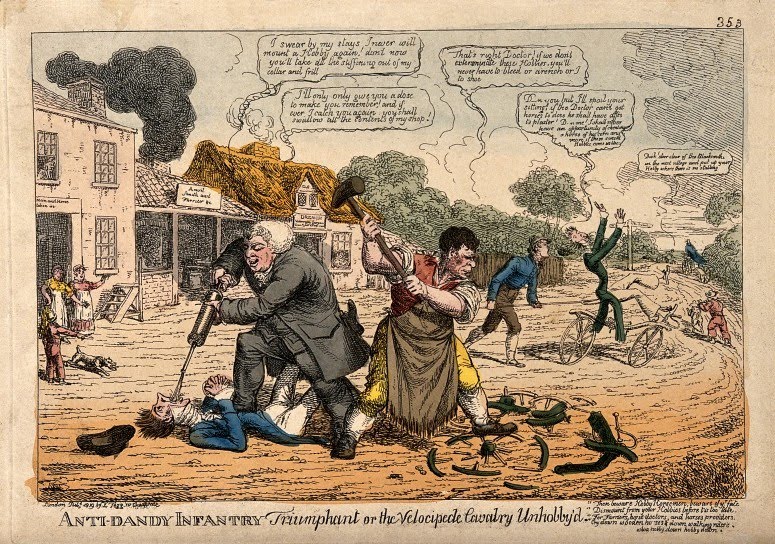
The print below shows a dandy “forced off his hobby-horse and subjected to brutal punishment by the two professions most threatened by the new technology: a blacksmith and a vet.” (Wellcome Library)

Image @Wellcome Library

It is sad to think that Jane Austen, who died in 1817, never had the chance to observe a gentleman riding a velocipede. With her wit and keen sense of observation, what would she have made of the sight?

More on the topic:

Read Full Post »

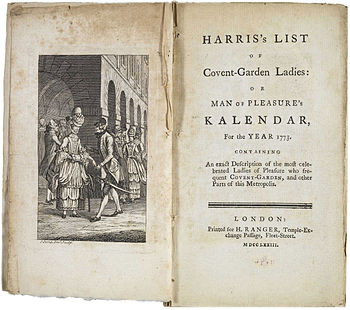
1773 Edition. Image @Wikipedia

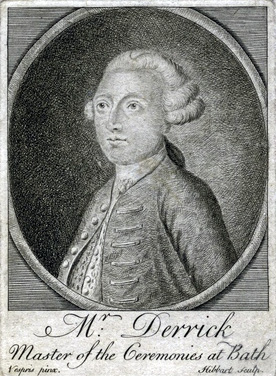
When I wrote my post about the Master Key to the Rich Ladies Treasury, a number of readers mentioned Harris’s List of Covent Garden Ladies. To my delight Google eBooks offers a link to the 1789 publication. The pocket-sized book, first published in 1757, remained popular for over 30 years with Lotharios looking for a light-o’-love. This annual sold for half a crown, the equivalent of about £15 today or the weekly room rent back in those days. Its author, identified for years as John Harris, was actually the drunken poet, Samuel Derrick, once described by James Boswell as “a little blackguard pimping dog”.*

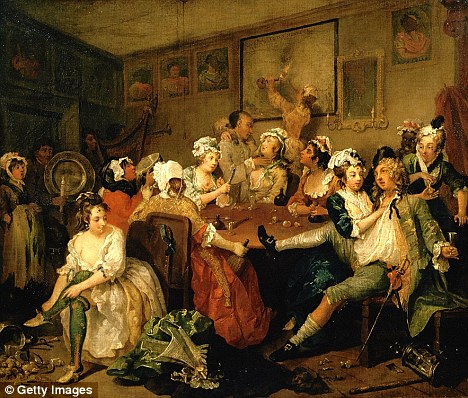
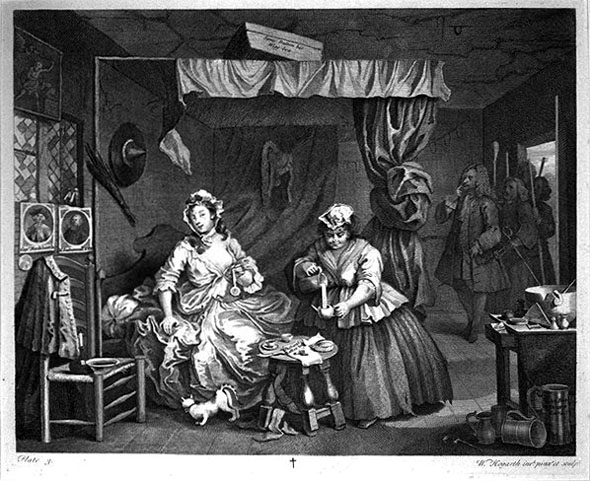
A Rake's Progress, Hogarth, 1732-33

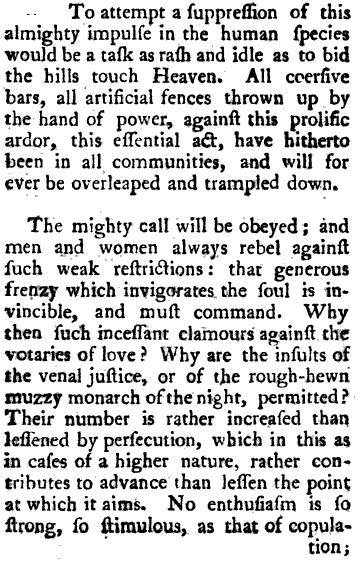
The introduction to the 1789 publication (see below) provides a shameless rationale for the “votaries of love.” The writer ignored the fact that for most of these ladies life was hard and bitter.

Introduction, p ii of Harris's List of Covent Garden Ladies, 1789

Demand for these lists was so great that 8,000 copies of the first edition were printed. London’s prostitutes were identified by name, location, and their special charms. Here’s a description of Miss Devonshire of Queen Ann Street, who had ‘a fair complexion, cerulean eyes and fine teeth.:

many a man of war hath been her willing prisoner, and paid a proper ransom…she is so brave, that she is ever ready for an engagement, cares not how soon she comes to close quarters, and loves to fight yard arm and yard arm, and be briskly boarded. – Port Cities, London

Although Derrick died in 1769, the list was continued by anonymous authors:

The list was continued for another 15 years by others, but Ms Rubenhold says it became dull soft porn, lacking the wicked sparkle of Derrick’s days – such as the anecdote of Miss C, powdered and perfumed above and below to entertain a prince, who “was so much of an Englishman to despise all fictitious aids in that quarter and, turning up his nose at the … musk, which was quite offensive to him, he rang the bell and sent the servant for a red herring”.- Exposed: Filthy Poet Pimp Who Wrote the Georgian Gentleman’s Guide to Prostitution

The description below of a tall and elegant woman, written 20 years after Derrick’s death, is rather pedestrian and obviously lacks Derrick’s wit.

A description in the 1789 list

For most prostitutes eking out a living in the Georgian era life was a constant struggle against poverty, illness and danger.The Times reported in 1785 that every year 5000 street-walkers died in the city (Prostitution in Maritime London). Prostitutes also died from venereal disease and the effects of poverty once their charms waned. Many aged prematurely. Some girls began their life of sin when they were 10 or 12 , for virgins came at a premium.

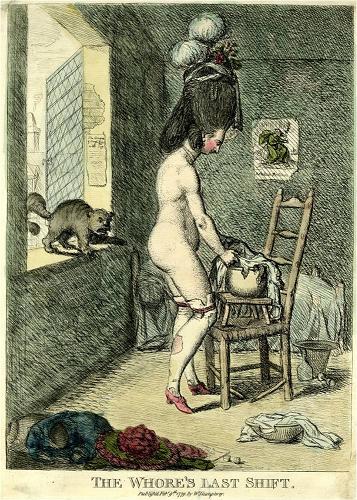
The Whore's Last Shift, James Gillray, 1779. From this view of her room and hole in her stocking, we can surmise that her life was far from glamorous. One can imagine that her tower of elaborately styled hair, kept in shape with grease, lard, and powder for days at a time, contained any number of itching lice and vermin when the arrangement was dismantled.

Economics was the driving engine of the thriving whore business in London. One in five women made a living as a prostitute, a remarkable number. The young women and girls who chose prostitution as a living were undereducated and fit only to work in backbreaking, menial jobs. Most prostitutes were independent street-walkers and kept a majority of their wages. A London prostitute stood an excellent chance of earning more than £400 a year. Contrast this income to a housemaid’s earnings of £5 a year, and one can readily see why so many women were drawn to the trade. Forty per cent of prostitutes came from London, while 60% came from the countryside and Ireland. Pimps, bawds, and procuresses (aging former prostitutes) exploited young girls arriving from the country (shades of Fanny Hill). They could make a tidy sum of money, for the deflowering rights of a young virgin went for £150, or £11,000 in today’s sums. (Sin City: One in Five Women in 1700’s London Were Prostitutes.)

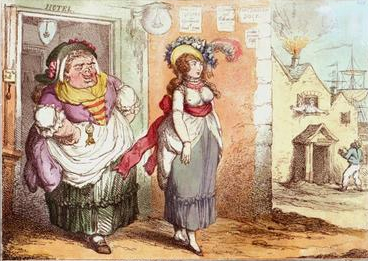
Rowlandson, Launching a Frigate. Image @Port Cities.org

[Prostitutes] tended to gather in areas with looser police control; when the police became stricter in the City of London in the eighteenth century, the prostitutes gravitated toward the west and east ends of the city; when police control loosened in the early nineteenth century, they returned to the City. Prostitutes also tended to congregate in areas with cheap lodging houses and lots of men. St. Giles and St. James, home to many cheap boardinghouses, were popular with prostitutes in Westminster; the Docks, where many sailors disembarked, was popular on the east side of the city. – (Tony Henderson. Disorderly Women in Eighteenth-Century London: Prostitution and Control in the Metropolis, 1730-1830. London and New York: Longman, 1999. x + 226 pp. $29.20 (paper), ISBN 978-0-582-26421-2; $106.00 (cloth), ISBN 978-0-582-26395-6. Reviewed by Kristen Robinson (Department of History, University of Kentucky)

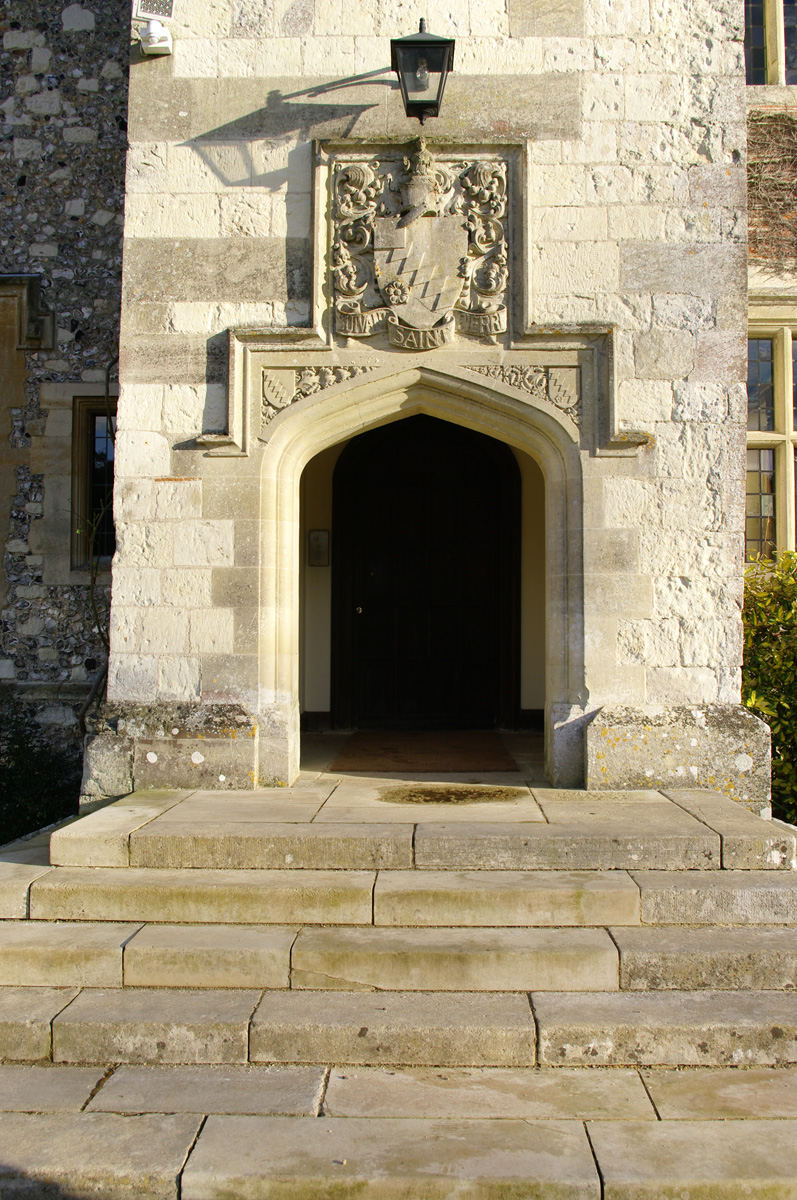
Note the saying above the door lintel.

The last Harris’s List was published in 1795, just as the perception of prostitution began to change. In the 18th century, “most prostitutes were seen as harlots who sought sex for pleasure. In the eighteenth century, however, prostitution was redefined as a condition stemming from economic need.” (Tony Henderson).  As the 19th century progressed, the arrival of street lighting and methods of modern policing reformed London as a city of vice.

The dawn of the Victorian age and new attitudes to morality meant that prostitution gradually went underground. Streetwalking was made an imprisonable offence in the 1820s. – Sin City: One in Five Women in 1700’s London Were Prostitutes

More on the topic:

Read Full Post »

Beauty and Cosmetics 1550-1950 by Sarah Jane Downing was published this month by Shire Library.  Small and compact, as Shire publications tend to be, this wonderfully illustrated book describes the standards of beauty popular in each era, from 1550 when alabaster brows were highly prized, to the black eyebrows that were favored by 18th century women.  As with her best-selling Fashion in the Time of Jane Austen, Ms. Downing provides the reader with a comprehensive overview of the topic. She begins with the Tudor Court and ends with the delightful cosmetic advertisements of the first half of the 20th century.

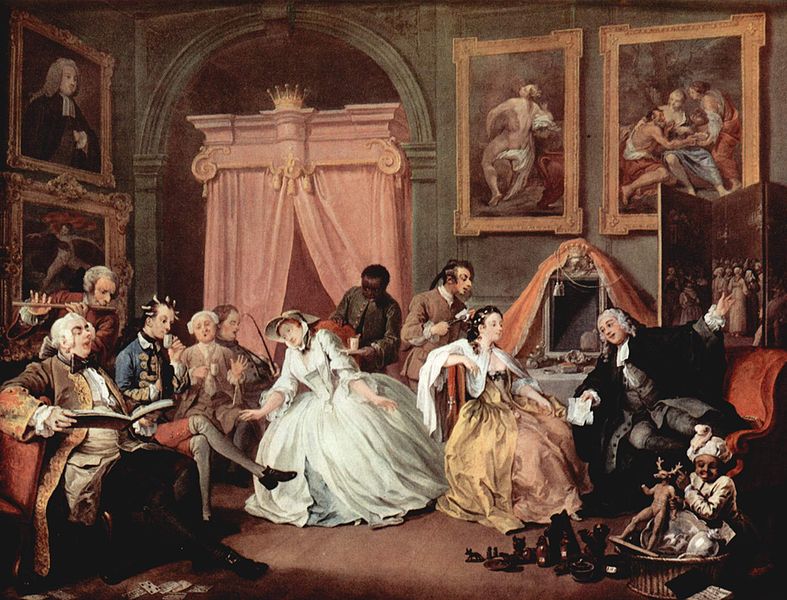
Marriage à-la-mode: The Countess's Morning Levee, William Hogarth, c. 1745

Because my blog’s theme centers on the Georgian and Regency eras, I will confine much of my recap to those years.

A woman applying beauty patches, Boucher

Mirrors, once only possessed by the rich, became so popular in London in the mid-16th century that British manufacturers petitioned Parliament to ban foreign imports. The ritual of the dressing table became quite elaborate and ladies began to entertain guests as they prepared themselves for the day.

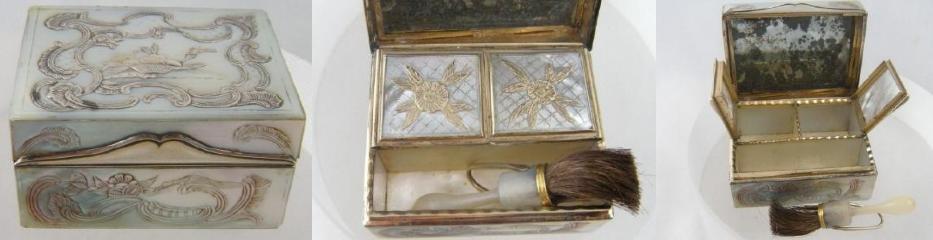
French mop gold boite a mouche patch box with brush, 1730. Images @ Etsy

Decorative patches covered skin blemishes and blotches, sometimes to such an extent that a face could be covered with a variety of dots, half-moon crescents, stars and even a coach and horses! The popularity of using patches began in the mid-17th century and did not wane until the end of the 18th century.

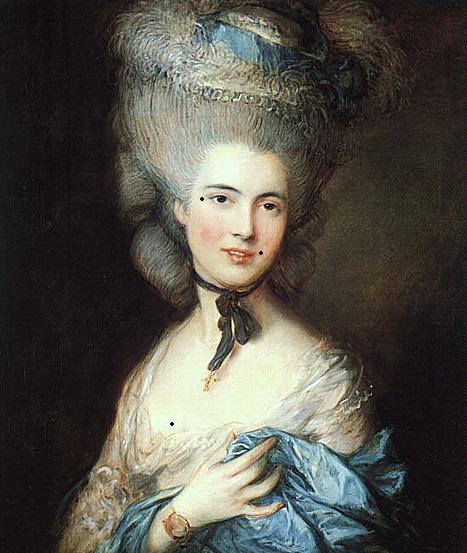
Woman with patches, pale skin and rouged cheeks. Thomas Gainsborough

Porcelain skin was highly prized and created with white lead-based skin cream. Blush was then applied to create a doll-like look. Cosmetics were created in a variety of ways. Here are the ingredients for one recipe for lead face powder that did not come from this book: several thin plates of lead, a big pot of vinegar, a bed of horse manure, water, perfume & tinting agent. Once can only guess how this concoction was put together and at its smell.

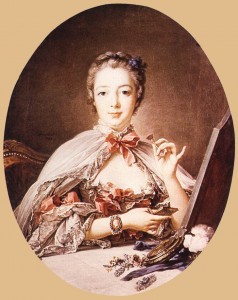
Marquise the Pompadour applying face powder with a brush. Boucher, 1758.

Ms. Downing describes in her book:

lead sheets were unrolled and beaten with battledores until all the flakes of white lead came off. These were gathered and ground into a very fine powder… p. 24

Gainsboroughs portrait of Grace Dalrymple Elliot in 1782 shows the craze for dark eyebrows.

For a while during the third quarter of the 18th century, dark eyebrows became all the rage. Lead-based cosmetics, used over time, caused hair-loss at the forehead and over the brows, resulting in a receding hair-line and a bare brow. For those who lost their eyebrows, it became the custom as early as 1703  to trap mice and use their fur for artificial eyebrows. Sadly, the glue did not always adhere well, and a lady could be caught with her brows out of kilter. This hilarious poem was written by Matthew Prior in 1718:

On little things, as sages write,

Depends our human joy or sorrow;

If we don’t catch a mouse to-night,

Alas! no eyebrows for to-morrow. – p.28

Aging beauties staved off the ravages of time with sponge fillers and rouge (sound familiar?), while many women risked poisonous side effects from using their deadly cosmetics. Maria, one of the Gunning sisters who went on to become Lady Coventry, was so addicted to her lead-based paints that she died in 1760 at the age of 27 knowing full well that she was at risk.

Maria, Countess of Coventry

The French Revolution swept away the widespread use of makeup, which was associated with the aristocracy. Defiantly, some aristocratic ladies went to their doom wearing a  full complement of make-up: pale skin, patches, rouged cheeks and rosy lips.

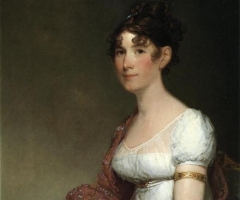
The more natural look of the regency woman. Note that the cheeks are still rouged.

Rousseau influenced the concept of nature and a more natural Romantic look took hold, aided by the blockade of cosmetics during the Napoleonic Wars. The death of many soldiers resulted in widespread melancholia and the affectation of a consumptive look. Ladies, nevertheless, were never far from their rouge pot.

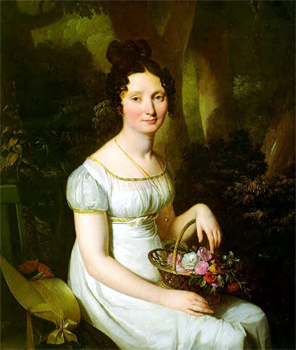
Another Regency portrait with subtle makeup. The flower basket adds to the natural look.

As with all Shire books, Sarah Jane Downing’s trip through time provides us with brilliant insights, in this instance it is via cosmetics and how society viewed beauty in each era. By the 1950s, the success of a marriage was defined by how well a woman took care of herself. This included makeup. Beauty, as Ms. Downing wrote, “was switched from a pleasure to an obligation.”  Oh, my. I give the delightful Beauty and Cosmetics 1550-1950 four out of five Regency tea cups.


Product Details

Paperback: 64 pages
Publisher: Shire (February 21, 2012)
Language: English
ISBN-10: 0747808392
ISBN-13: 978-0747808398
Product Dimensions: 5.8 x 0.2 x 8.2 inches

More on the topic:

Read Full Post »

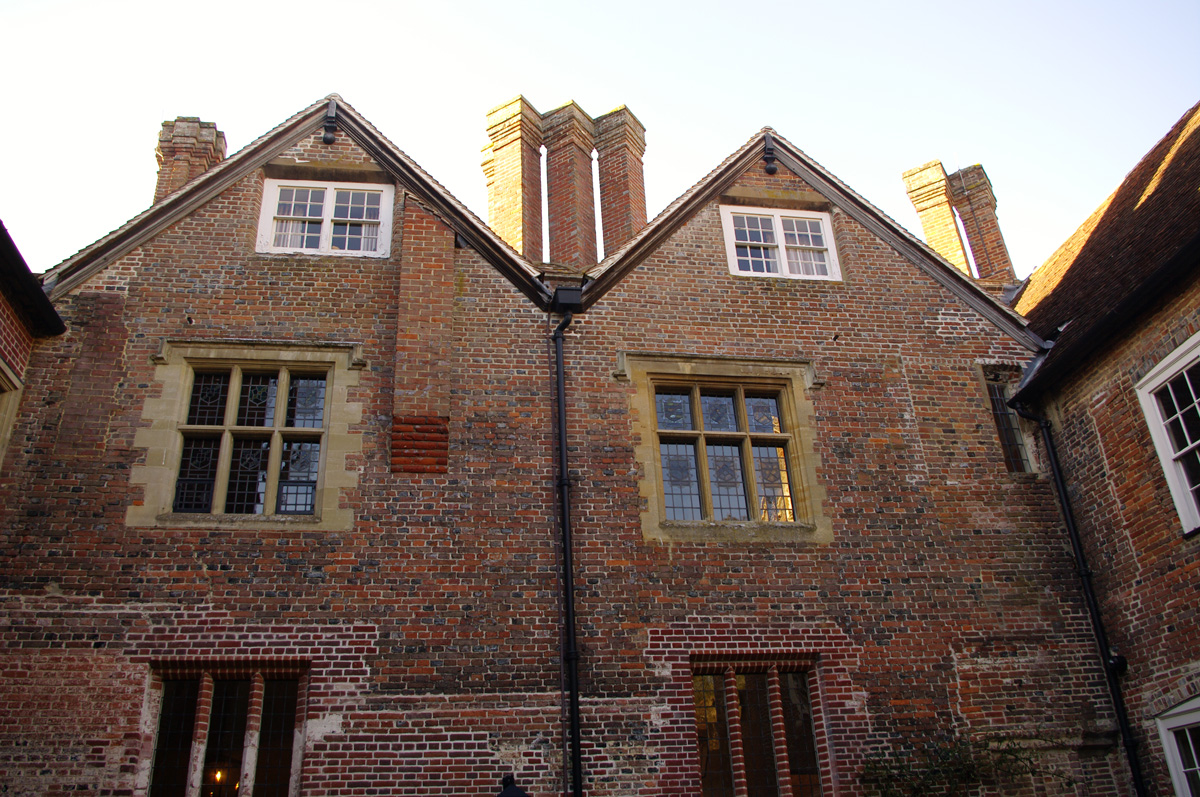
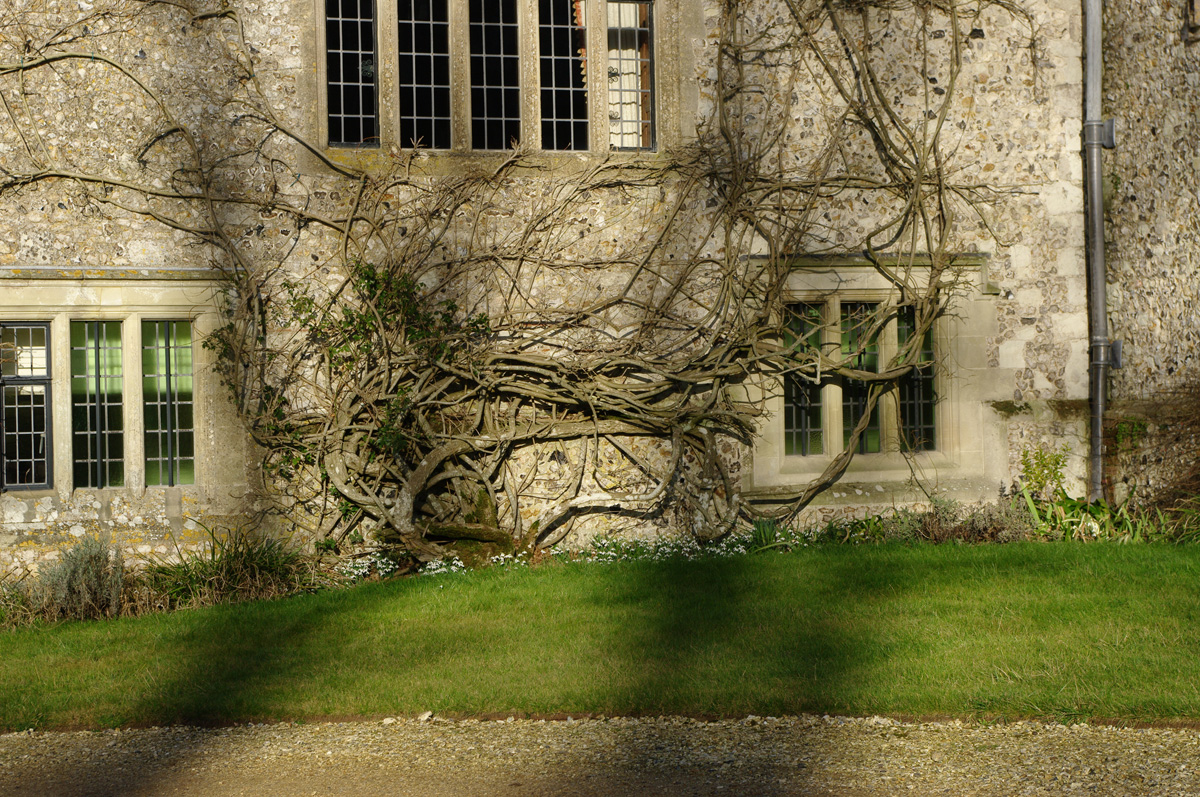
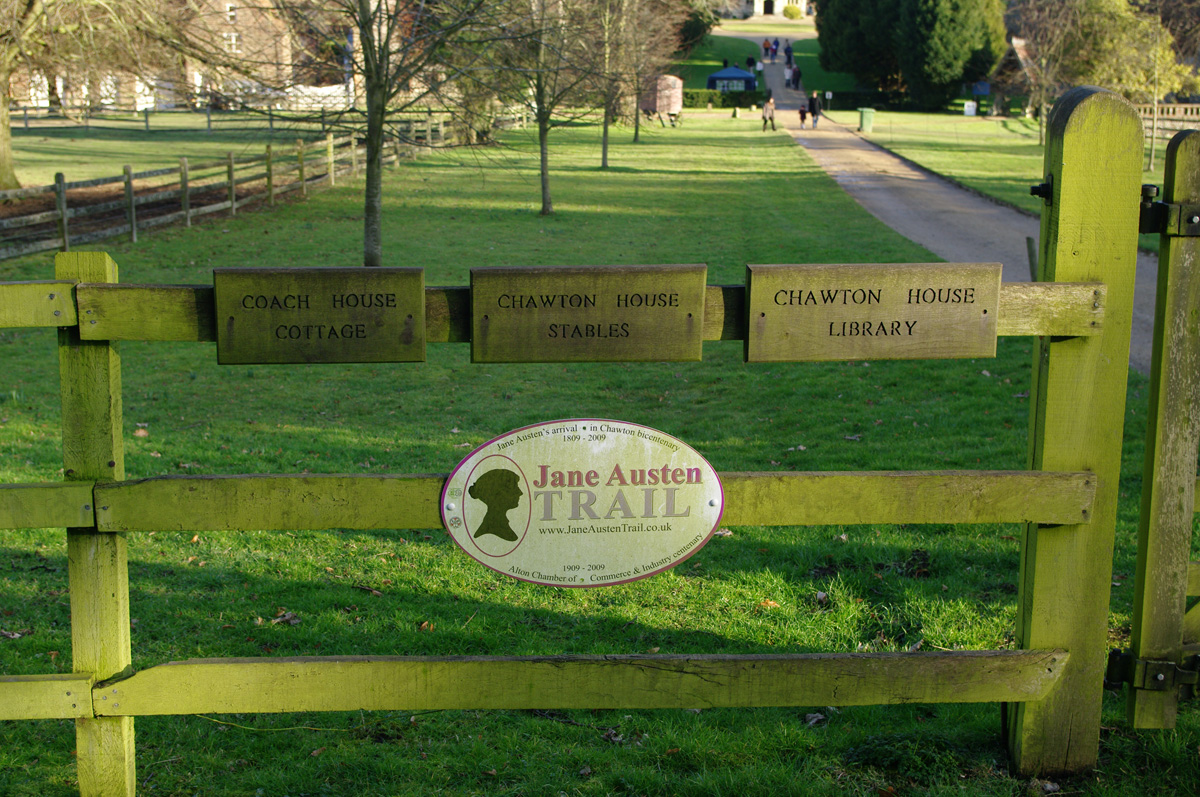
Gentle Readers, these fantastic images are by Tony Grant from London Calling. The text are quotations from the fabulous Chawton House Library site.  This site is rich with information and history. I am so impressed with the section on chickens, which were rescued and given a chicken-friendly coop for roosting and free ranging. The horses are magnificent as well. Sandy Lerner has done a magnificent job of turning this once ruin of a house into an historic library and museum. As Tony’s images show, this house is a world treasure .

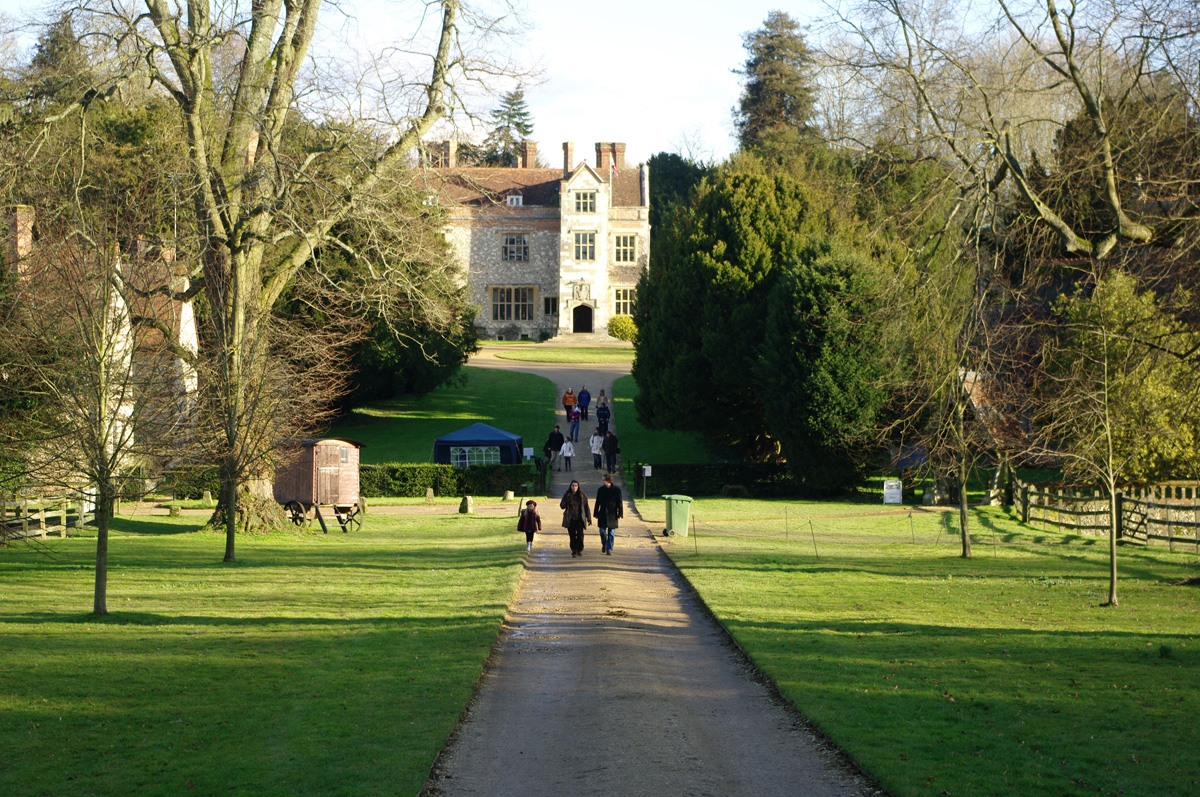
Drive leading to Chawton House. Image @Tony Grant

In April 1551, the land was sold for £180 to John Knight, whose family had been tenant farmers in Chawton since the thirteenth century and who had prospered sufficiently to wish to acquire a large estate.

Front entrance. Image @Tony Grant

The medieval manor house was replaced by John Knight’s grandson, also called John, with the largely Elizabethan house that can be seen today.  – History

Window detail. Image @Tony Grant

Eaves. Image @Tony Grant

Climbing shrub. Image @Tony Grant

Side view with side door. Image @Tony Grant

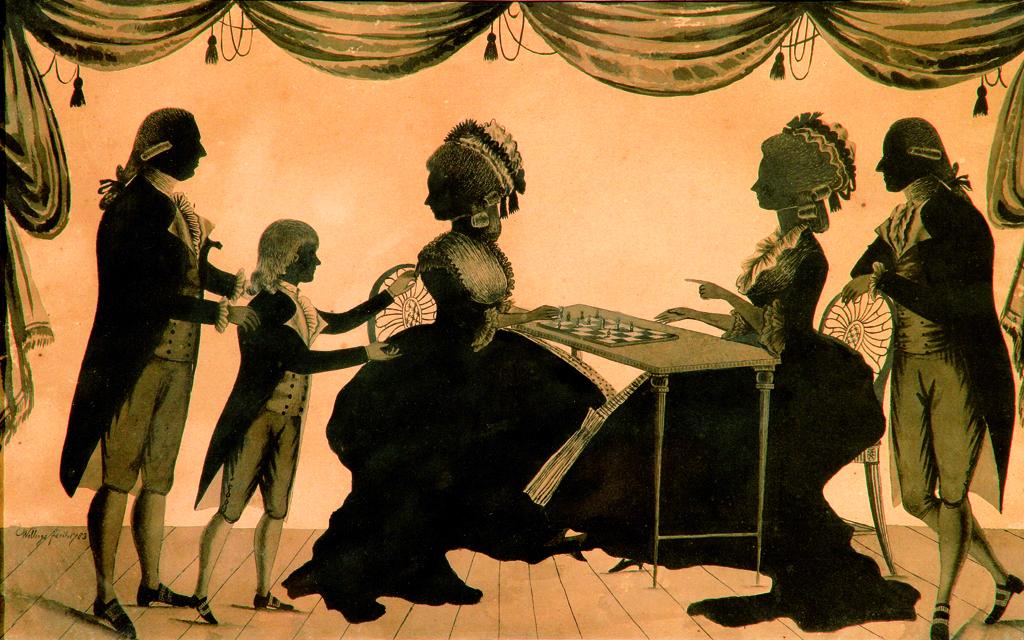
In 1781, Thomas Knight II inherited, but when he and his wife Catherine showed no sign of having children of their own, they adopted a son of the Reverend George Austen, who was a cousin of Thomas Knight’s.

Edward is introduced to the Knights. Image @Chawton House Library

Edward Austen Knight eventually took over management of the estates at Godmersham and Chawton in 1797, living mostly at Godmersham and letting the Great House at Chawton to gentlemen tenants.

Chawton Cottage, where Jane Austen lived. Image@Tony Grant

In 1809 he offered a house in the village to his mother and two sisters Cassandra and Jane, and it was there that Jane Austen began the most prolific period of her writing life.

Image @Tony Grant

Sandy Lerner. Image @The Telegraph

By 1987, when Richard Knight inherited, parts of the house were derelict, the roof leaked, timbers were rotting and the gardens were overgrown with scrub. The decline was halted in 1993 with the sale of a 125 year lease to a new charity, Chawton House Library, founded by the American entrepreneur and philanthropist, Sandy Lerner, via the charitable foundation established by her and her husband Leonard Bosack, the Leonard X. Bosack and Bette M. Kruger Foundation.

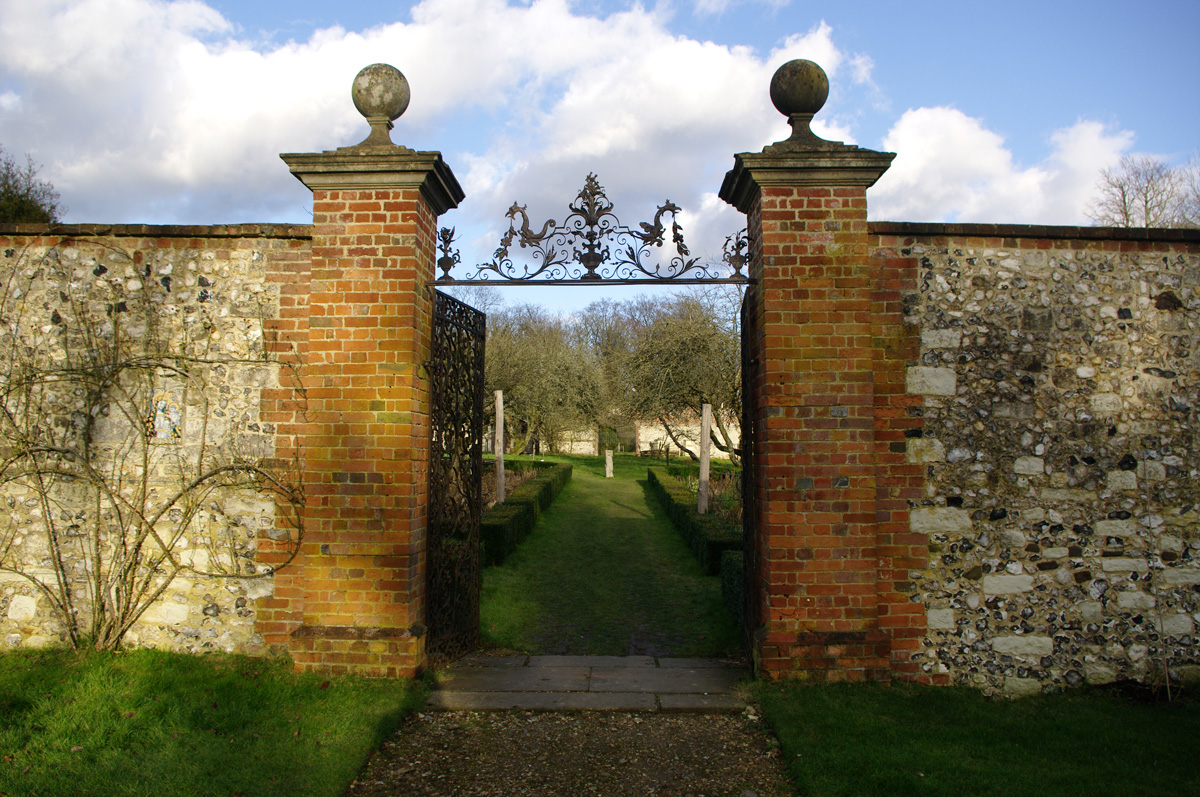
Kitchen garden entrance. Image @Tony Grant

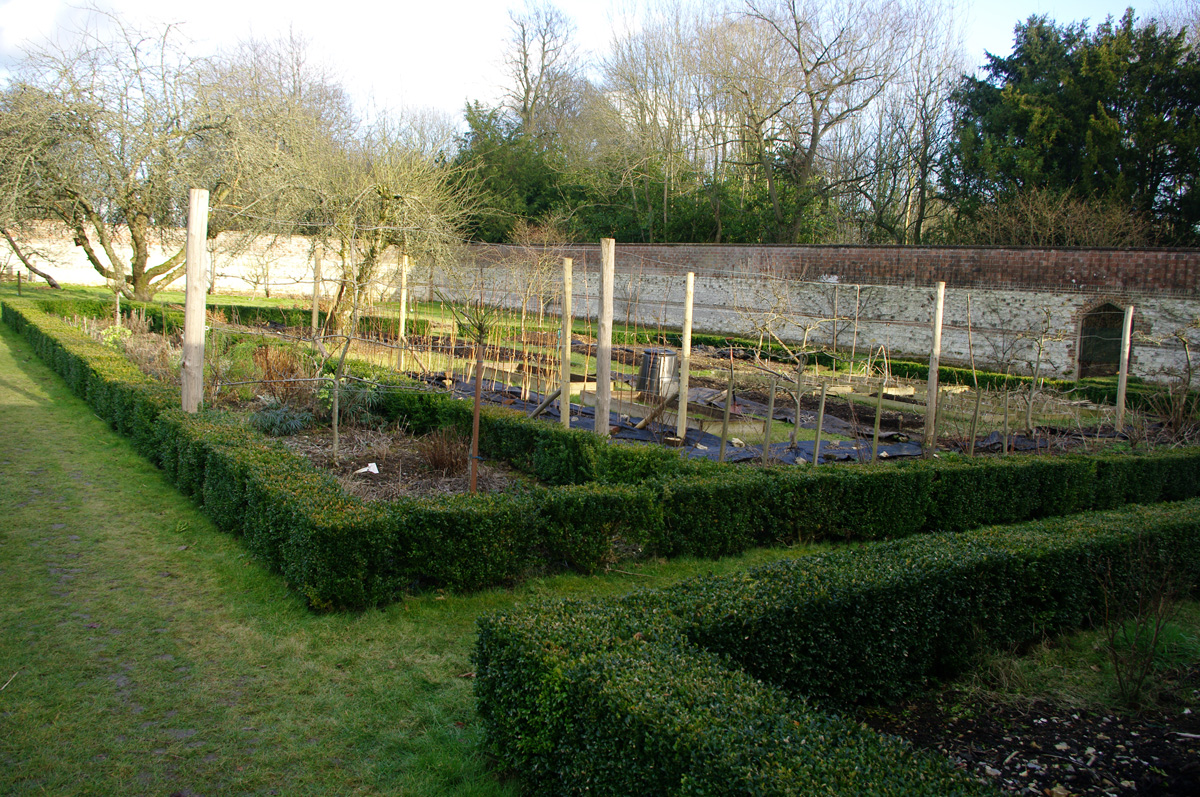
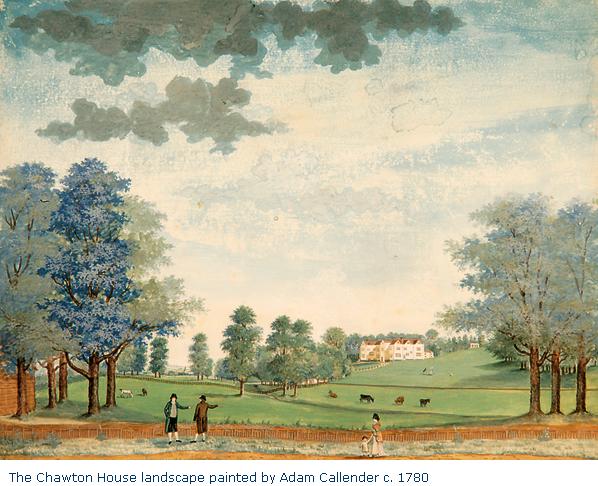
The grounds and gardens at Chawton House Library continue to be in the process of restoration although a great deal has already been achieved. The focus of the restoration is the English landscape period of the eighteenth century together with Edward Austen Knight’s early nineteenth-century additions of walled kitchen garden, shrubberies and parkland. – The estate

Kitchen gardens. Image @Tony Grant

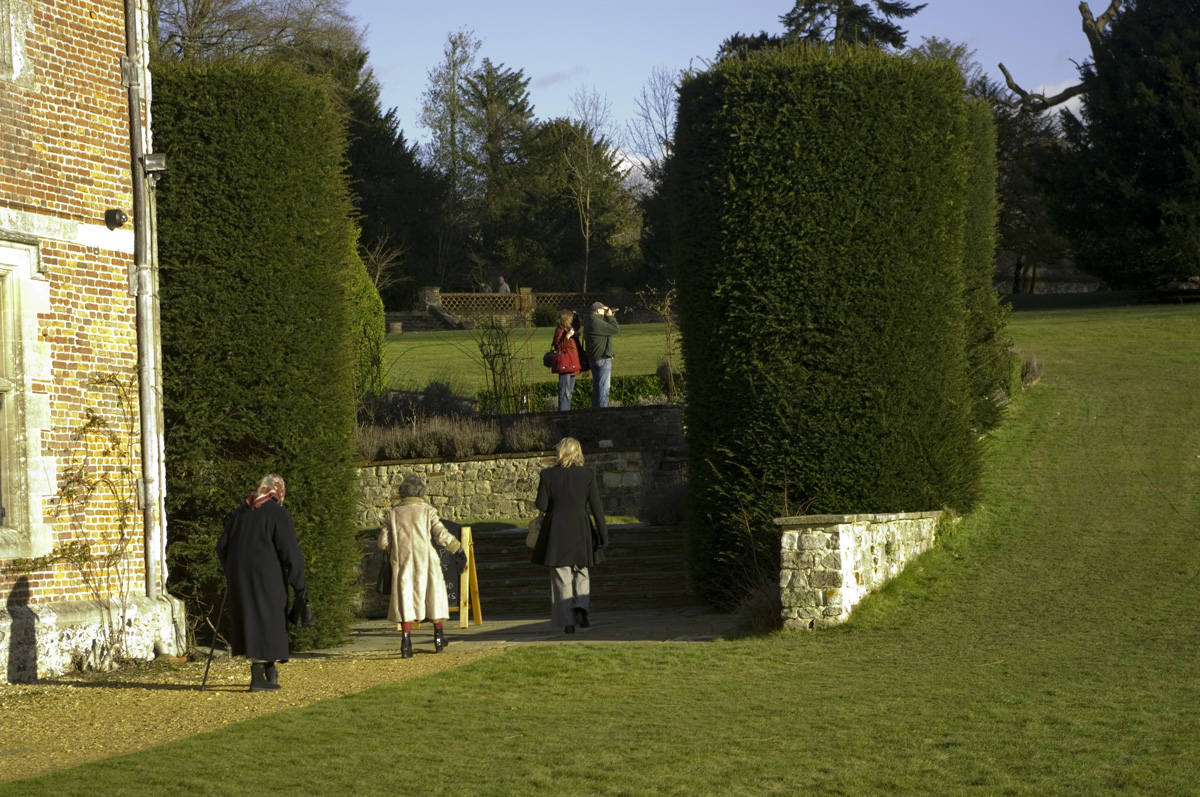
The Library Terrace was built between 1896 and 1910 (probably in 1904-05) by Montagu Knight (1844-1914). The terrace was actually an Arts & Crafts addition and almost certainly influenced by Edwin Lutyens.

Going round the back of the house. Image @Tony Grant

View from the gardens. Image @Tony Grant

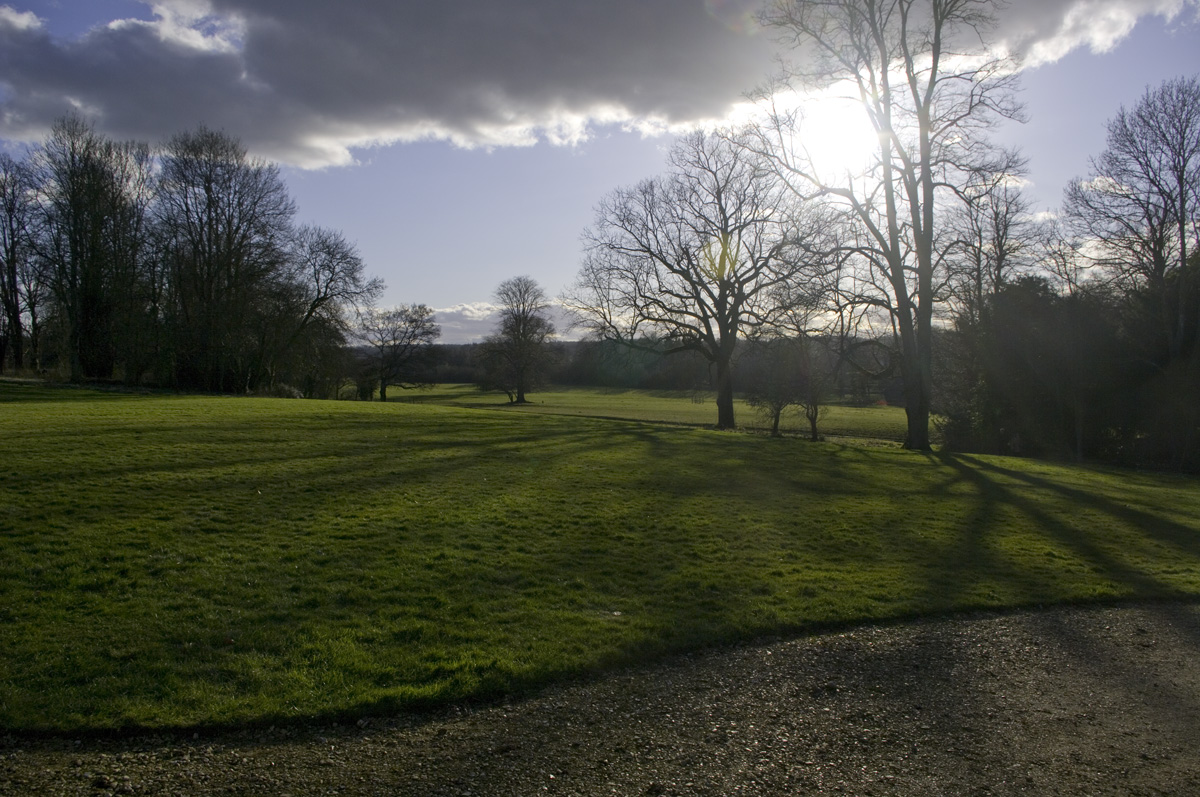
Gravel paths are not typical of the English Landscape period and were probably introduced by Edward Knight II (1794-1879).

View from one of the gravel paths. Image @Tony Grant

According to Montagu Knight, the brick Upper Terrace was built in 1901. In the early twentieth century this was a broad grass terrace with a central gravel path, recently uncovered.

Image @Chawton House Library

In Jane Austen’s time, the kitchen garden was located to the north of the Rectory (opposite the current entrance to Chawton House). Edward Austen Knight had the idea to build a new walled garden during his sister’s lifetime: in 1813, Jane Austen wrote to her brother Frank:

‘[h]e [Edward Austen Knight] talks of making a new Garden; the present is a bad one & ill situated, near Mr Papillon’s; — he means to have the new, at the top of the Lawn behind his own house’.

However, her brother’s plans did not come to fruition until after her death in 1817. – The estate

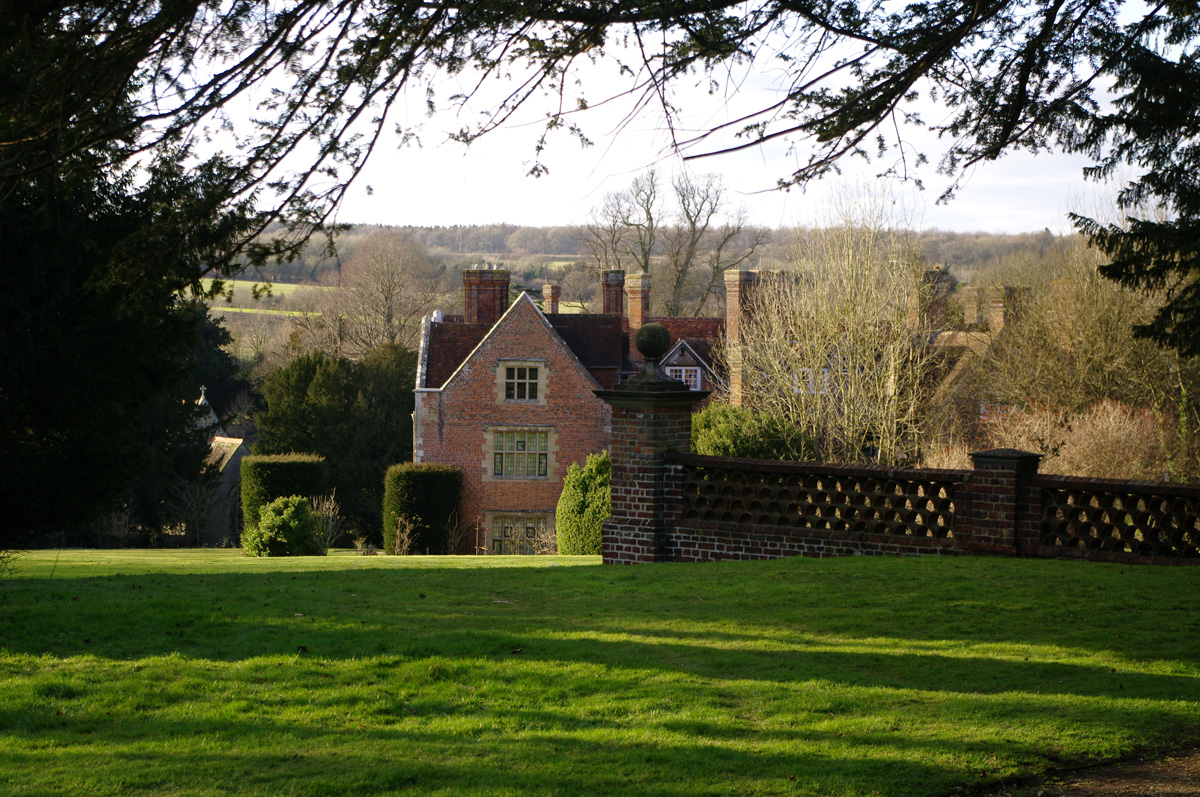
The grounds. Image @Tony Grant

The farm buildings. Image @Tony Grant

The fields. One can see the horses. Image @Tony Grant

The Wilderness dates from the late seventeenth and early eighteenth centuries and was originally set out geometrically with trees in straight rows, a practice which was later dropped. It survived the English Landscape improvements.

St. Nicholas Church. Image @Tony Grant

Church Copse. This area to the rear of St. Nicholas Church was cleared between 1999 and 2000, revealing the Knight family pet cemetery and the rear lychgate into the churchyard. Of particular interest in this area are the several large, important eighteenth-century lime trees and a yew tree, probably from the same period. – The estate

Image @Tony Grant

Read Full Post »

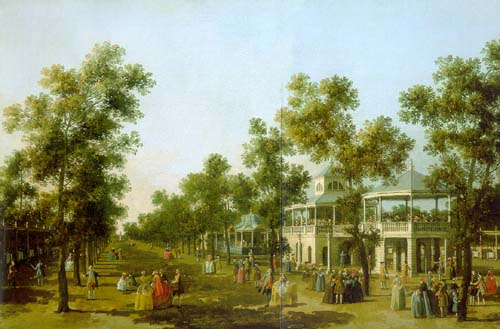
Canaletto's view of Vauxhall Gardens and the Grand Walk

Vauxhall Gardens opened in 1661. The most famous of London’s diarist’s, Samuel Pepys, recorded in his diary that he visited Vauxhall Gardens no less than twenty four times. The first time he recorded a visit to the gardens was on 29th March 1662, when Vauxhall it really was just a country inn set within a pleasant garden setting with walks and flower beds. It was approached from a path from the Thames and the Vauxhall stairs. Visitors would cross the Thames in a boat from the north bank. They generally would bring their own picnics.
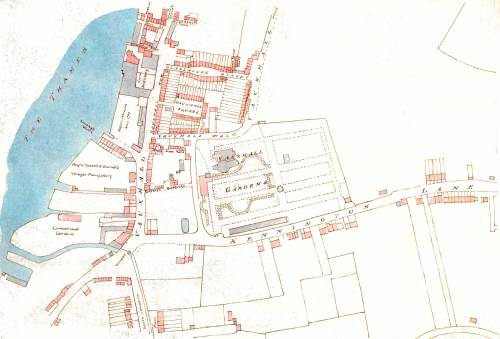
Map of Vauxhall Gardens in 1800. Click on image to enlarge. Image @Ideal Homes: History of South East Suburbs (see link below).

Amateur musicians would perform in the gardens and sometimes the visitors themselves would provide their own entertainment.  This was the first time that ordinary people could enjoy gardens like this, which was a unique social aspect at the time of Pepys. It was a freeing of social codes. Such gardens were usually found in the country estates of the nobility.
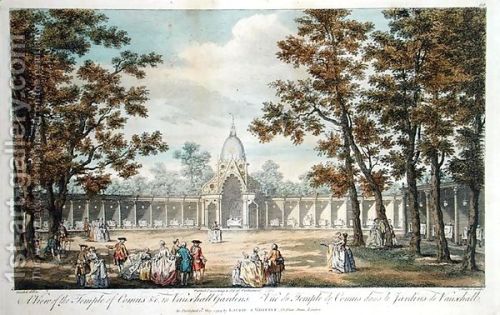
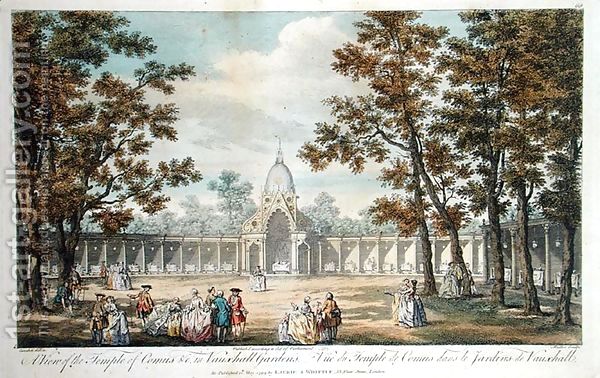
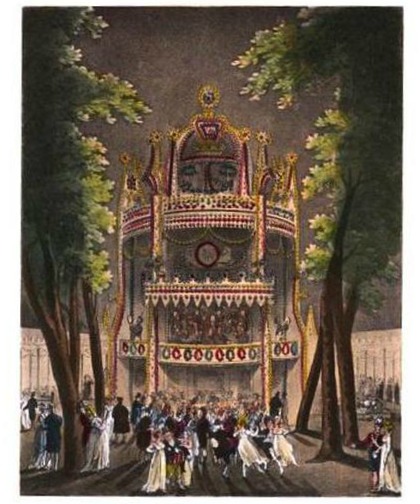
A view of the Temple of Comus at Vauxhall Gardens. Image @1st Gallery.com

People from different levels of society could meet freely and strangers could meet within the gardens. In the usual course of their lives there were strong social codes about friendships and who could talk to whom. The gardens were a place to be free of many social constraints, where males and females could meet. It was also an ideal place for the business of prostitutes.
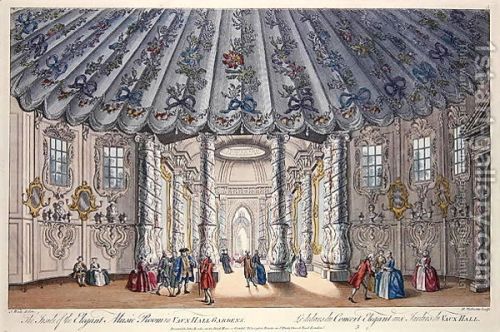
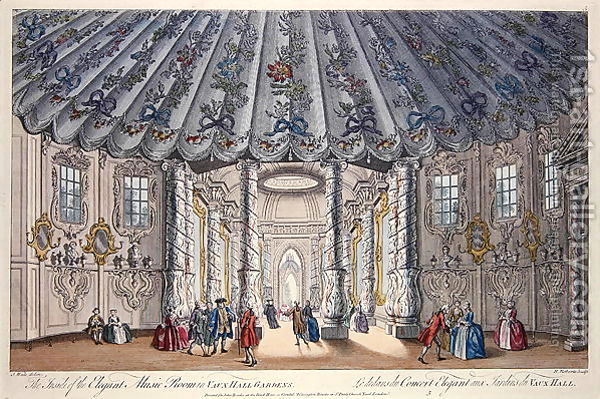
Interior view of the elegant music room at Vauxhall Gardens. Engraving by H. Roberts, 1752. Image @1st Gallery.com

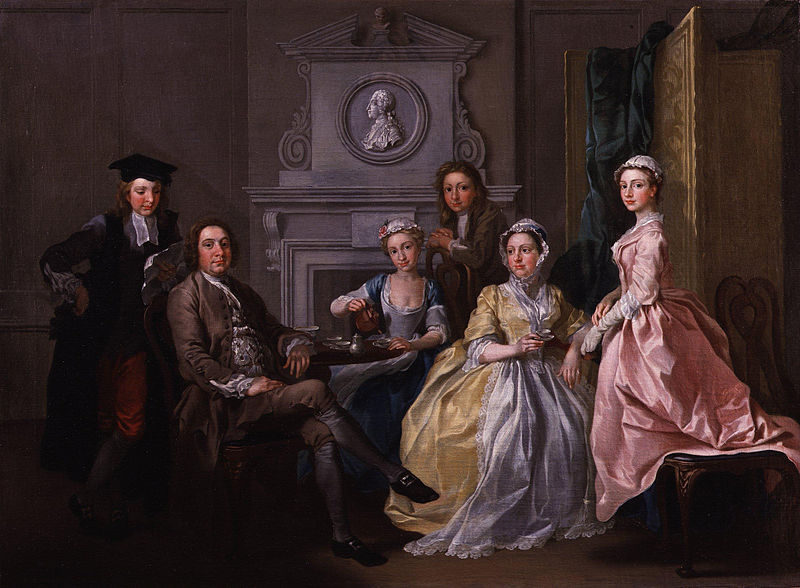
Over the centuries various owners and managers oversaw Vauxhall gardens . The greatest of these was Jonathan Tyers. He came from a family of fellmongers from Bermondsey in the east End. Fellmongers were dealers in leather hides.

Jonathan Tyers and his family by Hayman. Image @Wikimedia Commons

Tyers was a shrewd businessman and understood how to advertise and popularise the gardens. He was also good at reinventing himself as a gentleman, landowner, wit, urbane host, and patron of the arts. He owned the gardens from 1729 to his death in 1767 and saw Vauxhall gardens at the height of its fame and popularity. His most important guest was The Prince of Wales, who had his own booth within the gardens.
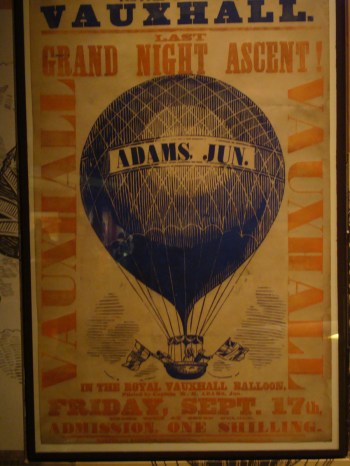
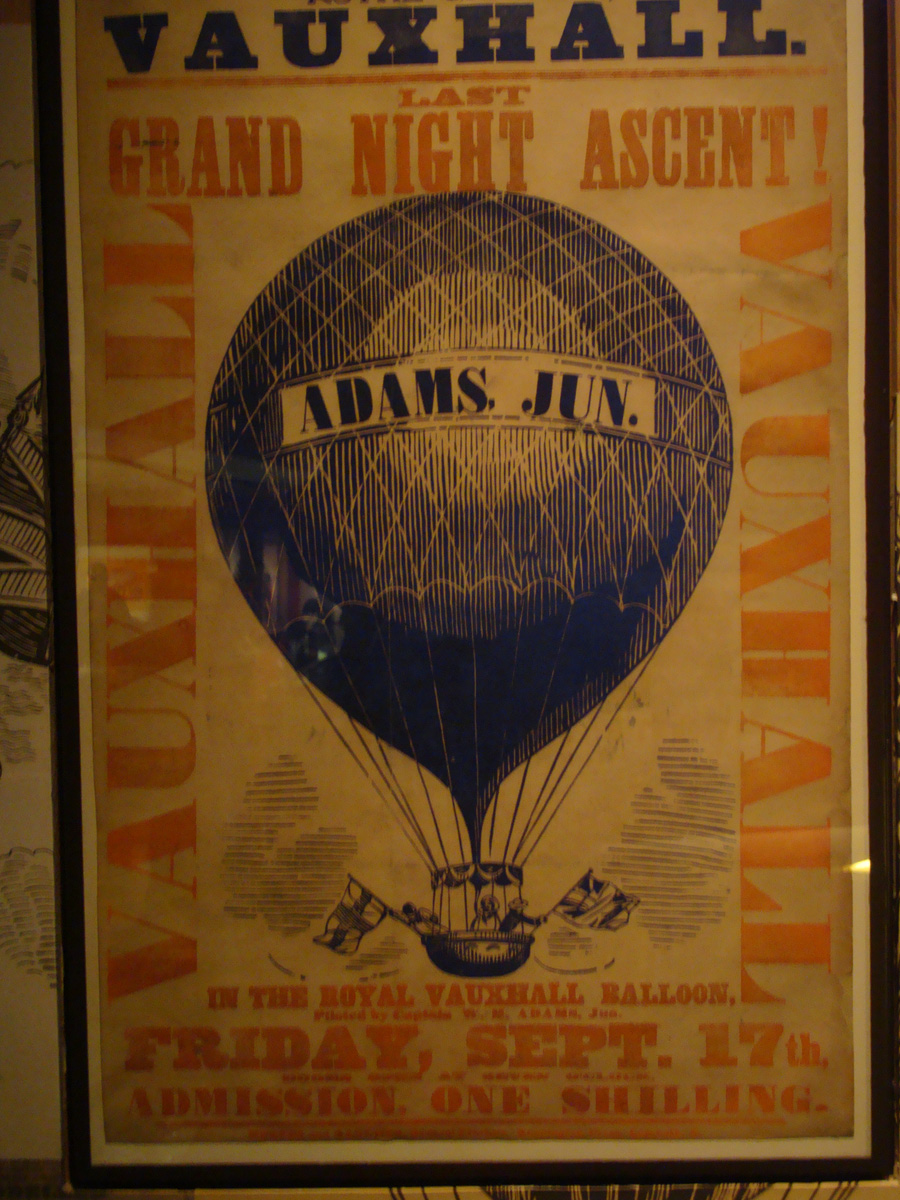
Pleasure gardens poster at The Museum of London. Image @Tony Grant

All of society, from the aristocracy, to landowners, to the ordinary working people came to Vauxhall. For special events Tyeres would raise the price to attract only certain people but generally the price was one shilling and this price remained the same for sixty years. He offered season tickets for a guinea.

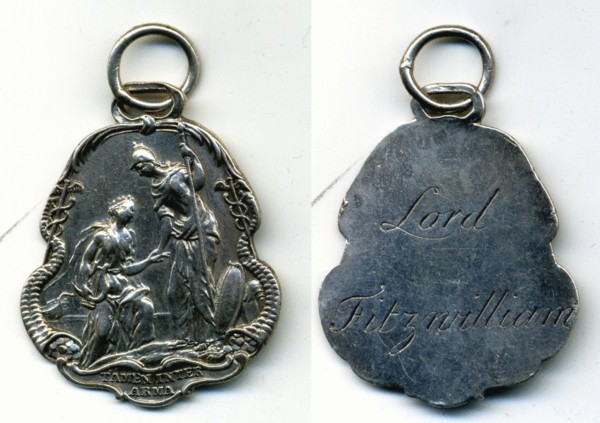
Vauxhall Garden silver pass, c. 1760

The season ticket comprised a metal tag embossed on one side with a scene of classical mythology and the other side was printed with the ticket holders name. There is quite a selection of these season tickets in various collections.
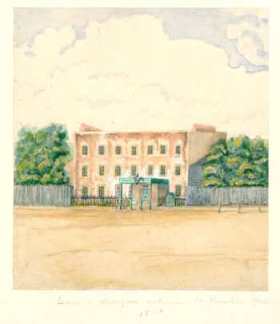
Water gate entrance to Vauxhall Pleasure Gardens

In 1740 a Vauxhall evening would begin at 7pm.The visitors would get into a boat from Westminster and alight at the Vauxhall Stairs on the south bank, very close to where Lambeth Palace, the home of the Archbishop of Canterbury, was located. Visitors would walk through the main entrance which fronted the River Thames and proceed along The Grove with the supper boxes lining the walkway on either side.
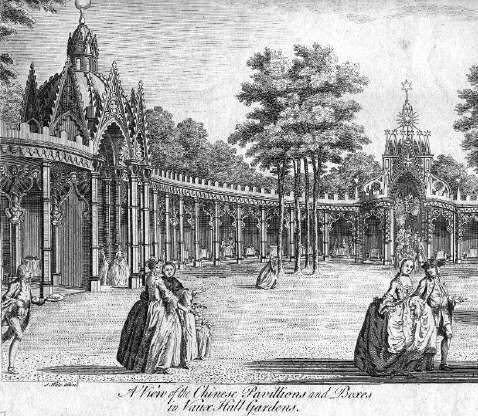
Chinese Pavillions at Vauxhall

In front of the boxes stood the orchestra building.
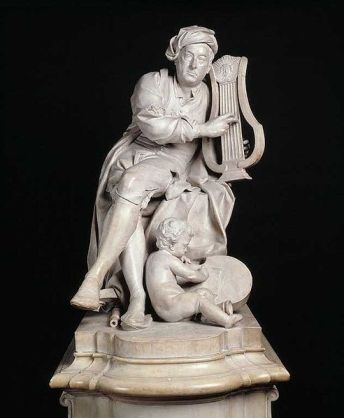
Statue of Handel by Louis-François Roubiliac, 1738. Image @V&A Museum

A statue of the composer Handel could be seen in front of this. The gardens were famous at this time for giving performances of new pieces composed by Handel or other composers well known at the time, such as Arne and Boyce.
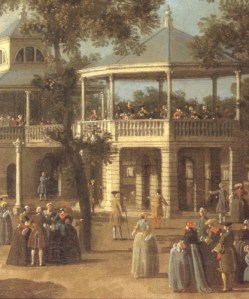
The orchestra at Vauxhall, Canaletto.

Visitors would have the chance to see wealthy people promenading through the gardens wearing the latest expensive fashions.
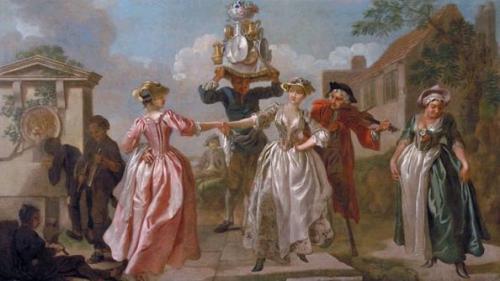
One of the surviving Vauxhall genre paintings. Image @ V&A

The fifty large supper boxes were able to entertain up to ten people to supper. Each box was decorated with an original painting. Surprisingly fourteen of these paintings still survive.
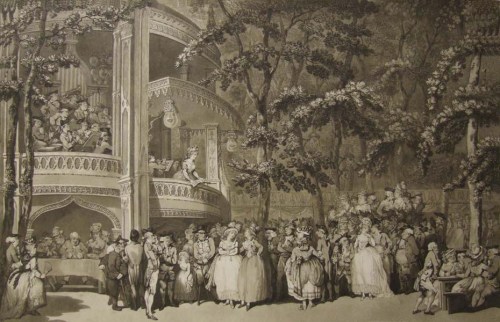
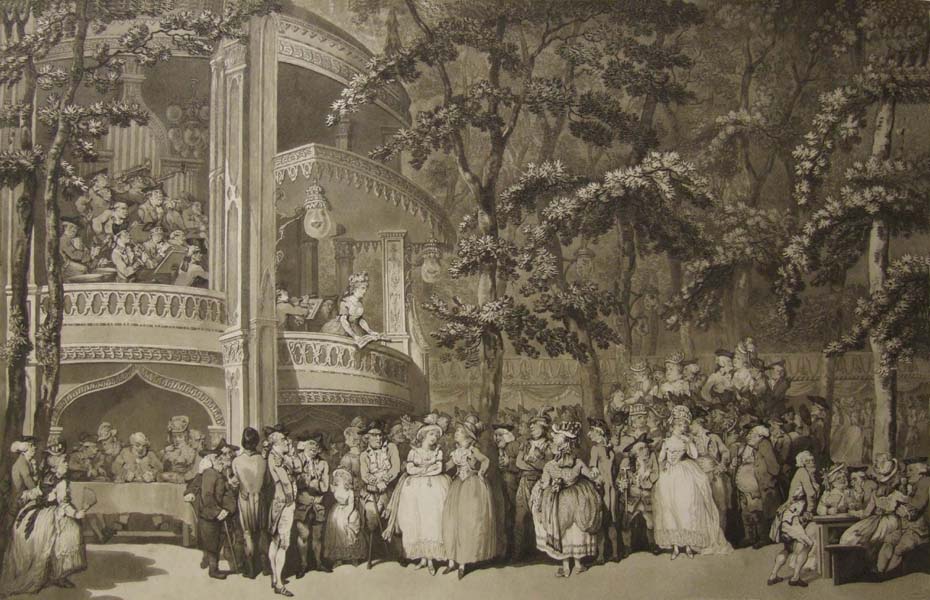
Vauxhall Gardens, Rowlandson

The Grand Walk led to the golden statue of Aurora or the Rural Downs where there was a life size statue of Milton. This reminds me of the 18th century gardens at Painshill in Surrey which have been restored very much to their former glories. At Painshill there are grand vistas, a Turkish tent, mysterious grottos near the lake, a ruined Abbey, a hermits lodging and a Roman temple as well as many large statues from Greek mythology set within groves.
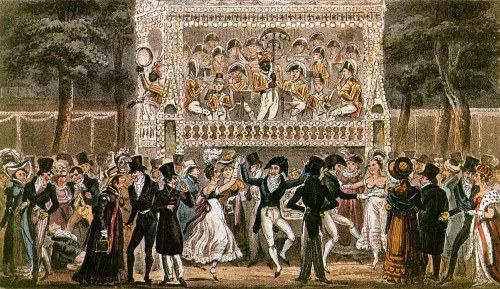
Tom and Jerry at Vauxhall

The Vauxhall experience therefore is still possible to experience. If Vauxhall was intended, as the gardens at Painshill were, then each setting was meant to create a different mood or spiritual experience. There is no record of Jane Austen visiting Vauxhall but she obviously knew about it. She stayed with her brother Henry at Hans Place which is almost directly across the Thames from Vauxhall.
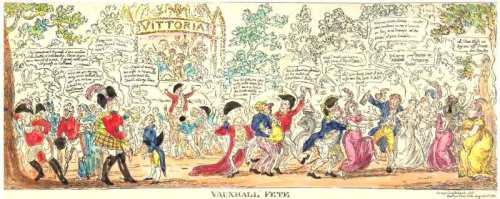
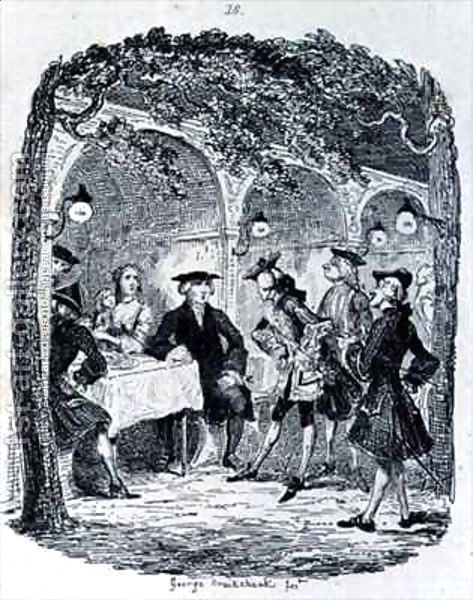
Vauxhall pleasure gardens by Cruikshank, 1813

It is about half a mile from the river bank but the lights, the sounds of the music and fire works exploding would easily have been noticed from miles around. In Mansfield Park the walk in the park at Sotherton owned by Mr Rushworth have echoes of Painshill and Vauxhall.

Night scene in a supper box at Vauxhall

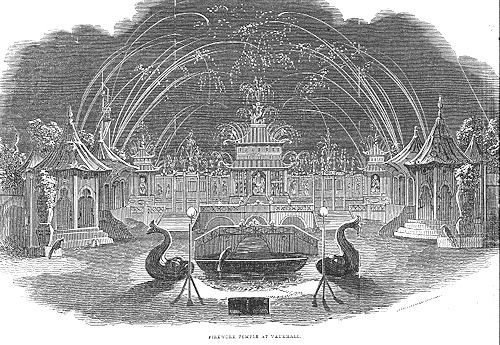
The Vauxhall Supper began about 9pm as dusk fell. It comprised of Vauxhall ham, cold meats, salad, cheeses custards, tarts, cheesecakes and other puddings. As night fell during the supper a whistle was blown. Servants lit thousands of lamps positioned strategically about the gardens and illuminated the scene. The effect was sensational.
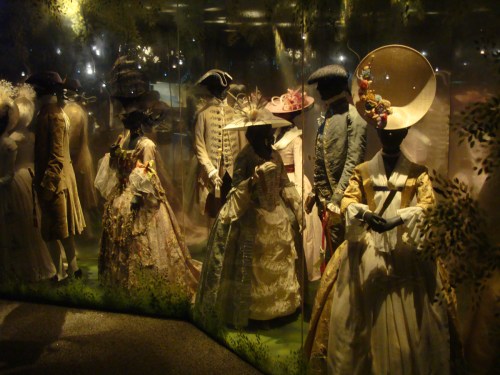
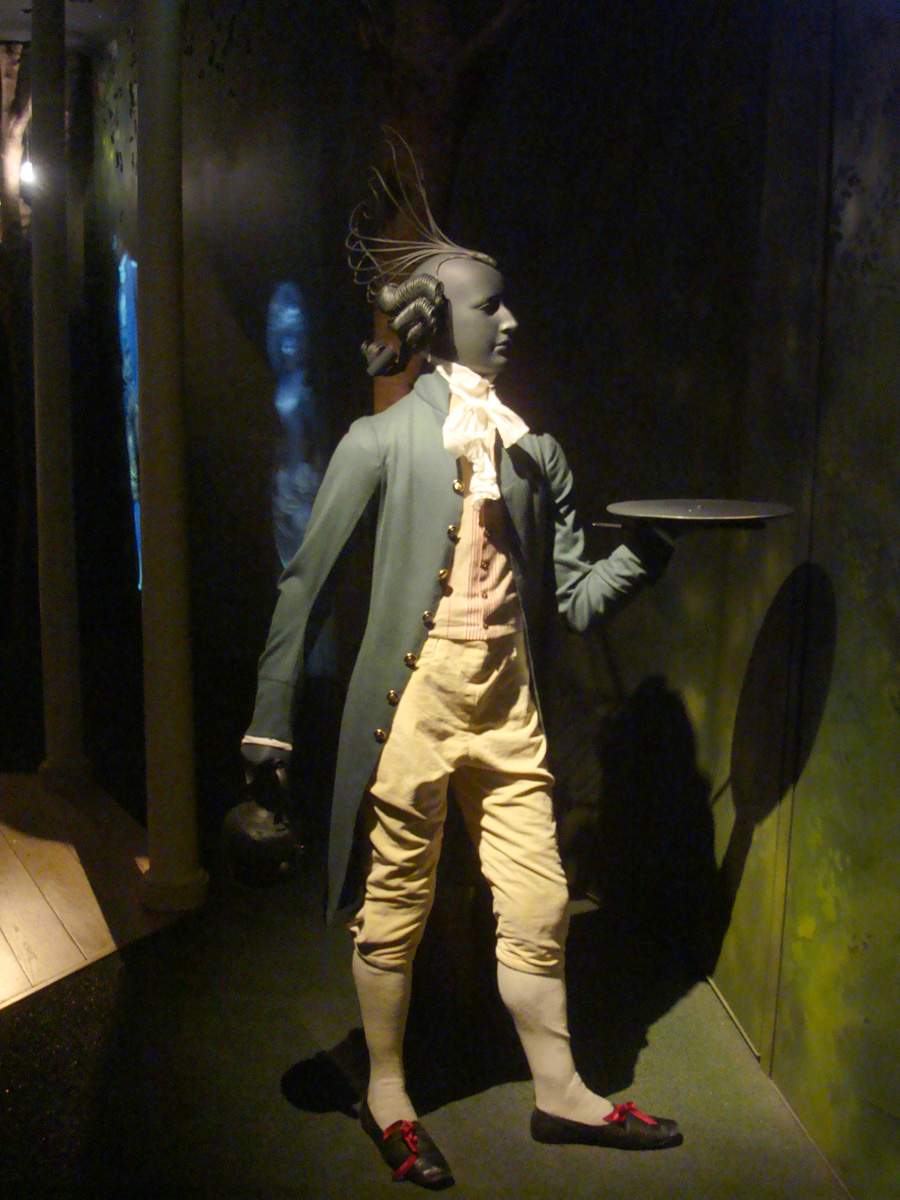
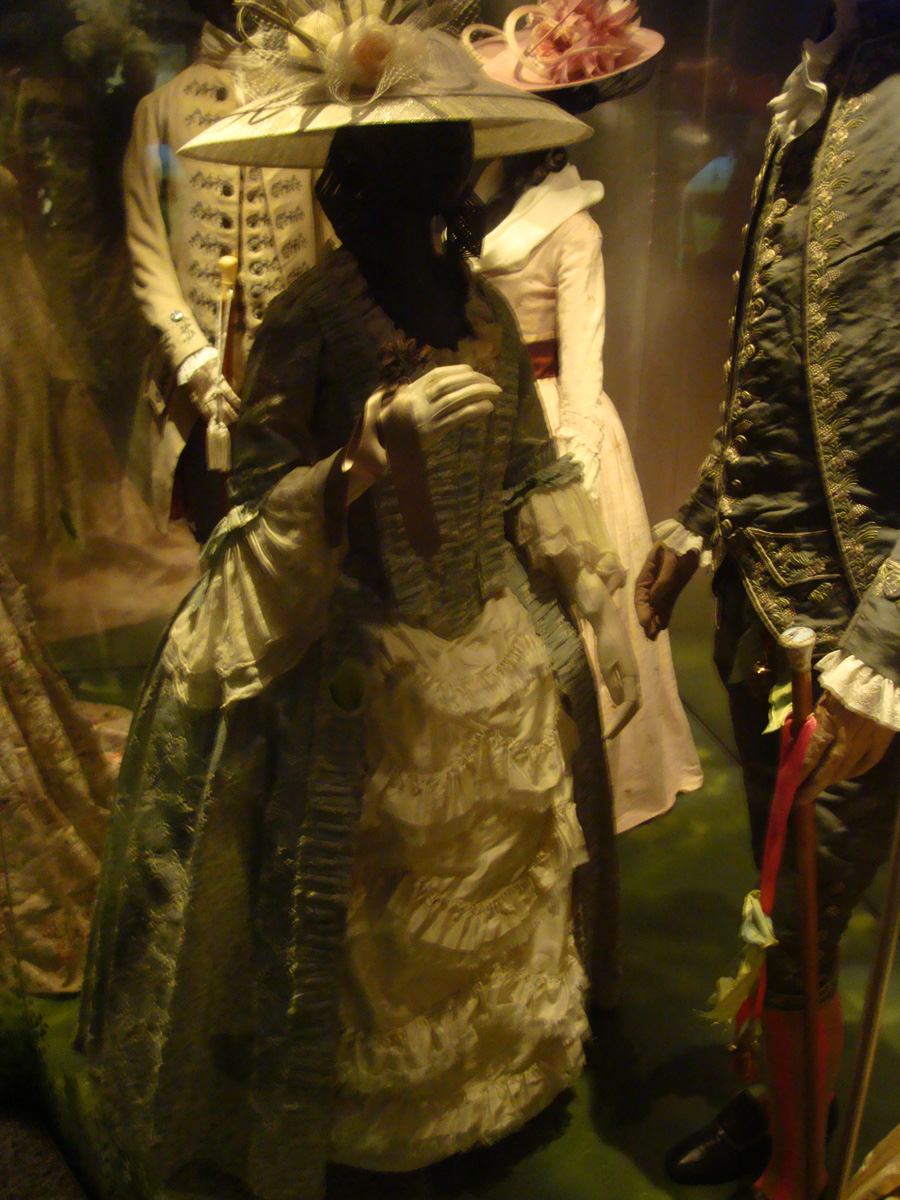
The installation at The Museum of London recreated how the costumes in Vauxhall would look at night. Hats in this exhibit by contemporary milliner Philip Treacy.

By the mid 18th century semi circular piazzas had been opened in the north and south ranges of boxes. Behind the north range of boxes Tyeres had the Rotunda built. This was a covered concert room for wet weather.
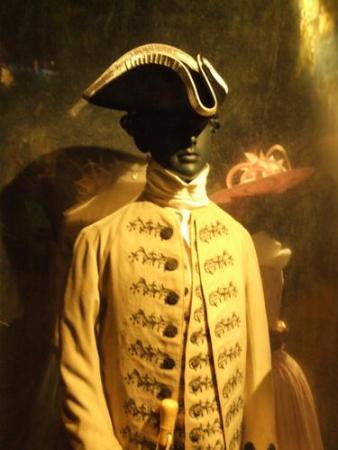
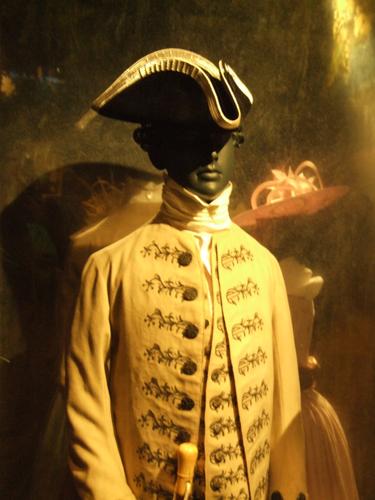
Costumes of the Vauxhall pleasure gardens, installation at The Museum of London

More costumes from the pleasure garden. This man is obviously a waiter.

Female costume. Note how the yellow light (from oil globes or candles) affected the colors of the costumes. Some colors would not show up well. People kept this effect in mind when choosing evening wear. Image @Tony Grant
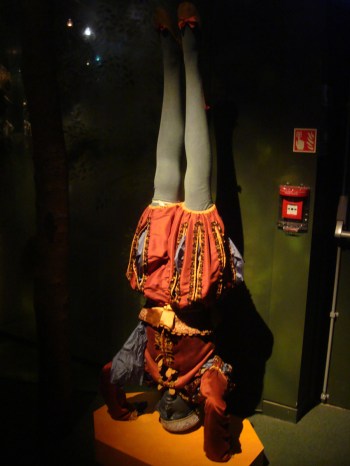
Costume of one of the entertainers. Image @Tony Grant
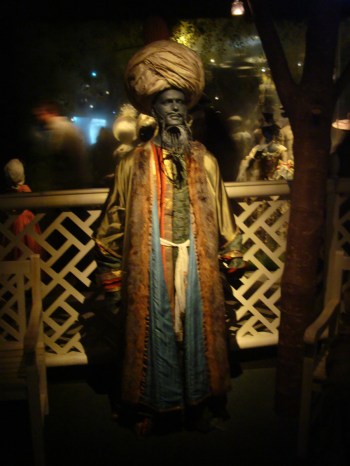
Exotic costume from the exhibit. Image @Tony Grant

Later a Pillared Saloon was added to the eastern side of the Rotunda. Within the Rotunda, Tyers got Francis Hayman to paint four huge canvases showing Britain’s victories in the Seven Years War. Each canvas was 12 feet by 15 feet. Only two oil sketches remain of the originals and an engraving is still in existence. The paintings have disappeared. Jonathan Tyers and Francis Hayman gave British art in the 1760’s its direction.
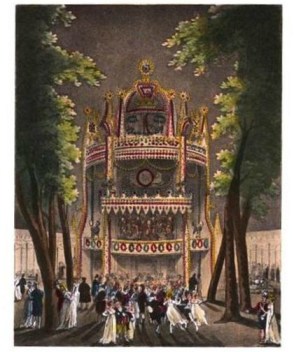
Vauxhall was also famous for its music. Many famous songs, some still known and sung today, were commissioned for the gardens. The most famous of which is, Lass of Richmond Hill. The singers became the superstars of their day, Thomas Lowe, Cecilia Arne, Joseph Vernon and Charles Dignum.
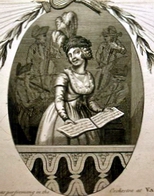
Miss Leary singing at Vauxhall, 1793-4

In 1758 the orchestra building was replaced by a neo gothic structure. The famous architect, Robert Adam, wrote to his brother:

“ I am now scheming another thing, which is a temple of Venus for Vauxhall which Mr Tyers proposes to lay £5000 upon……”

David Coke, author of a recent book on Vauxhall Gardens, wrote that this building was probably never built. Jonathen Tyers died in1767 and his children took over who themselves were followed by their children until 1822.
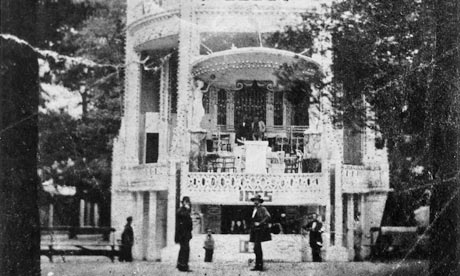
Photograph of Vauxhall in 1859. Image @The Guardian

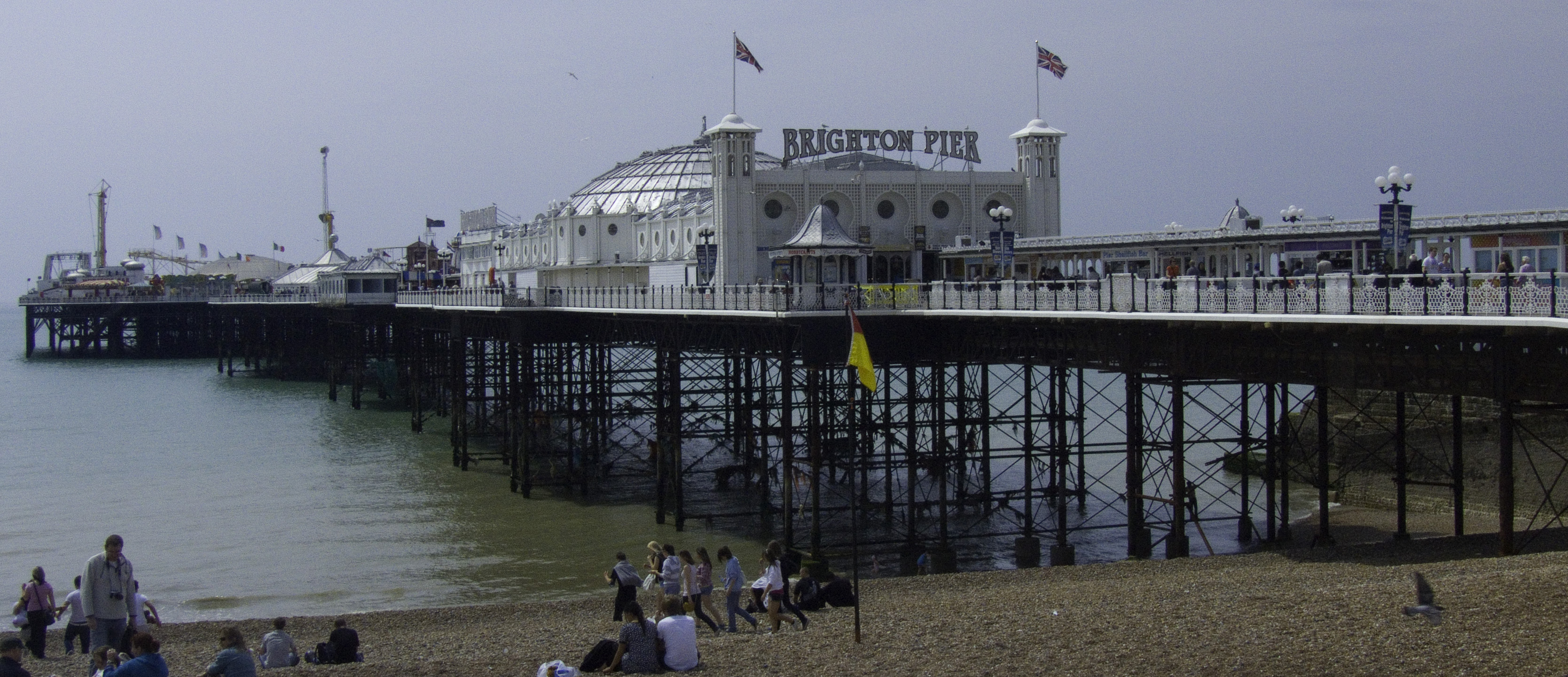
The gardens closed finally closed on 25th July 1859. By this time Vauxhall had become run down and dilapidated. Its popularity had waned. Vauxhall railway station is situated opposite to where the entrance to Vauxhall gardens was. It epitomises the changes that were occurring in the world and society. People were able to travel about the country easily. The ordinary people preferred to go to the seaside and the new entertainments that were provided at these holiday resorts. If you go to Brighton on the south coast in Sussex you can experience the delights of Brighton Pier.

Brighton Pier. Image @Tony Grant

It is a Victorian construction and many of the buildings on it date back to Victorian times. The pier has more than an echo of the Vauxhall Pleasure Gardens. These Victorian piers built at popular resorts have been described as Vauxhall piers.

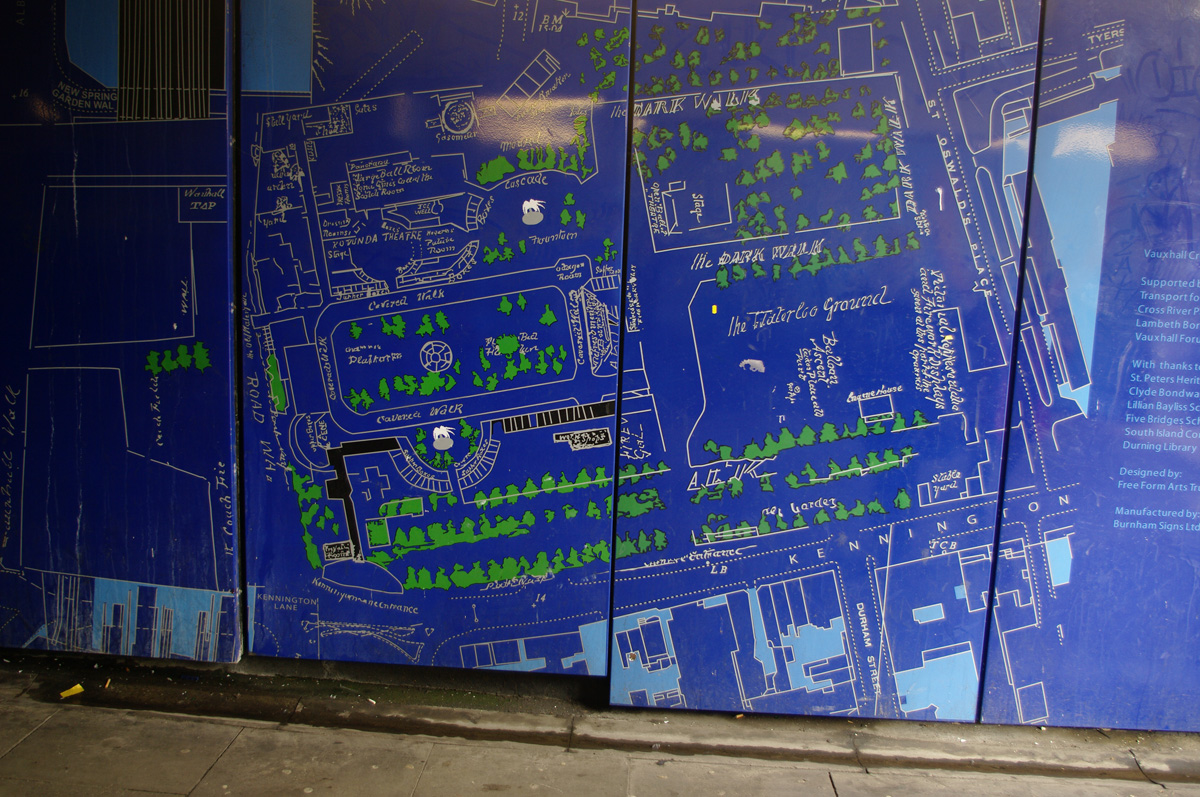
Map in Vauxhall Station showing the pleasure gardens. Image @Tony Grant

Recently I was looking at an old map showing the layout and design of Vauxhall Pleasure Gardens. I could see Kennington Road marked clearly on the map bordering the southern border of where the pleasure gardens had been. It showed the road curving slightly. It struck me that I know that part of Kennington Road well. Vauxhall is part of the London Borough of Lambeth. My wife Marilyn worked for over ten years in schools in Lambeth and often got off the train at Vauxhall and walked to her inner city school in Walnut Tree Walk next to the Lambeth Walk that is of Charley Chaplin and that song, fame. We decided that we would go for a walk around Vauxhall and see if we could find any signs or remains of the pleasure gardens.

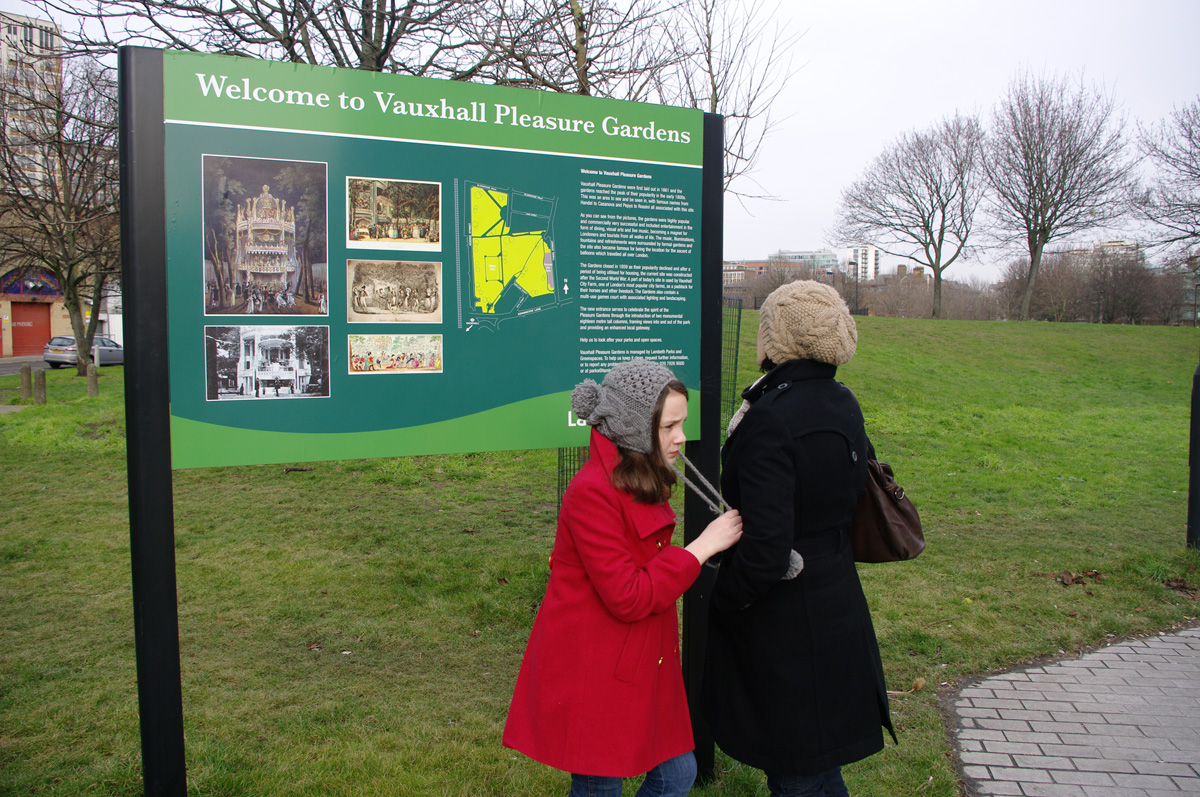
Marilyn and Abi reading the information board in the gardens

Marilyn, myself and Abigail, our youngest daughter, got off the train at Vauxhall and walked across the road to a pub which has its windows blacked out. This pub is now famous for the performance of strippers. This must be reminiscent of the courtesans who sold their bodies in the pleasure gardens of the 18th century perhaps.
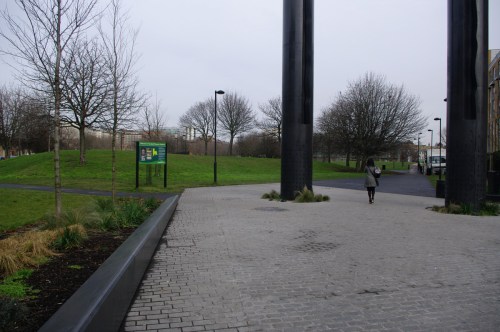
Looking across where the gardens were situated. Image @Tony Grant

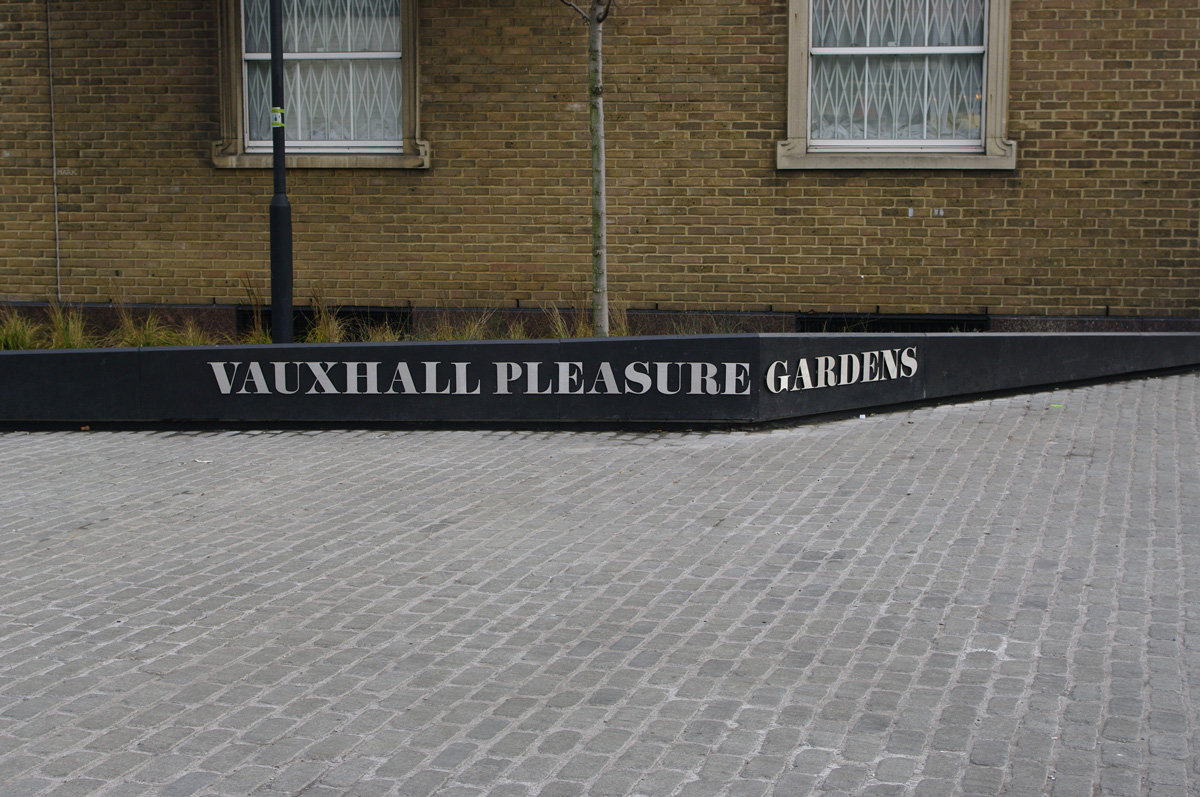
Behind the pub is a small park called Spring Park. This area was covered in Victorian terraced housing up to the second World War and then during the Blitz on London many were destroyed. After the war, to commemorate the old pleasure gardens, Lambeth Council decided to make the area into a park again. This was the site of the original pleasure gardens. We had found it. To one side you can see the green glass and concrete structure that is MI6.The entrance to the park announces that this is Vauxhall Pleasure Gardens, although it is officially called Spring Gardens. When I researched the old gardens I discovered that indeed it used to called Vauxhall Spring Gardens when it first began. There is a large sign board as you walk into Spring Gardens which provides a display of old pictures of the gardens and a history of the site.
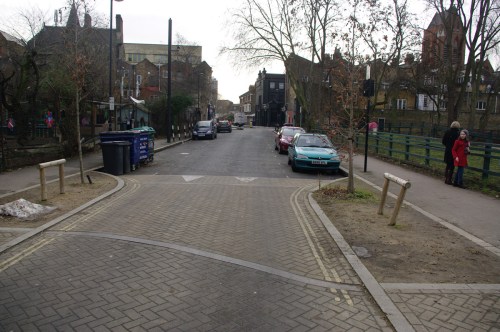
Tyers Road along the top of the present Spring Gardens

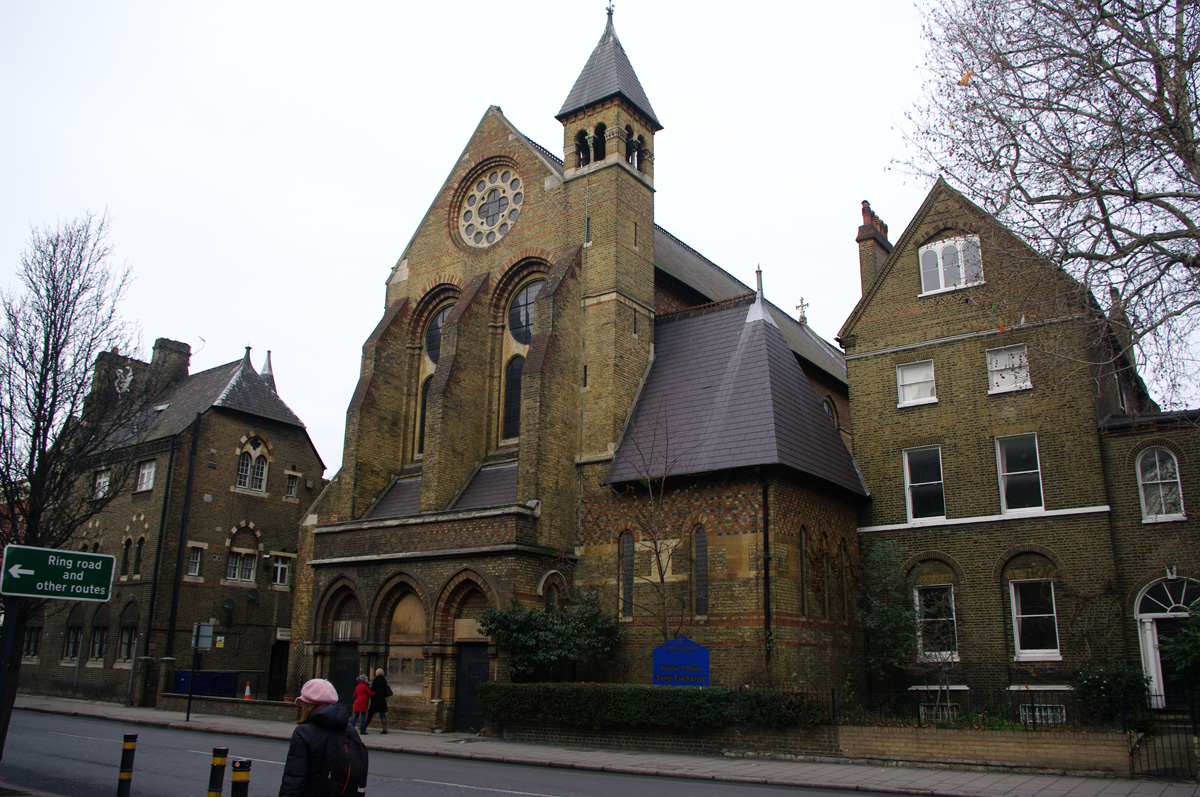
To the north of the park is Tyers Road commemorating Jonathen Tyers. There is a city farm called Vauxhall City farm on the site where the battle of Waterloo was re-enacted. In the far right eastern corner there is situated St Peter’s Church, which is reputedly on the very site of the Neptune Fountain that was placed at the end of The Grand Walk.

St. Peter's Church, Kennington Lane, on the site of the Neptune Fountain at the end of the Grand Walk. Image@Tony Grant

There are no remains of the actual pleasure gardens to be seen in the new park. Because it is an open area with walkways and grassy mounds within the park you can get a sense of the size and feel of the original pleasure gardens.
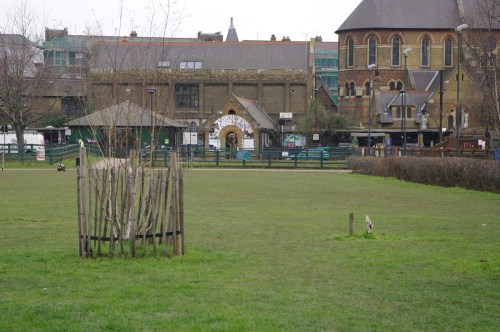
Vauxhall city farm; the site of the Waterloo grounds

Here are some quotations from people who visited the gardens at different times during its existence.

An article in The Spectator 1712:

We were now arrived at Spring-Garden, which is exquisitely pleasant at this time of the Year. When I considered the Fragrancy of the Walks and Bowers, with the Choirs of Birds that sung upon the Trees, and the loose Tribe of People that walked under their Shades, I could not but look upon the Place as a kind of Mahometan Paradise. Sir Roger told me it put him in mind of a little Coppice by his House in the Country, which his Chaplain used to call an Aviary of Nightingales.

Fireworks Vauxhall Gardens, 1800

A letter to a Lord describing the Spring gardens in 1751:

These Gardens, containing about twenty Acres and a Half, make part of a Mannor, belonging to His Royal Highness the PRINCE OF WALES, as Earl of Kennington; the famous black Prince, son to our immortal Edward III, having anciently had a Palace there. —But leaving Antiquity, I shall proceed to the present State of the Spot, which is the Subject of your Lordship’s obliging Command; after observing, that the Hint of this rational and elegant Entertainment, was given by a Gentleman, whose Paintings exhibit the most useful Lessons of Morality, blended with the happiest Strokes of Humour.
Being advanc’d up the Avenue, by which we enter into the Spring-Gardens; the first Scene that catches the Eye, is a grand Visto or Alley about 900 Feet long, formed by exceedingly lofty Sycamore, Elm, and other Trees. At the Extremity of this Visto, stands a gilded Statue of Aurora, with a Ha ha; over which is a View into the adjacent Meads; where Haycocks, and Haymakers sporting, during the mowing Season, add a Beauty to the Landskip. This Alley (a noble Gravel Walk throughout) is intersected, at right Angles, by two others. One of these Alleys (at the Extremity whereof, to the Left, a [p.3] fine Picture of Ruins is seen) extends about 600 Feet; being the whole Breadth of the Garden, or Spring-Gardens, as they are commonly called, which Terms I shall use indiscriminately.
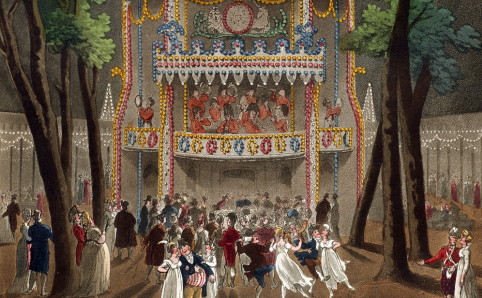
These are the thoughts of a German Prince in 1827:

Yesterday evening I went for the first time to Vauxhall, a public garden in the style of Tivoli at Paris, but on a far grander and more brilliant scale. The illumination with thousands of lamps of the most dazzling[157] colours is uncommonly splendid. Especially beautiful were large bouquets of flowers hung in the trees, formed of red, blue, yellow, and violet lamps, and the leaves and stalks of green; there were also chandeliers of a gay Turkish sort of pattern of various hues, and a temple for the music, surmounted with the royal arms and crest. Several triumphal arches were not of wood, but of cast-iron, of light transparent patterns, infinitely more elegant, and quite as rich as the former. Beyond this the gardens extended with all their variety and their exhibitions, the most remarkable of which was the battle of Waterloo.
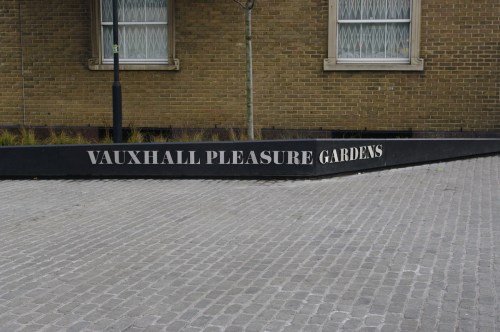
Vauxhall Pleasure Gardens entrance today. Image @Tony Grant

Here is part of a satirical poem written for the PUNCH magazine in 1859 and depicts the decline of the gardens before they were finally closed:

Comrades, you may leave me sitting in the mouldy arbour here,
With the chicken-bones before me and the empty punch-bowl near.
‘Rack’ they called the punch that in it fiercely fumed, and freely flowed:
By the pains that rack my temples, sure the name was well bestowed.
Leave me comrades, to my musings, ‘mid the mildewed timber-damps,
While from sooty branches round me splutter out the stinking lamps.
While through rent and rotten canvas sighs the bone-mill laden breeze;
And the drip-damp statues glimmer through the gaunt and ghastly trees.

And the ode goes on and on. It has become a depressing place.

Vauxhall Park looking towards the Thames. Image @Tony Grant

Written by Tony Grant, London Calling

More on the topic:

Read Full Post »
« Newer Posts - Older Posts »