Feeds:
Posts
Comments

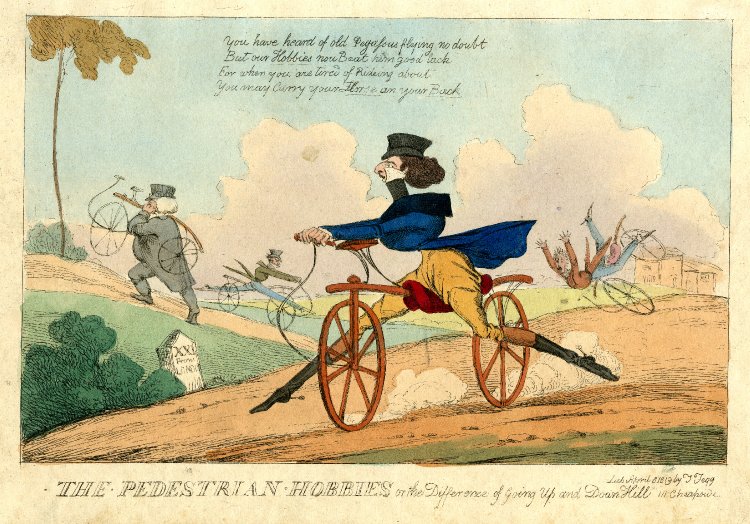
Imagine a bicycle with no brakes and no pedals and you have an idea of what it was like to ride a velocipede, or the dandy horse, in the early 19th century.

“The dandy-horse was a two-wheeled vehicle, with both wheels in-line, propelled by the rider pushing along the ground with the feet as in regular walking or running. The front wheel and handlebar assembly was pivoted to allow steering.” (Wikipedia)

This meant that the man riding this contraption not only looked ungainly while riding it, but had very little control over what he was doing and where he was going, especially on uneven and hilly ground.

The earliest usable and much copied velocipede was created by the German Karl Drais and called a Laufmaschine (German for “running machine”), which he first rode on June 12, 1817. He obtained a patent in January 1818. This was the world’s first balance bicycle and quickly became popular in both the United Kingdom and France, where it was sometimes called a draisine (German and English), draisienne (French), a vélocipède (French), a swiftwalker, a dandy horse (as it was very popular among dandies) or a Hobby horse. It was made entirely of wood and had no practical use except on a well-maintained pathway in a park or garden. – Wikipedia
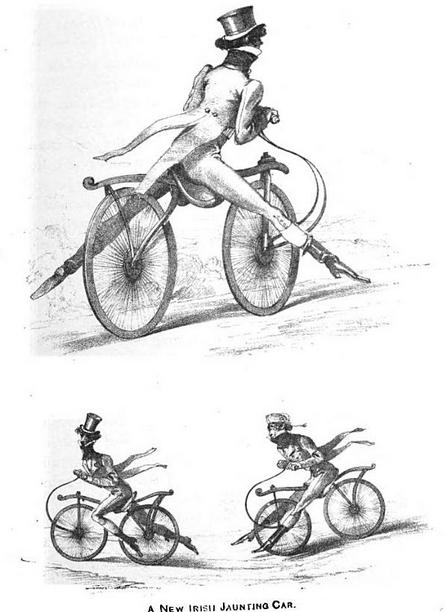
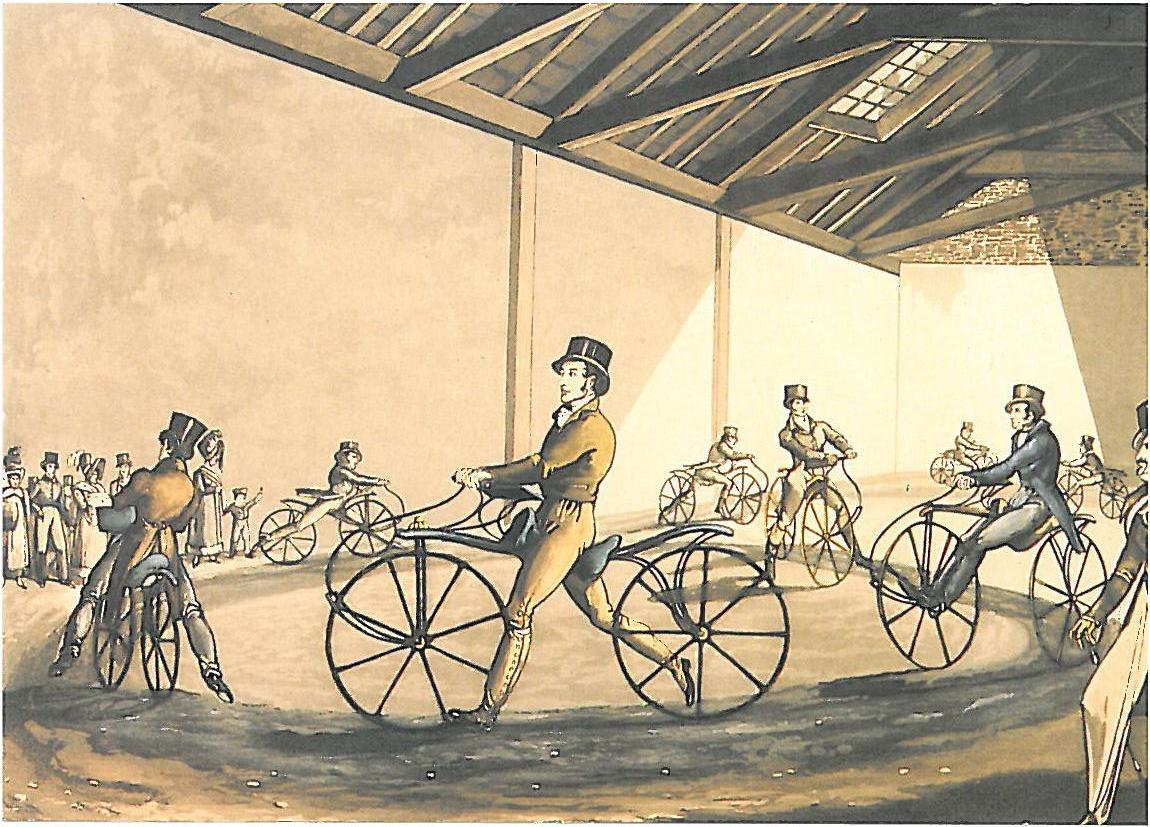
Learning how to ride one of these vehicles wasn’t easy. As seen in the image above, a man would propel himself with his legs and brake with them. The image below is from the archives of Westminster City Council, and is of a postcard of Dennis Johnson’s (c.1760-1833) velocipede school. The school was founded in 1818 by Johnson,  the coachmaker, who had made some improvements on Drais’ machine. He managed to make around 320 of his pedestrian curricles, as he called his patented machines. Then in 1819 the craze for velocipedes went out of fashion: Mr. Johnson returned to making carriages. (Velocipedes.) It wasn’t until towards the end of the 19th century that the velocipede began to be perfected and started to resemble the bicycle we know today.
Several years back I featured a remarkable publication on Dandyism.net called The Dandy’s Perambulations. The pamphlet was printed and sold in 1819 by John Marshall in Fleet Street.
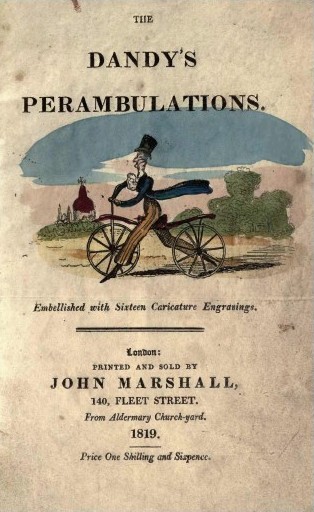
Image @Dandyism.net

Below are a few lines from the pamphlet:

[They] ran along together straight,
Until they reached the turnpike gate,
Where a coach had made a stop;
So they both got upon the top,
And after their disastrous falls,
At length in safety reached St. Paul’s.
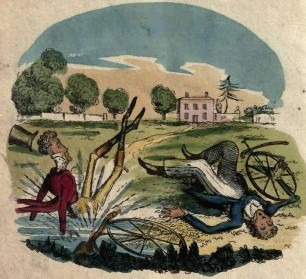
Image @Dandyism.net

The print below shows a dandy “forced off his hobby-horse and subjected to brutal punishment by the two professions most threatened by the new technology: a blacksmith and a vet.” (Wellcome Library)
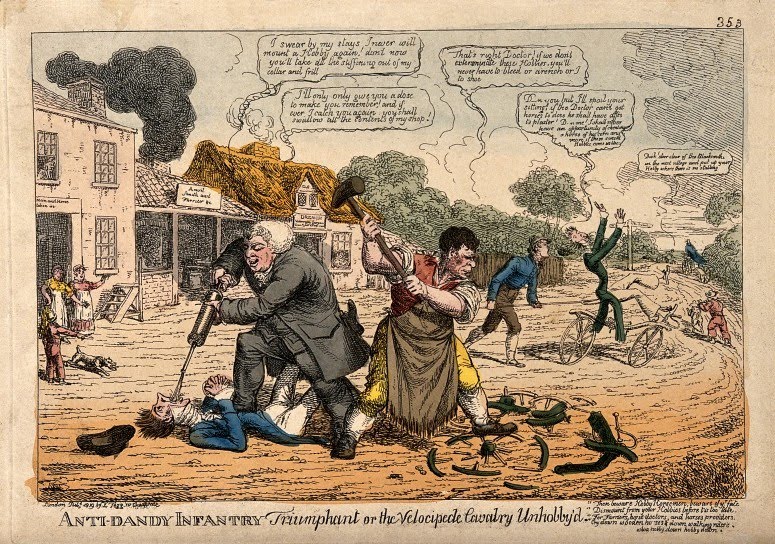
Image @Wellcome Library

It is sad to think that Jane Austen, who died in 1817, never had the chance to observe a gentleman riding a velocipede. With her wit and keen sense of observation, what would she have made of the sight?

More on the topic:

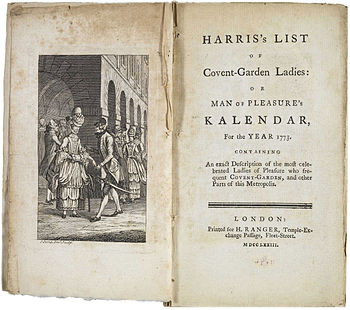
1773 Edition. Image @Wikipedia

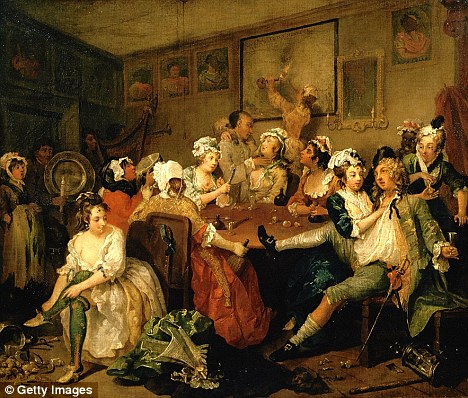
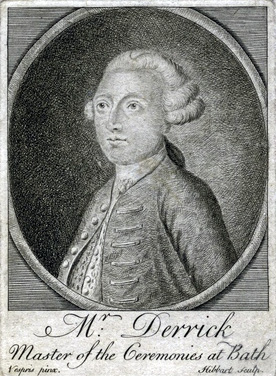
When I wrote my post about the Master Key to the Rich Ladies Treasury, a number of readers mentioned Harris’s List of Covent Garden Ladies. To my delight Google eBooks offers a link to the 1789 publication. The pocket-sized book, first published in 1757, remained popular for over 30 years with Lotharios looking for a light-o’-love. This annual sold for half a crown, the equivalent of about £15 today or the weekly room rent back in those days. Its author, identified for years as John Harris, was actually the drunken poet, Samuel Derrick, once described by James Boswell as “a little blackguard pimping dog”.*

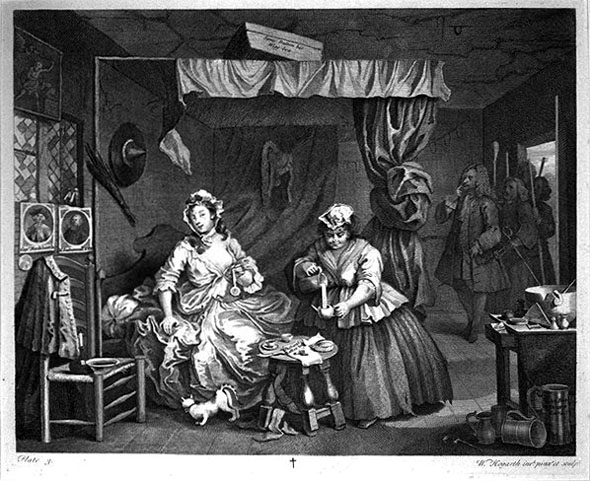
A Rake's Progress, Hogarth, 1732-33

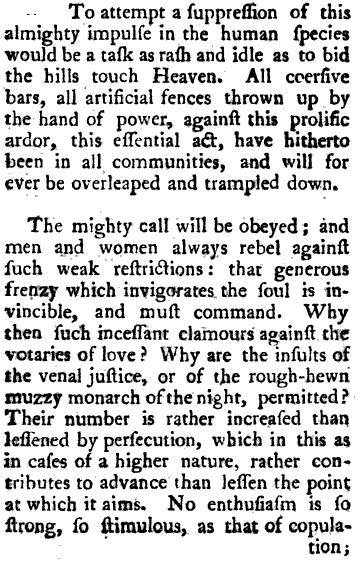
The introduction to the 1789 publication (see below) provides a shameless rationale for the “votaries of love.” The writer ignored the fact that for most of these ladies life was hard and bitter.

Introduction, p ii of Harris's List of Covent Garden Ladies, 1789

Demand for these lists was so great that 8,000 copies of the first edition were printed. London’s prostitutes were identified by name, location, and their special charms. Here’s a description of Miss Devonshire of Queen Ann Street, who had ‘a fair complexion, cerulean eyes and fine teeth.:

many a man of war hath been her willing prisoner, and paid a proper ransom…she is so brave, that she is ever ready for an engagement, cares not how soon she comes to close quarters, and loves to fight yard arm and yard arm, and be briskly boarded. – Port Cities, London

Although Derrick died in 1769, the list was continued by anonymous authors:

The list was continued for another 15 years by others, but Ms Rubenhold says it became dull soft porn, lacking the wicked sparkle of Derrick’s days – such as the anecdote of Miss C, powdered and perfumed above and below to entertain a prince, who “was so much of an Englishman to despise all fictitious aids in that quarter and, turning up his nose at the … musk, which was quite offensive to him, he rang the bell and sent the servant for a red herring”.- Exposed: Filthy Poet Pimp Who Wrote the Georgian Gentleman’s Guide to Prostitution

The description below of a tall and elegant woman, written 20 years after Derrick’s death, is rather pedestrian and obviously lacks Derrick’s wit.

A description in the 1789 list

For most prostitutes eking out a living in the Georgian era life was a constant struggle against poverty, illness and danger.The Times reported in 1785 that every year 5000 street-walkers died in the city (Prostitution in Maritime London). Prostitutes also died from venereal disease and the effects of poverty once their charms waned. Many aged prematurely. Some girls began their life of sin when they were 10 or 12 , for virgins came at a premium.

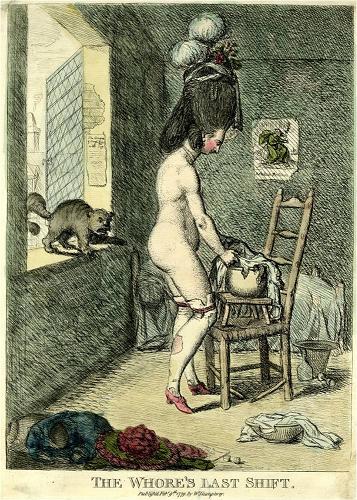
The Whore's Last Shift, James Gillray, 1779. From this view of her room and hole in her stocking, we can surmise that her life was far from glamorous. One can imagine that her tower of elaborately styled hair, kept in shape with grease, lard, and powder for days at a time, contained any number of itching lice and vermin when the arrangement was dismantled.

Economics was the driving engine of the thriving whore business in London. One in five women made a living as a prostitute, a remarkable number. The young women and girls who chose prostitution as a living were undereducated and fit only to work in backbreaking, menial jobs. Most prostitutes were independent street-walkers and kept a majority of their wages. A London prostitute stood an excellent chance of earning more than £400 a year. Contrast this income to a housemaid’s earnings of £5 a year, and one can readily see why so many women were drawn to the trade. Forty per cent of prostitutes came from London, while 60% came from the countryside and Ireland. Pimps, bawds, and procuresses (aging former prostitutes) exploited young girls arriving from the country (shades of Fanny Hill). They could make a tidy sum of money, for the deflowering rights of a young virgin went for £150, or £11,000 in today’s sums. (Sin City: One in Five Women in 1700’s London Were Prostitutes.)

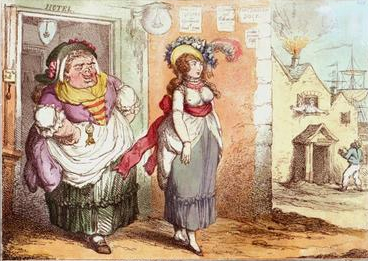
Rowlandson, Launching a Frigate. Image @Port Cities.org

[Prostitutes] tended to gather in areas with looser police control; when the police became stricter in the City of London in the eighteenth century, the prostitutes gravitated toward the west and east ends of the city; when police control loosened in the early nineteenth century, they returned to the City. Prostitutes also tended to congregate in areas with cheap lodging houses and lots of men. St. Giles and St. James, home to many cheap boardinghouses, were popular with prostitutes in Westminster; the Docks, where many sailors disembarked, was popular on the east side of the city. – (Tony Henderson. Disorderly Women in Eighteenth-Century London: Prostitution and Control in the Metropolis, 1730-1830. London and New York: Longman, 1999. x + 226 pp. $29.20 (paper), ISBN 978-0-582-26421-2; $106.00 (cloth), ISBN 978-0-582-26395-6. Reviewed by Kristen Robinson (Department of History, University of Kentucky)

Note the saying above the door lintel.

The last Harris’s List was published in 1795, just as the perception of prostitution began to change. In the 18th century, “most prostitutes were seen as harlots who sought sex for pleasure. In the eighteenth century, however, prostitution was redefined as a condition stemming from economic need.” (Tony Henderson).  As the 19th century progressed, the arrival of street lighting and methods of modern policing reformed London as a city of vice.

The dawn of the Victorian age and new attitudes to morality meant that prostitution gradually went underground. Streetwalking was made an imprisonable offence in the 1820s. – Sin City: One in Five Women in 1700’s London Were Prostitutes

More on the topic:

Only two days remain to watch Downton Abbey Season 2 on PBS’s website. The online feature ends on March 6th. If you have a Netflix membership, you can watch Season 1 on streaming video.

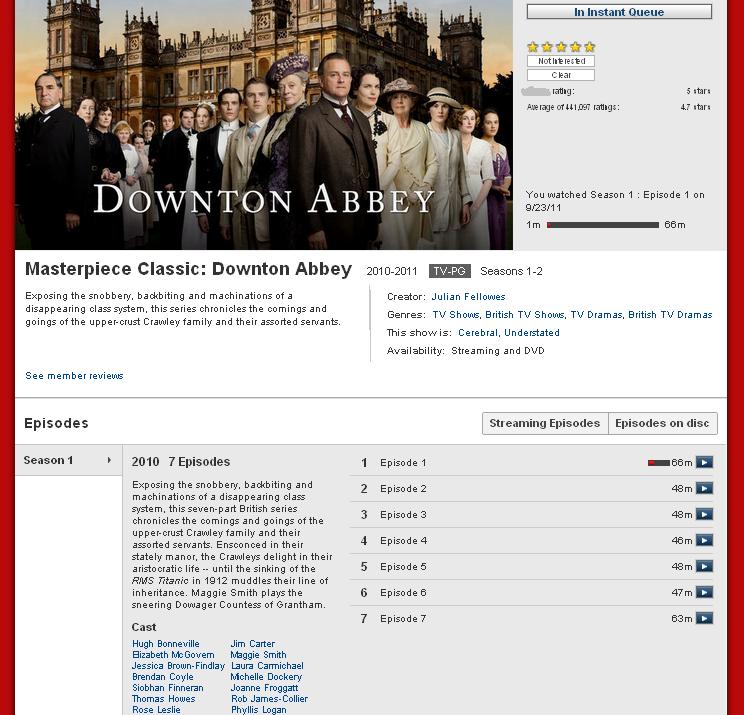
Netflix page for Downton Abbey Season 1

Season 3 is being filmed as I type. Once again we have to wait 10 anxious months before seeing the results.

Several questions were sent in by readers about Lady Mary and Pamuk. Perhaps readers can help answer these particulars.

Reader #1:

1) The whole plot revolves around Lady Mary not defending herself so it’s a mystery. WHY does she not defend herself? Pamuk said he would expose her if she didn’t let him have his way with her, and she never tells anyone that. So, she couldn’t even scream him off.

2) How did Pamuk learn where Lady Marys room was? No one asks her and that’s strange. We know that rat Thomas told him after threat of exposure from his peccadillo, but the plot should have someone asking.

Reader #2:

I still have two questions:

1) How did Pamuk convince Mary she would “still be a virgin”?

2) Why was Mary so hesitant to accept Matthew even prior to the news of her Mother’s pregnancy if she loved him? Was it that she couldn’t find the way to explain Pamuk’s death?

Do you have other questions that still remain unanswered?

This 12-minute podcast from Colonial Williamsburg Podcasts discusses The Art of Beauty in the 18th century. My previous post featured a recap of the Shire Book, Beauty and Cosmetics 1550-1950 by Sarah Jane Downing. The podcast compliments that post to a tee!

Read the transcript at this link. Find other podcasts at the Colonial Williamsburg Past and Present Podcast. The categories sit in the sidebar on the right.

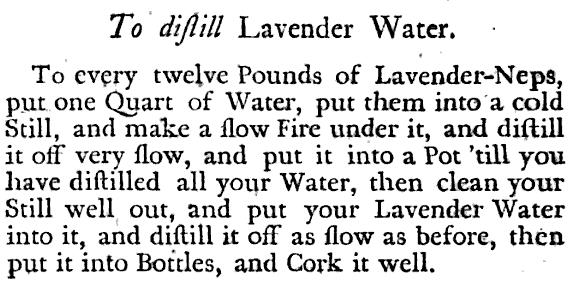
Lavender Water recipe from The experienced English house-keeper: for the use and ease of ladies, house-keepers, cooks, &c, Elizabeth Raffald, confectioner … Manchester, 1769.

Beauty and Cosmetics 1550-1950 by Sarah Jane Downing was published this month by Shire Library.  Small and compact, as Shire publications tend to be, this wonderfully illustrated book describes the standards of beauty popular in each era, from 1550 when alabaster brows were highly prized, to the black eyebrows that were favored by 18th century women.  As with her best-selling Fashion in the Time of Jane Austen, Ms. Downing provides the reader with a comprehensive overview of the topic. She begins with the Tudor Court and ends with the delightful cosmetic advertisements of the first half of the 20th century.

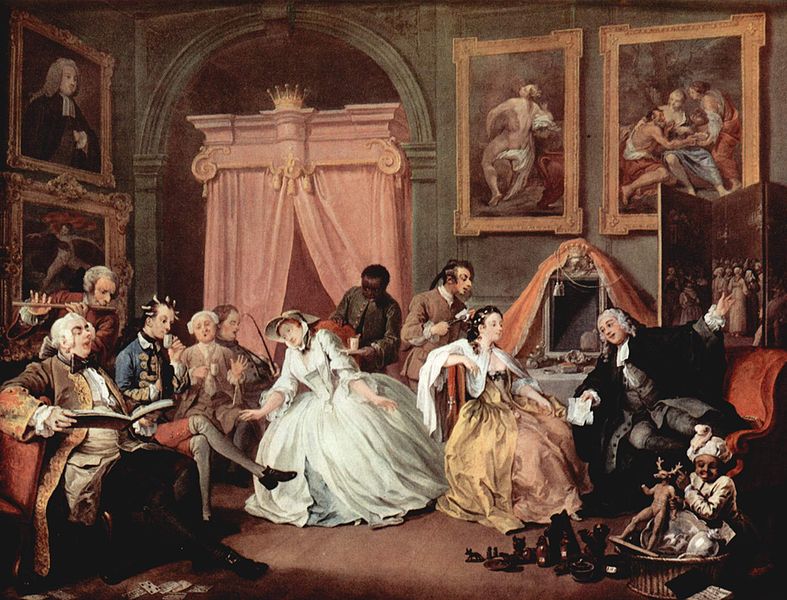
Marriage à-la-mode: The Countess's Morning Levee, William Hogarth, c. 1745

Because my blog’s theme centers on the Georgian and Regency eras, I will confine much of my recap to those years.

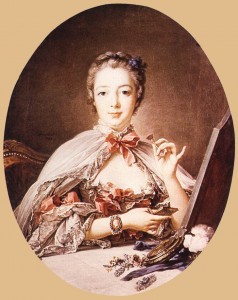
A woman applying beauty patches, Boucher

Mirrors, once only possessed by the rich, became so popular in London in the mid-16th century that British manufacturers petitioned Parliament to ban foreign imports. The ritual of the dressing table became quite elaborate and ladies began to entertain guests as they prepared themselves for the day.

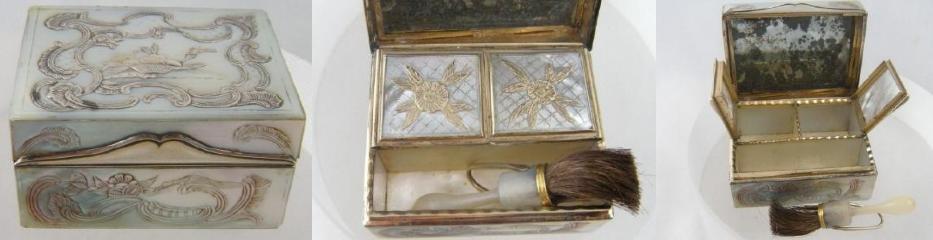
French mop gold boite a mouche patch box with brush, 1730. Images @ Etsy

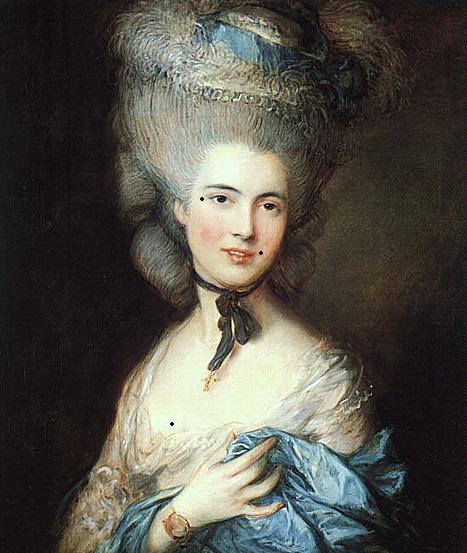
Decorative patches covered skin blemishes and blotches, sometimes to such an extent that a face could be covered with a variety of dots, half-moon crescents, stars and even a coach and horses! The popularity of using patches began in the mid-17th century and did not wane until the end of the 18th century.

Woman with patches, pale skin and rouged cheeks. Thomas Gainsborough

Porcelain skin was highly prized and created with white lead-based skin cream. Blush was then applied to create a doll-like look. Cosmetics were created in a variety of ways. Here are the ingredients for one recipe for lead face powder that did not come from this book: several thin plates of lead, a big pot of vinegar, a bed of horse manure, water, perfume & tinting agent. Once can only guess how this concoction was put together and at its smell.

Marquise the Pompadour applying face powder with a brush. Boucher, 1758.

Ms. Downing describes in her book:

lead sheets were unrolled and beaten with battledores until all the flakes of white lead came off. These were gathered and ground into a very fine powder… p. 24

Gainsboroughs portrait of Grace Dalrymple Elliot in 1782 shows the craze for dark eyebrows.

For a while during the third quarter of the 18th century, dark eyebrows became all the rage. Lead-based cosmetics, used over time, caused hair-loss at the forehead and over the brows, resulting in a receding hair-line and a bare brow. For those who lost their eyebrows, it became the custom as early as 1703  to trap mice and use their fur for artificial eyebrows. Sadly, the glue did not always adhere well, and a lady could be caught with her brows out of kilter. This hilarious poem was written by Matthew Prior in 1718:

On little things, as sages write,

Depends our human joy or sorrow;

If we don’t catch a mouse to-night,

Alas! no eyebrows for to-morrow. – p.28

Aging beauties staved off the ravages of time with sponge fillers and rouge (sound familiar?), while many women risked poisonous side effects from using their deadly cosmetics. Maria, one of the Gunning sisters who went on to become Lady Coventry, was so addicted to her lead-based paints that she died in 1760 at the age of 27 knowing full well that she was at risk.

Maria, Countess of Coventry

The French Revolution swept away the widespread use of makeup, which was associated with the aristocracy. Defiantly, some aristocratic ladies went to their doom wearing a  full complement of make-up: pale skin, patches, rouged cheeks and rosy lips.

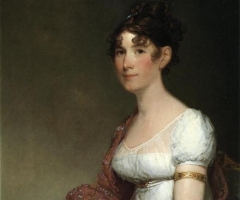
The more natural look of the regency woman. Note that the cheeks are still rouged.

Rousseau influenced the concept of nature and a more natural Romantic look took hold, aided by the blockade of cosmetics during the Napoleonic Wars. The death of many soldiers resulted in widespread melancholia and the affectation of a consumptive look. Ladies, nevertheless, were never far from their rouge pot.

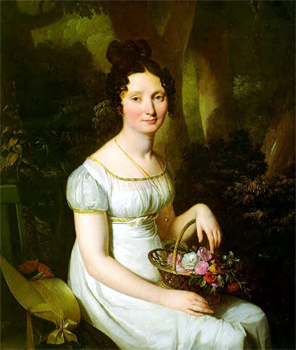
Another Regency portrait with subtle makeup. The flower basket adds to the natural look.

As with all Shire books, Sarah Jane Downing’s trip through time provides us with brilliant insights, in this instance it is via cosmetics and how society viewed beauty in each era. By the 1950s, the success of a marriage was defined by how well a woman took care of herself. This included makeup. Beauty, as Ms. Downing wrote, “was switched from a pleasure to an obligation.”  Oh, my. I give the delightful Beauty and Cosmetics 1550-1950 four out of five Regency tea cups.


Product Details

Paperback: 64 pages
Publisher: Shire (February 21, 2012)
Language: English
ISBN-10: 0747808392
ISBN-13: 978-0747808398
Product Dimensions: 5.8 x 0.2 x 8.2 inches

More on the topic: