Feeds:
Posts
Comments

Archive for the ‘Georgian Life’ Category

Inquiring readers: Once upon a time, road travel was fraught with danger and a traveler could be held up by a highwayman at any time. Jerry Abershawe was such a man. Tony Grant (London Calling) writes about him in this post.

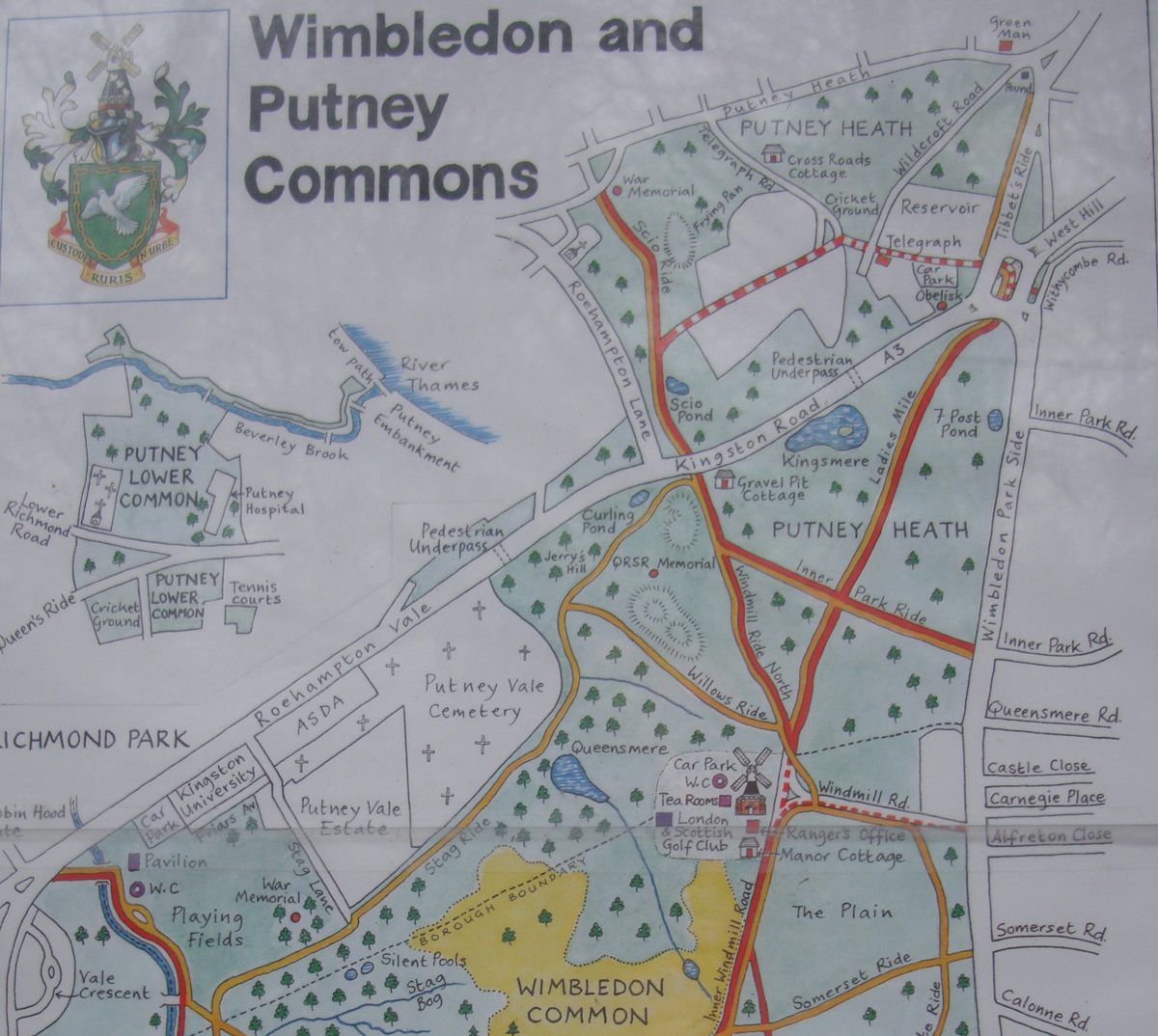
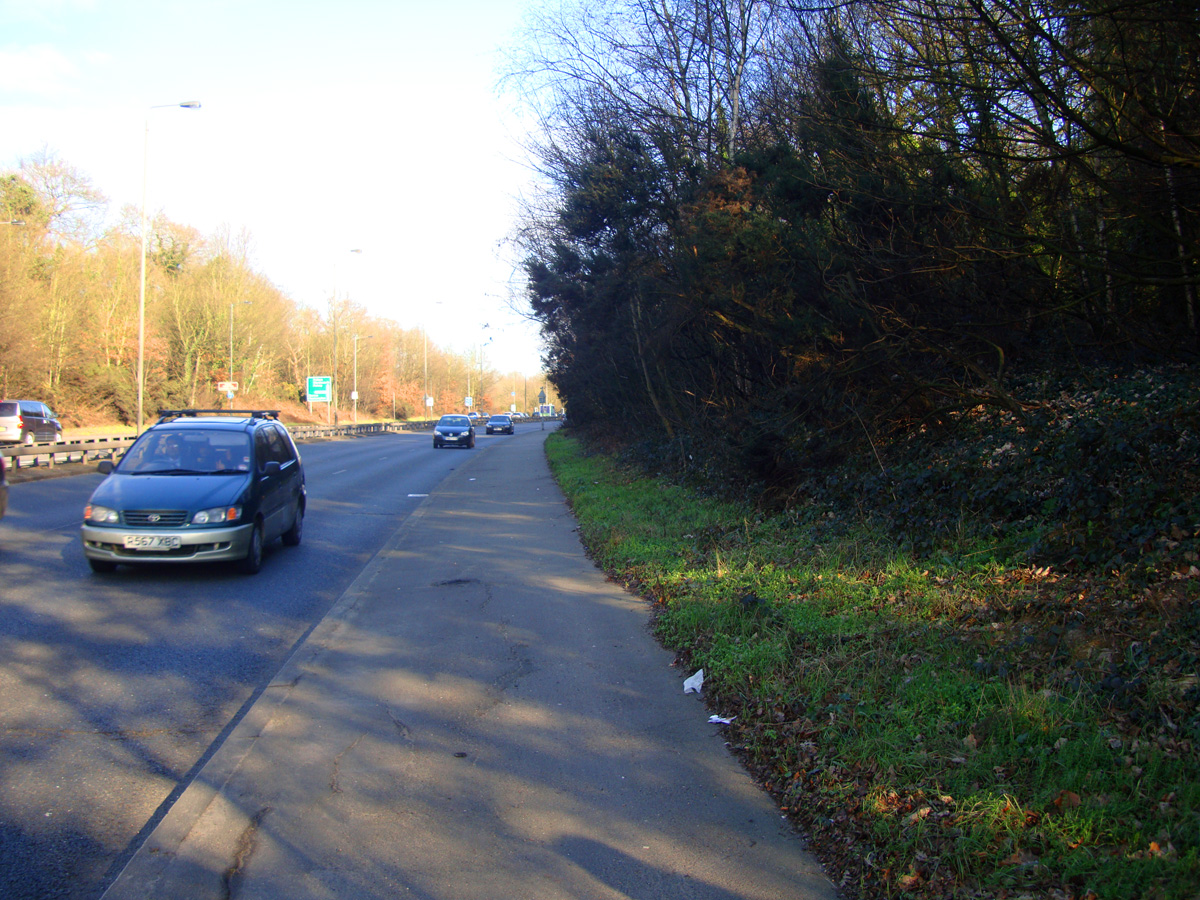
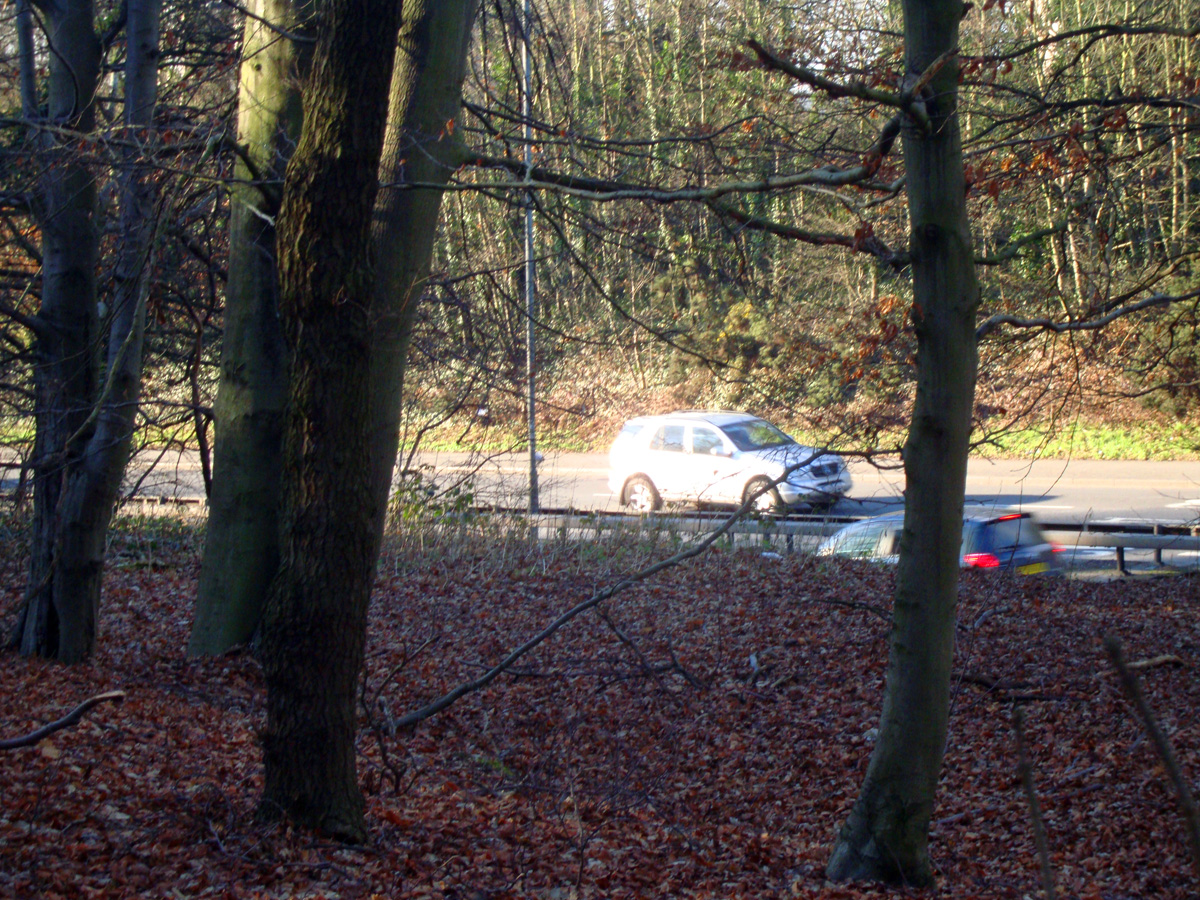
Not far from where I live, on the edge of Wimbledon Common where the Kingston Road passes, are some trees on the side of a small rise of ground. This part of the common is called Jerry’s Hill. It is named after the 18th-century highwayman called Jerry Abershawe, who frequented those parts and held up carriages on their way between Kingston and London. He was one of the last highwaymen.

Jerry's hill. The gibbet was near here. Image @Tony Grant

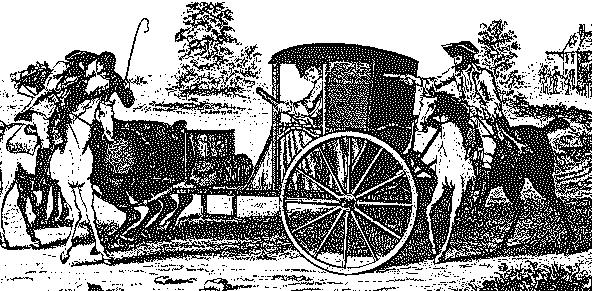
A highwayman was a thief who held up passers by, usually people travelling in carriages, at gun point or blunderbuss point, and relieved the passengers of their valuables. Some attacks on coaches were brutal and people were killed. Highwaymen weren’t all the dashing handsome masked desperados of fiction with the manners of a lord and a twinkle in the eye for a beautiful lady. “Stand and deliver!” was their traditional call. They chose lonely remote stretches of the highways to perform their dastardly deeds, but they also had to be sure they chose an area where there was regular traffic going to and fro or their despicable mission would be pointless. They chose places just outside towns and cities where there was a constant flow of people travelling. Wimbledon, then a small rural village on the outskirts of London and with a vast area of wild untamed common land around it, was an ideal spot.

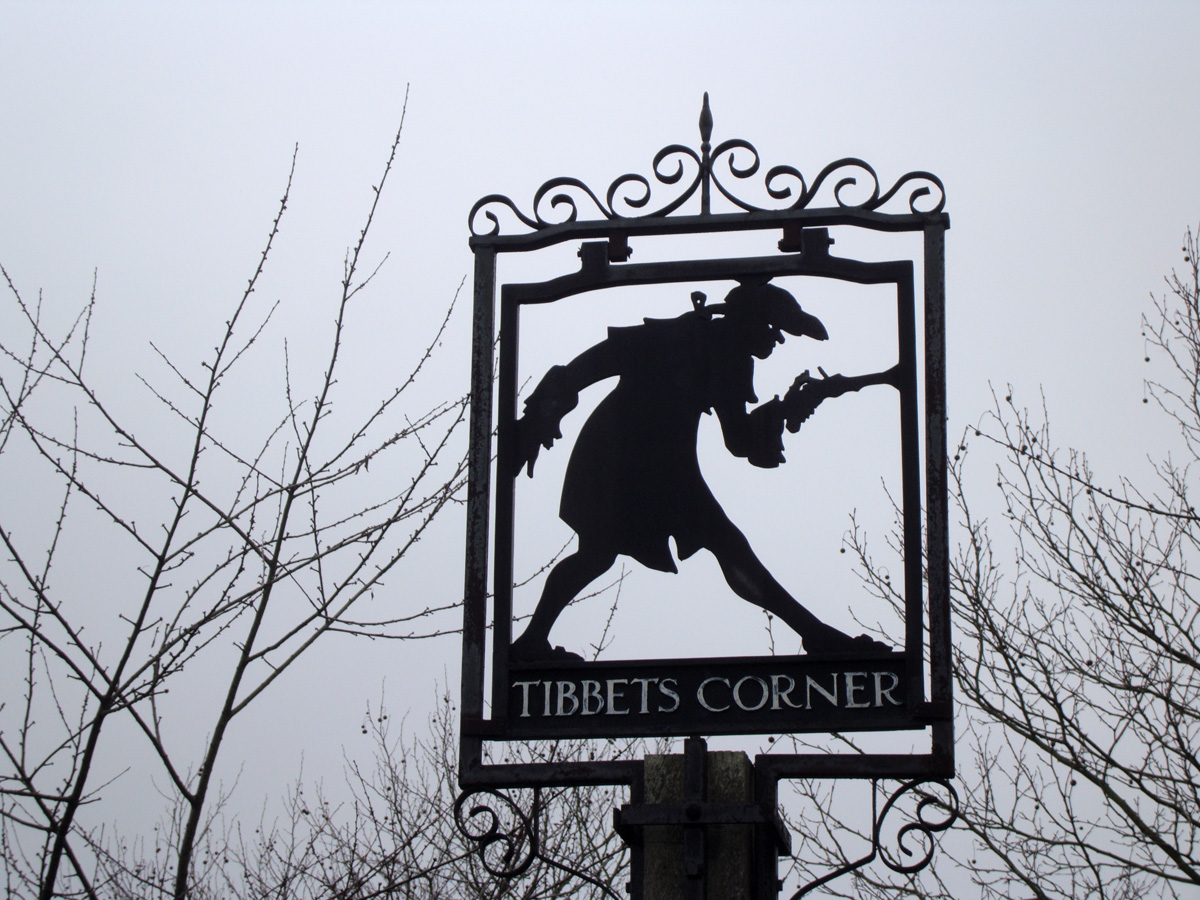
Gibbet post at Tibbet's Corner. Image @Tony Grant

Jane Austen was travelling to London from Steventon in 1796 the year after Jerry Abershawe was executed. They were about the same age, 20 and 22 years old.

To Cassandra Austen Thursday 15 – Friday 16th September:

“….As to the mode of our travelling to Town, I want to go in a Stage Coach, but Frank will not let me. As You are likely to have the Williams’ & Lloyds with You next week, You would hardly find room for us then-. If anybody wants anything in Town, they must send their Commissions to Frank, as I shall merely pass thro’ it- The Tallow Chandler is Penlington, at the Crown & Beehive Charles Street, Covent garden.”

Travelling from Steventon, Jane would not have gone through Kingston upon Thames and the London Road leading out of Kingston where Jerry Abershawe plied his highwayman trade. However, you can understand Frank’s concerns for Jane using the stagecoach. A stagecoach carrying a variety of passengers, some undoubtedly wealthy, would have been a target for a highwayman.

From Steventon, the most direct route to London would have taken her through Basingstoke, Virginia Water, Staines, Richmond upon Thames, Hammersmith and on to Westminster and the centre of London. From Staines she would have been travelling on what was known as The Great West Road which lead directly to the second most important city after London, in Georgian times, Bristol, the centre of the slave trade. Some very wealthy merchants and members of the aristocracy would have travelled this road. It must have had its fair share of highway robbers. Stagecoaches on this road would most certainly have been prime targets. So Frank was right to refuse Jane her wish. But maybe the excitement and the risk appealed to Jane. She was young after all. It does not say in Jane’s letter how they did get to Town, but I presume it was in less conspicuous transport and with her brother.

Wimbledon Common showing Jerry's Hill

In 1813, Jane did travel along the London Road leading out of Kingston, Jerry Abershawe’s haunt. She did this many times from Chawton. There is no hint in her letters of any possible dangers but by the time she was living in Chawton, although the Kingston route was now her most direct route to Town, highwaymen were all but extinct. The toll roads had made highway robbery very difficult. Roads were manned every few miles and the people on them had paid to use them. This made it very difficult for highway robbers to make their escape along these routes so this crime virtually died out.

Jerry's Hill, London Road. Image @Tony Grant

To Cassandra Austen Wednesday 15 – Thursday 16 September 1813 Henrietta Street (1/2 past 8-)

Here I am, my dearest Cassandra, seated in the Breakfast, Dining, sitting room, beginning with all my might. Fanny will join me as soon as she is dressed & begin her Letter. We had a very good journey- Weather & Roads excellent – the three first stages for 1s – 6d & our only misadventure the being delayed about a quarter of an hour at Kingston for Horses, & being obliged to put up with a pr belonging to a Hackney Coach & their Coachman, which left no room on the Barouche Box for Lizzy, who was to have gone her last stage there as she did the first;- consequently we were all four within , which was a little crowd;-We arrived at quarter past 4 …”

This time there was no sense of Jane’s brothers putting their foot down and refusing this time to let her travel in what appeared to them in the past in an inappropriate mode of transport. The party Jane travelled with appeared to be Henry, Lizzy and Fanny. There was no sense of danger, just the excitement of the journey, and from Kingston on their last stage, the cramped conditions of four of them inside the barouche. (Imagine being squashed inside a barouche with Jane Austen. What a thought.)

The women would have passed the inn at the bottom of Kingston Hill, where Jerry Abershawe made his headquarters, before their barouche made the long rising trek up the hill onto Wimbledon Common, going past Jerry’s Hill, where I am sure the gibbet would still have been displayed on the right hand side of the road. There probably was no sign of the remains of Jerry Abershawe by that time though. His body had been pecked clean by the crows and his bones had been taken as souvenirs. His finger bones and toes bones were used in candleholders. Jerry Abershawe was the last person to have his body displayed like this on a gibbet.

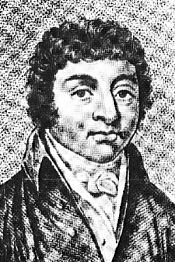
Jerry Abershawe

Louis Jeremiah Abershawe(1773-3 August 1795), better known as Jerry Abershawe, terrorised travellers between London and Portsmouth in the later 18th century. He was born in Kingston upon Thames and at the age of 17 began his life of crime. He formed a gang, which was based at an inn on the London Road between Kingston and Wimbledon, at the bottom of Kingston Hill called the Bald Faced Stag. I am sure, as well as his primary occupation of highway robbery, Jerry Abershawe also managed to gain the odd carcase of a King’s deer from Richmond Park, which backed on to the Bald Face Stag Inn. The inn no longer exists, but there was a very large and comfortable pub and restaurant built there in the early 1900’s that, just a few years ago, was demolished for new housing built on the site.

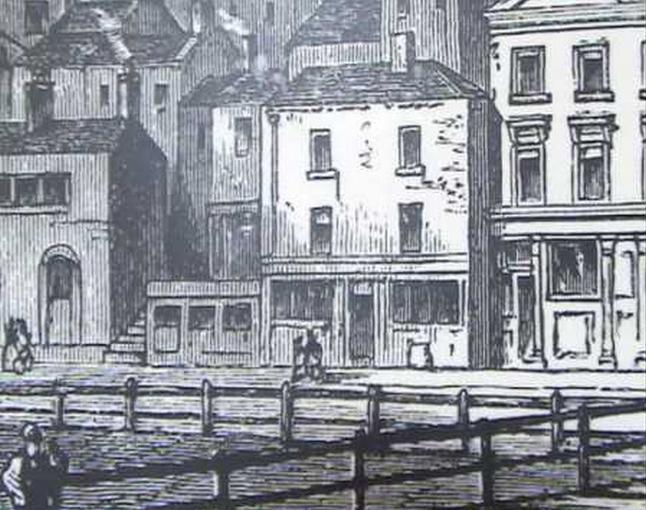
Jerry had other places of refuge at Clerkenwell near Saffron Hill. He used a house called the Old House in West Street. Other highwaymen also used this house. Jack Sheppard and Jonathan Wild were known to have stayed there. It was a house renowned for its dark closets, trap doors, and sliding panels.

Clerkenwell

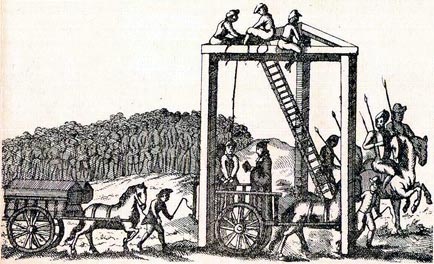
All attempts to bring Jerry Abershawe to justice failed until in January 1795, when he shot dead one of the constables sent to arrest him in Southwark and badly injured the other constable sent along too. Abershawe was arrested at a pub in Southwark called The Three Brewers. He was brought to trial at Surrey Assizes in July of 1795, and convicted and sentenced to death. On Monday 3 August 1795, Jerry Abershawe was hung on Kennington Common, a couple of miles from Wimbledon and then his body was set up on a gibbet on the hill overlooking the Kingston Road, which was more commonly known then as the London Road, next to Wimbledon Common near the scene of many of his highway robberies. It remained there for all passers by to see and be warned about the price to pay for evil ways.

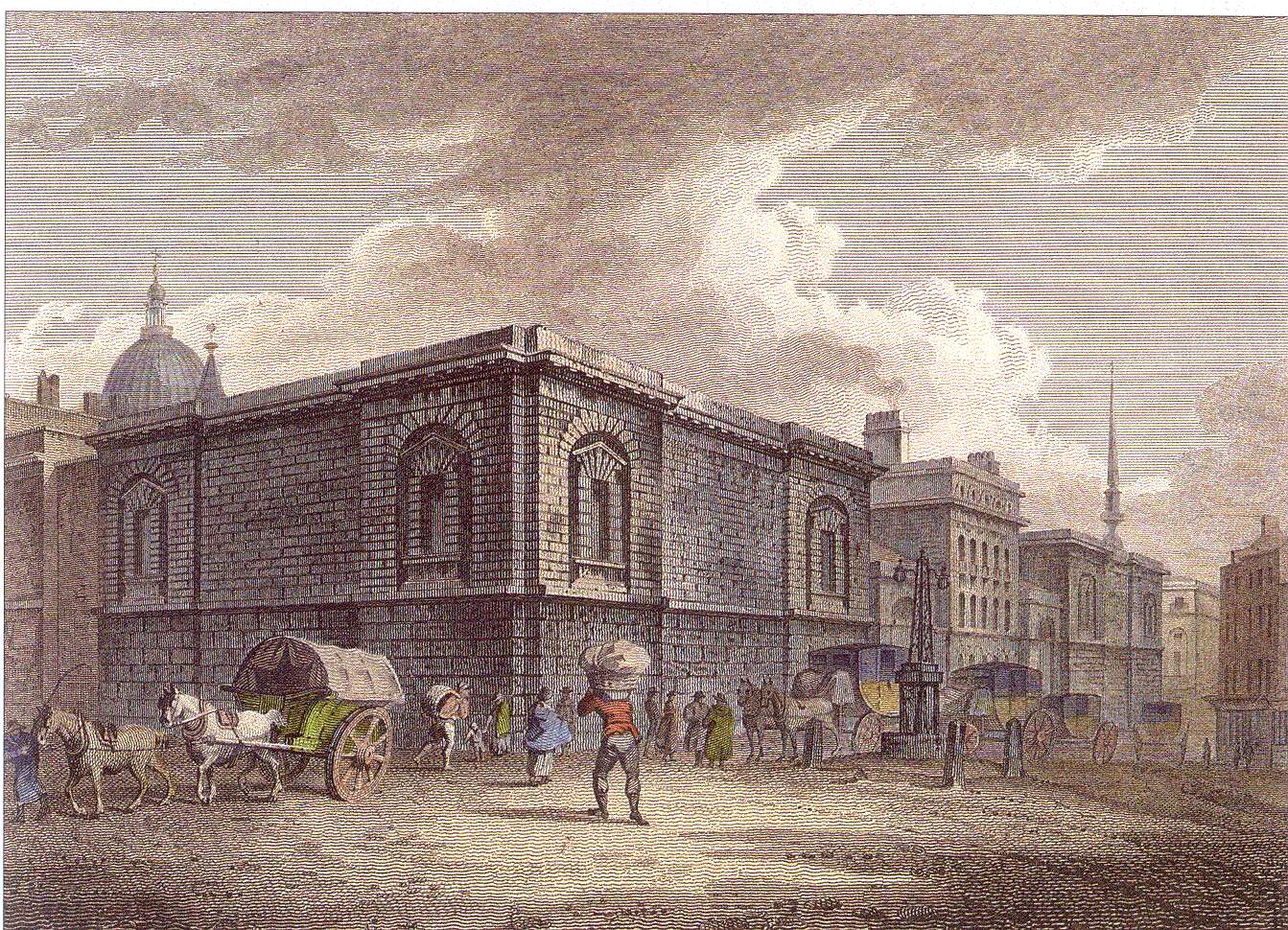
Newgate Prison

The Newgate Calendar for 1795 describes the manner of his being found guilty of murder. Newgate prison was a notorious London prison in which criminals waiting for trail would be held, and it was there that Jerry Abershawe was incarcerated before his execution.

When the judge appeared in his black cap, the emblem assumed at the time of passing sentence on convicted felons, Abershaw, with the most unbridled insolence and bravado, clapped his hat upon his head, and pulled up his breeches with a vulgar swagger; and during the whole of the ceremony, which deeply effected all present except the senseless object himself, he stared full into the face of the judge with a malicious sneer and affected contempt, and continued this conduct till he was taken, bound hand and foot from the dock, venting curses and insults on the judge and jury for having consigned him to, “murder.”

The Newgate Calendar also describes his execution on Kennington Common.

He was executed on Kennington Common, on the 3rd of August, 1795 in the presence of an immense multitude of spectators, among whom he recognised many acquaintances and confederates, to whom he bowed, nodded, and laughed with the most unfeeling indifference. He had a flower in his mouth, and his waistcoat and shin were unbuttoned, leaving his bosom open in the true style of vulgar gaiety; and talking to the mob, and venting curses on the officers, he died, as he had lived, a ruffian and a brute!”

A hanging at Tyburn 17th c.

Highwaymen especially were supposed to affect an attitude and a jocular type of behaviour called gallows humour. It seems that Jerry Abershawe went to his death displaying ribald and stentorious gallows humour.

Jerry's hill view. Image @Tony Grant

At least Jane was now safe on her journeys to London. But I wonder if she had just a small wish for the thrill of danger and would have loved to encounter Jerry on the wild wilderness of Wimbledon Common and ,”stand and deliver,” to him. If it had happened, would her novels have turned out differently in some ways?

Jane was 20 years old when Jerry died at the age of 22. Just maybe Jane would have loved the thrill of adventure on a journey with the threat of Jerry Abershawe round the next bend.

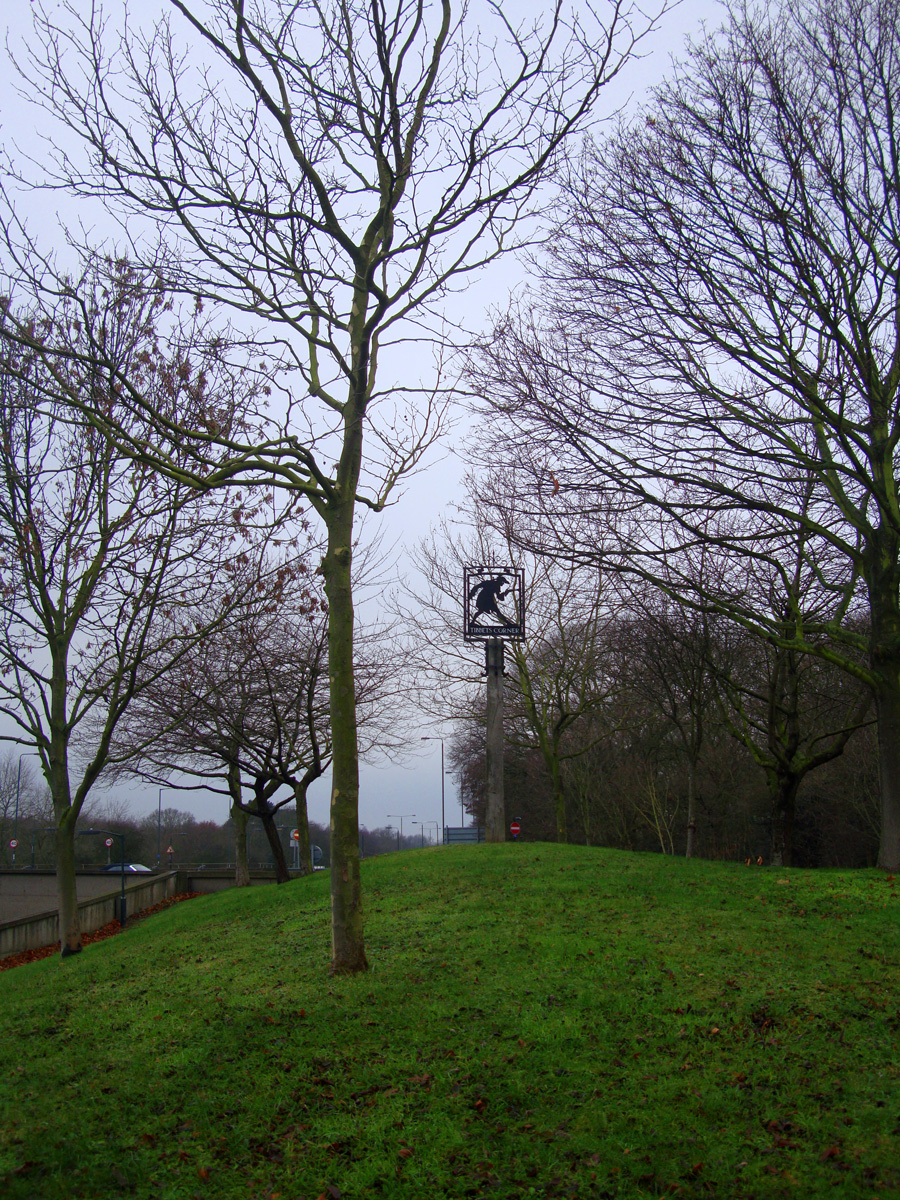
Tibbets Corner. A stylized sign commemorating Jerry Abershaw. Image @Tony Grant

Post script:

After writing this article I just couldn’t get a nagging thought out of my head.

Why and how did Jerry end up as a highway robber?

I know he was young, 22 years of age when he was caught and executed. There is no mention of family or wife or children or any sort of familial attachments. I can imagine him being brought up, an orphan, perhaps on the market streets of Kingston having to survive and live by his wits. It doesn’t take much to imagine the step into criminality to survive. He got in with the wrong lot obviously. An intelligent, bitter, hard done by, street wise kid gone wrong and obviously with a big personality. We can compare him with those who go off the tracks in our own society today. The forces for evil don’t change apparently. Obviously this is a total surmise but I feel better for it.

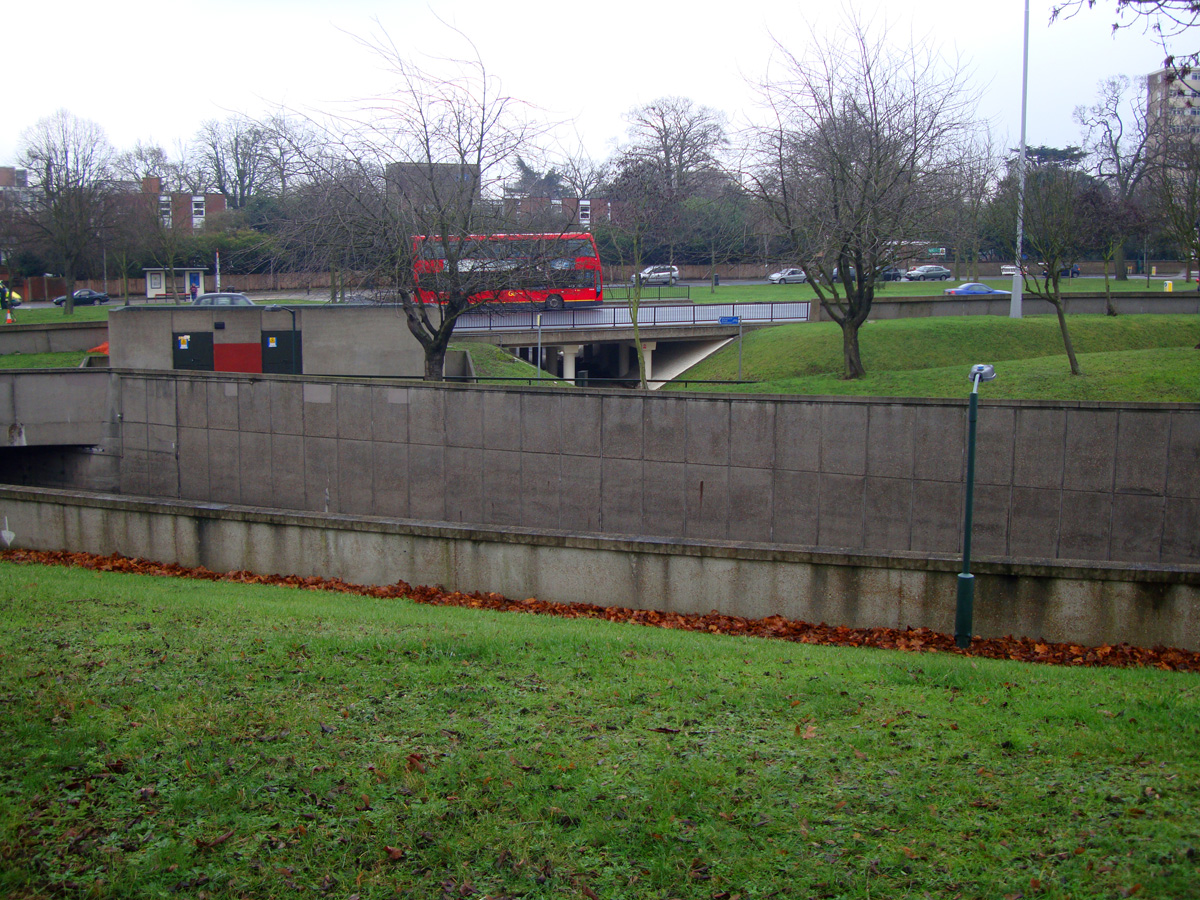
Tibbets Corner today - where Abershawe held up coaches. Image @Tony Grant

Read Full Post »

Inquiring readers,

For those of you who have not yet visited Nancy Mayer’s beautiful website, you are in for a treat. Click here to enter Nancy Mayer, Regency Researcher: A most proper authority on all things Regency. Nancy has been a member of JASNA (Jane Austen Society of North America) for some time. She was a member of a local chapter in 1990-1994, then started up a new chapter in 1996, and has been the regional coordinator for northern Georgia since then. Nancy has been researching Regency England for more than twenty years, and finds Google books a big help. While she is responsible for the text on her website, Susan Newman designed the web pages and added the illustrations. Nancy graciously agreed to answer a few of my questions:

1. How and when did you become interested in Jane Austen’s novels?

This is probably heresy, but I came to Austen and her novels because I wanted to learn more about Regency life. I had heard of Pride and Prejudice and seen the old Lawrence Olivier movie, but hadn’t gone any further with it or the other novels until I became interested in the Regency period. After reading Jane Austen’s letters, and some biographical data on her, I started in on her novels. I joined a discussion group in Atlanta around 1990 and haven’t looked back since. Even after twenty years of discussing the novels there is always something new to be found. I am not one who has memorized the books and don’t read them all over every year, but I usually find some new insight each time I do.

2. Which is your favorite Jane Austen book and/or character, and why?

Persuasion. Anne Elliot is my favorite character. She is more mature than the other heroines and so doesn’t make the mistakes they do. One seldom has to blush for her. I also think Wentworth is more romantic than Darcy, but I wouldn’t want to be a sailor’s wife.

3. You are considered an authority on the topic of Jane Austen and the Regency period, and your breadth of knowledge about the era astounds me. What are some of your favorite topics to research and why?

You flatter me. The more I research the more I discover what I don’t know. I like to research marriage, titles, peerage, the law, and mourning rules. I find property law most confusing, and barely know a VanDyke fringe from a scalloped one.

One can find all sorts of period books on Google books.

I am also interested in Lord Byron who was Jane Austen’s contemporary, His life gives the masculine and aristocratic elements missing in Jane Austen’s life. Though they both were alive from 1809 to 1817, one could sometimes think they lived at different times.

4. For the casual (but avid) Jane Austen reader, what are some sources you would recommend for further reading?

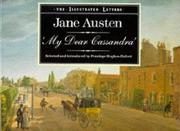
  • My Dear Cassandra:The letters of Jane Austen, Selected and introduced by Penelope Hughes Hallet. Clarkston Potter Publishers or Collins & Brown 1990, ISBN 0-51758312-7
  • Some might want the complete letters edited by Deirdre Le Faye, or the ones edited by John Chapman.
  • The novels published by Oxford have great appendices. Some of the Critical editions of the novels have appendices. One should have a copy of Lover’s Vows in one’s Copy of Mansfield Park. There are annotated versions of the stories with explanations of obscure and not so obscure points, and there are even comic book editions of Pride and Prejudice and Sense and Sensibility. No matter one’s taste or interests, one should be able to find a connection with Jane Austen.
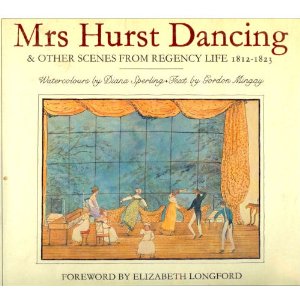
  • Mrs. Hurst Dancing by Diana Sperling. This isn’t about Jane Austen but the illustrations of the Sperling family could be those of the Younger Dashwoods or the Bennets. # ISBN-10: 0575030356 # ISBN-13: 978-0575030350. Some are exceedingly expensive, but there are remaindered copies and second-hand copies at reasonable prices.
  • Jane Austen and Her times by G.E. Mitton, originally published 1905, 2007 Barnes and Noble.
  • Also there are probably fifty books out there covering everything from Jane Austen and Art to Jane Austen and Zombies. I know of book on Jane Austen and Food, Jane Austen and Crime, Jane Austen and fashion, ( and Fashion in the Time of Jane Austen).
  • Those who like quizzes and challenges might like: Jane Austen Challenge by Helen Barton: BartonBooks (June 2009) # ISBN-10: 0952725754 # ISBN-13: 978-0952725756
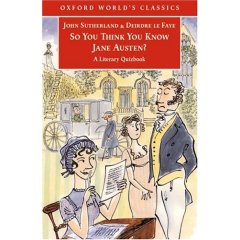
  • Also, So you Think You Know Jane Austen? By John Sutherland and Deidre le Faye Oxford University press, ISBN 0-19-280440-5

5. Would you like to share a common misconception about the Regency period with our readers, one that is wrongly perpetuated by book sources, websites, and blogs?

A general error I have found is thinking that the marriage laws, the church, and laws of inheritance were the same then as they are now. Many think the regency period was just like today, but in costume and with horses.

Nancy, thank you for sharing your wonderful insights. I hope readers will bookmark your website and visit it often. It’s best feature, as far as I am concerned, is your answers to their specific questions, like a personal researcher.

Read Full Post »

Curious readers: Tony Grant (London Calling) has contributed an article about Kew Gardens and his beautiful photographs to go with it. Relax and enjoy this visual feast of gardens, walkways, and flowers.

The Royal Entrance at Kew. Image @Tony Grant

I have been to Kew Gardens, which is only a couple of miles from where I live, on the other side of Richmond upon Thames, many, many times for more than thirty years. When I first visited Kew gardens all those years ago the charge to get through those regal, ornate gates was 1p, a penny, a mere token payment. Kew is a government research centre and a leading authority on plants throughout the world. I think they felt in those far off days that a token payment, just to keep the paths swept, was all that was required. It was and is a government-owned establishment, and so by default, we, the British public, own it, (A little like The National Gallery and The National Portrait Gallery. Those paintings belong to me you know. So, why shouldn’t I get in free?)

Bumble bee at Kew. Image @Tony Grant

Nowadays, it costs an arm and a leg to get into Kew Gardens. I’ll whisper this; “it’s £13.90 for an adult.” The Government decided, to help finance research, and to develop further public facilities in the gardens, we should all pay to get in. It’s such a beautiful place and such an elemental place that, yes, I’ll pay to get in. No questions asked. I need my dose of Kew. And many, many thousands of others just love to pay to get in too.

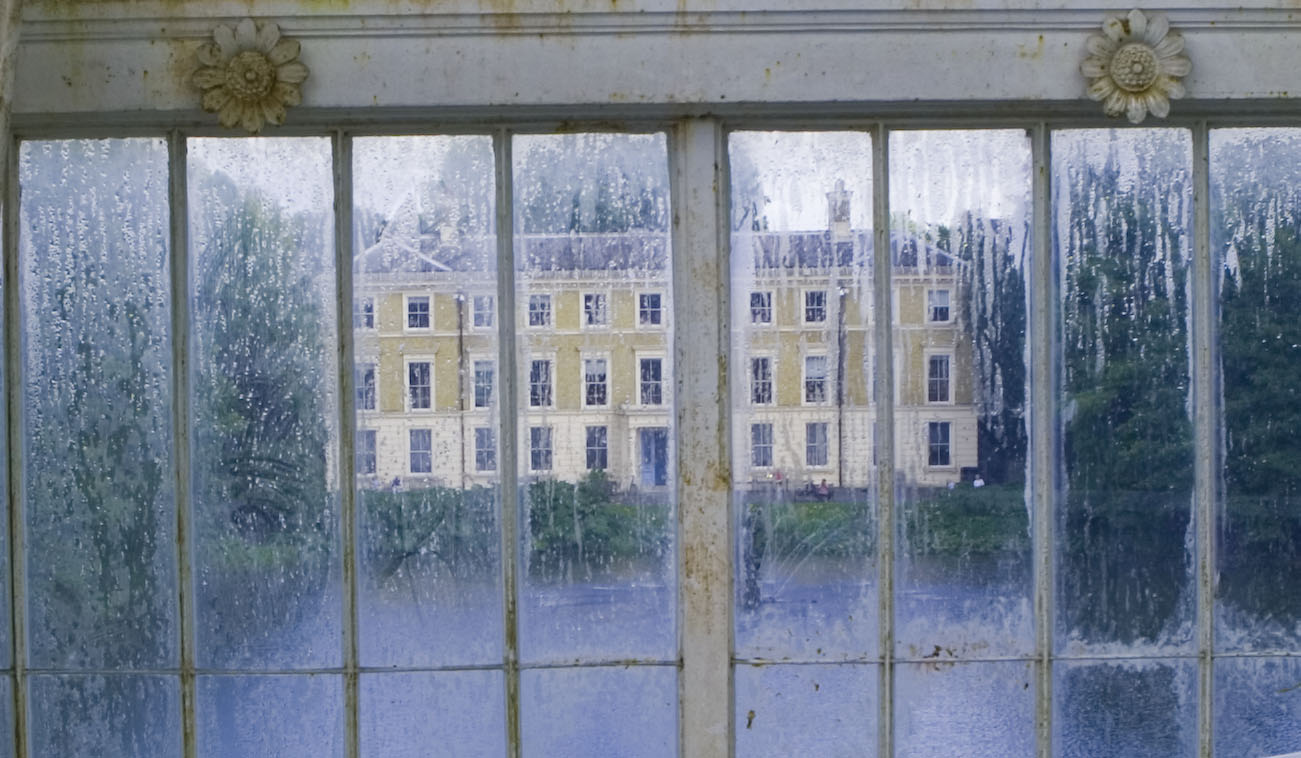
Through the glass wall. Image @Tony Grant

Oh, by the way, if you are a mum with a baby and young toddlers in tow, it’s free for the children, totally free. An example of British quirkiness in action. The gardens are a great place to meet for morning coffee in one of the 18th-century orangeries, to have a chat and a place to let the youngsters roam.

The Chinese Pagoda. Image @Tony Grant

My first encounter with Kew, I must admit, involved fellow students, bottles of wine, cans of beer, some very attractive females (my future wife amongst them), and an appreciation of nature and trees gained by lying on my back looking up through leafy branches to a clear blue sunny sky beyond.

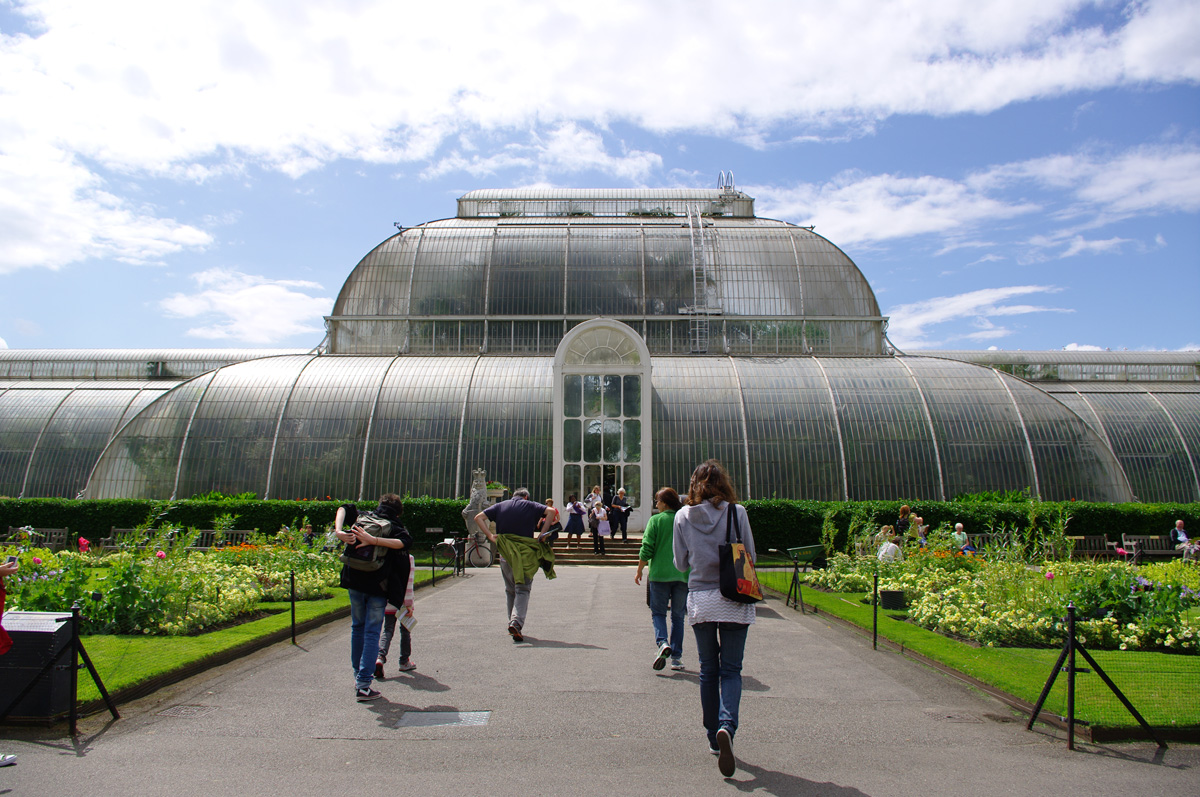
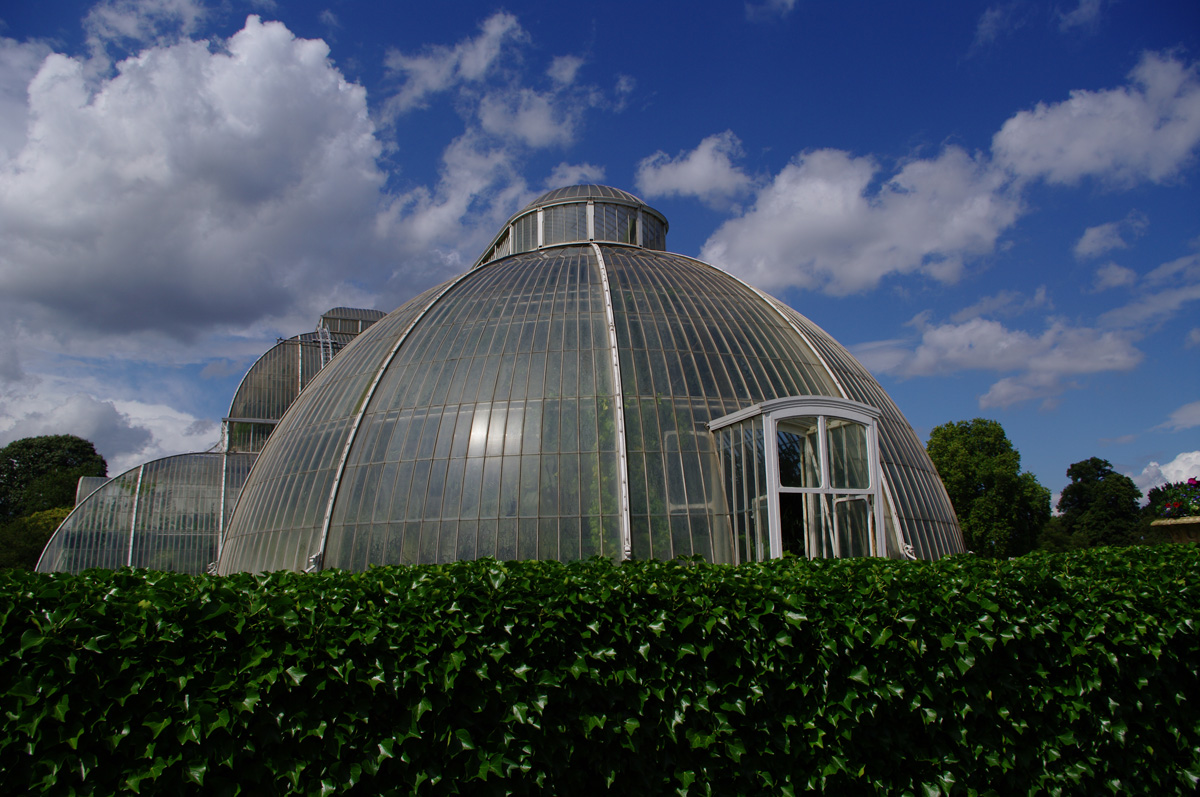
Approaching a palm house. Image @Tony Grant

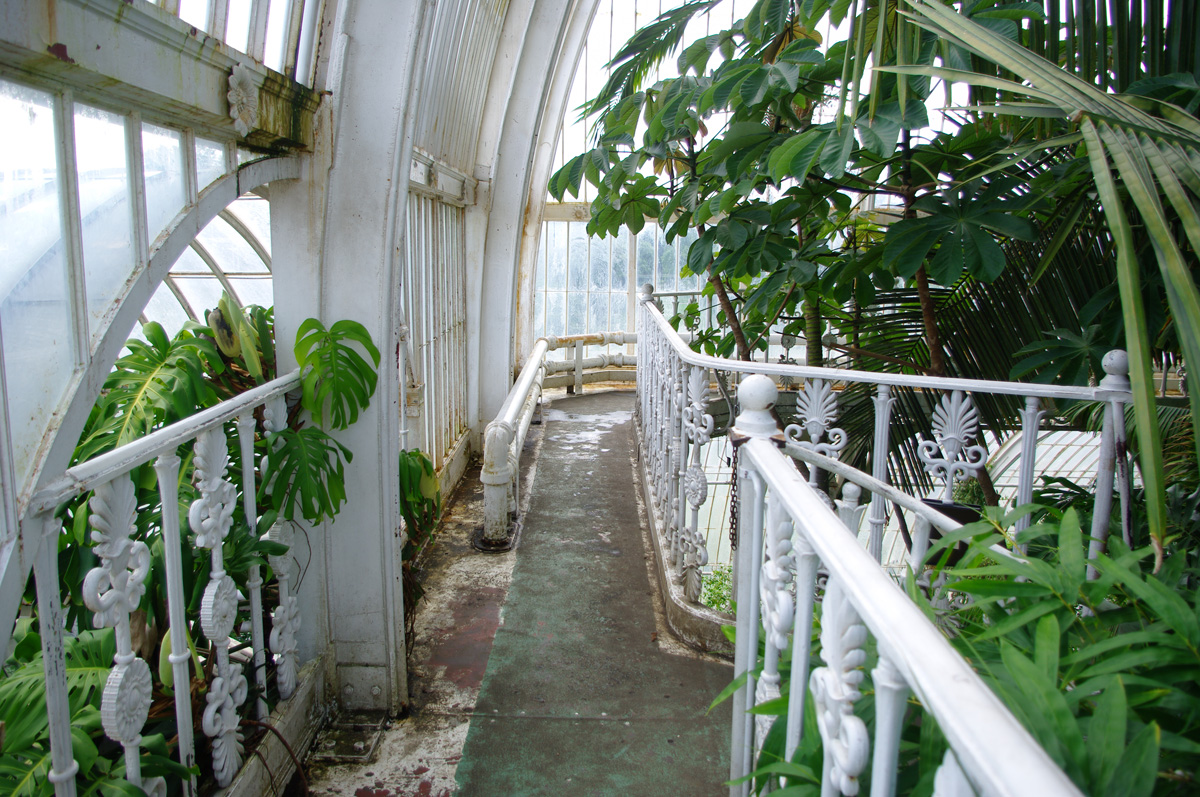
Kew to me means pleasant tree-lined walks, elegant plant houses with their acres of glass and miles of fine wrought iron structural parts painted white and curved and curled into shapely structures. It is a place to look closely at beautiful flowers, contemplating their wondrous shapes and form, and their intense colours, and to take in their seductive perfumes. It is uplifting to observe the majesty of the many varieties of trees, with their beautiful patterned leaves, and their branch and twig systems like fine black lace against changing skies.

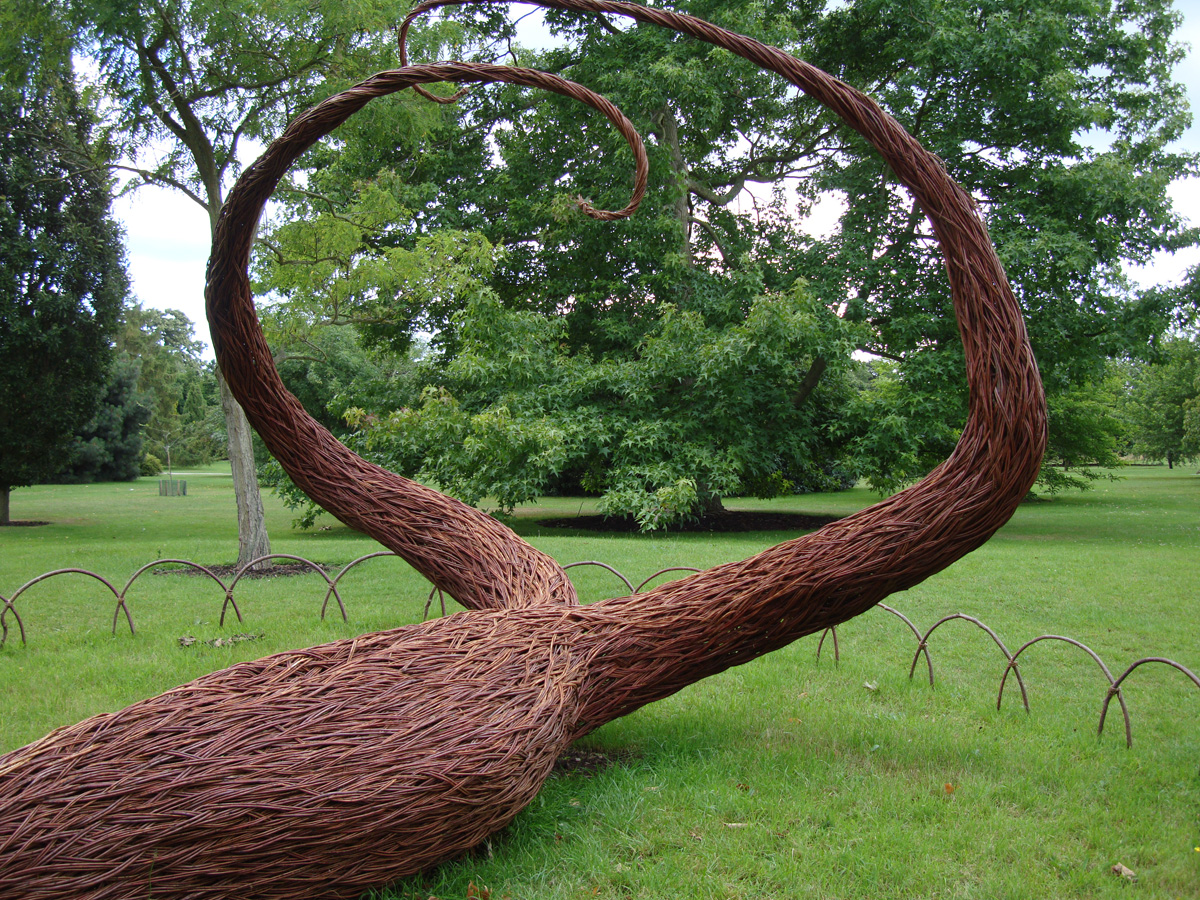
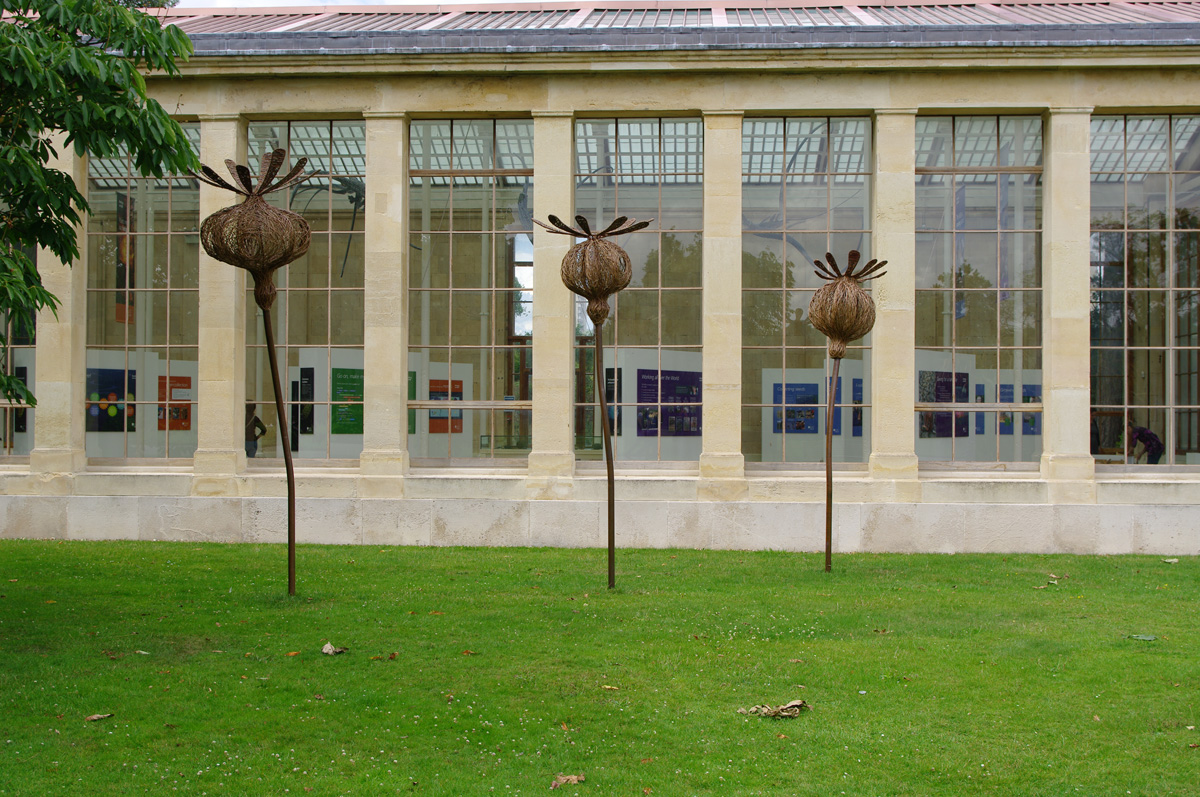
Environmental art at Kew. Image @Tony Grant

Kew calms the spirit. It is a meditative place. You can become one with yourself as you walk around or find a place on the grass to sit.

A Zen Garden. Be at peace. Image @Tony Grant

It is vast enough to give you personal space and there is tranquillity amongst the greens and shade.

Museum Number One, Economic Botany. Image @Tony Grant

The Importance of Kew

Kew is an important place. It has a seed bank that holds 10% of all the worlds’ plant species, and contains samples of nearly all endangered species. It also has a herbarium whose collection is being added to virtually daily. At the Joderell Laboratory at Kew, they research the molecular systems, and study the physiology and biochemistry of plants. They study the plants to find natural medicines, specifically for anti-cancer and anti-inflammatory drugs. One department focuses on agricultural research, and there are also botanical illustration and photography departments. Kew is a world leader in conservation and plant technology.

18th century orangery. Image @Tony Grant

Development of Kew

The development of Kew began in the 16th century when Henry VII built a palace at Richmond just along the Thames from Kew. By the 17th century the area round Richmond had become established as a hub of political power for part of the year. Everybody who was part of the court and the government came there in the summer when the king was in residence. Later, James I combined all the royal land in the area, along with former monastic land, with the park that existed at Shene, and created a new hunting ground of 370 acres. Robert Stickles, the architect, built a hunting lodge called Richmond Lodge right in the middle of it.

Temperate House and pagoda. Image @Tony Grant

After Charles I was executed, and The Commonwealth had taken over under Oliver Cromwell, much of the Royal property around Richmond and Kew was sold off. However, those sales were reversed during the reign of William III. Robert Stickles’s Richmond Lodge had survived, and it was extended and turned into a royal palace. The old deer park was reassembled, and the land around Richmond Lodge was turned into formal gardens. So began what we know today as Kew Gardens.

The broad walk.Image @Tony Grant

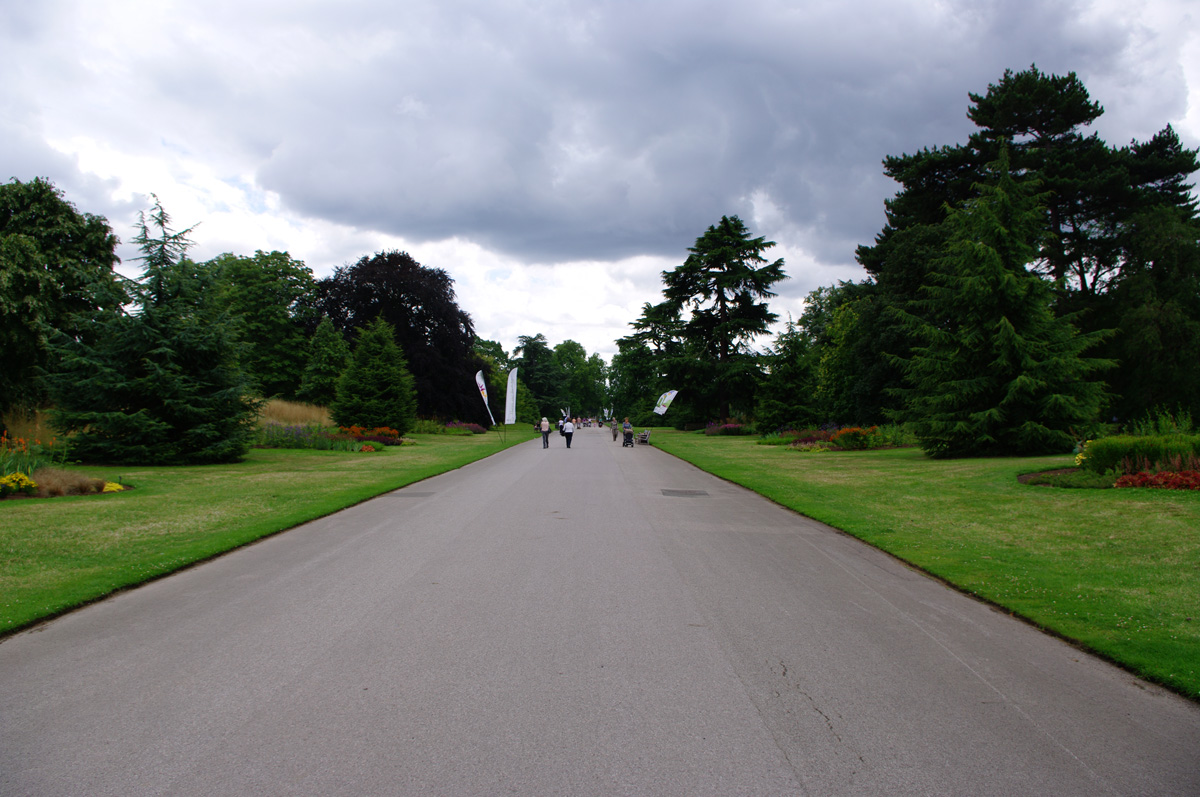
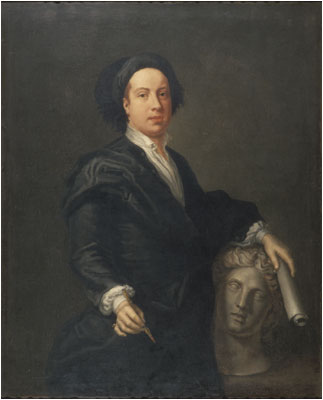
In the 1690’s, George London created the Broad Avenue, a wide path that goes nearly the full length of the gardens connecting many of the main gardens features. Charles Bridgeman and William Kent, two great 18th century landscape gardeners, primarily created the layout and design of the original gardens.

William Kent

Capability Brown added to the design later. Because of these three great garden designers’ influences and ideas, the garden at Kew were watched and visited, so that new ideas in garden design could be disseminated. Kew was an important influence to 18th century garden design throughout Britain.

Shape, pattern, colour. Image @Tony Grant

This early 18th-century plan was overlaid by later designers, although some of the Capability Brown’s features still persist. It is also likely that some of the older trees might have been planted by Charles Bridgeman. In 1731, King George II’s son, Frederick, Prince of Wale,s leased Kew farm. In 1736 he married Princess Augusta of Saxe Gotha, and together they began some drastic changes at Kew. They commissioned William Kent to redesign Richmond Lodge. He added extensions and covered the façade in white stucco. It became known as The White House.

Monkey puzzle tree. Image @Tony Grant

Frederick and Augusta were garden enthusiasts, and they were helped by the Earl of Bute, who advised them on obtaining plants and landscaping. He later became the tutor to their son, who became George III. Unfortunately, Frederick died in 1751 due to a bout of pleurisy and a burst abscess in his chest. He wasn’t able to fulfil his plans for the gardens. At the time it was said his death was a great loss to the development of gardening in this country. George III, Frederick’s son, succeeded to the throne on the death of his grandfather, George II in 1760.


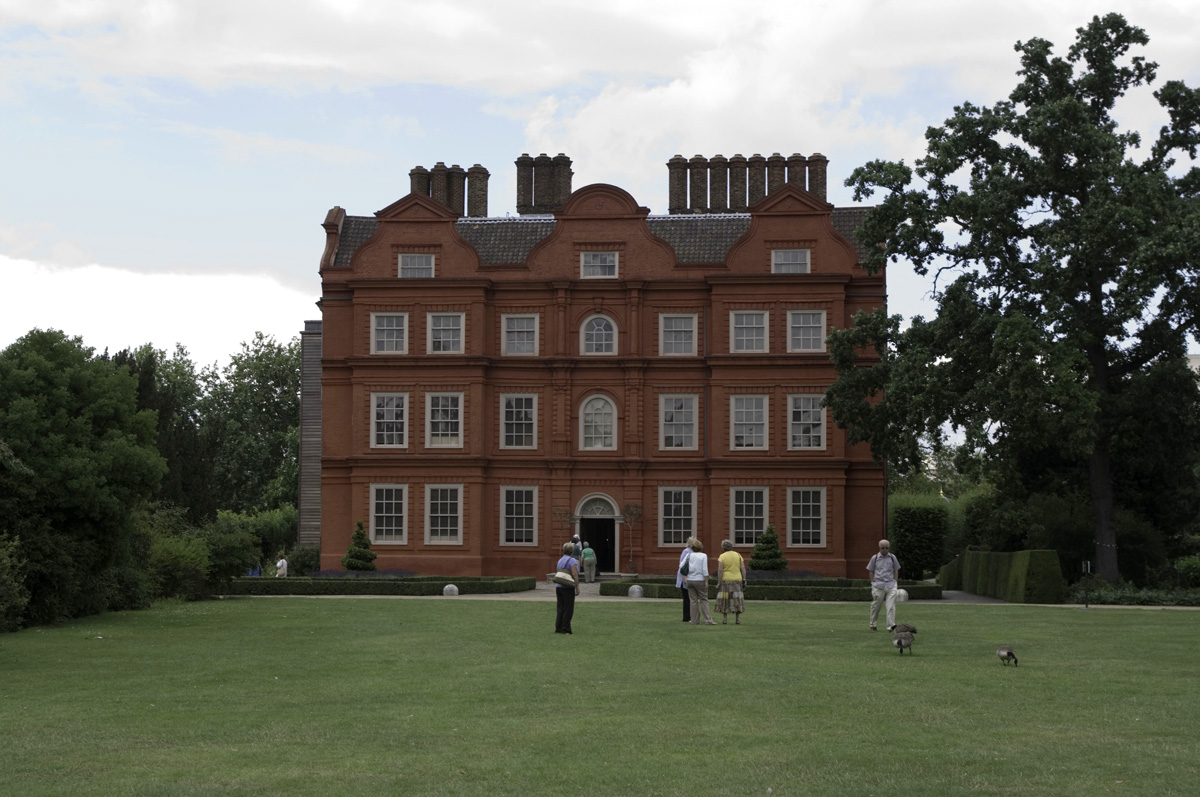
The Dutch House at Kew, Kew Palace. Image @Tony Grant

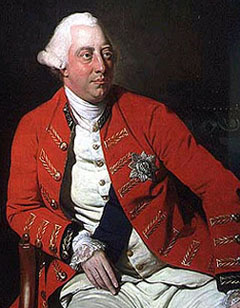
Capability Brown was commissioned to re-landscape the gardens. The royal family used Richmond Lodge as a summer home. When, Princess Augusta, George’s wife, died, the royal family moved to the White House, whilst The prince of Wales and his brother Prince Frederick lived in the Dutch House, which still exists today and is now called Kew Palace. The royal children were given lessons in botany and botanical illustration. During his bouts of illness, the King lived at Kew.

George III

During the Georgian period Joseph Banks became friends with George III and was the unofficial director of Kew Gardens. He became one of the most influential botanists of his time and began many of the work botanists do today.

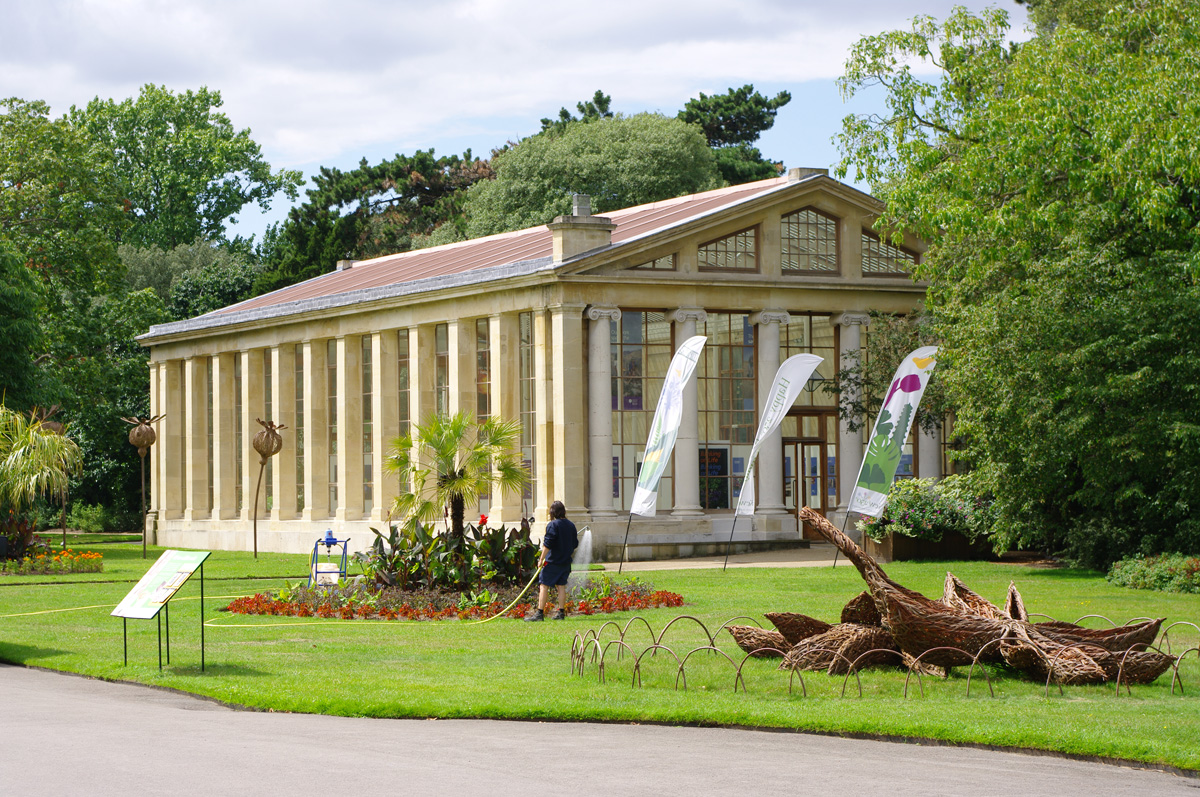
Natural art beside an orangery. Image @Tony Grant

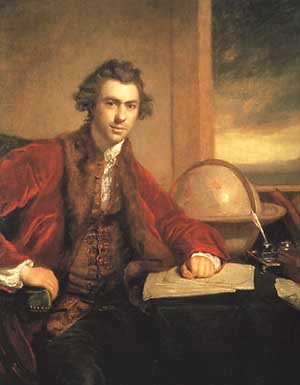
Sir Joseph Banks (1743 – 1820)
In 1761he inherited his father’s estate in Lincolnshire to which was attached considerable wealth. His first voyage of discovery was to the coasts of Newfoundland and Labrador on the ship HMS Niger. On his return to London in 1767 he was elected a member of the Royal Society at the tender age of 23.

Joseph Banks

When the society proposed an expedition to observe the transit of Venus in the Pacific in 1769, Joseph Banks financed his own expedition with his own team of scientists, including the botanist Daniel Solander and the artist Sydney Parkinson. HMS Endeavor under Captain Cook left England in August 1768.

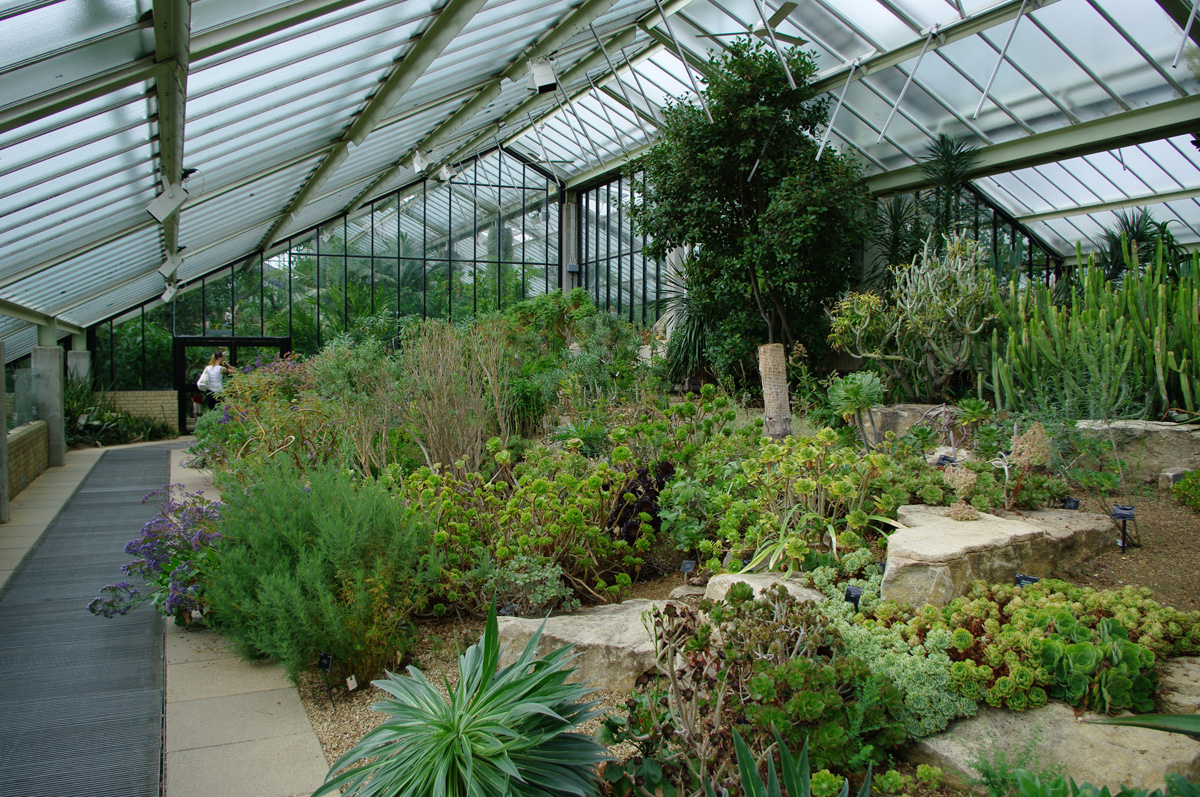
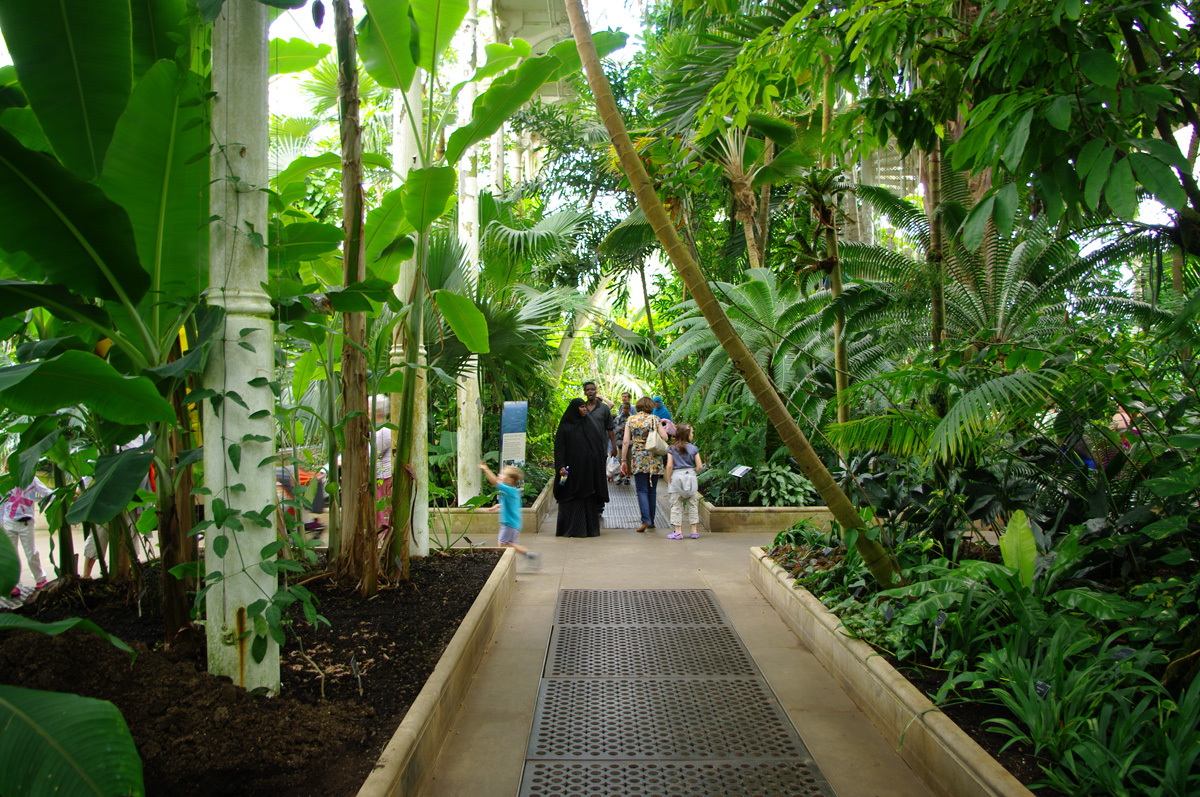
Inside a green house. Image @Tony Grant

Joseph Banks’ botanical collection formed the basis of the Herbarium at Kew today. His original specimens an still be studied there. Later he mounted expeditions to Iceland, the Hebrides, and the Orkneys. Banks helped organise the first collections at Kew. Specimens arrived from all over the growing British Empire, a typical trait with Empire building.

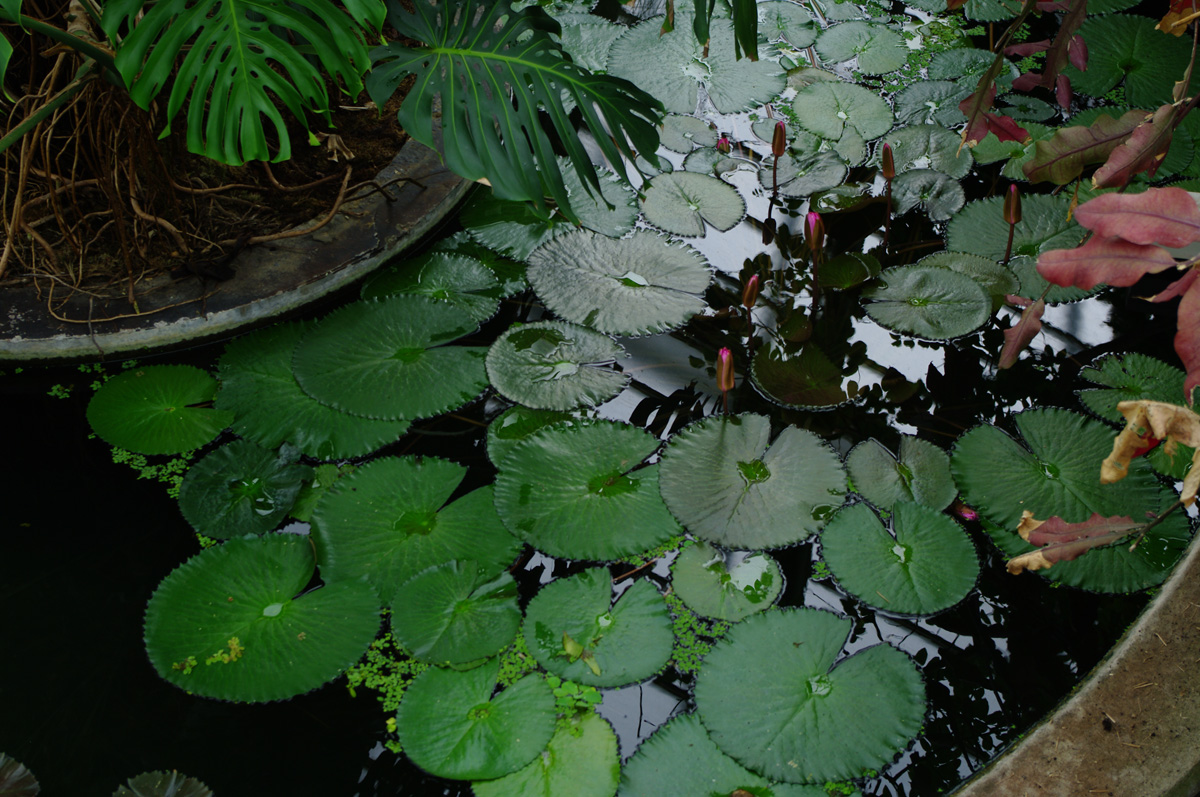
Water lillies. Image @Tony Grant

The initial impulse were trade and wealth, but so many other things went along in parallel with that:  science, exploration, discovery, art, culture. The British Empire brought religion, government, and even citizenship along with it. You can see examples and parallels with The Roman Empire, the Spanish exploration of South America, and present-day empire building.

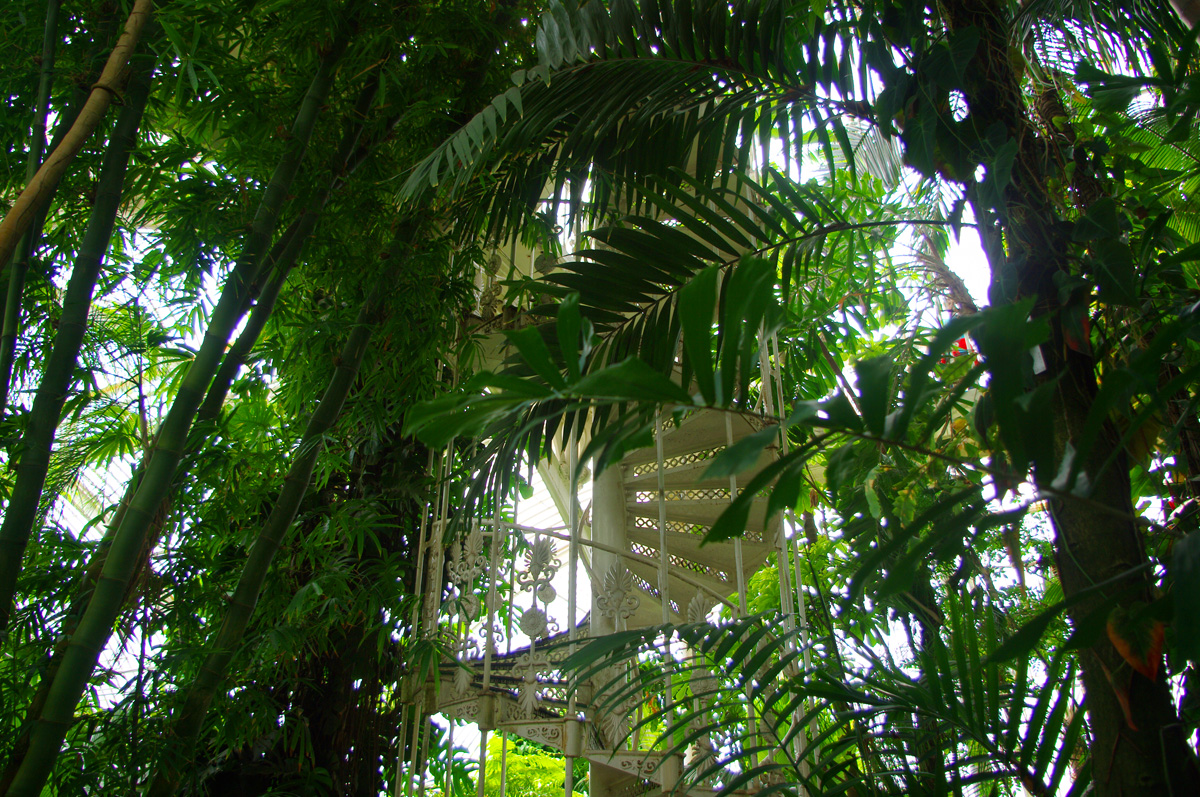
Inside the roof of the Palm House. Image @Tony Grant

Kew is a special place, and a visit there brings home the importance of plants, the keystone of our planet and very existence. They do so much for us, and their beauty brings us peace and joy. Is it such a strange thing to do – hug a tree?

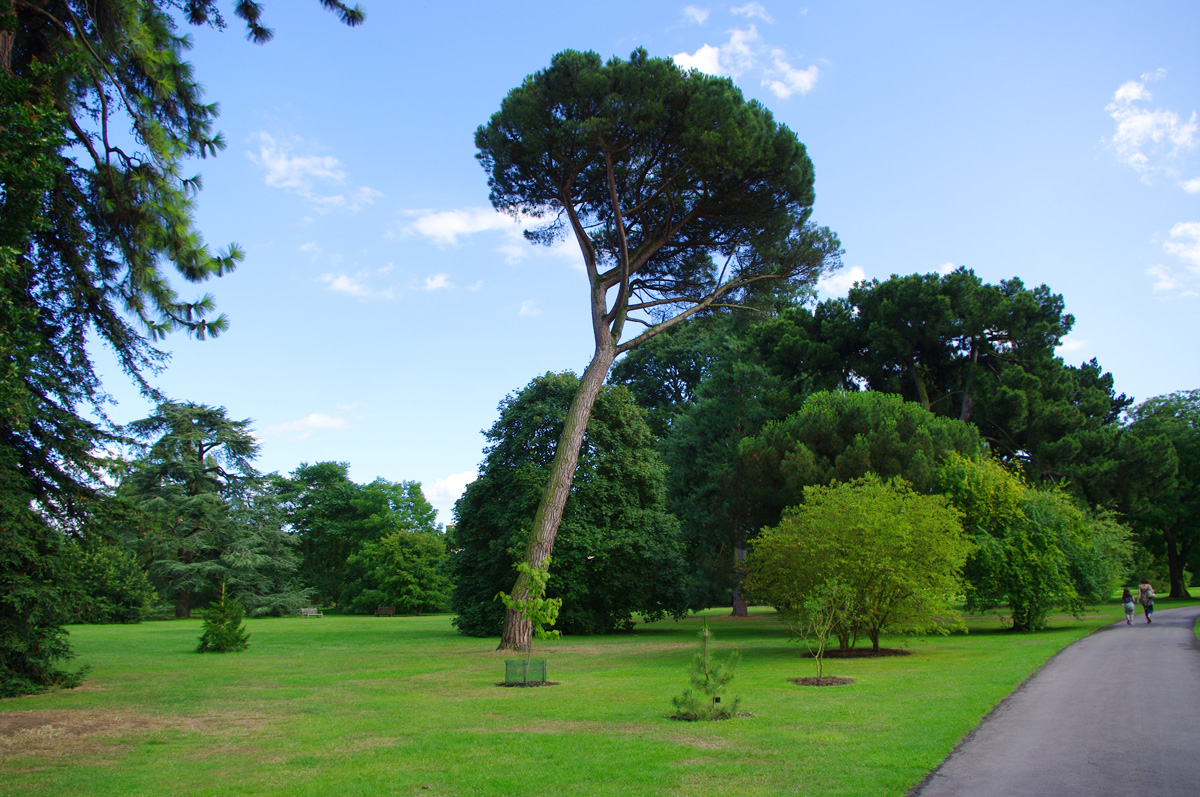
Scots pine. Image @Tony Grant

More images:

Before opening. Image @Tony Grant

Environmental art at Kew. Image @Tony Grant

Inside the Palm House. Image @Tony Grant

Side entrance. Image @Tony Grant

Stairs inside the Palm House. Image @Tony Grant

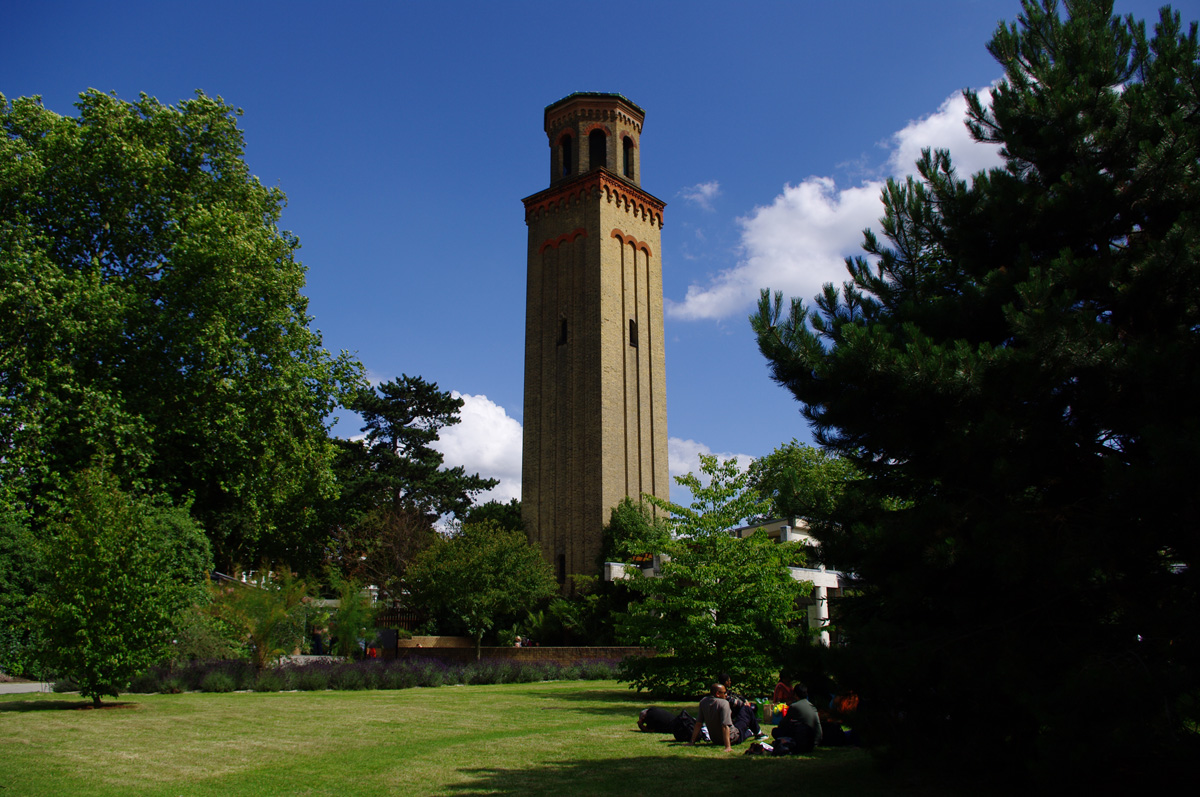
Water tower. Image @Tony Grant

Read Full Post »


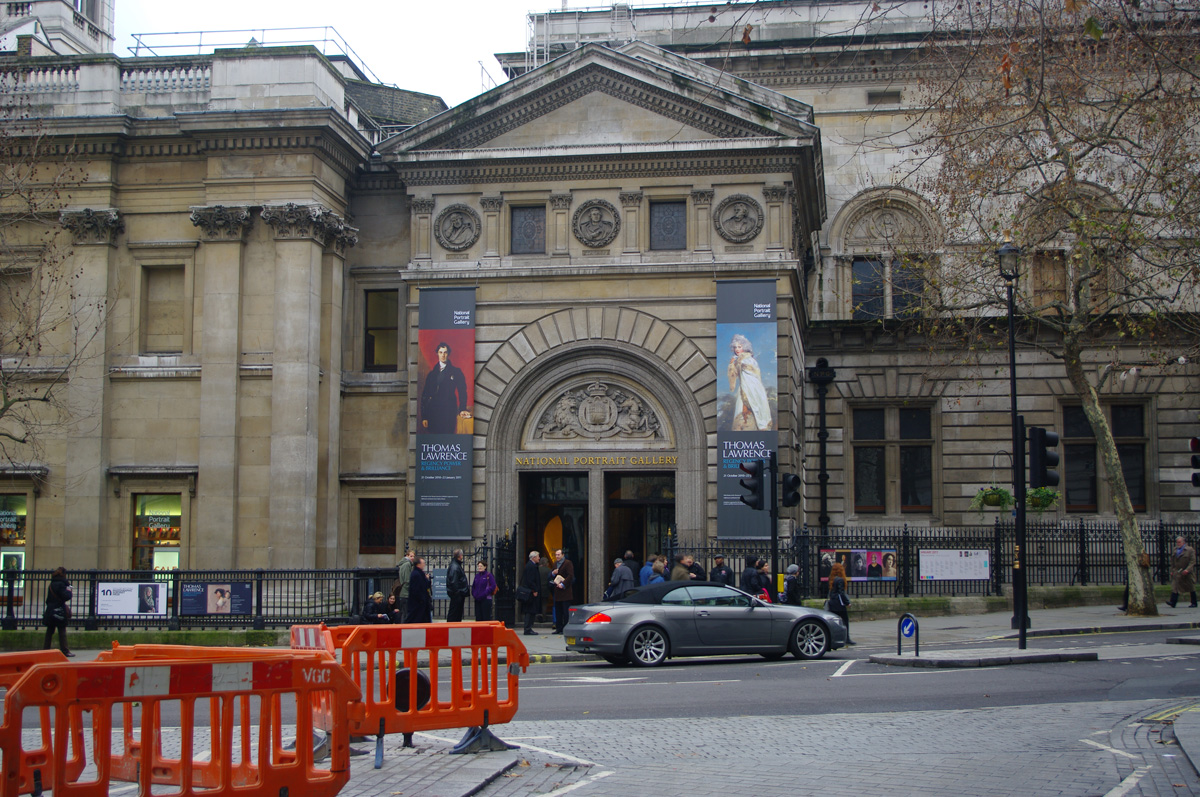
Thomas Lawrence Exhibit, National Portrait Gallery, London. Image @Tony Grant

Gentle readers, if you are lucky enough to be near London you have only a few days to see the exhibit at the National Portait Gallery of the splendid painter, Thomas Lawrence. This is Tony Grant’s (London Calling) review of the show.

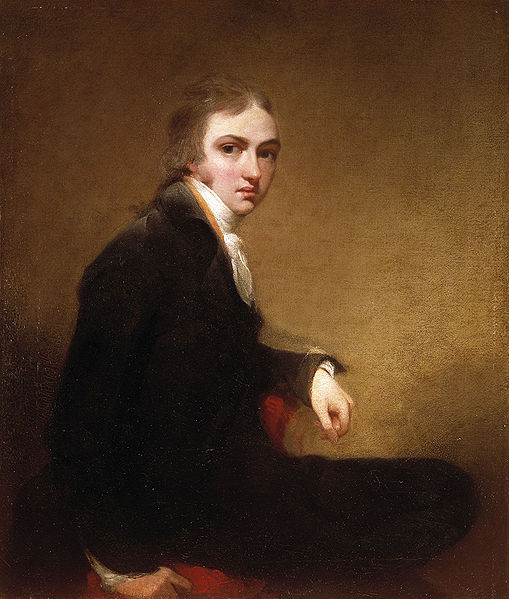
On entering the exhibition you are met with the bright gaze from a young Thomas Lawrence.

Self Portrait, Sir Thomas Lawrence, 1788 Image @PRA

Under the title of the exhibition, “Regency Power & Brilliance,” hangs a self-portrait, of oil on canvas, completed in the years 1787 – 1786 when Lawrence was 19 years of age. It is typical of Lawrence’s style that it is new and innovative for it’s time. Lawrence is sitting with his body facing to the right and his head turned to look at you the viewer over his right shoulder. The stare is steady, confident and penetrating. His face is almost illuminated and glows brightly out of the picture.


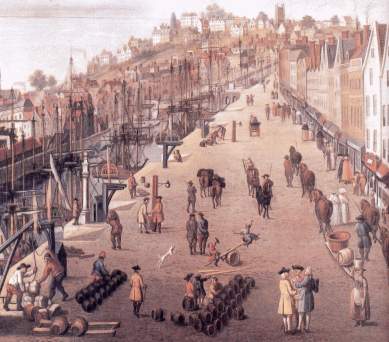
Bristol in the 18th century

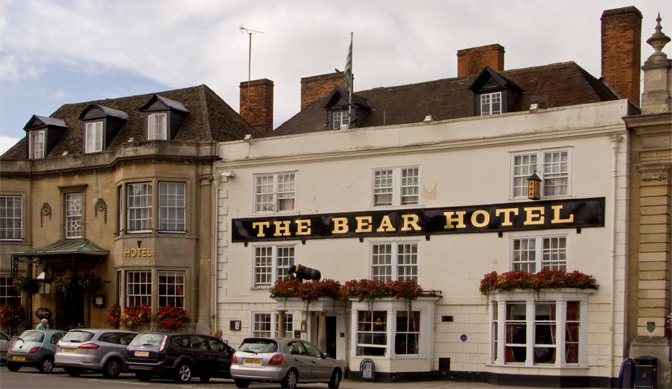
Thomas Lawrence was the leading portrait artist of the Regency period. Born in 1769 at 6 Redcross Street, Bristol, he came from a humble background. His father was also called Thomas Lawrence and his mother was Lucy Read, the daughter of a clergyman. Thomas’s father had several jobs, including innkeeper at the White Lion in Bristol. Later became the innkeeper of the Black Bear in Devizes where famous writers and artists, including David Garrick the actor and theatre owner, on their way to Bath, would stay. The young Thomas Lawrence would meet them.

Devices Heritage .orgThe Black Bear in Devices

Thomas was the entertainment in the inn. He would recite poetry and use his natural talent for sketching people to amuse and interest them. When the senior Lawrence became bankrupt, the family moved to Bath where the younger Thomas Lawrence took over being the breadwinner for the family by selling his sketches and miniature oval portraits in pastel and chalk. Some of the wealthy people in Bath commissioned his work. From an early age Thomas had had prodigious natural talents for sketching and reciting poetry. Wealthy people allowed him to study their collections of paintings and Lawrence’s drawing of a copy of Raphael’s Transfiguration was awarded a silver gilt palette and a prize of 5 guineas by the Society of Arts in London. In 1787 he moved to London where he was introduced to Joshua Reynolds. He started exhibiting at the Royal Academy exhibitions held at Somerset House and his career took off.

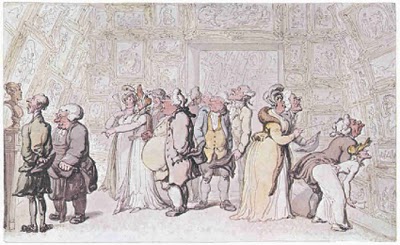
Royal Academy at Somerset House, Viewing Art, Rowlandson

The period in history that Lawrence came to prominence was also to have an affect on his development as an artist. There was much turmoil and political change. There was The French Revolution and the long wars against France. Once these came to an end, Thomas was able to travel across Europe. He did this commissioned by the Prince Regent, later George IV. He was able to make portraits of many of the great names of the time – generals, Emperors and the Pope. On his return from Europe in 1820 he was elected as the president of the Royal Academy and produced some of the best portraits of the time. Unexpectedly he died in January 1830 and was honoured with a state funeral.

What is evident in this exhibition is Lawrence’s original ideas, his naturalism and his particular use of colours.

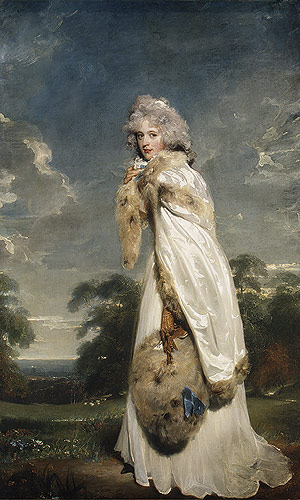
Elizabeth Farrren, Thomas Lawrence. Image @Met Museum

One of his early portraits, when he had only begun his career in London in 1790, was of Elizabeth Farren. He was only 21 at the time and this particular portrait attracted peoples interest. It shows a full length portrait of a slender, beautiful young girl caught in the act of walking through a rural landscape of trees and pathways with her dizzy blond head high in the dramatic surroundings of a stormy sky and dressed in a shimmering three quarter length white silk shawl over a long white gauze like garment. With this portrait and with all the others in the exhibition, for all the costume, dress and surroundings they might have, what always stands out, like an illuminated beacon, is the face of the person in the portrait. This is the most important part. It shows the persons character, and personality. Elizabeth has pale smooth skin, bright red lips and eyes that smile at you the viewer.


Emilia, Lady Cahir, later Countess of Glengall, Thomas Lawrence

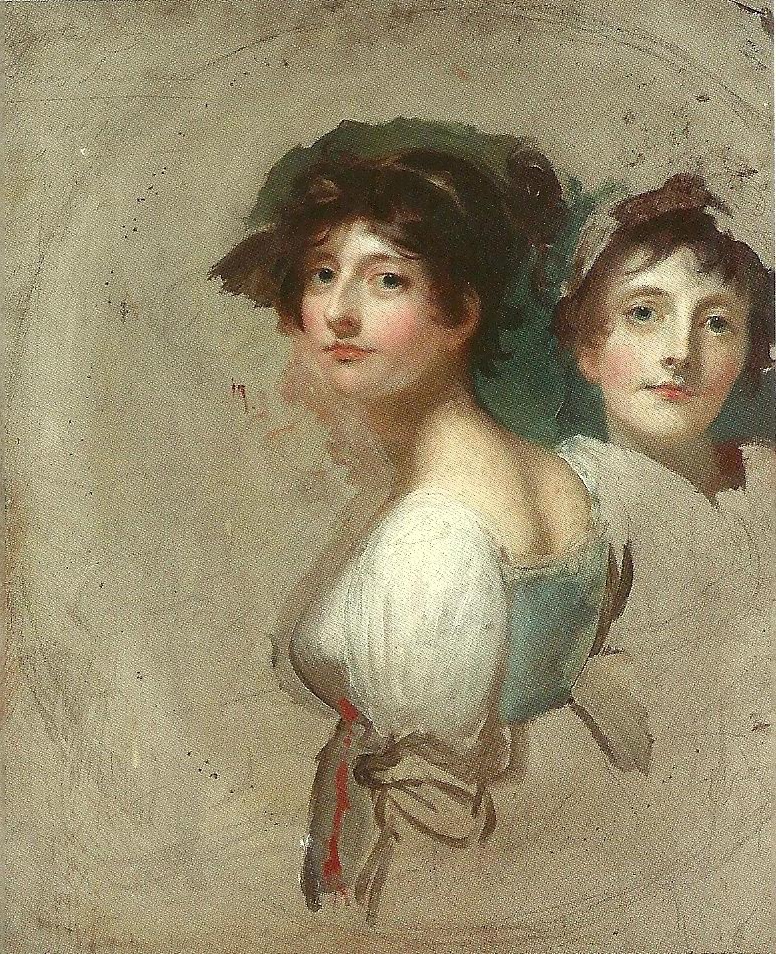
What is evident with all the pictures in this exhibition is that when you are standing looking at one of these portraits, no matter how many other people there are in the gallery, it’s just the two of you. You could almost have a conversation together. The paintings certainly allow you to relate to them in a very personal way. I think this is true of all of Thomas’s portraits. Many of the portraits of beautiful young women, as with the Elisabeth Farron portrait, show them, young, always beautiful but often unmarried. The full title to this particular portrait is, Elizabeth Farron, later Countess of Derby. There are a lot of portraits with the name and then the phrase,.. “later the duchess of…” appended to the end. These portraits must have served an important part of the marriage trade. I certainly felt my blood rising at the sight of some of these beauties.

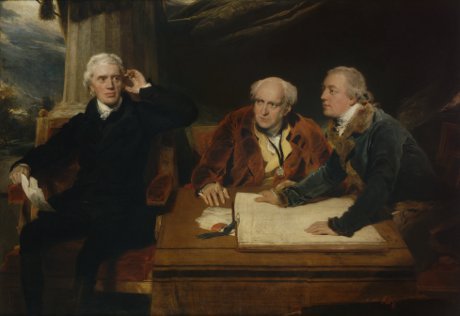
Three Colleagues, Thomas Lawrence

Thomas Lawrence showed great originality. One of his portraits of 1806, of Sir Francis Baring, John Baring, his brother and Charles wall, shows three businessmen contemplating business. It’s extraordinary. They have their work set out in front of them spread on a table and they are planning, scheming, thinking, working things out. It is an action packed picture. Although they are not walking or physically moving anywhere in the picture, things are happening, great decisions are being made right there in front of you. The different angles and poise of each character is quite disconcerting at first. It is not smooth and elegant. It shows action of thought, creativity and influence.


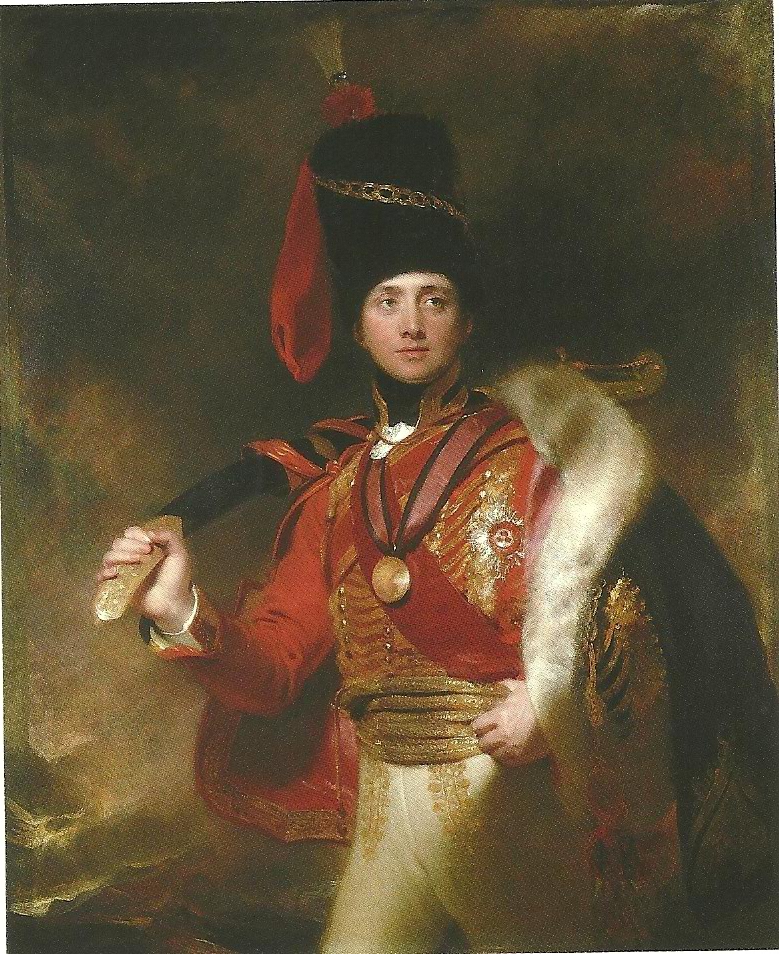
Charles William Vane Stewart, 3rd Marquess of Londonderry

Another thing I noticed and it became a quest for me to find in each portrait throughout the exhibition, was Lawrence’s use of the three colours red, white and black. At first I thought, why would he include these in every picture he painted. They do create very dramatic atmospheres. The Elizabeth Farron portrait has bright red lips, masses of white in her dress and one small pitch black shoe poking from under the hem of her dress but many of the other portraits have great swathes of each of these three colours.


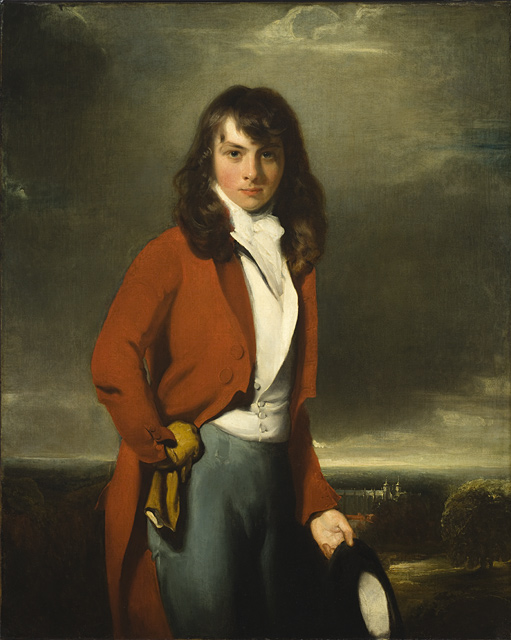
Arthur Atherley, Thomas Lawrence

The title of the exhibition is, “Regency Power and Brilliance.” Lawrence paints many of the leading figures of that period from right across Europe. You might think, well how does the power bit enter into portraits of individuals? If you want to see ultimate overarching power embodied in an individual human being you only have to look at the faces in Lawrence’s portraits. All the men show this in their eyes, their demeanour. One small room in the gallery has three portraits of three different men. Arthur Atherley is a youth of about twenty who has just left Eton College, one of the top public schools. He is shown in 1792. The next shows Robert Banks Jenkinson 2nd Earl of Liverpool. This one is painted when the sitter was in his late twenties.


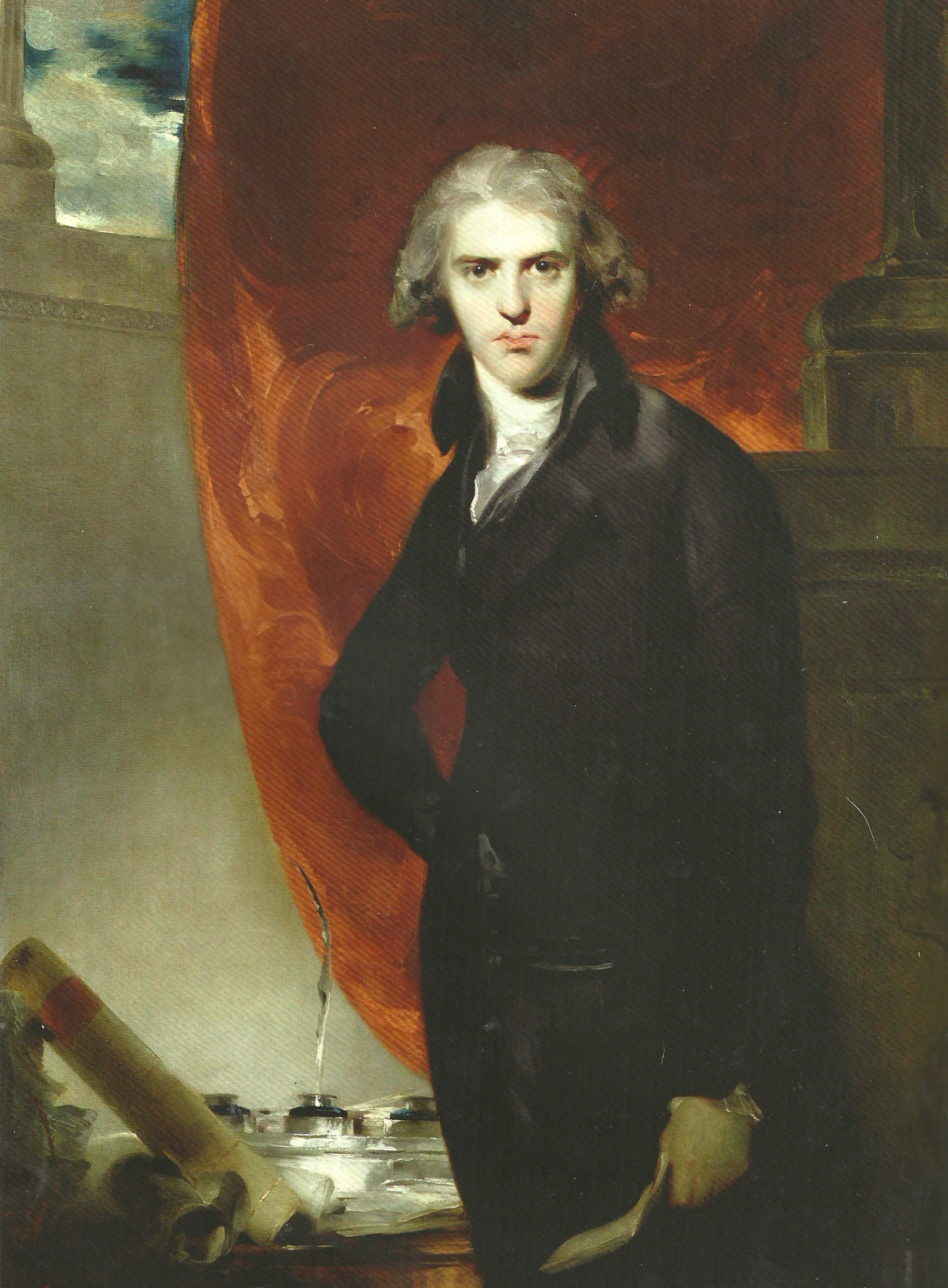
Robert Banks Jenkinson, 2nd Earl of Liverpool

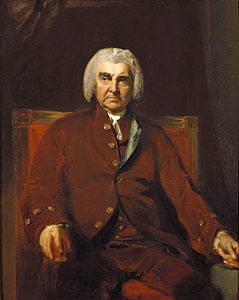
The final picture shows, Edward Thurlow, Baron Thurlow. It was painted in 1802 when he was in his early seventies and he had retired. They are the different stages of a mans life. Arthur Atherley has a precocious energy, a steady stare revealing a sense of utter belief in his powers and where and what he is about to achieve in life. There is no swerving of thought or doubt. He is totally assured of his position and power in life. It’s quite unnerving to see this unwavering belief looking you right in the eye especially from somebody so young. I kept coming back to this portrait. He has long luxurious black hair, a bright red ornate coat and a bright luminous white neckerchief. The three colours work in a very dramatic way in this picture. Robert Banks is a thin spider like creature, slightly twisted and turning his face towards you from the picture, dressed in black from head to foot. A white pale face looking straight at you, looking into your very soul. He looks full of energy. He wants to get things done with his rolls of documents before him. His personality is like a force of nature almost leaping out of the portrait at you. He can get things done. No doubt about that.

Baron Thurlow, Thomas Lawrence

Finally Edward Thurlow, at first looks, benign, very pleasant and friendly and almost smiling but the eyes are piercing and forceful. He is friendly but you couldn’t cross him. He wants talent, imagination, achievement and hard work from anybody who works for him. The three portraits, although of different people, could almost be the same person at different times of their life. In that small room in the gallery it’s quite an encounter. You could almost feel, coming away, that you have been for a tough penetrating job interview.


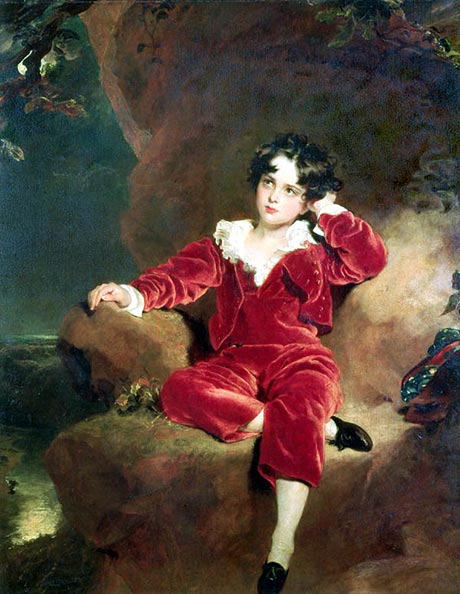
Master Lambton, Thomas Lawrence

Lawrence’s women fall into various categories. He obviously liked women and children too. There are quite a few pictures showing children. The children are active, playing, interacting, sometimes in a precocious way towards their mother or father in the pictures. He shows real children, not posed children.

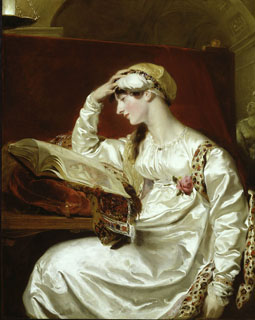
Mrs. Jens (Isabella) Wolff, Thomas Lawrence

His friend Isabella Wolf, who may have been his lover, is shown in two portraits. He drew and painted her over many years. The painting of her done in 1803 shows her examining some Michaelangelo prints. She was also separated from her husband. So this picture shows an intellectually curious women who also has broken the bounds of society in her personal life. There are also portraits of Queen Charlotte and Princess Sophia. Royalty is a theme that runs through the exhibition.


John, Lord Mountstuart, Thomas Lawrence

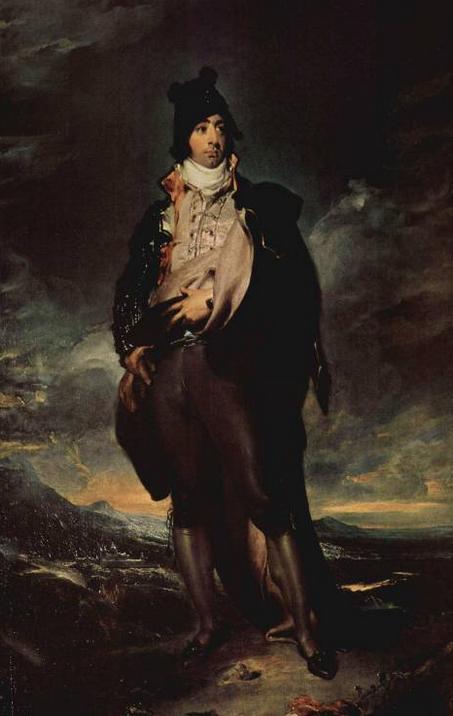
The picture that is most controversial is that of John, Lord Mountstuart.. He was a young politician and had lived in Spain for a while because he was the son of Britain’s ambassador to Spain. Lawrence painted him in 1795 when he had just returned from Spain. In many ways the picture is shocking. It is a full-length, life size portrait. It is hung so that at eye level you are confronted by a pair of very muscular legs showing all the muscular contours sheathed in very tight black leggings. As you look up you are confronted by a rather large black shining bulge in the crotch area. The top half of his body is swathed dramatically in a swirling fur trimmed embroidered black cloak with a dark jowelled, bright eyed, ruddy cheeked quite beautiful face surmounting the whole confection. It is a very erotic picture to say the least. It has lead to questions about Thomas Lawrence’s sexuality. But if you took one of his female portraits, almost any of them, you can say the same thing. Sensuality and a slight erotic air pervade many of Lawrence’s pictures.


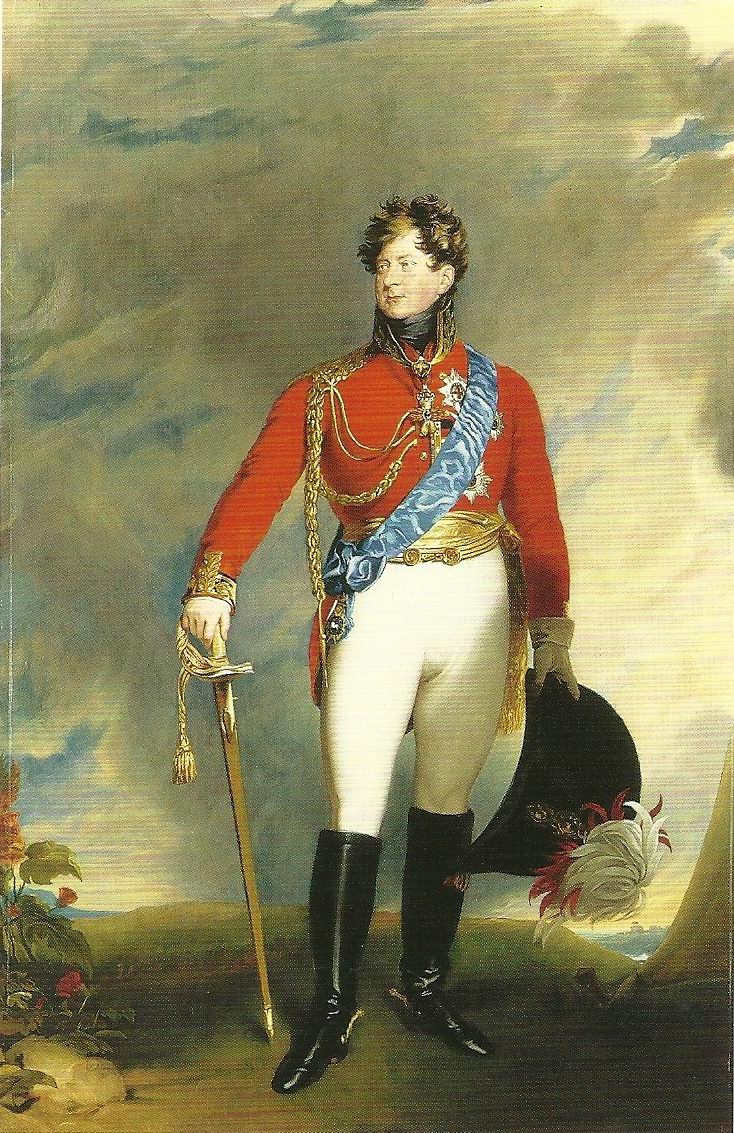
George IV when Prince of Wales, Thomas Lawrence

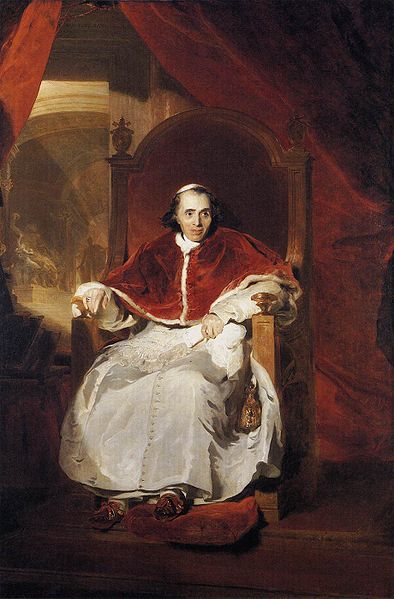
There are fifty-four pictures in this exhibition and each of the people portrayed in them are a delight to be with and a pleasure to spend time with. Some other characters you may care to come across are Arthur Wellesley, The Duke of Wellington, King George IV as King and also as Prince Regent, Field Marshall Blucher, who lead the Prussian forces who pursued Napoleon, Charles, the Archduke of Austria and Pope Pius VII and many more delightful and very interesting people.

Pope Pius VII, Thomas Lawrence

I have tried to give you a taste and flavour of this exhibition. (Click here to see a PDF document of more paintings in the exhibit.) It is not something you can grade from good to bad, give a level to, say you must see it, or not see it, or apply any subjective or objective assessment like that. What I can say though, if you do get a chance to see it, be prepared to meet real people face to face in those portraits. You will have some very interesting encounters along the way. You will learn something about power, personality, individual characters and yes, brilliance.

Read Full Post »

Inquiring reader: Sit back, relax, and grab a cup of coffee or a glass of wine! This is a long post about foxhunting. (Note: because of the helpful suggestions from equestrian readers, crucial edits have been made.)
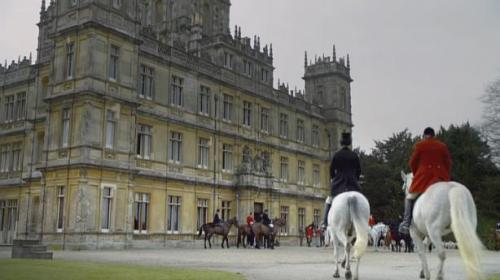
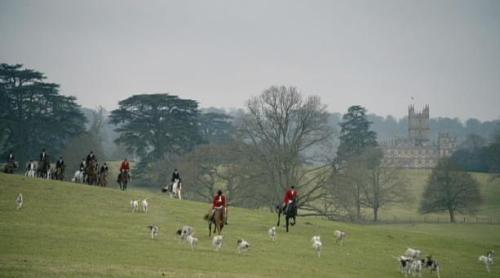
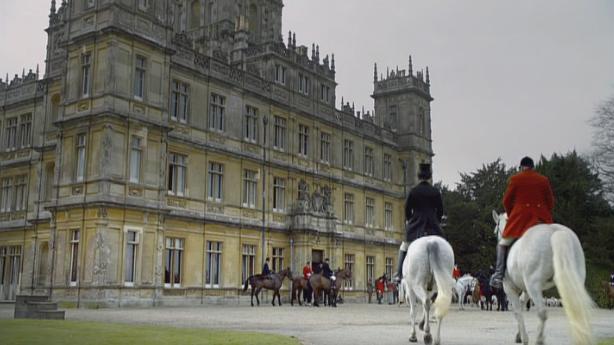
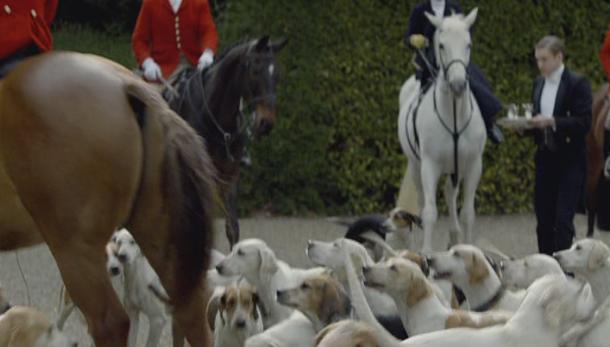
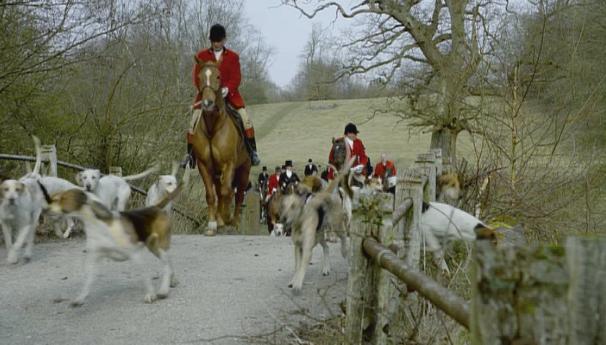
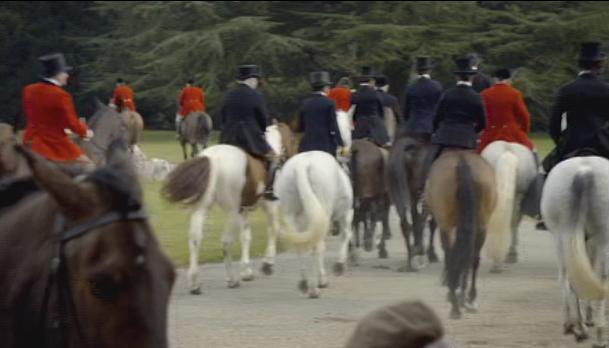
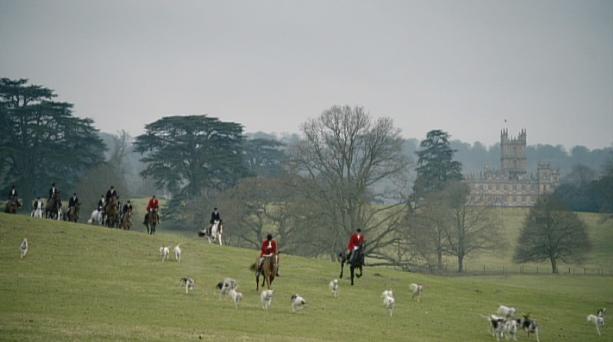
Downton Abbey (Highclere Castle) and the start of the hunt

The fox hunting scenes in PBS Masterpiece Classic’s Downton Abbey fascinated me and prompted me to ask: How accurate was the depiction of this sport? Aside from the fashions, how different was fox hunting in the Edwardian era from the Regency era? And what happened to that wily fox, whose odds of escaping a score of determined hunters and a pack of excited hounds must have been close to zero? Or were they? My research uncovered a few interesting bits of information:
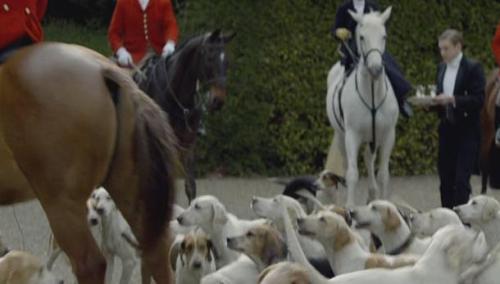
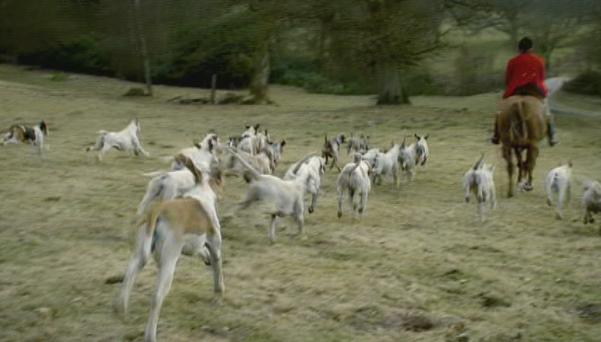
Hounds milling before the hunt. Notice William with refreshments. Downton Abbey

Description of the Hunt:

In 1910, 350 hunts existed in Britain, almost twice as many as today. Foxhunting was one of the few country sports in which women played an active role. It had become so popular that foxes were even imported from Europe to meet demand. The anti-hunt movement was a fledgling organisation concerned largely with horse beating and vivisection. For the vast majority, fox-hunting was seen as a harmless and ancient tradition. – Manor House
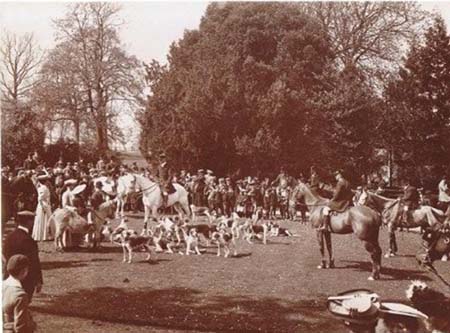
Before the start of an Edwardian hunt. Image @The Antique Horse

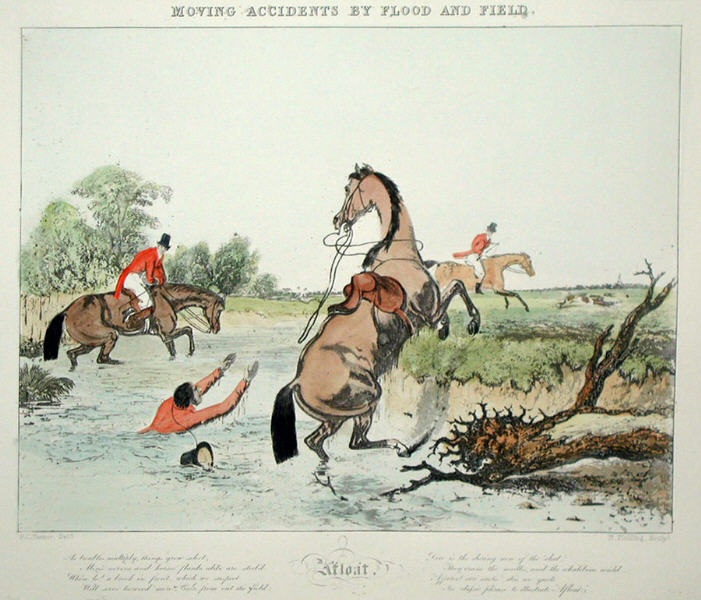
The Master will sound his horn and he and the hounds will take off on the hunt. Everyone else follows. The hounds are cast or let into coverts, which are rough brush areas of undergrowth where foxes often lay in hiding during the day. Sometimes the huntsmen must move from covert to covert, recasting the hounds until a scent is discovered. Once the hounds pick up the scent of a fox, they give tongue. The hounds will trail and track for as long as possible. Either the fox will go to ground or find an underground den for safety and protection or the hounds will wear him out and overtake him in a kill. Temperature and humidity are huge factors in how well hounds keep the scent of a fox. Often the chase involves extreme speed through brush and growth. A rider will need to be skilled in racing, jumping brooks, logs, brush, and the horses must be in excellent condition as well.”  – The history of fox hunting
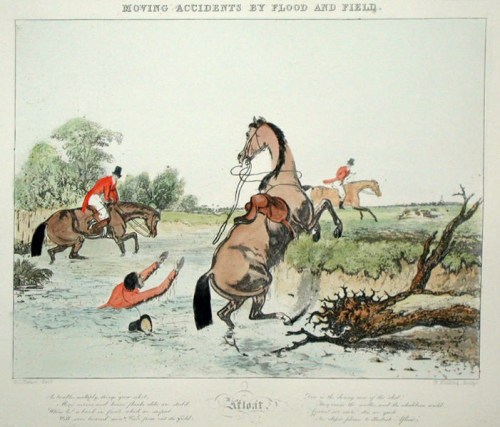
Moving accident by flood and field

Moving accident by flood and field

Filming the Fox Hunt for Downton Abbey:

While the crew were at the castle they filmed various scenes, inside and out. Lady Carnarvon explained that on one particular day they filmed a hunt. “It was wonderful. It was a beautiful day on the day they were doing it too. The funny thing is the one thing I asked them not to do was go across the lawns because there was to be a wedding. They started very early and they were all hanging around. They were going up and down for hours on end, and then suddenly just out of the laurel bushes went a fox – a real fox. The fox took off towards the secret gardens and the hounds turned in full pursuit. The fox wasn’t caught. It just ran off. The hounds were eventually brought back having gone through a couple of cold frames in the garden. I could see the location manager thinking that is the one thing I asked them not to do,” she laughed. – Highclere Castle is the star of the screen
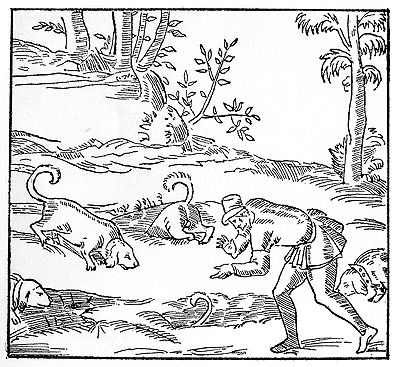
Dirt dog work, circa 1560

History of the Fox Hunt:

Talk of horses, and hounds, and of system of kennel!

Give me Leicestershire nags, and the hounds of old Meynell!

While Hugo Meynell is widely considered to be the father of modern foxhunting as we know it today (his Quorn Hunt between 1753 and 1800 was quite fashionable), hunting foxes with hounds was not new. Evidence exists that fox hunting has been practiced since the 14th century. In 1534 a Norfolk farmer used his dogs to catch a fox, which consisted of hunting on foot and trailing the animal back to its den. Foxes were thought to be “vermin” and left to commoners to hunt. In those early times, royalty and the aristocracy hunted stags, or deer, which required great swathes of open land and an investment in horses, hounds, and stables. Considering the chasing and killing of vermin to be beneath their status, the aristocracy continued to chase stags until these animals became scarce.
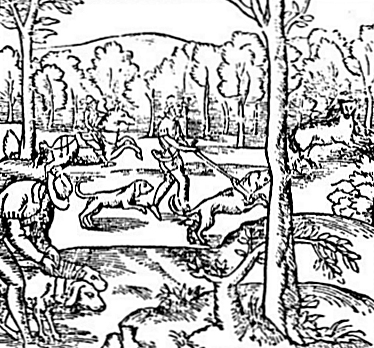
Hunting with hounds on foot

Hugo Meynell began breeding hounds that could keep up with the foxes at the same time that an increased number of 18th century men could devote their time to leisurely pursuits. Consequently, the sport of fox hunting began to take off. (See Rowlandson, The Humours of Fox Hunting: The Dinner, 1799 for a depiction of a group of men enjoying the after effects of a hunt.)

There were no formal hunt clubs during this period. Rather, large landowners kept hounds that accompanied them on private hunts. The hunts were not very effective in controlling the number of foxes in any given area, but the sport was safer than the practice of using spring traps, which could snare a human as well as a fox. (Animal traps from the 16th century. )
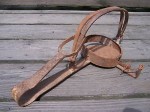
 

18th century spring trap

By the early 19th century, a more formal style of foxhunting began to be organized. Roads and railways had cut the land into smaller portions, and it became more convenient for rich landowners and their guests to hunt foxes. Railways also gave a larger number of people in towns and cities easy access to the countryside and an opportunity to join in the sport.

The rising middle clases, eager to improve their social standing, joined the clubs, and by the late 19th century the sport had reached the height of its popularity. In fact, the demand for foxes was so great that some hunts were called off if the probability was high that the fox would get killed. Foxes were so scarce that a large numbers of the animals were imported from Europe to be sold in England.
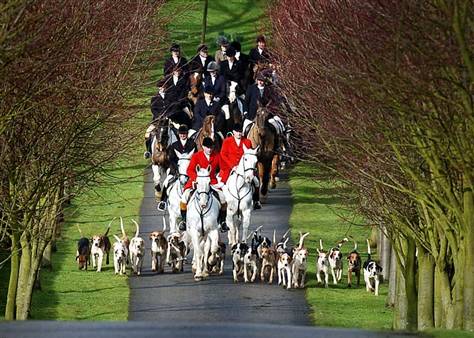
The Bilsdale Hunt. Image @MSNBC.com

The oldest continuous fox hunt in England is the Bilsdale Hunt in Yorkshire, established by George Villiers, the Duke of Buckingham in 1668. Since 2005, foxhunting with hounds has been illegal in Britain, but there are groups that are still unhappy with this turn of events, for foxes are still allowed to be hunted and shot in England. Supporters of the foxhunt state that organized foxhunts never caught enough foxes to affect the total population and that the kills were clean. In addition, foxhunting supports a minor economy of farriers, grooms, horse stables, dog kennels, trainers, veterinarians, shops, inns, taverns, and the like. Since it became organized, the hunt also provided a spectator sport to local villages and market-towns and inspired railroads to expand their services so that participants could join the hunts and travel up and back within a day. The landscape also benefited from the hunt in that landowners planted low bushy coverts for the foxes and maintained their hedges to facilitate jumps. – Encyclopedia of Traditional British Rural Sports: History of Fox Hunting


Foxhunting Schedule:

Fox hunting began on the first Monday of November; traditionally a hunt was held on Boxing Day (Dec 26).

In the early morning workers stopped up the holes of the dens where the foxes rested, forcing these nocturnal animals to find shelter above ground during the day.

Around 11 a.m. the riders (field) would assemble, with around 40-50 hounds.

The Master of the Hounds was in charge of the hunt and supervised the field, hounds, and staff. The huntsman, who had bred the hounds and worked with them, would be in charge of the pack during the hunt.
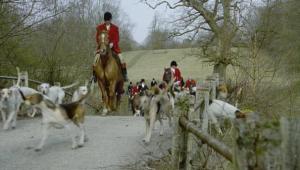
Chasing the fox. Downton Abbey

Once the group was assembled, the hunstman would lead the pack of hounds and field to where a fox might be hiding. When the fox was flushed out into the open, the group would pursue the fox, with the huntsman leading the group. The field would follow at a gallop and watch the hounds chase down the fox.

When the fox was cornered, the hounds took over.

Hunt festivities included lawn meets, where food and drink were served to the people who gathered together, and hunt balls.The cost of horses, outfits, and operating expenses made the activity prohibitive for those with limited means, and only those with a great deal of money could afford to participate. – What Jane Austen Ate and Charles Dickens Knew, Daniel Pool – p171-173

Women and Foxhunting:
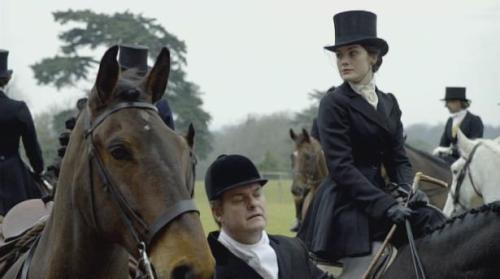
Waiting for the hunt to begin, Downton Abbey

Few women rode in a fox hunt during the Regency period. It took great skill and courage for a woman to join the hunt, for in those days the side-saddle lacked the leaping horn, which offered a more secure seat and made taking fences safer.
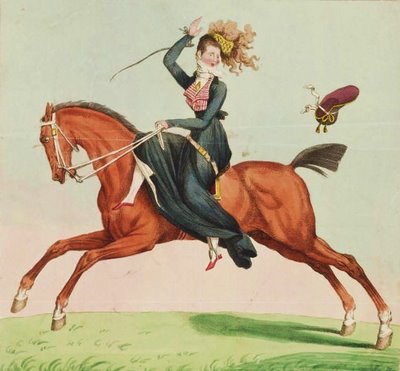
The Inconvenience of wigs, Carle Vernet. Image @Yale University Library

By the mid-19th century, women began to join in the sport in greater numbers. An article written by Catriona Parratt discusses women’s involvement:

“Preeminent among these activities was foxhunting, one of the few sports for which there seems to have been no rigidly prescriptive code limiting women’s participation. In fact, some women embraced the sport with a zest which was evidently not considered inappropriate. This may be explained in part by the extreme social exclusivity which attended to the leaders of the foxhunting set. Members of the aristocracy and the upper middle classes were probably sufficiently secure in their status to ignore, to some extent, more bourgeoise notions of respectability… According to one enthusiast, 200 riders was considered a poor turn out, while few meets attracted less than 100 men and women. A figure of thirty women is given in an account of the Tipperary Hunt in the 1902 season, but the overall evidence is very impressionistic…

There are also several accounts of women achieving the honour of being the first to ride in at the death of the fox, something which seems not to have offended their supposedly more delicate sensibilities. In a 1900 meeting of the Dartmoor Pack, the brush [tail] was awarded to a Miss Gladys Bulteel, of whom it was noted that her pony “was piloted with exceptional skill,” while in a previous month’s run of the same pack, a Miss Dorothy Bainbridge claimed the coveted trophy. None of this is to suggest that women participated in equal numbers or on equal terms with men… Rather, it is clear that some women were active, enthusiastic, and skillful participants who were drawn to the sport by “the enjoyment, the wholesomeness, even the nerve-bracing dash of danger.” – Athletic “Womanhood”: Exploring Sources for Female Sport in Victorian and Edwardian England Cartriona M. Parratt*, Lecturer, Dept. of Physical Educ
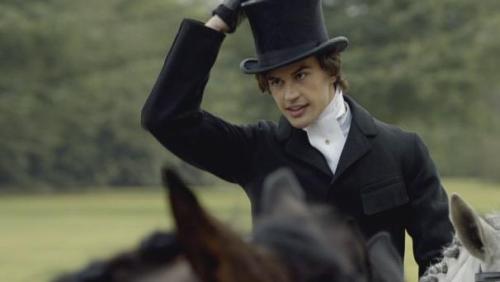
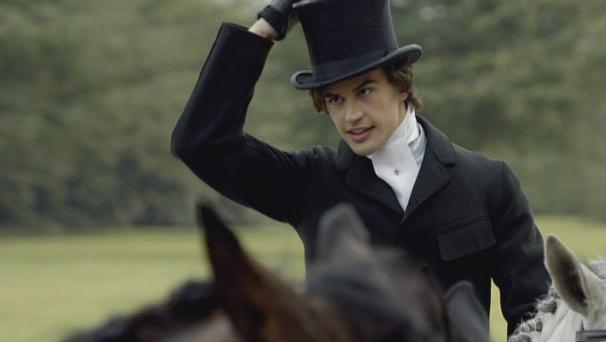
Kemal Pamuk (Theo James) meets Lady Mary

Comments about the Fox Hunt in Downton Abbey from the Horse and Hounds forum:

As I researched foxhunting, curiosity led me to a discussion forum at the Horse and Hounds website. I wanted to know what the experts thought of the foxhunting scenes in Downton Abbey. Here they are in a nutshell, with the names of the individuals taken off:
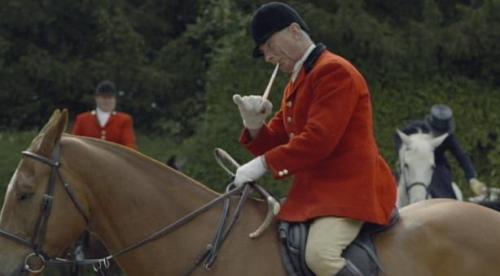
Master of the Hunt sounds the call

They should have told that daft lady [Mary] side saddle person to put a bloody thong and lash on her hunting whip and hold it the right way too..thong end up please. Suppose we should be grateful it was’nt filmed in high summer! And WHY film the field and hounds all mingled but apparently in full cry..UUURRRGGGHH it drives me nuts.”

“Not unless they have a leather loop on one end for the thong and lash? Do sidesaddle whips have bone “gate hooks” on the top end?? In one shot the lady did have a thong attached ..but still holding it the wrong way anyway, shortly before, no lash!! Pathetic.”

“My thoughts that the horses were not typical or hunters of that era, also would there have been a coloured, I thought that the craze for colours was a recent thing and they were frowned on in ‘those days’. “
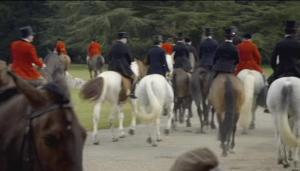
The field follows the Master and pack

I am amazed that finally a TV programme has made the effort to show not only a hunting scene but a lady hunting on PRIMETIME TV and people are moaning about minor details! I hunt side saddle, I do it because I love it, so I was over the moon to finally see something relevant to it on t.v. Would you have preferred they didn’t show it at all and cut the hunting scenes entirely??

Lets not forget these programmes are filmed for public entertainment, they are not historical documentarys. Please could we all be a little more supportive of equines on TV regardless of the reasons, then maybe we would see more.”

“Well if you want to moan about the most minute details of the scenes (and don’t forget, what you see on screen in a STORY not a documentary !!!) why not start with the fact that the forward seat was unknown in Edwardian times?”
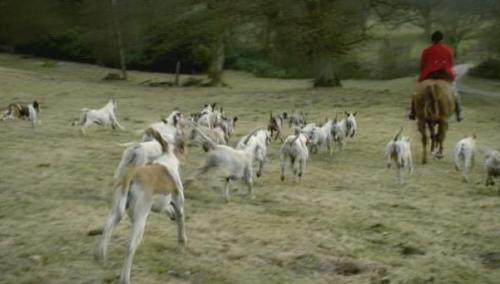
Master of the Hunt and pack set off ahead of the field

We noticed the coloured horse too and said no way would they have had one of them!! They only pulled carts in those days. Still – we all got excited when the hunting scene started!!”
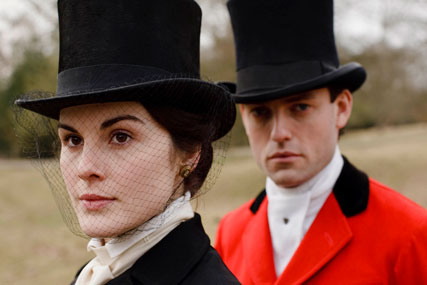
Lady Mary and Evelyn Napier, Downton Abbey

Lady Mary and Evelyn Napier

Did anyone spot which hunt’s tail coat was being worn by Mr Evelyn Napier?”

“It was the vine and craven hunt huntsman David Trotman scarlet coat with gold vine leafs on black collar. The Vine & Craven [were] filming at Highclere Castle…”Horse and Hounds forum

Riding hell bent for leather through the fields. Downton Abbey

Master of the Hunt and other staff:

The Master of the Fox Hounds (MFH) or Joint Master of the Fox Hounds operates the sporting activities of the hunt, maintains the kennels, works with, and sometimes is, the Huntsman. The word of the Master is the final word in the field and in the kennels.  The Huntsman is responsible for directing the hounds in the course of the hunt.

The Huntsman usually carries a horn to communicate to the hounds, followers, and whippers-in.  Whippers-in are the assistants to the Huntsman. Their main job is to keep the pack all together.”  – Human roles in fox hunting
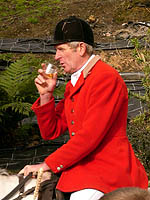
The huntsman drinking a pre-hunt drink. Image @Icons A Portrait of England

From Baily’s magazine of sports and pastimes, Volume 2, 1861, p. 182: “As well might you assert that because a nobleman throws open his house and grounds to the public one or two days in the week from free goodwill that he has not the right to exclude any persons he may object to. A Master of fox hounds hunts his country upon the same conditions. Any landowner can prevent him riding over his fields or drawing his coverts. By the landowners he stands or falls. He recognizes no other power to interfere with his conduct in the field.”
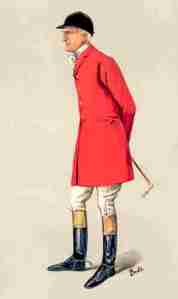
Edgar Lubbock, Master of the Blankney Hunt

Description of the above image: Edgar Lubbock LLB was the Master of the Blankney Hunt at the turn of the 20th century. He was born on 22 February 1847 in St James, London the eighth son of Sir John William and Harriett Lubbock. Educated at Eton and the University of London he studied Law and became an accomplished lawyer. Through his career he held varying positions, including Lieutenant of the City of London, Director of Whitbread Brewery, Director of the Bank of England and in 1907 Lord Lieutenant of Lincolnshire. He died in London on 9 September 1907 aged 60 whilst Master of the Blankney Hunt. – Metheringham Area Mews

The Dogs:

The true point of riding to hounds was (and is) to watch the hounds work. Those who galloped wildly or jumped unnecessarily were termed “larkers” – an insult – and disdained by the serious hunters. – Word wenches, fox hunt

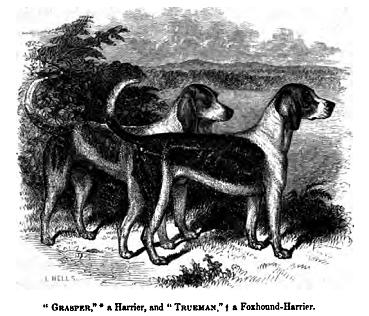
The hounds are the most vocal component of the hunt and the means by which the fox is flushed out and then chased until it was too exhausted to go farther. In England, there were two breeds of dogs that were necessary to the hunt: Harriers, which are slightly smaller than foxhounds, and who chased the fox over hill and dale; and terriers, who followed the fox into the den and dug it out.

Harriers (Hare Hounds or Heirer)
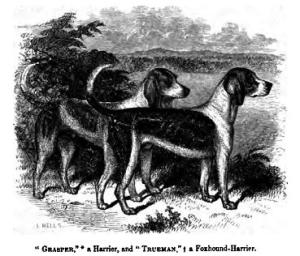

The Harrier, also known as the Hare Hound or the Heirer, is a hardy hound, with a strong nose, that was developed in England to hunt hare.  Hare hunting has always been popular in England, sometimes being even more popular than fox hunting because hunters could trail their hare hounds on foot, without the need for the many horses required to follow fox hounds on the hunt. Moreover, hare hunting was never reserved to royalty; it was always accessible to commoners, who could add their few Harriers to a “scratch pack” made up of hounds owned by different people and still participate in the sport. Reportedly, in 1825, the slow-moving Harrier – in size between the larger English Foxhound and the smaller Beagle – was crossed with Foxhounds to improve its speed and enable it to better hunt fox in addition to hare. – Harrier overview

Terriers
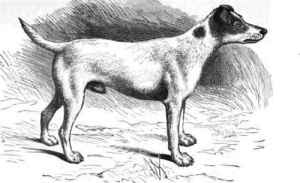
Fox Terrier. Image @Chest of Books

With the growth of popularity of fox-hunting in Britain in the 18th and 19th centuries, terriers were extensively bred to follow the red fox, and also the Eurasian badger, into its underground burrow, referred to as “terrier work” and “going to ground”.[1] The purpose of the terrier is that it locate the quarry, and either bark and bolt it free or to a net, or trap or hold it so that it can be dug down to and killed or captured.[2] Working terriers can be no wider than the animal they hunt (chest circumference or “span” less than 35 cm/14in), in order to fit into the burrows and still have room to maneuver.[3] As a result, the terriers often weigh considerably less than the fox (10 kg/22 lbs)[4] and badger (12 kg/26 lbs),[5] making these animals formidable quarry for the smaller dog. – Wikipedia
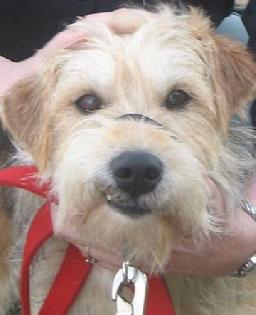
My terrier no longer has the slender girth to chase a fox into its den, for he eats too many doggie biscuits.

Read more about terriers:

The Kill:

Foxes were killed in one of two ways:

1) Hounds chased the foxes until they were caught and then dispatched it. There seems to be a widespread disagreement about the kill, some saying it was quick, and that the fox died from a nip to the back of the neck, and others saying that the fox was repeatedly bitten or torn apart, and sometimes died slowly from its injuries.

2) The fox went to ground (inside a hole or den), and then was dug out with terriers.

Animal rights experts also found the chase itself, with the fox hunted to the point of exhaustion, cruel.
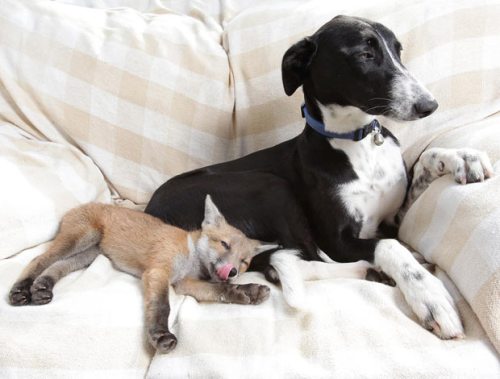
A lurcher adopts a fox cub, the opposite of a kill. Jack and Copper are famous in the U.K. Image @Animal Tourism.com

I could not show an image of a kill, so I’ve presented you with the opposite image: This young lurcher has adopted a fox cub. Jack, the hound, and Copper, the cub, are famous in the U.K. for their playful wrestling matches. Image @Animal Tourism.com

Final Words about Foxhunting in America:

Since Cora (the Countess of Grantham) in Downton Abbey was an American heiress, the information below regarding the American fox hunt is appropriate to this post:

Description of a Fox Hunt by a New England minister
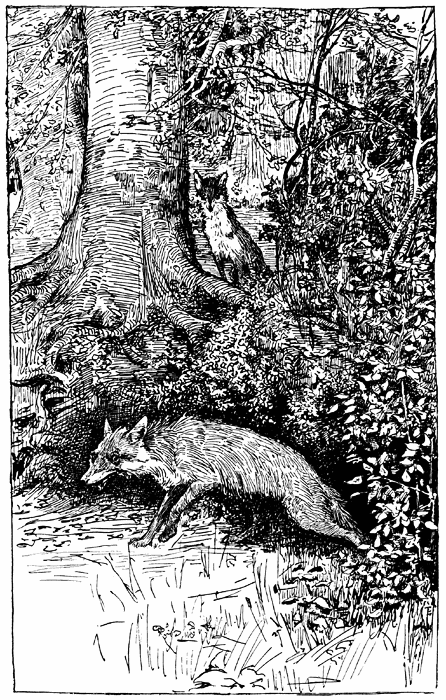
Fox hiding in the covert.

Foxhunts were imported into America in the 17th century. In 1799, a wry New England minister gave a glimpse of the sport in the New World: “From about the first of Octor. this amusement begins, and continues till March or April. A party of 10, and to 20, or 30, with double the number of hounds, begins early in the morning, they are all well mounted. They pass thro’ groves, Leap fences, cross fields, and steadily pursue, in full chase wherever the hounds lead. At length the fox either buroughs out of their way, or they take him. If they happen to be near, when the hounds seize him, they take him alive, and put him into a bag and keep him for a chase the next day. They then retire in triumph, having obtained a conquest to a place where an Elegant supper is prepared. After feasting themselves, and feeding their prisoner, they retire to their own houses. The next morning they all meet at a place appointed, to give their prisoner another chance for his life. They confine their hounds, and let him out of the bag—away goes Reynard at liberty—after he has escaped half a mile—hounds and all are again in full pursuit, nor will they slack their course thro’ the day, unless he is taken. This exercise they pursue day after day, for months together. This diversion is attended by old men, as well as young—but chiefly by married people. I have seen old men, whose heads were white with age, as eager in the chase as a boy of 16. It is perfectly bewitching. The hounds indeed make delightful musick—when they happen to pass near fields, where horses are in pasture, upon hearing the hounds, they immediately begin to caper, Leap the fence and pursue the Chase—frequent instances have occurred, where in leaping the fence, or passing over gullies, or in the woods, the rider has been thrown from his horse, and his brains dashed out, or otherwise killed suddenly. This however never stops the chase—one or two are left to take care of the dead body, and the others pursue.” – Colonial Williamsburg, Personable Pooches
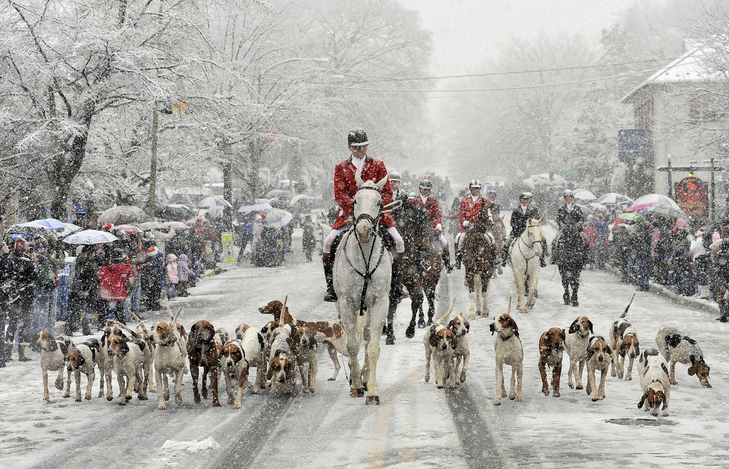
Middleburg Christmas parade. Image @Washington Post

Comment made on a Word Wenches post by a reader who lives in Virginia’s hunt cup country: I live in Virginia hunt country, in fact in the Old Dominion hunt area.  My property deed has one covenant on it. We must allow the huntmaster through. We can deny the rest of the hunt if we want. The covenant was signed by King Charles (I am not sure which one). Fauquier County has 3 hunts and the U.S. largest Steeplechase race, the Gold Cup. .. Many of the more recent mansions (post US Civil War through the 1920s) in Fauquier and neighboring Loudoun were built as hunt houses. – Word Wenches, Fox Hunting
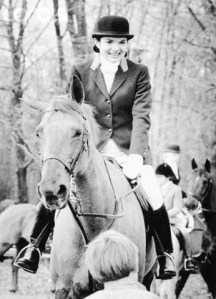
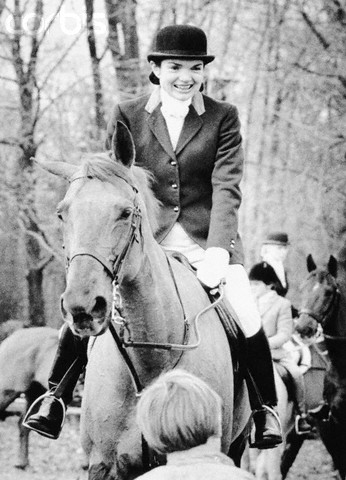
Jacqueline Kennedy. Equestrian outfit in the 1970s.

Etiquette and Dress Code of a Fox Hunt:

The etiquette of the hunt field was (and is) as intricate and strict as that of the ballroom. I imagine (and please correct me if I am wrong), that each club has its own variation of rules. Loudoun County is west of Washington D.C. and sits near the middle of the hunt country of Northern Virginia, where Jacqueline Kennedy frequently hunted when she lived in Georgetown. Click here to read the extensive rules of etiquette of the Loudoun Hunt: Etiquette and the rules of Attire.
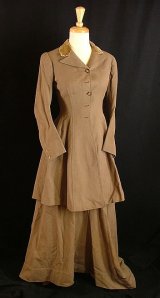
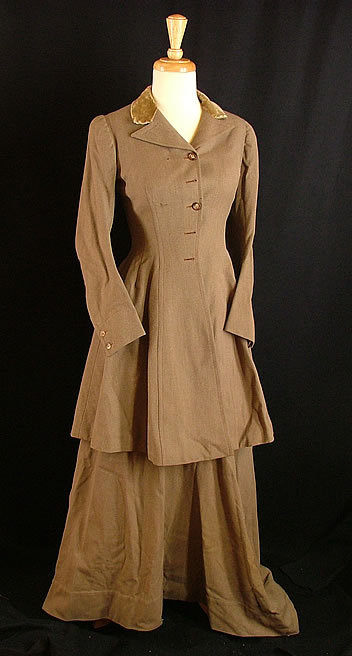
Edwardian riding habit. Image @side saddle girl

More on the foxhunt:

Addendum to original post:

This post began innocently enough, for I had no idea about the emotions surrounding the fox ban. Various views are presented in the comment section. Tony Grant, who writes for this blog and who lives in London, said in an email:
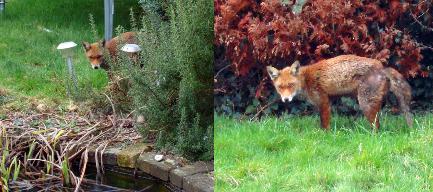
A fox creeps in Tony's yard towards the dustbins

Because foxes are no longer hunted their population has expanded unbelievably. They no longer keep to the countryside but live in the towns and cities as scavengers. They live in dens created in parks and the bottom of peoples gardens. They scavenge dustbins. We have an epidemic where I live in South London. They walk down my road and enter my garden on a regular basis. They are not afraid of humans.

Here are some pictures taken in my back garden. This fox wanted to raid our dustbins.

Read Full Post »
« Newer Posts - Older Posts »